




Mohd Nazri: Face up to presence of refugees
The issue of refugees is one of national security which requires swift response, instead of being swept under the carpet, said Minister in the Prime Minister's Department, Mohamed Nazri Abdul Aziz.
The issue of refugees is one of national security which requires swift response, instead of being swept under the carpet, said Minister in the Prime Minister's Department, Mohamed Nazri Abdul Aziz.
Speaking at an event today to commemorate World Refugee Day, which was marked yesterday, he said it is time Malaysia acknowledges the presence of refugees, "some of whom have been here for 40 years".
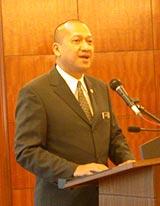 He said this during the launch of the Bahasa Malaysia version of the handbook,
Refugee Protection: A Guide to International Refugee Law
, to be circulated to parliamentarians.
He said this during the launch of the Bahasa Malaysia version of the handbook,
Refugee Protection: A Guide to International Refugee Law
, to be circulated to parliamentarians.
Members of Parliament, foreign dignitaries and representatives of local NGOs attended the event organised by the United Nations High Commissioner for Refugees (UNHCR) in Kuala Lumpur.
"It is vital that we identify the number of people on our shores and be able to keep tabs on their whereabouts and reasons for being here. This documentation is important in efforts to safeguard national security," he said at a press conference later, when asked to elaborate on his statement.
"We want to end the era of refugees being caught by policemen and their children refused education. They must have access to health, vaccinations and education," he said, adding that the government is looking into the matter, albeit without time-frame for a decision.
"Rather than ignore the situation, we should tackle it as the long-term benefits are many. It would be good to give them a form of identification and access to employment, but only in sectors already shunned by Malaysians."
Better understanding
 This was in reference to the suggestion last week by UNHCR head Volker Turk that refugees be
employed
in the plantation, construction and restaurant sectors as a temporary means of integration.
This was in reference to the suggestion last week by UNHCR head Volker Turk that refugees be
employed
in the plantation, construction and restaurant sectors as a temporary means of integration.
However, Nazri also noted the need for careful study of the potential effects of recognising refugees, which might lead to an influx of economic migrants.
"The government does not want people to take advantage of the situation and settle down in this country without good reason such as persecution based on race, religion and circumstances of war.
"We must not signal to potential economic migrants that they might be allowed to settle down in the country despite being in no situation of immediate danger and subject to severe risks which characterises being a refugee."
The handbook, published by the Inter Parliamentary Union and UNHCR in 2001, is designed to allow parliamentarians better understanding of the rights of refugees and the role of the state in ensuring their protection.
It outlines the legal framework for recognising and protecting refugees with reference to international protection of practice.


Are you sure you want to delete this comment?
This action cannot be undone.