


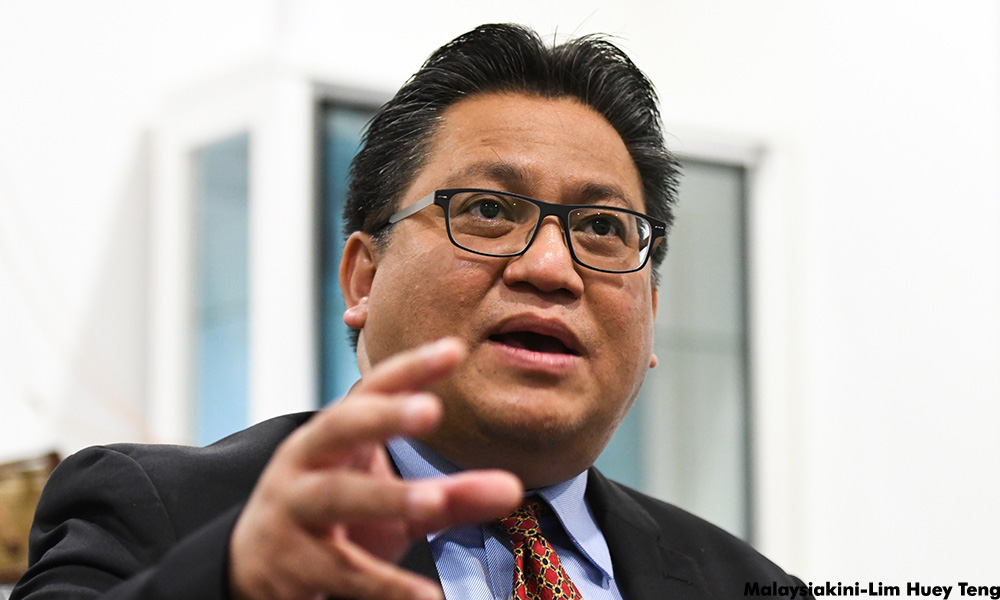

Nur Jazlan claims Malaysiakini a 'very biased' media outlet
On World Press Freedom Day today, Deputy Home Minister Nur Jazlan Mohamed claimed in an interview that news portal Malaysiakini is a "very biased" media outlet.
In the interview aired by BFM 89.9, Nur Jazlan pointed out that Malaysiakini has remained in operations for the past 18 years.
"If the governmentt is truly draconian, it will close down BFM. Because BFM has been very vocal against the government," he claimed on the radio station’s Breakfast Grille morning show.
"Malaysiakini, (a) very biased media outlet, but they have been around for 18 years," Nur Jazlan said...
On World Press Freedom Day today, Deputy Home Minister Nur Jazlan Mohamed claimed in an interview that news portal Malaysiakini is a "very biased" media outlet.
In the interview aired by BFM 89.9, Nur Jazlan pointed out that Malaysiakini has remained in operations for the past 18 years.
"If the government is truly draconian, it will close down BFM. Because BFM has been very vocal against the government," he claimed on the radio station’s Breakfast Grille morning show.
"Malaysiakini, (a) very biased media outlet, but they have been around for 18 years.
"But they have to realise that they now suffer from news fatigue. People tune in to Malaysiakini less and less every day," he further claimed.
When it was pointed out by the programme’s host that BFM has always strived to maintain balance in its reporting, Nur Jazlan however said, “not to some people”.
Nur Jazlan was responding to a question on critics against the government's plan to regulate the Internet.
What the government aimed to do, he said, was to make people accountable for what they write online and on social media, rather than hiding behind “a cloak of anonymity”.
Commenting on Malaysia’s press freedom rankings by media watchdog Reporter Without Borders, Nur Jazlan said putting Malaysia at number 144 out of 170 was “unfair”.
“Also their methodology is outdated in the current online world,” he said, claiming that too much focus was being placed on print media and related regulations.
Unlike the regulated print media, Nur Jazlan also said that the government was fighting challenges surrounding the spreading of fake news online.
“RWB should focus on new media instead of old media,” he said.
He further pointed out that China is ranked only seven spots below Malaysia at number 151, despite being a totalitarian regime known for its harsh censorship laws.
“Totalitarian regime at number 151 and we are 144. That in itself shows that the index is fraudulent in many ways.
“Number 143 is Gambia…Would you say press freedom is better in Gambia?,” he questioned.
Unlike in many other countries, Nur Jazlan also claimed that Malaysian journalists face less restrictions in carrying out their duties.
“You are interviewing me here today. You are talking about how many reporters are hurt or killed, taken to court and sued.
“In Malaysia the numbers are very low. That itself tells you Malaysia has a high level of press freedom,” he insisted.
In March, Dewan Rakyat speaker Pandikar Amin Mulia courted criticism from press freedom groups over his ruling to bar the media from the Parliament lobby, purportedly for safety concerns.
Individual politicians from both BN and Pakatan Harapan parties, meanwhile, have been criticised for verbally attacking reporters who were carrying out their duties to ask questions.
Certain online media outlets have also been banned from covering press conferences after the Umno Supreme Council meeting at the party's headquarters in PWTC, Kuala Lumpur.


Report this comment
Are you sure you want to delete this comment?
This action cannot be undone.