




Kuala Lumpur air quality declared unhealthy due to haze
The air quality in Kuala Lumpur and surrounding areas was declared unhealthy as an acrid haze hung over the country's western states.
The air quality in Kuala Lumpur and surrounding areas was declared unhealthy as an acrid haze hung over the country's western states.
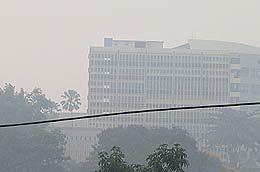 Kuala Lumpur and four surrounding areas including the administrative centre Putrajaya were declared unhealthy from late morning, as well as areas in the neighbouring states of Negeri Sembilan and Malacca, the Environment Department said in a statement yesterday.
The department said that although the situation had initially shown signs of improvement, the air had started worsening towards midday.
"The hazy conditions started to return at around noon," it said.
Officials also said the haze could worsen in the next few days as fires continue to burn in Indonesia and Malaysia.
"There is also the possibility of the conditions worsening over the next few days since the winds are blowing our way and we are getting dry weather," said Muhammad Helmi Abdullah from the Meteorological Department's forecasting office.
The haze moved over Kuala Lumpur and the surrounding Klang Valley on Tuesday afternoon, covering the Petronas Towers and permeating buildings with the smell of smoke.
Morning rains Wednesday improved visibility and cleared some of the brown smog. But by lunchtime the pall over the city had returned, bringing with it the smell of burning.
Peat fires in Cyberjaya
Blazes in Indonesia and Malaysia, as well as a peat fire near Kuala Lumpur and the current southwest monsoon season, have been blamed.
States in central-western Malaysia, including Perak and Selangor were worst hit by the haze, Muhammad Helmi said.
The Environment Department has said the problem is being caused by nearly 600 fires in Indonesian provinces in Riau and northern Sumatra, as well as blazes in Indonesia's Kalimantan and Malaysia's eastern state of Sarawak.
Peat fires which started Monday in Cyberjaya, south of Kuala Lumpur, have also contributed to the smoky conditions in and around the capital.
The peat fires were still smouldering on Wednesday, while there was some illegal open burning of rubbish taking place in several areas around Cyberjaya, said the Environment Department.
Haze caused by fires in Indonesia and Malaysia is a common occurrence during hot, dry seasons.
In 1997 and 1998 choking haze caused mainly by Indonesian forest fires enveloped parts of Southeast Asia including Malaysia for months.
They caused an estimated 9.3 billion dollars in economic losses to the region due to serious health problems, traffic hazards and flight disruptions.


Are you sure you want to delete this comment?
This action cannot be undone.