



Report: Widow of 'Ibrahim Libya' yet to forgive Dr M over Memali
The widow of slain religious preacher Ibrahim Mahmud has not forgiven former prime minister Dr Mahathir Mohamad for the Memali tragedy.
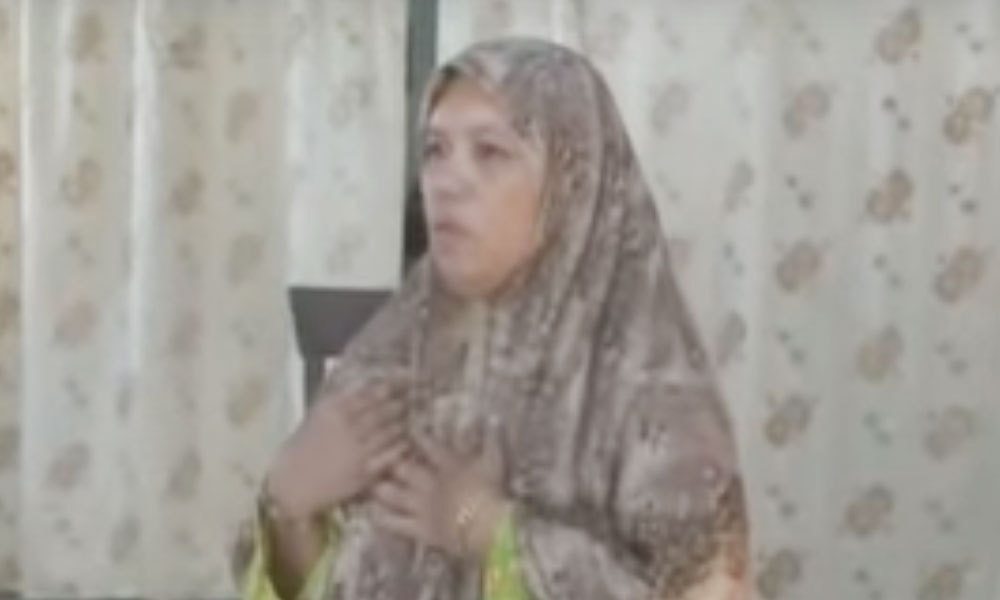
The New Straits Times (NST) spoke to Soleha Husin, 65, at her family home in Kampung Charok Puih Siong in Baling, Kedah, where Ibrahim, who's better known as Ibrahim Libya, was gunned down by security forces on Nov 19, 1985.
Three decades on, Soleha told the daily that she had waited half her life for the "truth" behind the bloody incident, and said the government's consideration to form a Royal Commission of Inquiry (RCI) on the episode would give "justice" to her late husband and 13 other villagers who were killed on that day.
"I still have in my mind, the sight of blood in front of our house and on the road, where one villager was shot dead by police...
The widow of slain religious preacher Ibrahim Mahmud has not forgiven former prime minister Dr Mahathir Mohamad for the Memali tragedy.
The New Straits Times (NST) spoke to Soleha Husin, 65, at her family home in Kampung Charok Puih Siong in Baling, Kedah, where Ibrahim, who's better known as Ibrahim Libya, was gunned down by security forces on Nov 19, 1985.
Three decades on, Soleha told the daily that she had waited half her life for the "truth" behind the bloody incident, and said the government's consideration to form a Royal Commission of Inquiry (RCI) on the episode would give "justice" to her late husband and 13 other villagers who were killed on that day.
"I still have in my mind, the sight of blood in front of our house and on the road, where one villager was shot dead by police.
"My children were young when the incident occurred. None of them were at home when their father was gunned down," Soleha related.
She recalled how she cradled her husband in her lap, as he succumbed to gunshot wounds.
The villagers who had tried to prevent Ibrahim's arrest were also mere rubber tappers, she added.
According to Soleha, Ibrahim was merely teaching religious classes to the villagers but was accused of propagating deviationist teachings.
After the incident, she claimed, many people looked down on her family, as they regarded Ibrahim as a criminal. Others visited the family as they wanted to know the "real" story.
"Everyone was wondering why police had taken such an action, which cost the lives of innocent people."
On the proposal to form an RCI on the incident, as stated by Deputy Prime Minister Ahmad Zahid Hamidi last Sunday, Soleha said she and her five children were pleased to hear of such a possibility as it had given them "new hope to see justice served over the deaths".
The deadly incident was the culmination of a long build-up of tensions between PAS and the government when the police attempted to arrest Ibrahim, who they claimed was giving fiery speeches inculcating "extremist attitude" among PAS members and villagers. Villagers, who were influenced by Ibrahim's teachings, barricaded themselves to protect Ibrahim.
The ensuing clashes saw 18 fatalities, including four policemen, and dozens of injuries from both the police and the villagers.
The ghost of Memali had lain buried since then but was recently revived during the Nothing to Hide 2 forum in Shah Alam, when Mahathir, who was the prime minister when the incident occurred, was confronted with a question on the tragedy.
Mahathir had maintained that he was not in the country during the incident and recently remarked that the villagers should be prepared to face retaliation if they challenged the police.
NST also spoke to villager Abdullah Che Soh, 71, who still bears scars from the seven shots he sustained on the day, as he firmly stood in front of Ibrahim's house, with other villagers, to prevent the religious leader's arrest.
“We were armed with parang and pieces of wood, but only waved at the police to stop them from coming closer to the house.
“I was shot seven times, four of them hit my chest, two on my hands and one on my left waist," said the rubber tapper.
His two sons were also with Abdullah at Ibrahim's house then, while his wife Kalsom Salim, 67, and three daughters, stood guard at a blockade the villagers had set up to prevent the police from coming to Ibrahim's house.
“At the time, our children were aged between 2 and 15, but we stood our ground because we were innocent.
“What saddened me the most was when we were treated like communist insurgents," he said.
Like Soleha, he also welcomed the proposal to form an RCI, which he hopes would help shed light into the action taken by the police.


Are you sure you want to delete this comment?
This action cannot be undone.