




MCA polls: And the winners are...
Tomorrow's MCA elections is taking on a mathematical twist, with speculations that delegates were being offered intricate formulas to choose from.
Tomorrow's MCA elections is taking on a mathematical twist, with speculations that delegates were being offered intricate formulas to choose from.
The formulas were for the hotly contested vice-presidents posts, which will see nine aspirants slugging it out for the four positions at stake.
According to a Bernama report, the formulas were as follows:
- 3 + 1 - retain three incumbents and pick one new candidate
The contest is especially important for six of the nine candidates as a defeat could see them being dropped from their coveted government positions.
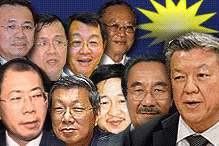 Besides incumbents Dr Chua Soi Lek, Dr Fong Chan Onn and Fu Ah Kiow, the others in the race are Tan Chai Ho, Donald Lim, Chor Chee Heung, Ong Tee Keat, Yap Pian Hon and Chau Tet On.
Chua and Fong are ministers while Fu, Tan, Lim and Ong are deputy ministers.
Chor is a former deputy minister while Yap is a three-term former vice-president and Chau, the former Sabah MCA chief.
It is believed that Chua, Fong and Fu to retain their posts, but Lim and Ong will have to fight it out for the fourth slot.
It added that delegates are anxiously waiting for the 'ultimate menu' expected to come from the leadership after the 2,353 central delegates are feted to a mass dinner tonight.
The influential 'cai tan' or 'menu' will decide the outcome of the 2005 MCA polls.
Victory margin?
Meanwhile, incumbent president Ong Ka Ting was expected to retain his post against five-time vice-president Dr Chua Jui Meng.
The crucial factor in this contest would be Ong's victory margin.
An overwhelming majority would reflect the strength of the incumbent, who was elected by the central committee under a peace plan to end an internal strife two years ago.
"This will be Ong's first test of strength since helming MCA. He has to win convincingly to gain the respect of other leaders and follow his orders," a party veteran told Bernama.
"A slim majority will see him sitting in a shaky position for some time until he consolidates himself."
Judging from today's Youth and Wanita assemblies, the team 'anointed' by Ong and his deputy Chan Kong Choy are expected to make a clean sweep of the movements' key positions.
Ong's aides said the president's camp was aiming for at least 80 percent of the central delegates' votes.
The incumbent is said to have garnered 70 percent support to date.
Whereas, Chua's side rates the support for the former health minister at between 20 and 30 percent.
Observers said both sides were jostling for the remaining 20 percent votes, which would be the decider, if the contest proved to be a close fight.
"These 20 percent are silent voters who have been approached repeatedly but have yet to indicate who they will support.
"These delegates welcome anybody who wants to meet them but they don't tell or indicate their choice of candidates," one of Ong's aide was quoted as saying.
Some political observers indicated that Chua could secure as much as 40 percent of the votes, which will put a dent in Ong's leadership in the party.
Chan has the upper hand
Presidential challengers in the past had garnered at least 20 percent of the votes.
In the 1990 party elections, former president Dr Ling Liong Sik polled 1,225 votes beating Wong Leong (no third name) by a 922-vote majority.
In 1993, former deputy education minister Woon See Chin challenged Ling. In this contest, more than 300 out of the 1,600 votes went to Woon.
Meanwhile, the focus on the three-cornered battle for deputy presidency is between incumbent Chan and party secretary-general Dr Ting Chew Peh.
The third contestant Chan Tsu Yuen, former deputy youth chief, is a lightweight and is unlikely to make any headway.
Analysts predicted that this was shaping up to be a tough fight for Chan, but he had the upper hand over veteran Ting, who had earlier called on delegates to disregard the age factor and vote for capable leaders.


