




Analysts: Top MCA leaders can expect greater pressure
The lower-than-predicted majorities obtained by MCA's newly-elected president Ong Ka Ting and his deputy Chan Kong Choy will contribute to reducing their authority, according to a review panel's analysis.
The lower-than-predicted majorities obtained by MCA's newly-elected president Ong Ka Ting and his deputy Chan Kong Choy will contribute to reducing their authority, according to a review panel's analysis.
Selangor Chinese Assembly Hall chief executive Tang Ah Chai pointed out that the 35 percent of votes secured by presidential challenger Chua Jui Meng showed that he had sympathy and support from the delegates, which had denied Ong the 80 percent that he had expected.
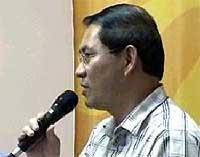 "It was the same story for Chan. Both he and Ong got lower votes than expected although they utilised almost all campaigning advantages, including obtaining huge media coverage. They eventually won with difficulty."
Tang said he believes the duo will face greater internal pressures compared to previous leaders who had dominated the party.
At the elections on Saturday, Ong retained his post by beating Chua by a margin of 696 votes. Chan garnered 56.6 percent of the votes to fend off Dr Ting Chew Peh.
Also on the panel were Strategic Analysis Malaysia chief analyst James Wong Wing and malaysiakini columnist Lee Ban Chen. The discussion was webcast by malaysiakini and chaired by its Chinese version editor Yong Kai Ping.
New trend
Wong said that the results demonstrated the extent of dissent and that the incumbents could have been defeated with the appropriate resource and strategies.
"They could only win with a small majority despite their various advantages as incumbents...Chua and Ting had raised a trend of opposition in the party," he said.
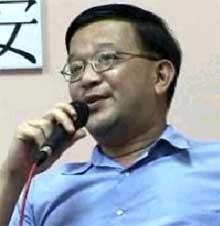 He predicted two outcomes - first, that the political legitimacy of the duo would be in doubt while Chua and Ting would have a stronger profile within the party as dissenters.
Secondly, the failure of challengers with a professional background may deliver a blow to the party's image, especially in the eyes of the urban middle class community.
Tang agreed that the significant votes secured by the two challengers reflect that many members disagree with the incumbents.
"People inside or outside the party are demanding higher quality from candidates... this is to the advantage of advancing democracy in politics here."
'Negotiations helped'
Lee said the election result proved that incumbents have the upper hand in the Malaysian political structure. The duo won largely because they inherited an uncontested leadership, which gave them the advantage.
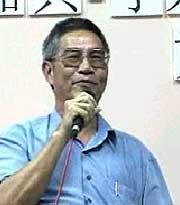 "Without the arrangements made three years ago, could Ong and Chan have won the election in democratic polls? This shows that the inheritance system is an obstruction to the spirit of democracy," he said.
He also cast doubt if newcomers Ling Hee Liong and Ling Hee Keat, sons of former MCA president Ling Liong Sik, could have won the Youth elections "without the negotiation of a small group of leaders".
Hee Leong was elected deputy Youth chief, while Hee Keat won a seat on the wing's central committee.
A six-member negotiation group comprising state Youth leaders had been formed a month before the polls to negotiate various candidates' path to the posts. A 'compromise list' was released after the third meeting. Hee Leong was shortlisted for deputy Youth chief.
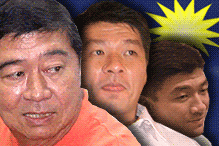 Commenting on the 'political dynasty', Wong said the phenomenon is caused by two main factors.
"Malaysia's political parties have no significant route or ideology to serve as a reference point for members. They can only advance their status in the party through interpersonal relationships."
"The grassroots are still influenced by feudalism and think that inheritance of posts by family members is reasonable. They still cannot differentiate between (what is) private and public, (or what is) family and nation."
Wong said the phenomenon is also linked to admiration of long-time leaders and subsequent transfer of loyalty to members of their families.
Tang said the political culture is a factor in sustaining political dynasties, noting that both Umno and MCA have tolerated this culture.
"If the members are more demanding, they can reject (the dynasty) culture by voting against it," he said.
Influence on party
The panel members agreed that Ling still has strong authority in the party, with Lee pointing out that Ong had been promoted under his patronage.
"The fact that Ling's sons and many of his proteges won reflects his influence in the party," said Lee.
Wong said many still depend strongly on the former president, who "is not only an individual, but an institution (in the party)".
Tang said Ling's influence can be viewed in two ways.
"Candidates sought his influence in the intense fight, in order to have a better chance of winning. Meanwhile, he also cast his influence on the polls."
"From the result and background of winning candidates, apparently the influence of Ling is still strong."
Of the four newly-elected vice-presidents, two - Dr Chua Soi Lek and Donald Lim Siang Chai - are seen as staunch supporters of Ling, while Fong Chan Onn has a close relationship with him.
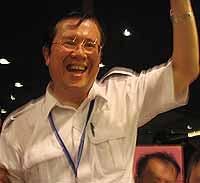
Only Ong Tee Keat ( photo ), the former Youth chief, was a dissenter during Ling's administration.


