



Conservative political discourse a red herring, says scholar
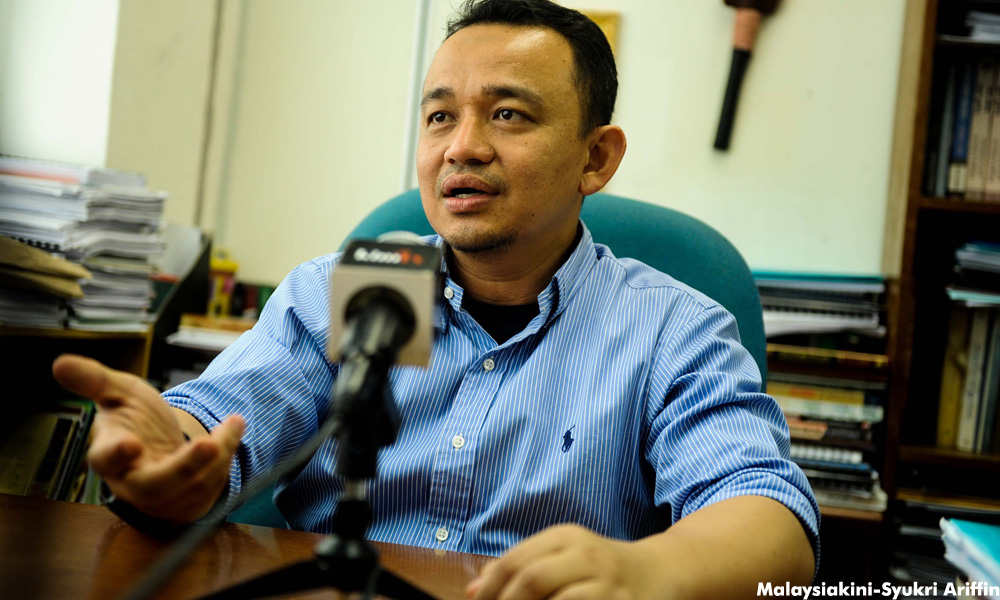
The conservative political dialogue being pushed by certain quarters is a red herring that is distracting from more important issues, said scholar Maszlee Malik.
"They want to distract from bread and butter issues, issues of corruption, integrity, and empowerment," Maszlee said at a forum in Petaling Jaya last night.
When met later, Maszlee clarified that he did not mean those who pushed a conservative agenda, including to strengthen Islamic criminal laws, were insincere.
"Sincerity is something we can't see. But what I meant by red herring is, these issues are swaying (the discourse) away from the bigger issues, even Islamic issues such as integrity and corruption," he told Malaysiakini.
The International Islamic University Malaysia (IIUM) professor was speaking at a forum on the politicisation of Islam organised by Gerakbudaya...
The conservative political dialogue being pushed by certain quarters is a red herring that is distracting from more important issues, said scholar Maszlee Malik.
"They want to distract from bread and butter issues, issues of corruption, integrity, and empowerment," Maszlee said at a forum in Petaling Jaya last night.
When met later, Maszlee clarified that he did not mean those who pushed a conservative agenda, including to strengthen Islamic criminal laws, were insincere.
"Sincerity is something we can't see. But what I meant by red herring is, these issues are swaying (the discourse) away from the bigger issues, even Islamic issues such as integrity and corruption," he told Malaysiakini.
The International Islamic University Malaysia (IIUM) professor was speaking at a forum on the politicisation of Islam organised by Gerakbudaya and Merdeka Centre.
Others panellists at the forum were Iman Research executive director Dina Zaman and Indonesia Survey Institute research director Hendro Prasetyo.
Describing the politicisation of Islam as something that has been occurring since the aftermath of the 2008 election, Maszlee said many Muslim youths in the country feel that leading an Islamic way of life would lead to a better government and quality of life.
"But when you have corruption right before your nose, when you have an Islamic party happily working together with a kleptocratic regime, for the youth, there's no hope.
"The only hope for them is utopia," he said.
The utopia they imagine, he said, was one ruled by a caliph who would eradicate corruption and crime, an idea some believe that extremist groups such as the Islamic State (IS) can deliver in the absence of better alternatives.
Dina noted that in her research, many Muslim youths were disenfranchised with political parties on either side, as they felt that public policies have failed to empower them.
She said while they may not believe in violence as espoused by IS, the feeling of powerlessness and not having anything to lose, made youths susceptible to extreme ideologies.
This feeling of lack of empowerment she said, is felt by Muslim youths from all social classes, regardless of geographic location.
Both Dina and Maszlee believe that to tackle this, there must be a counter narrative – one that will encourage a better and healthier political discourse, especially on religion, with all sides to coming together.
"We're not that different in the way we practice our faiths. We all have a value system," Dina said.
As for Maszlee, while conservativism is on the rise, those who believe in universal justice are still the majority.
"Ye are many – they are few," he said, citing a poem by 19th-century poet Percy Bysshe Shelley, which has become a mantra for non-violent movements.


Are you sure you want to delete this comment?
This action cannot be undone.