



The rising power of social media influencers in M'sia
SPECIAL REPORT | Social media has risen to be an important platform for youths to present their creativity, and some go to the top and turn into social media influencers or Key Opinion Leaders (KOL) as their numbers of followers boom.
The definition of social media influencers varies. According to San Francisco-based public relations agency Pixlee, social media influencers are users of social media who have established credibility in a specific industry, have access to a wide audience and are able to influence others by virtue of their authenticity and reach.
Alexis Sue Ann, 22, started as a radio announcer in Malaysian English language station, Hitz.fm, before she turned into a full-time social influencer on Instagram and YouTube.
Today, she’s known as a social media influencer, a fashion blogger, a fitness model and an emcee.
For Alexis, her sponsored posts on Instagram generate 40 percent of her total monthly income.
Ninety percent of her posting gigs are obtained from Instagram. Various brands come to her on a daily basis and ask her to post their products on her page. Each post can cost thousands of ringgit.
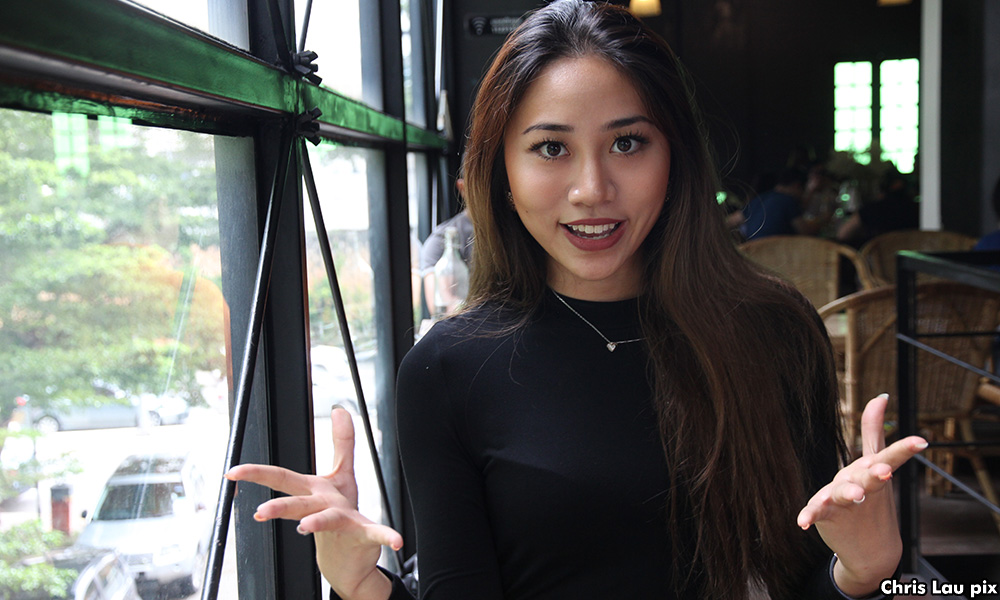
Currently Alexis (photo) has 30,000 followers on Instagram, and she is one of the most prominent social media influencers in the country. At various events, she is often in the limelight, walking with other social media stars.
Some of the high-end brands like Guess, Coach, and Zalora have approached her to showcase their products on her Instagram account.
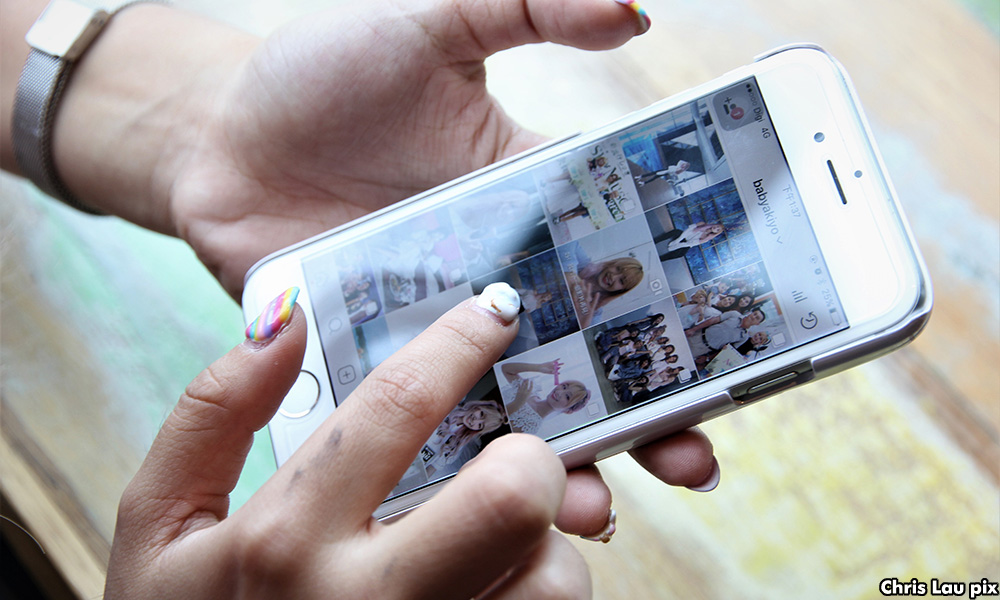
Instagram is a social networking app made for sharing photos and videos via smartphones. It provides each user with a profile, which can either be public or private, and a news feed to interact with others.
Since it started in 2010, it has become a platform for the Generation Y (Gen Y) to share their lives in filtered squares.
On Instagram, people pay attention more to the image itself than to the caption. When some hashtags come along, these will be able to attract more people from all around the world to connect through a related hashtag.
Recently, Instagram has started to follow in Facebook’s footsteps. Both have begun competing with another social networking app called Snapchat by replicating its exact features, which Instagram calls “Stories”. The latest “Live” function also enables Instagram users to interact more with their followers.
Instagram is currently a prominent site of commerce used by more than a million advertisers, which itself derives value from the content created by its users for free.
Alexis is also one of the female cast members of JinnyboyTV, which has 763,000 subscribers on its YouTube channel. Her first video, “When You Date Someone Hotter Than You”, which was uploaded in August 2016, has hit a million views to date.
“That’s the time when an influx of followers came in,” she said. “My number of followers increased drastically. YouTube does help a lot.”
She usually limits herself to posting once a day on Instagram, but will make exceptions if there are too many jobs coming in.
For Instagrammers, posting time is rather important, for it will affect a person’s engagement with his or her followers.
At least 70 percent of the Instagram posts by Alexis are endorsed with sponsorships and product reviews.
According to a 2015 report by Deloitte, 47 percent of the millennials’ shopping decisions are influenced by social media, while only 19 percent of other age groups use social media to make purchasing decisions...
SPECIAL REPORT | Social media has risen to be an important platform for youths to present their creativity, and some go to the top and turn into social media influencers or Key Opinion Leaders (KOL) as their numbers of followers boom.
The definition of social media influencers varies. According to San Francisco-based public relations agency Pixlee, social media influencers are users of social media who have established credibility in a specific industry, have access to a wide audience and are able to influence others by virtue of their authenticity and reach.
Alexis Sue Ann, 22, started as a radio announcer in Malaysian English language station, Hitz.fm, before she turned into a full-time social influencer on Instagram and YouTube.
Today, she’s known as a social media influencer, a fashion blogger, a fitness model and an emcee.
For Alexis, her sponsored posts on Instagram generate 40 percent of her total monthly income.
Ninety percent of her posting gigs are obtained from Instagram. Various brands come to her on a daily basis and ask her to post their products on her page. Each post can cost thousands of ringgit.
Currently Alexis (photo) has 30,000 followers on Instagram, and she is one of the most prominent social media influencers in the country. At various events, she is often in the limelight, walking with other social media stars.
Some of the high-end brands like Guess, Coach, and Zalora have approached her to showcase their products on her Instagram account.
Instagram is a social networking app made for sharing photos and videos via smartphones. It provides each user with a profile, which can either be public or private, and a news feed to interact with others.
Since it started in 2010, it has become a platform for the Generation Y (Gen Y) to share their lives in filtered squares.
On Instagram, people pay attention more to the image itself than to the caption. When some hashtags come along, these will be able to attract more people from all around the world to connect through a related hashtag.
Recently, Instagram has started to follow in Facebook’s footsteps. Both have begun competing with another social networking app called Snapchat by replicating its exact features, which Instagram calls “Stories”. The latest “Live” function also enables Instagram users to interact more with their followers.
Instagram is currently a prominent site of commerce used by more than a million advertisers, which itself derives value from the content created by its users for free.
Alexis is also one of the female cast members of JinnyboyTV, which has 763,000 subscribers on its YouTube channel. Her first video, “When You Date Someone Hotter Than You”, which was uploaded in August 2016, has hit a million views to date.
“That’s the time when an influx of followers came in,” she said. “My number of followers increased drastically. YouTube does help a lot.”
She usually limits herself to posting once a day on Instagram, but will make exceptions if there are too many jobs coming in.
For Instagrammers, posting time is rather important, for it will affect a person’s engagement with his or her followers.
At least 70 percent of the Instagram posts by Alexis are endorsed with sponsorships and product reviews.
According to a 2015 report by Deloitte, 47 percent of the millennials’ shopping decisions are influenced by social media, while only 19 percent of other age groups use social media to make purchasing decisions.
Local events have started to realise the growing influence of social media, and now invite dozens of influencers to attend their events, hoping to give their brands more exposure.
“Sometimes, I have to attend three events in an evening,” Alexis said. “This is not a good plan, but we still have to show up at the events to show our appreciation for the brands.”
With the rise of social media, she agrees that it has become a platform to brand oneself.
“Even some of the country’s most prominent celebrities, like Ning Baizura, go to social media. That’s where people engage with the followers, and continue gaining followers.”
A different approach
The business of social media influencers is so profitable and promising that former news anchors and both major and minor celebrities are using their public social media accounts to share sponsored and non-sponsored posts to interact with their readers.
Celebrities may help brands to reach the masses but the KOLs have a different marketing approach - by convincing followers who share similar beliefs, in terms of point of view, and opinion.
This is what shows that their audience is truly interested in this person, that they care about their point of view and opinion and that they listen to them.
The skill has come into how the brands cut through the clutter to reach their target markets.
Social media influencers are all the rage right now, with marketeers and businesses clamouring to utilise influencers to promote their products or services in order to reach a larger audience.
Some media are partnering with influencers outside of typical branded content, in order to maximise their reach.
BuzzFeed, an American online media company, partnered with US influencer and YouTube personality GloZell in a video showcasing BuzzFeed's office and most well-known content creators.
In July 2017, R.AGE, the local investigative journalism platform of The Star invited Jinnyboy in one of its videos on child sex groomers to support the campaign against crimes related to child sex.
Some people have been excelling in their industry long before they were active on social media.
To be a social media influencer, most are expected to come along with pretty faces or good physiques.
Brynn Lovett, 24, first became famous when she was crowned as Miss World Malaysia 2015.
Her fan base has grown quickly since then.
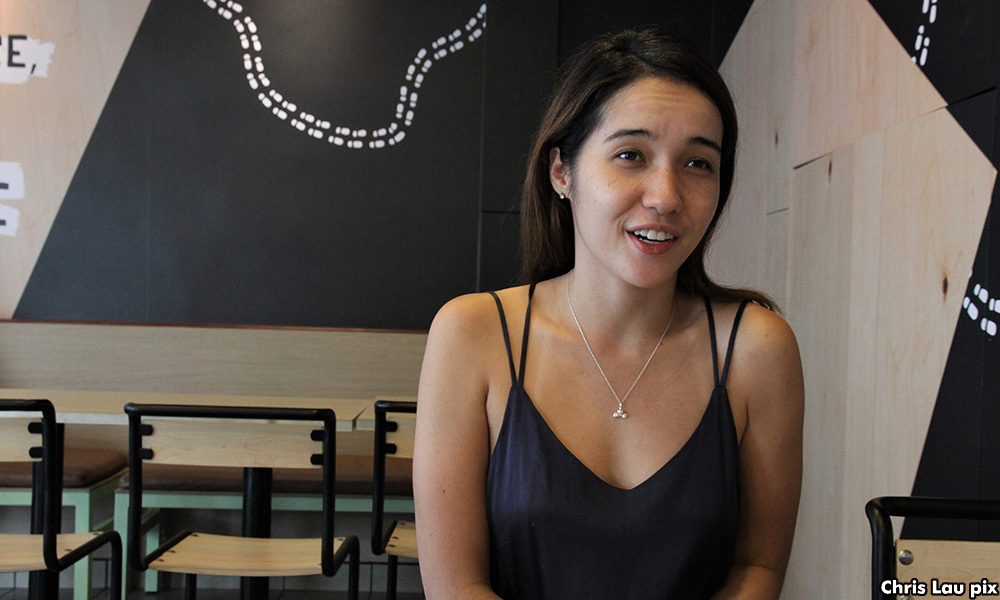
Lovett’s father is an Australian, and her mother is Kadazan. She was brought up in Kuala Lumpur, but often spent her childhood in Beaufort, Sabah.
She started out on Instagram by posting lifestyle pictures without any endorsement. Slowly, some brands started to approach her to post their items on her profile.
“They saw me wearing sunglasses in my previous post. So they DM me if I could post a picture of myself wearing their glasses,” she said.
DM stands for “Direct Message”, which is a form of communication commonly used among Instagram users to speak privately with one another.
Initially, Lovett did it for free, without realising she should have charged the brand for each post.
“Until a friend told me, I do need to charge at least RM500 per post. She told me with my title, I need to do things as it is.”
Given her Miss World title and the subsequent influx of followers, she has become a new favourite of fashion and cosmetic brands.
“Some of the followers would ask me where I got the outfit from, and so on. From there, I would sometimes need to reply. Or they will get to know it through the hashtags in the post,” she said.
She agreed that Instagram is a rising power nowadays, given that it is a way of branding and a platform to reach out to clients.
“You have got to post it every day, as the followers would want to know what you are doing. Most of the pictures are better to be the model shoot kind of pictures. A cool face will get more likes compared to a picture with a sweet smile,” she said.
Lovett currently has more than 26,000 followers on Instagram. She is planning to venture into the acting industry soon.
Being ‘insta-famous’
Fiqrie Dahari was a household name in the early 2000s, way before Malaysians became active on social media.
“We were publishing our diary kind of stuff on MySpace, but there was less interaction, as exposure still depended mostly on mass media those days,” the 35-year-old said.

Starting as a radio announcer in 2005, Fiqrie (photo) was part of the first batch of radio announcers in then newly-formed Malay radio station Hot.fm.
In 2008, he halted his career for personal reasons and worked in Singapore.
He came back to Malaysia in 2011 and began working for English radio stations instead, switching his target to the urban market.
Fiqrie signed up for Instagram when a Brazilian brand approached him for a sponsorship project.
When his income from social media reached up to five figures every month, he began emceeing and radio announcing too.
He said some of the young influencers these days do not have strong and solid skills to thrive in the creative industry, like hosting, acting or singing.
“Recently, I attended an event and met this girl, along with some other Key Opinion Leaders.
She introduced herself as a social media influencer. I asked her what she does, apart from that. She paused for a while and said ‘I’m an insta-famous.’
“Well, you know you’ve got to have something to focus on. Because there are many new faces popping out these days. Also, looks aren’t going to sustain you for another 10 years.”
Insta-famous is the other term for social media influencers, specifically for Instagram users, which means they are “famous on Instagram”. This refers to the huge number of people these influencers have following their accounts.
However, Fiqrie admitted that things have changed now, as the focus would be on how social media influencers engage and reach their followers.
A rising power
For Niki Cheong, it is no longer a new phenomenon in the country to have social media influencers appearing at some public events.
He was one of the most prominent within the first batch of bloggers in Malaysia.
“Making money through social media has been happening since 2005, but the scale had changed,” said Cheong. A former journalist, Cheong is now a social media analyst who is currently lecturing on and researching media, power and politics.
“Last time, we had bloggers like Kenny Sia, Joyce Wong and others. They were the first batch of ‘influencers’, all making tonnes of money in the early 2000s. We all have a very particular skill, such as writing on specific topics and taking pictures.”
Cheong does not believe that the power of social media influencers has increased, but rather, that the number of social media influencers has grown.
However, his position contradicts with that of Jason Goh, a blogger who has also ventured into the industry for more than a decade.
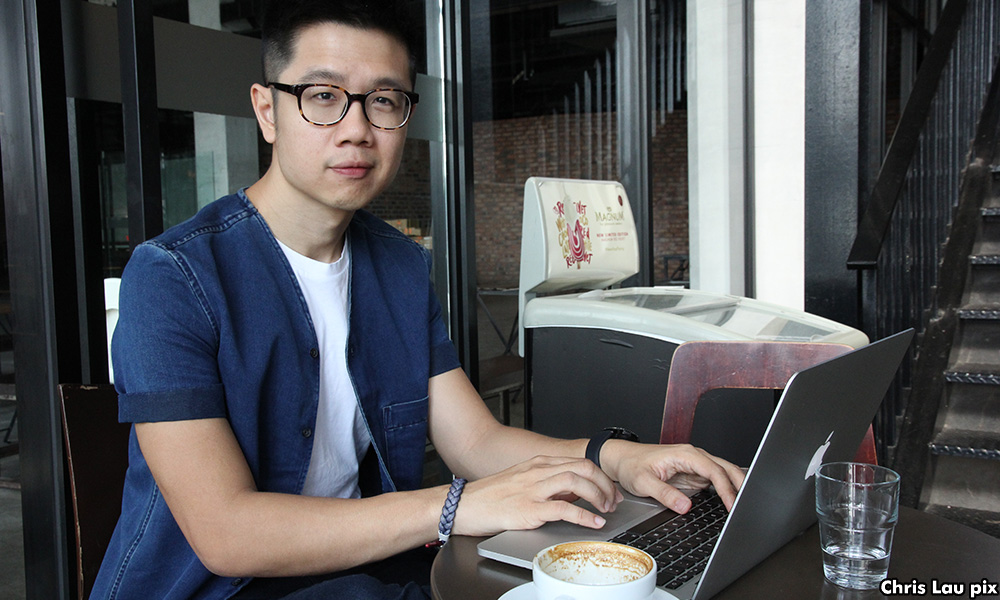
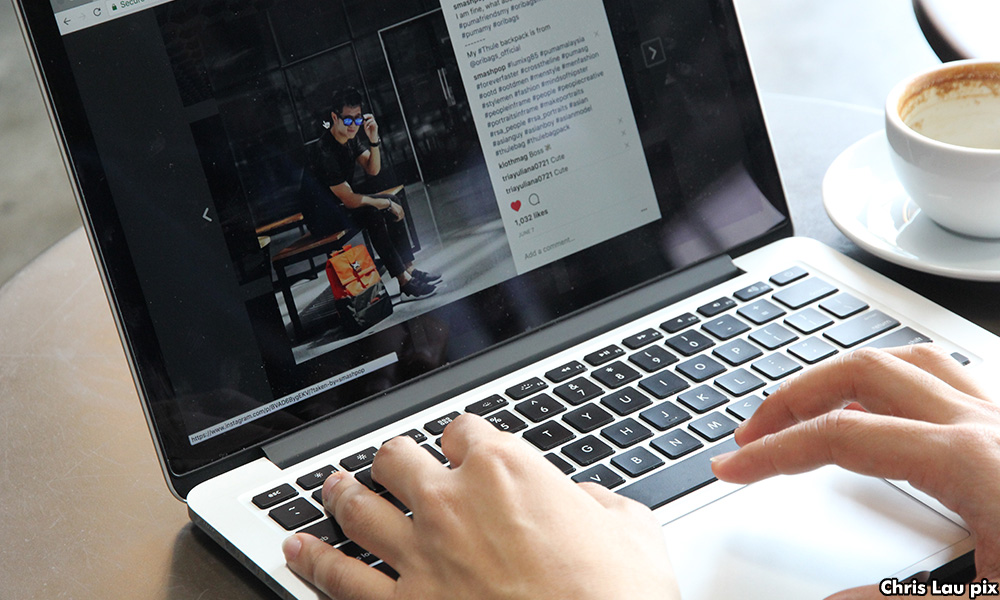
“Social media influencers are indeed a rising power these days,” said Goh (photo), founder of Smashpop.net, who started blogging 16 years ago.
Smashpop.net is Goh’s website, which he started in the early 2000s, and where he blogs about lifestyle stories with some professionally-shot pictures and brief descriptions.
He said that social media platforms are indeed a powerful tool for a brand’s exposure.
“Let’s say you have one million followers, that can help the product to reach out to 10,000 people - at least 10,000 people would know about the latest product launching,” Goh said.
“Millennials might be just taking a selfie with a certain product, but given their high numbers of followers, the brands will want their products to be shown on their social media page, as an alternative to create more buzz.”
CHRIS LAU is a former intern with Malaysiakini.


Report this comment
Are you sure you want to delete this comment?
This action cannot be undone.