




Figuring a way out of financial squeeze
 Without doubt, the eyes of big players in the investment, industrial and commercial sectors will be on the economic report that is routinely released on Budget Day each year.
At least as portrayed in the media, both items will be the talking points of the day. But such data is often less than credible to those in small or medium scale businesses - with good reason.
 Without doubt, the eyes of big players in the investment, industrial and commercial sectors will be on the economic report that is routinely released on Budget Day each year.
At least as portrayed in the media, both items will be the talking points of the day. But such data is often less than credible to those in small or medium scale businesses - with good reason.
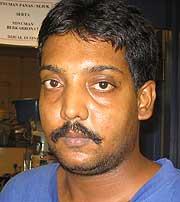 Zul, who sells Indian Muslim food at a food court in Bangsar, starts his day at 5.30am to begin preparing the dishes. It is 10.30pm before he returns home to his wife and two children.
Given the realities of his life, Zul, 29, can be forgiven for flatly stating: "I don't believe the figures. My business depends on customers, not on the figures in the economic report. In the food industry, if your food is good, the customers will come."
That's easier said than done these days, as prices of basic goods and services have shot up, especially with the gradual reduction of the fuel subsidy.
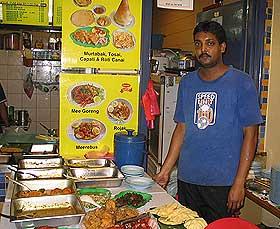 "I'll read the budget, but I don't think it will have any impact on my business. I don't feel there will be any good policies for those like me who are in small businesses," he said.
"I support (premier) Abdullah (Ahmad Badawi). His intentions are very good, but I feel the goodies have not reached the people. I work hard, but what I earn is cukup makan sahaja (a subsistence income)."
Another food seller at the same venue said she is not looking forward to either the economic report or the budget speech, which will be tabled in Parliament tomorrow.
"Every time (the report is revealed), I only glance through the news reports. I am just involved in small business, (so) it won't have an impact on me," said the former accountant, who declined to be named.
Improbable data
Heng You Teck, a 31-year-old engineer based in Kuala Lumpur, has no choice but to boost his income by working part-time as a mutual fund agent.
"I just use the figures in the economic report as a point of reference. I don't really trust the statistics. How to trust the figures? The numbers don't reflect (what happens in) real life," he said.
Citing the inflation rate revealed two weeks ago, Heng said the figure was improbable to him in real terms.
"I used to pay about RM3 for a plate of mixed rice. Now, I have to pay RM4. So, how can the inflation rate be only 2-3 percent?" he asked with clear frustration.
The statistics department had disclosed that the inflation rate was 3.7 percent, the highest since February 1999.
Heng said he has to spend more time at work to keep pace with the cost of living.
"I feel increasing financial pressures. My expenses have increased but my income is stagnant, so I must work harder," he said.
Although he has a relatively "decent income" now, he is worried that the increase in petrol price could slash his purchasing power.
"I am pessimistic about my future, especially if the price of petrol rises again. I dare not spend or invest my money. This is to make sure that I don't lose money," he added.
Cash-flow caution
Jean Lee, a unit manager with a global insurance agency, was in full agreement: "In my job, naturally I have to pay attention to the official financial figures. But these can only used for reference. In real life, it's totally a different picture."
She said at least 90 percent of her clients complain casually that the inflation figure as revealed by the government is not a reflection of real life.
"When I do financial planning for my clients, we take into account the 'real' inflation rate," she explained.
Lee said the increasing financial burden on ordinary people is almost palpable, as she deals with clients.
"They appear to be very cautious of their cash-flow. Most of them would typically pay the premium on annual basis in the past, but now they prefer to pay monthly," she said.
On a personal note, she said the economic statistics bring no relief in her own situation.
"I spent RM80 on fuel each week previously. Now, I spend at least RM120. So I have to plan well - each time I go out, I make sure to complete as many errands as possible. I do less shopping and no more karaoke sessions either," she said with a laugh.
Information technology expert Gan Chin Siong, 30, is another Malaysian who is sceptical about the figures delivered through the economic report and budget.
"I can't relate these figures to my business my life goes on," he said.
Gan, who runs an IT company with seven personnel, has travelled extensively to Hong Kong, mainland China and Singapore to seek out business opportunities.
"I think the situation in Malaysia has not changed much over the last four years. But in China, I can feel a sense of real development, with plenty of business opportunities," he added.


Are you sure you want to delete this comment?
This action cannot be undone.