




Selangor projects: Good plans but poor execution
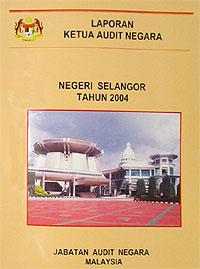
Poor implementation and inadequate monitoring mechanisms are the main obstacles faced by the Selangor state government in development projects, says the Auditor-General's report for Selangor last year.
Poor implementation and inadequate monitoring mechanisms are the main obstacles faced by the Selangor state government in development projects, says the Auditor-General's report for Selangor last year.
AG Hadenan Abdul Jalil said while there were improvements in state financial management when compared to the previous year, no improvements have been seen at the implementation level.
 "As in reports for the previous years, although the programmes or activities have been well-planned, but in terms of its implementation and monitoring, there are still a few weaknesses that need to be rectified. Otherwise, they will jeopardise its objectives," he said.
He said the failures in implementations were due to insufficient manpower and limited financial allocations as well as incomplete guidelines and no close monitoring.
He said a few government departments and agencies had rectified these faults after being advised by the Auditor-General's office.
"However, the rectifications have to be a continual process to avoid the re-occurrence of the same mistakes," he stressed.
"Supervisors should scrutinise closely other departments which have not yet been audited to ensure the same mistakes do not occur. Subsequently, they should take necessary steps to rectify them," he said.
Financial management
In reviewing the financial management of the Selangor government, Hadenan said the National Audit Department had audited the state treasury, the Agriculture Department, the Forest Department, the Hulu Langat and Kuala Langat district and land offices.
"Financial management has improved but there were weaknesses in revenue control, expenditure and management of trusts, deposit accounts and assets because the financial records did not completely follow financial procedures," he revealed.
On the auditing on state statutory bodies, Islamic councils, local authorities and monetary funds, Hadenan said the department had completed audits of the Ampang Jaya Municipal Council and the Selangor State Economic Development Corporation (SEDC).
 He said the financial management of the Ampang Jaya Municipal Council 'did not have obvious weaknesses'.
"However, the council should enhance its effort to collect outstanding assessment rates and rentals. The monitoring of the financial records should be improved and streamlined " he said.
He also revealed that while the investment management and trusts accounts at the SEDC were satisfactory, revenue control and expenditures could be improved.
"Its loans, assets and deposits management can be streamlined further," he said, adding that the council should also set up an accounting and financial management committee to monitor and enhance its financial management.
Hadenan said the department also carried out studies on the privatisation of the collection of assessment rates by the Selayang Municipal Council and the management of collection and historical artifacts at the Selangor Museums Department.
He said although the collection of assessment rates have increased since its privitisation in 2001, the council was collecting them with private sector help.
"The council can collect the assessment rates by itself if it studies its usage of human resources and logistics.
"With good planning and continued monitoring and enforcement, the performance of the council can be improved without involving the private sector," he stressed.
Special programmes
The audit department also audited two special programmes - a coconut area development programme by the Selangor Agriculture Department and the implementation of a computersied land registration system at the state land and mining office.
Hadenan said the outcome of the coconut area development programme - with the objective of increasing the income of small farmers - was 'less than satisfactory'.
He said the programme was not planned well due to the absence of guidelines. "We are unable to identify whether this programme has achieved its objective," he said.
On the computerised land registration system, he said although it has expedited the process on obtaining land information, the monitoring of capital asset registrations and inventory registrations had not been streamlined.


