



Harapan’s campaign in the shadows to woo rural Kedah
GE14 | Kedah is one of the key battleground states in Pakatan Harapan’s bid for power in this general election, but one might not have guessed by the seemingly slow pace of campaigning in the state and the lack of mega-ceramahs seen in other states so far.
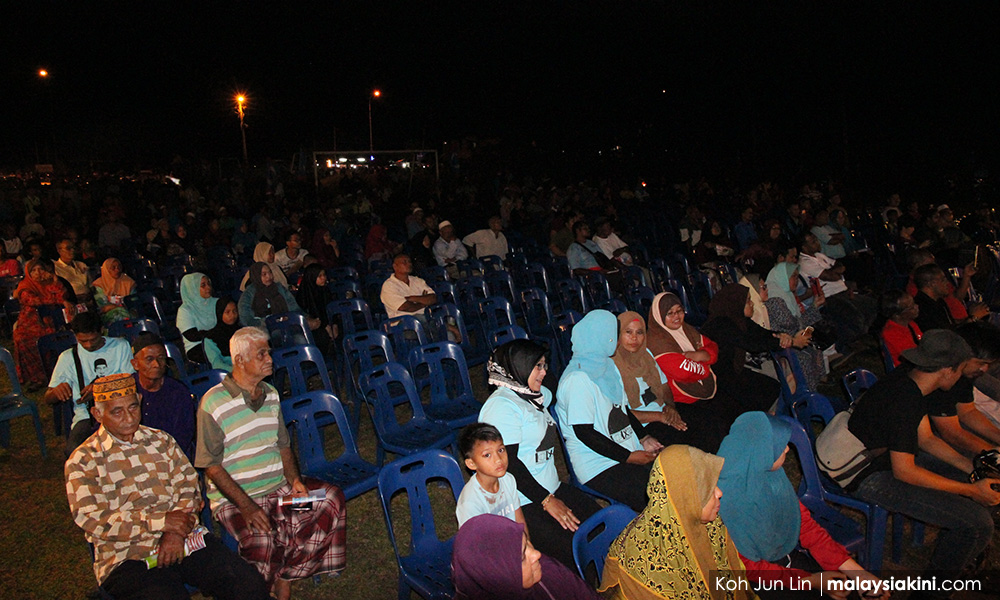
Even at the small-scale ceramah kelompok and the few larger ceramahs, a strange phenomenon emerges: The crowd tends to either stay close to the speaker or watch from a distance, leaving a gap in the middle. This is especially evident in Kedah’s rural Malay heartland...
GE14 | Kedah is one of the key battleground states in Pakatan Harapan’s bid for power in this general election, but one might not have guessed by the seemingly slow pace of campaigning in the state and the lack of mega-ceramahs seen in other states so far.
Even at the small-scale ceramah kelompok and the few larger ceramahs, a strange phenomenon emerges: The crowd tends to either stay close to the speaker or watch from a distance, leaving a gap in the middle. This is especially evident in Kedah’s rural Malay heartland.
During a ceramah at Batu Lima in the rural constituency of Sik on April 30 for example, the 300 or so audience members either took up the first few rows of seats or stayed at the back. This left many empty seats in the middle rows, even though it meant at least a-third of the crowd were standing in the dark at the back of the venue, or at the sides.
Some others simply watched from their motorcycles parked on the nearby road, as the star speaker for the night, Kedah Harapan chief Mukhriz Mahathir, took to the stage.
A similar phenomenon is seen in Pengkalan Kundur in the rural constituency of Kuala Kedah an hour’s drive away, where about 500 people turned up at Harapan president Dr Wan Azizah Wan Ismail’s ceramah on the same night.
Upon closer inspection, however, it would turn out that the dim lights and low-profile campaigning are a deliberate move to attract voters who are hesitant to be seen in public at a Harapan ceramah or openly supporting the coalition.
Scared of being seen
Sungai Tiang Bersatu candidate Abdul Razak Khamis (photo), who is in charge of Harapan’s campaigning in the parliamentary constituency of Pendang as the local division chief, explained that rural Malay voters fear reprisals from their friends, family, village committees, and employers if they are spotted.
He said those who would dare come forward tend to be non-Malay voters, and Malay voters who are already hardcore Harapan supporters.
Hence, campaign activities are focused meeting as many voters as possible in more intimate and informal settings, such going house-to-house to canvass votes, leafleting, meeting and having tea with villagers at warungs, and holding small-scale cemamah kelompok with the lights dimmed or switched off.
“In my experience in Pendang, local organisers do ask me to turn down the lights when I want to conduct a ceramah, especially inside the tents, because if the conditions are bright, then you can see the faces and people won’t come.
“So, we will let conditions in the tent be a bit dim. If it even looks a little bright, then they would prefer to sit at the back and refuse to come to the front. Those who do take the front seat are those who have already become bold and are our movers.
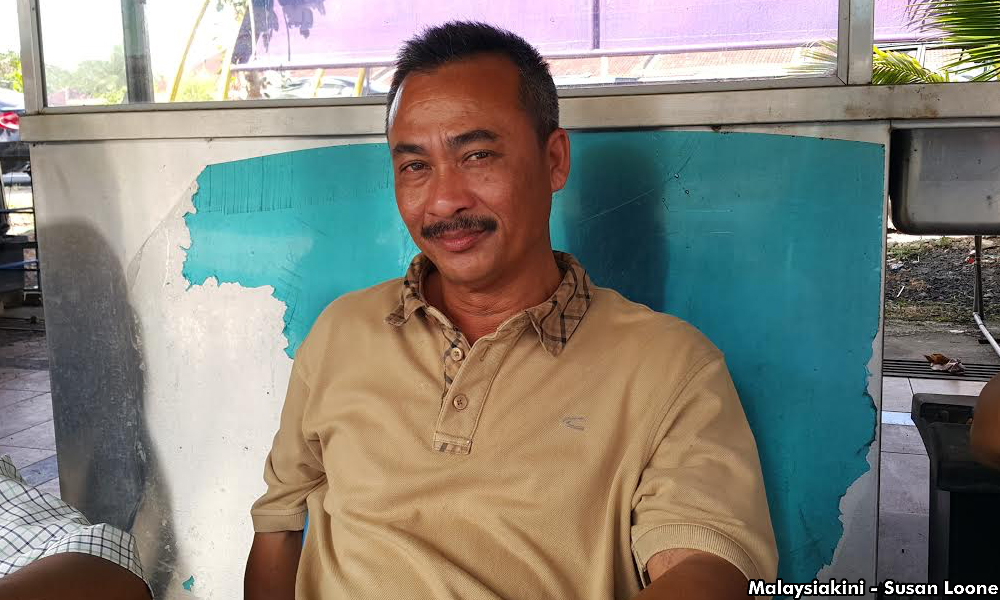
“But there are many who have yet to find that courage and I’m confident that (many Umno members) are with us but don’t show their support,” Abdul Razak (photo) told Malaysiakini when met in Pendang yesterday.
Danial Syahiran Ho Imran Ho, a campaigner for the Bersatu Pendang candidate Wan Saiful Wan Jan, concurred.
“People don’t want to show their support openly. So, when there is a tent with a light, they don’t come inside. When you switch off the lights, people come in.
“And then you see many motorbikes staying a little bit away from the program, and listening, and smoking their cigarettes,” he said.
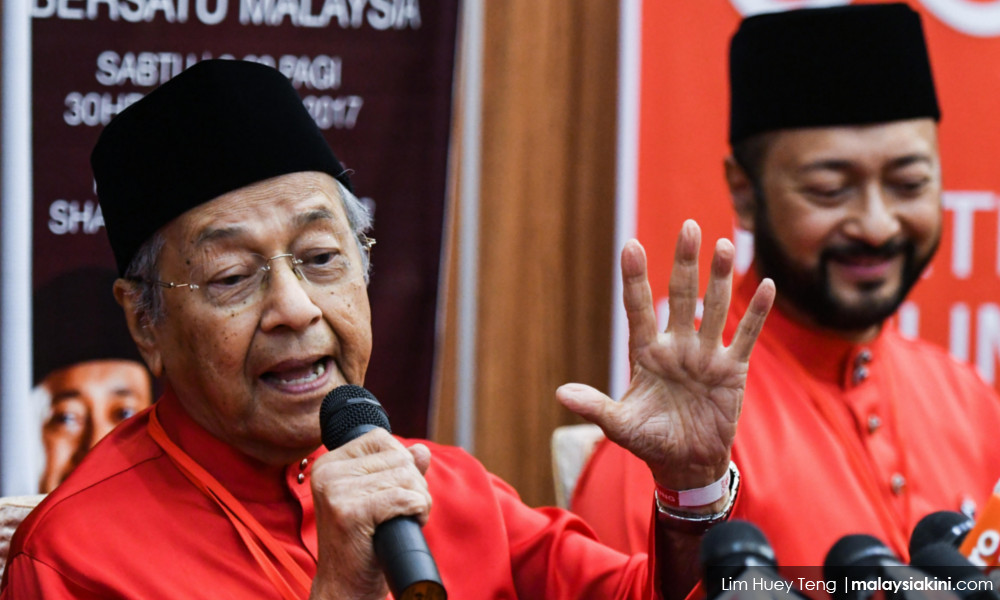
Razak said this style of campaigning is more effective than a large-scale ceramah, as not all those attending a ceramah would be paying attention to the speakers. Moreover, people are unlikely to attend at all, unless Harapan top leaders such as its chairperson Dr Mahathir Mohamad, or Mukhriz is present.
As for younger voters, they may not even need to turn up at Harapan’s events at all. Brandishing his smartphone, he pointed out that information also spreads through social media and instant messaging apps like Facebook and WhatsApp.
Nevertheless, there may still be one or two large-scale ceramah to come towards the end of the campaign period, he said, but finding time for this would be difficult.
This is because Bersatu is a new political party with few prominent figures, and those figures are election candidates themselves with their own campaigning to worry about, he said.
Meanwhile, in the neighbouring rural parliamentary constituency of Jerai to the south, Bersatu candidate Akhramsyah Muammar Ubaidah Sanusi’s agent Nordin Ahmad painted a similar campaign situation in the constituency.
Top guns' backing needed
While stressing the importance of informal meetings with voters similar to what is being done in Pendang, he told Malaysiakini that a ceramah featuring Harapan’s top guns like Mahathir is still necessary to boost Akhramsyah’s odds of winning the election.
“It needs to happen, but the date and speakers have yet to be decided. If we separate large-scale ceramahs from Pakatan Harapan, it would mean that we have rejected the lifeblood of Pakatan Harapan,” he said when contacted yesterday.
However, he admitted that time constraints are a factor, and it would have been easier to borrow time from the party’s top leaders such as Mahathir to speak in Jerai, if it wasn’t for the fact that Mahathir is also an election candidate in Langkawi.
Kedah comprises 15 parliamentary constituencies, of which only Alor Setar is considered an urban constituency. The remainder are nine rural constituencies and five semi-urban constituencies.
Of these 15 constituencies, 10 constituencies have Malay voters making up more than 75 percent of the electorate, going as high as 93 percent in Sik. All 10 of these predominately Malay constituencies are rural constituencies, except the semi-urban Kubang Pasu.
Many of these seats had also traditionally voted for Umno, but Harapan is attempting to engineer what it calls a “Malay tsunami” in hopes of riding on low paddy, rubber, and oil palm prices, rising cost of living, and disgruntlement over caretaker prime minister Najib Abdul Razak’s administration, to victory.
In particular, the Umno splinter party Bersatu is leading Harapan’s charge into the Malay heartland throughout Peninsular Malaysia. Many of it the party’s rank and file are Umno defectors, and this has allowed them to gain some traction amongst voters even in areas the Pakatan Rakyat campaigners found impenetrable during the last general election.
Whether this is enough to secure victory, however, remains to be seen; especially with votes from those disgruntled with BN potentially split between Harapan and PAS.


