



Gov't urged to withdraw need for official media accreditation
A media academic today said that the press could be granted greater access for coverage by doing away with the need for official government-issued media accreditation passes.
A media academic today said that the press could be granted greater access for coverage by doing away with the need for official government-issued media accreditation passes.
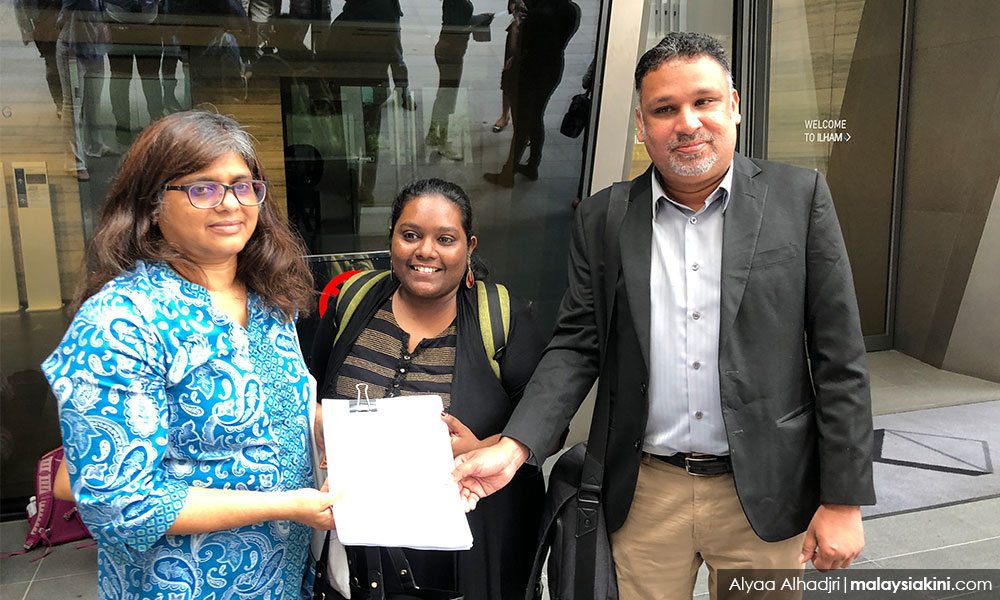
University of Nottingham Malaysia assistant professor Gayathry Venkiteswaran told reporters that the proposal was among several issues submitted during her meeting with the Committee on Institutional Reforms at Ilham Tower in Kuala Lumpur this morning.
"We talked about press freedom, to ensure that the Printing Presses and Publications Act is repealed so there would be more freedom for the media.
"I also presented on (the need) to remove accreditation for media so that media will have easier access to officials," said Gayathry who presented her submissions together with Civicus Alliance researcher Josef Benedict and Article 19 Malaysia representative Nalini Elumalai.
Gayathry further said the current colour coded accreditation passes had prevented some journalists from covering certain issues of public interests.
At present, the official media tag issued by the Information Department is required to access Parliament and ministries in Putrajaya as well as to obtain a special pass from the Election Commission to cover an election.
This was on top of certain royal functions or government events being restricted only to those accredited as official media - namely Bernama and RTM.
Even without official government accreditation, Gayathry said there could be limits imposed in terms of the number of representatives per organisation allowed to cover a certain event.
"But we think that this accreditation actually discriminates against some journalists or some media outlets so we actually recommended to the committee to remove it.
"This is something government can immediately do," she said.
Combatting hate speech
Nalini, meanwhile, said she had submitted on the need for the government to repeal the Sedition Act, the Anti-Fake News Act 1998 and other laws that infringed on the rights to freedom of expression.
"We spoke about how to respond to hate speech and to have a more inclusive environment in Malaysia.
"We have also submitted several documents including the (UN 2013) Rabat Plan of Action on how to combat hate speech in Malaysia," she said, adding that other recommendations made to the committee included for the government to invite UN special rapporteurs on freedom of expression.
On issues surrounding freedom of association, Benedict said his submission had focused on various restrictions imposed by the Registrar of Societies under the Societies Act on registration of organisations.
"We called for a review of these regulations to allow civil society to register and operate in an environment that is more conducive to human rights.
"We also called for the repeal of the Peaceful Assembly Act 2012 because there are currently a lot of restrictions against peaceful assemblies and that's very crucial in a democracy," he said.
Aside from calling for the repeal of repressive laws, Benedict said he also recommended for the new government to enact a law to protect human rights defenders against criminalisation and threats faced in their line of work.
The new Pakatan Harapan government since taking over power has so far pledged to ensure greater media freedom and to repeal or amend repressive laws, including the Anti-Fake News Act 2018 and the PPPA.


Are you sure you want to delete this comment?
This action cannot be undone.