



Stop hiding behind debt definitions to deceive public, Najib told
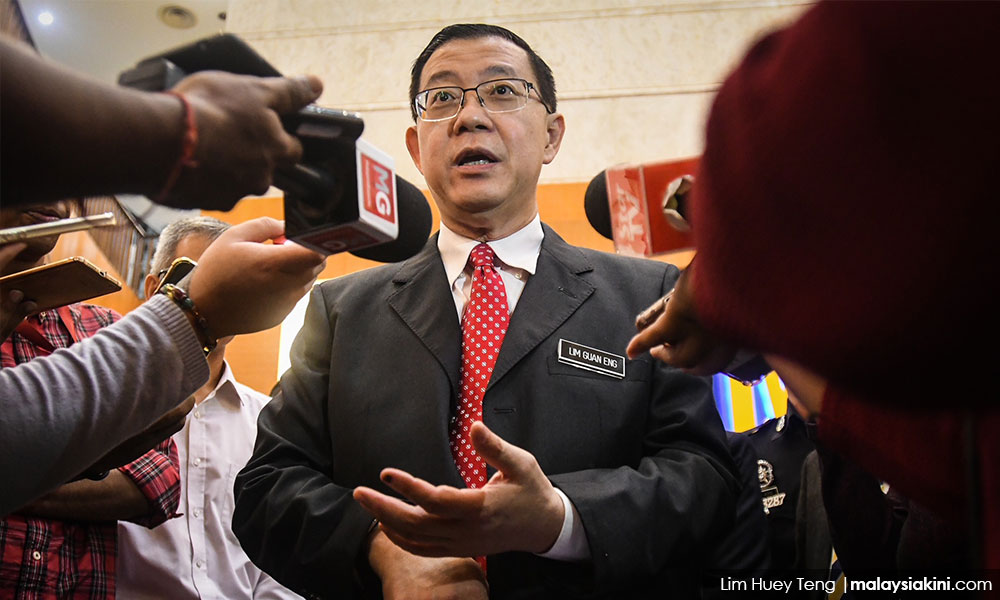
Finance Minister Lim Guan Eng has lambasted former prime minister Najib Abdul Razak for deceiving the public with confusing definitions of the national debt level.
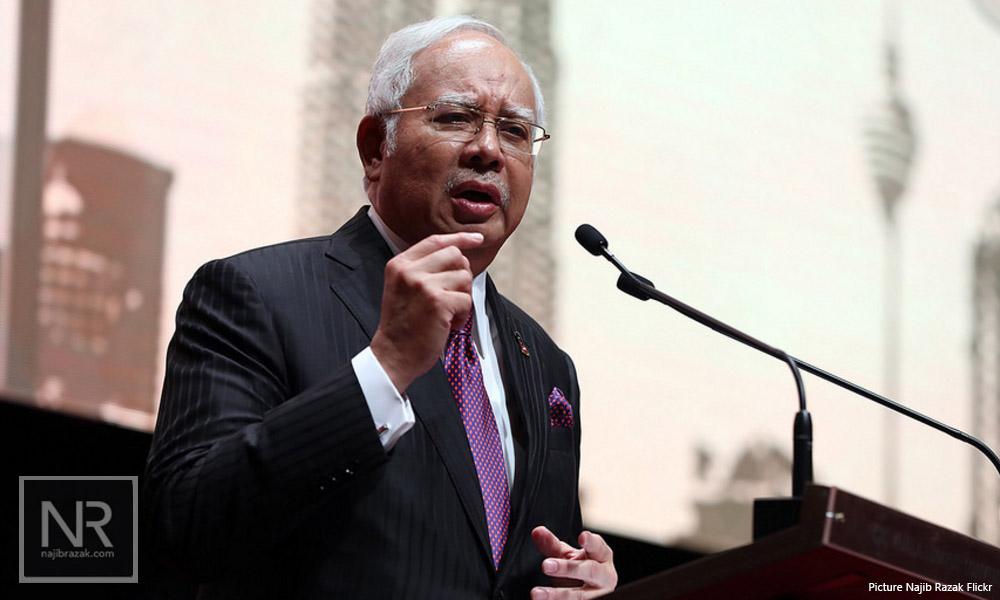
Earlier today, Najib referred to a Moody’s Investor Service report to accuse the Pakatan Harapan government of "misleading the public" by inflating the country’s debt level to RM1 trillion...
Finance Minister Lim Guan Eng has lambasted former prime minister Najib Abdul Razak for deceiving the public with confusing definitions of the national debt level.
Earlier today, Najib referred to a Moody’s Investor Service report to accuse the Pakatan Harapan government of "misleading the public" by inflating the country’s debt level to RM1 trillion.
In response, Lim denied overstating the magnitude of the country's debt, and reiterated that the RM1 trillion figure was made up of both debts and liabilities.
“Unlike what the former prime minister said... We have never denied that direct government debt is RM687 billion.
“(But) I would reject what Najib claims, that our debt level is not at RM1.08 trillion.
“The federal government debt is at that level because we want to include contingent liabilities, which have become direct debt, and those guarantees which have become direct debt,” he explained.
Lim thus advised Najib against “hiding behind definitions” in order to mask the true state of the economy.
“So why don’t you call a spade a spade, why do you want to hide behind (and say) that this is not a direct debt when it is a direct debt?
“Why do you want to continue to hide behind the definition?
“You are not only deceiving the people but also yourself, in order to pretend that our debt level is not so high,” he said after distributing Hari Raya goodies at the Palace of the Golden Horses in Seri Kembangan tonight.
The finance minister had provided a breakdown last month to show how the government arrived at the RM1 trillion figure.
At today's event, Lim also proffered an analogy to explain the logic behind conflating debts and liabilities.
“For example, you borrow money directly (and thus) you have debt.
“But let’s say you guarantee a friend’s (loan) to buy a house and they don’t pay for the house, you will have to pay for your friend’s loan, and you will actually owe a direct debt."
Removing GST will boost consumption
The finance minister also downplayed Moody’s claim that several of Harapan’s policies were credit negative for the economy.
Among the policies mentioned in the report were the removal of the GST and the reinstatement of fuel subsidies.
“Let me state that when you look at the Moody’s report, there is no doubt that there is an impact, because you are taking away sources of revenue (like the GST).
"But we are replacing it with the sales and services tax (SST).
"They also mentioned that by removing the GST, it will encourage consumption. With the increased consumption, that will help to spur the economy,” he contended.
Earlier during the event, Lim had touted how the government could continue to provide welfare to the people even after the abolishment of the consumption tax.
“Some said that without GST, we would become bankrupt.
“But today without GST, we are still able to give out Bantuan Sara Hidup and reinstate fuel subsidies,” he said in his speech, adding that the rakyat could now enjoy their Hari Raya shopping and festivities GST-free.


Report this comment
Are you sure you want to delete this comment?
This action cannot be undone.