



Bestinet denies involvement in Nepali workers scam
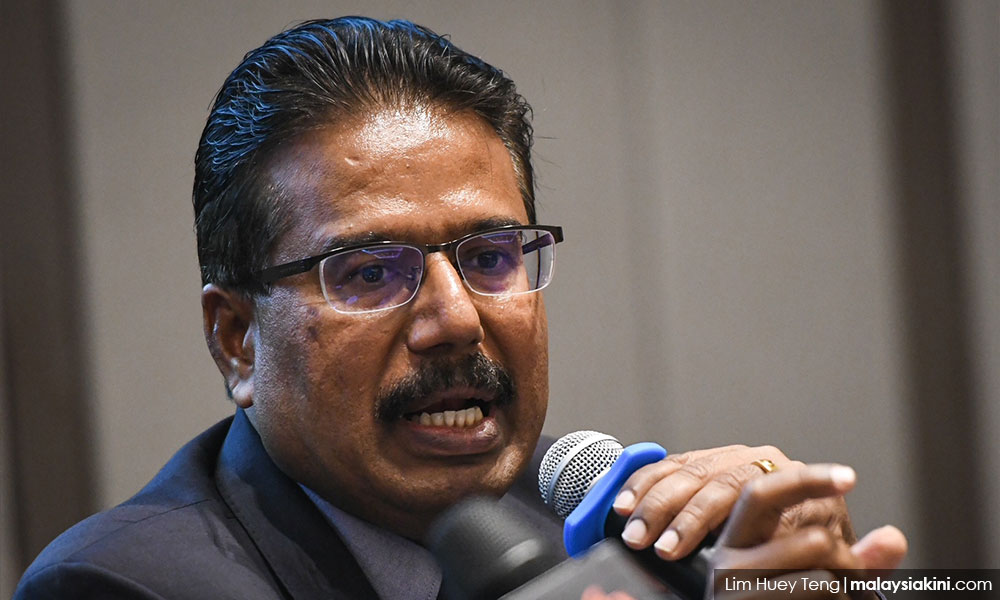
Bestinet Sdn Bhd, the company embroiled in an alleged scam involving recruitment of Nepali workers, has denied claims that it had directly collected some RM185 million from over 600,000 workers bound for Malaysia between September 2013 to early this year.
“We wished we had. Definitely not,” Bestinet executive director Rathakrishnan Vellaisamy told a press conference in Petaling Jaya today.
He said this when asked to comment on the allegation first reported by the Nepali Times last week and which subsequently made headlines here...
Bestinet Sdn Bhd, the company embroiled in an alleged scam involving recruitment of Nepali workers, has denied claims that it had directly collected some RM185 million from over 600,000 workers bound for Malaysia between September 2013 to early this year.
“We wished we had. Definitely not,” Bestinet executive director Rathakrishnan Vellaisamy told a press conference in Petaling Jaya today.
He said this when asked to comment on the allegation first reported by the Nepali Times last week and which subsequently made headlines here.
Malaysiakini together with the Centre for Investigative Journalism Nepal, in a special report published earlier today, had taken a closer look at the larger network of companies and government agencies involved in the alleged fleecing of Nepali workers.
Read more: Nepali workers' scam: The whos and hows behind it
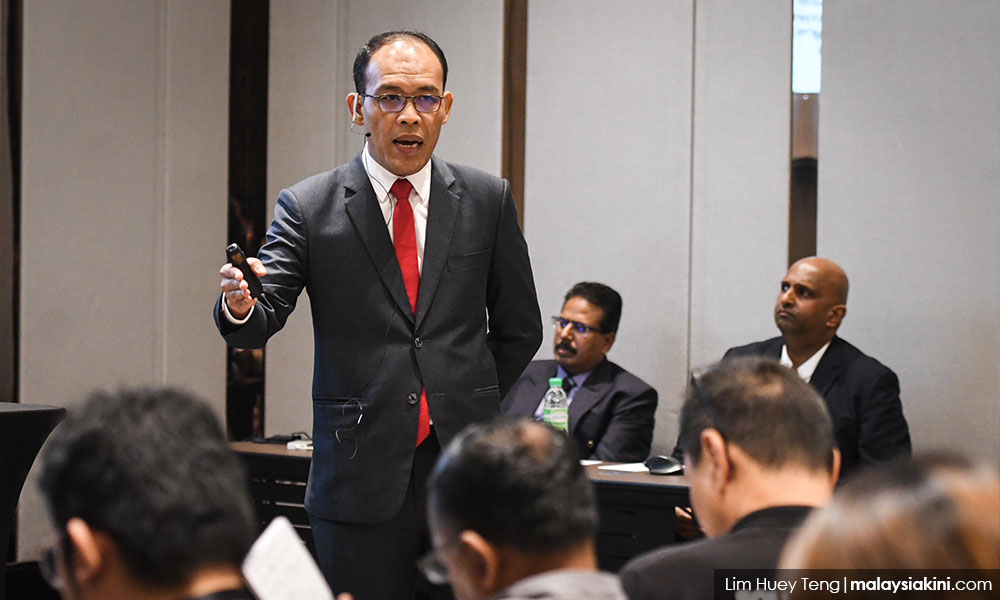
Also present at Bestinet event today was its CEO Ismail Mohd Noor, who delivered a presentation on the company’s award-winning Foreign Workers Centralised Management System (FWCMS).
In his opening speech, Ismail denied claims that Bestinet had a monopoly over the entire process of recruiting Nepali migrant workers.
“I want to stress three major points based on the allegations made against us. One is that we do not exploit (the workers).
“Second, we are not a monopoly. And third, we bring significant change to the recruitment process which benefits all stakeholders,” he said.
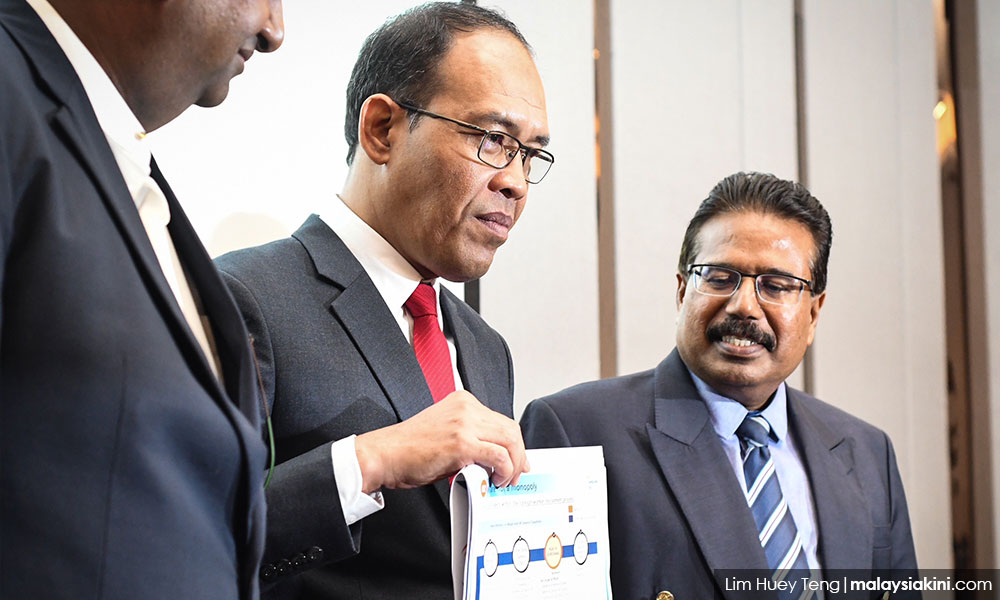
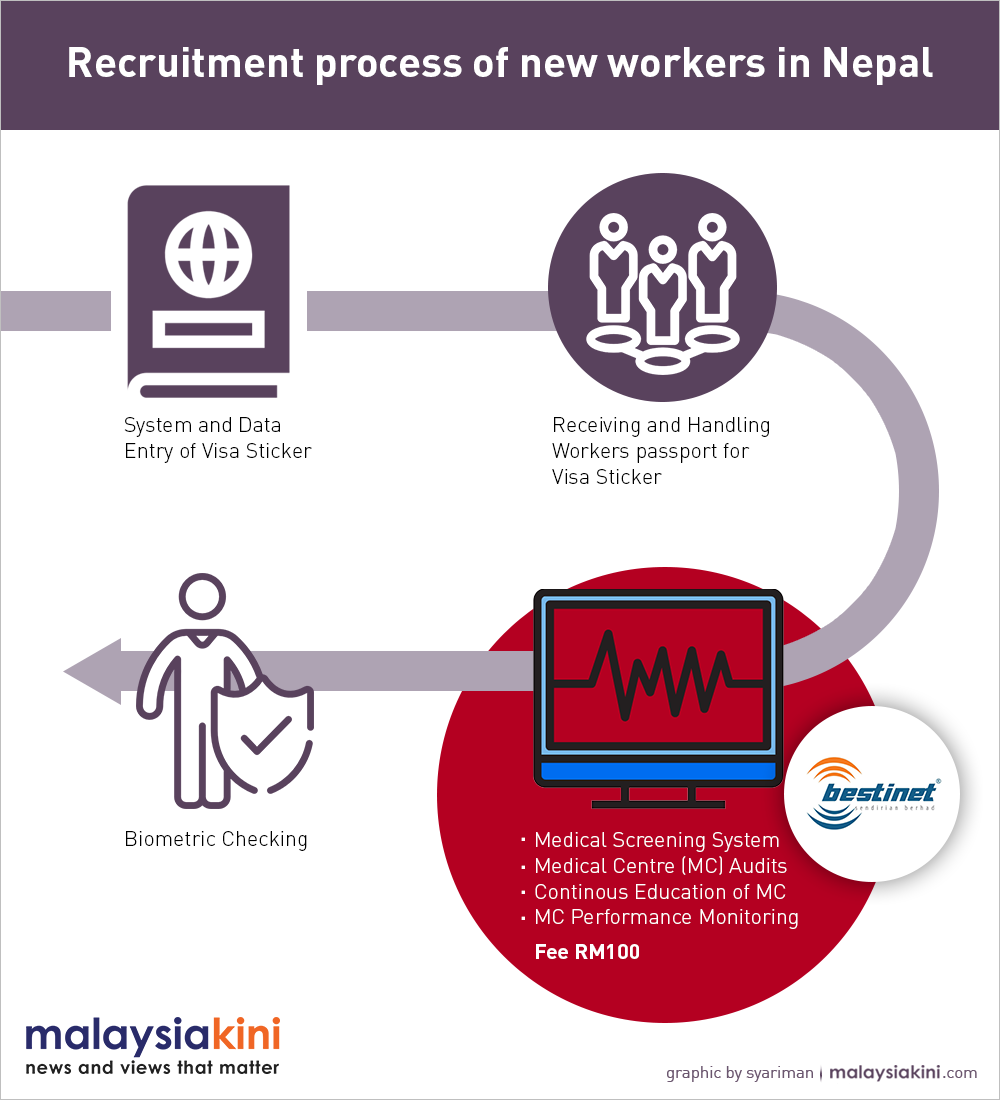
Rathakrishnan, meanwhile, also said the allegations made against Bestinet were largely due to a “misunderstanding” over its actual role to only provide one service out of the four steps involved in the migrant worker recruitment process.
“There is a lot of misunderstanding. In fact, maybe even the minister himself was misinformed,” said Rathakrishnan in reference to Human Resource Minister M Kulasegaran.
Under probe
Kulasegaran in a written parliamentary reply today revealed that the Nepali government was currently investigating alleged “money laundering” activities linked to Bestinet.
He also confirmed that Bestinet was given an approval to charge RM100 for each worker that went through its biometric health screening service.
Three other companies, meanwhile, were appointed to provide three other steps involved in the process – from security clearance to the processing of the final visa application.
“Bestinet is now accused of controlling the whole thing. These three services are not related to us,” said Rathakrishnan.
“But in the source countries, because we were the first one to be there, all the biometric and visa processes involved is wrongly and falsely attributed to us,” he stressed.
Rathakrishnan further said their pioneer status in several migrant worker source countries including Nepal had also contributed to the misunderstandings.
He said Bestinet’s health screening system involved the capturing of a foreign worker’s 10 fingerprints and the same biometric process was also repeated for the immigration security clearance (ISC) process.
“When we started this process of health screening, we took the 10 fingerprints of the workers.
“So when this ISC was implemented, also 10 fingerprints were taken. So they thought this biometric also belongs to Bestinet,” he added.
‘Won’t know where money came from’
Bestinet’s legal advisor N Sivananthan, meanwhile, denied that the company was involved in alleged money laundering activities via payments transferred from Nepali agents on behalf of the workers.
“When the money is banked into Bestinet's account, it is RM100 per worker. Of course, if you ask us, ‘the person who banked it in where he got the money from?’ We can't answer that question.
“All we know RM100 was banked in for one worker. We have accounted for it, we issued an invoice and a receipt… it is all in the books of our companies,” he said.
“It is impossible for Bestinet to verify whether the money banked in for the workers was, in fact, illegal money or otherwise,” Sivananthan stressed.
Pressed on whether Bestinet would initiate legal action against any of the parties that had raised the allegations, Sivananthan said the matter would only arise if new allegations made after today's explanations.
“But as for what happened before today, it is a forgive and forget situation,” he added.


Report this comment
Are you sure you want to delete this comment?
This action cannot be undone.