



Ouster clauses won't be used to deny access to justice, pledges AG
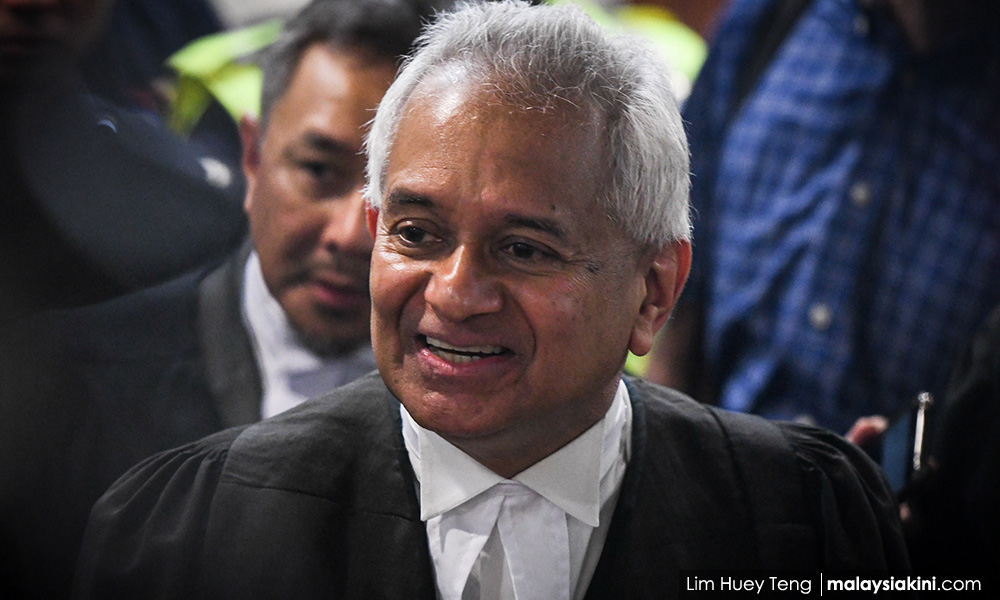
Disputes between state agencies and individuals should be allowed to be ventilated in the court of law, said attorney-general Tommy Thomas today.
As such, he pledged that the Attorney-General's Chambers will no longer deny or object to a litigant's access to justice by relying on ouster clauses...
Disputes between state agencies and individuals should be allowed to be ventilated in the court of law, said attorney-general Tommy Thomas today.
As such, he pledged that the Attorney-General's Chambers will no longer deny or object to a litigant's access to justice by relying on ouster clauses.
Speaking at an international law conference in Kuala Lumpur, Thomas said the judiciary – as the third branch of the government under the doctrine separation of powers – has to fulfil an important duty in deciding the constitutionality of written laws and to determine disputes between a state agency and an individual.
"The court is to perform its function as the bulwark against the state. Hence, access to justice is critical and any legislative and executive attempt to curtail it must be rejected.
"It follows that the provision in the written law which purport to oust the jurisdiction of the court must be repealed, and I will be recommending to the government to put the necessary legislation in place.
"Pending the enactment of such law, the AG's Chambers will henceforth cease to rely on ouster clauses in any written law, and will not object to a litigant's right to access to court for his grievances," he said in his speech.
Thomas said the chambers' focus will be on the merits of the complaint of the litigant, rather than searching for technical and procedural objections to strike out his or her case and thereby shutting the door to a court challenge.
Prior to this, previous attorneys-general and their officers had relied on ouster clauses in some existing law to deny challenges made by the people.
Examples of ouster clauses are: Section 9A of Election Act which prohibits anyone from questioning the electoral roll once it is gazetted; under Societies Act where members cannot bring their dispute to court, and the power given to director-general of Immigration to bar anyone from travelling overseas.
Crediting past Bar leaders
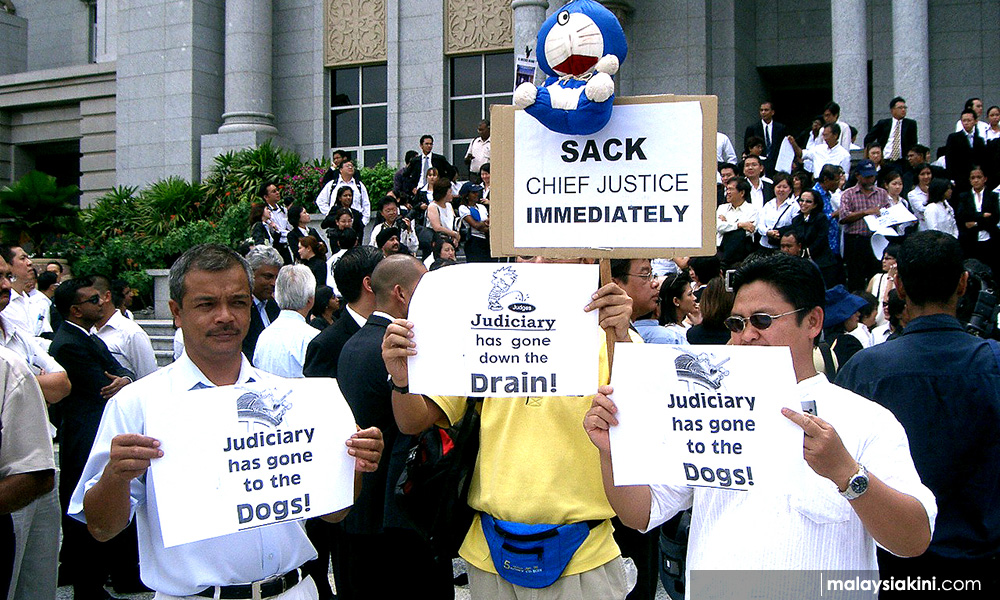
Thomas, in his speech, credited the Malaysian Bar for upholding the rule of law during what he called the "dark days"
"One voice remained defiant throughout the dark days whenever the rule of law, the separation of powers or the independence of the judiciary were threatened by state action: the Malaysian Bar and its executive agency, the Bar Council and this, they did through issuing public statements, passing resolutions, instituting legal action and organising marches and protests."
The Bar, he noted, opposed the enactment of the dreaded preventive detention law, the Internal Security Act.
"The battle to put civil liberties at the forefront of the manifesto of every political party was the singular contribution of the Bar.
"I, therefore, acknowledge, on behalf of the government of Malaysia, the role played by the Bar in fulfilling its statutory duty in upholding the cause of justice, uninfluenced by fear or favour.
"The Malaysian Bar has received international accolades from numerous independent organisations: it is not too late to be finally recognised by your own government," he said.
Thomas also paid tribute to several past Malaysian Bar leaders for their endless campaign to do the right thing and noted among them are Raja Aziz Addruse, Lim Kean Chye, the late Karpal Singh, Param Cumaraswamy, Zainur Zakaria and Ambiga Sreenevasan.
Bar urged to draft new act
Thomas also urged the Bar to draft a new act to govern the profession (to replace the Legal Profession Act 1976) where he says the AG still holds power over them.
"I am still waiting for a draft new bill to govern your profession! And you have a free hand in drafting it! There are sufficient practitioners in the Cabinet who will be happy to pilot its passage in Parliament.
"In the new law, there should be no role for the attorney-general or any other state functionary. Your model should then be replicated by the other great professions: each should draft its own bill with minimum input from AG’s Chambers until the Parliamentary draftsmen begins his specialised responsibilities," he said.
There are about 300 participants attending the four-day conference which begins today.


