


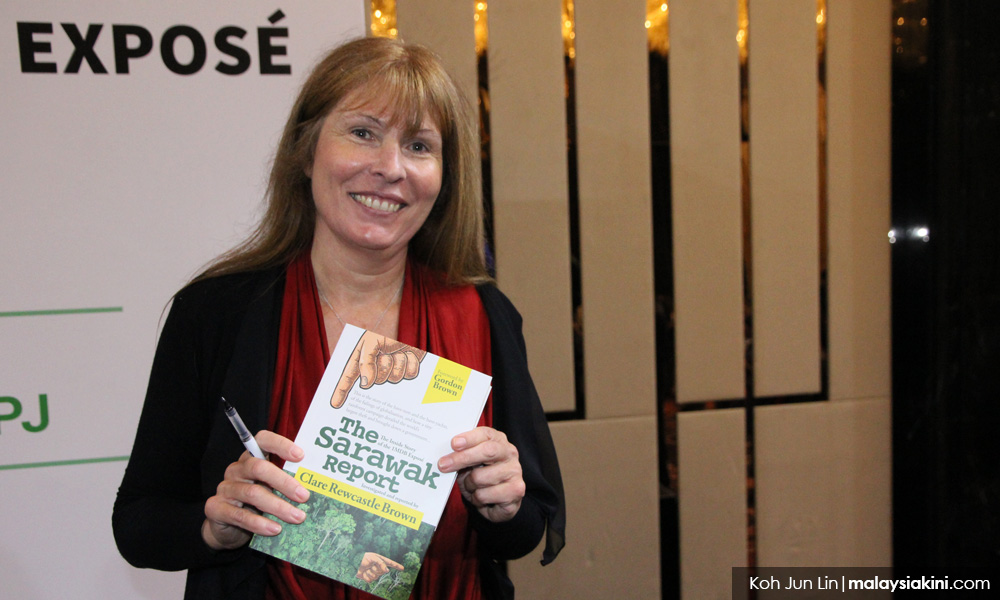

After 1MDB, Rewcastle-Brown to tackle 'unfinished business' in S'wak
After playing a key role in exposing the 1MDB scandal, Sarawak Report editor Clare Rewcastle-Brown said she still has “unfinished business” in Sarawak.
She said she will continue to campaign for proper forest management in the state, as well as due process for those involved in corrupt practices in its timber industry.
“It’s a pretty sorry story so far, isn’t it?… When you arrive in Sarawak, you’d see these posters saying ‘Welcome to the place of the orangutan’, ‘Welcome to the oldest rainforest in the world’, yet at the same time, while they know this is the greatest attraction for their country, they’re cutting it all down...
After playing a key role in exposing the 1MDB scandal, Sarawak Report editor Clare Rewcastle-Brown said she still has “unfinished business” in Sarawak.
She said she will continue to campaign for proper forest management in the state, as well as due process for those involved in corrupt practices in its timber industry.
“It’s a pretty sorry story so far, isn’t it?… When you arrive in Sarawak, you’d see these posters saying ‘Welcome to the place of the orangutan’, ‘Welcome to the oldest rainforest in the world’, yet at the same time, while they know this is the greatest attraction for their country, they’re cutting it all down.
“So, I’ll keep campaigning about that as long as there is a tree standing,” she said during the launch of her book The Sarawak Report: The Inside Story of the 1MDB Exposé in Petaling Jaya today.
“For many years, I and others have questioned the financial arrangements behind so many of Sarawak’s biggest companies and the handing out of contracts to (logging) concessions.
“So, I’ll be campaigning for due process and continue to work on revealing the concerns and malpractices that resulted in the wealth of Sarawak’s rainforests going into a very small number of bank accounts, instead of improving the lives of the majority of people in Sarawak,” she added at a press conference after the launch.
Read more: '1MDB is but a glimpse into corrupt offshore financial system'
The Sarawak-born UK national said she began exposing timber corruption in Sarawak because she was troubled by deforestation and the encroachment of native rights in the state, and began to question who benefited from the tragedy.
That was when she started writing about the issue around 2010, and was promptly blacklisted entering the state.
According to Rewcastle-Brown, she is still on the blacklist.
She said that she was troubled about the lack of action on timber corruption in Sarawak and against its former chief minister and current governor Abdul Taib Mahmud.
When asked whether she thinks the federal government has a moral obligation to tackle the issue as soon as possible, Rewcastle-Brown answered in the affirmative.


Lapor komen ini
Anda pasti mahu padam komen ini?
Komen anda tidak akan boleh dikembalikan semula.