


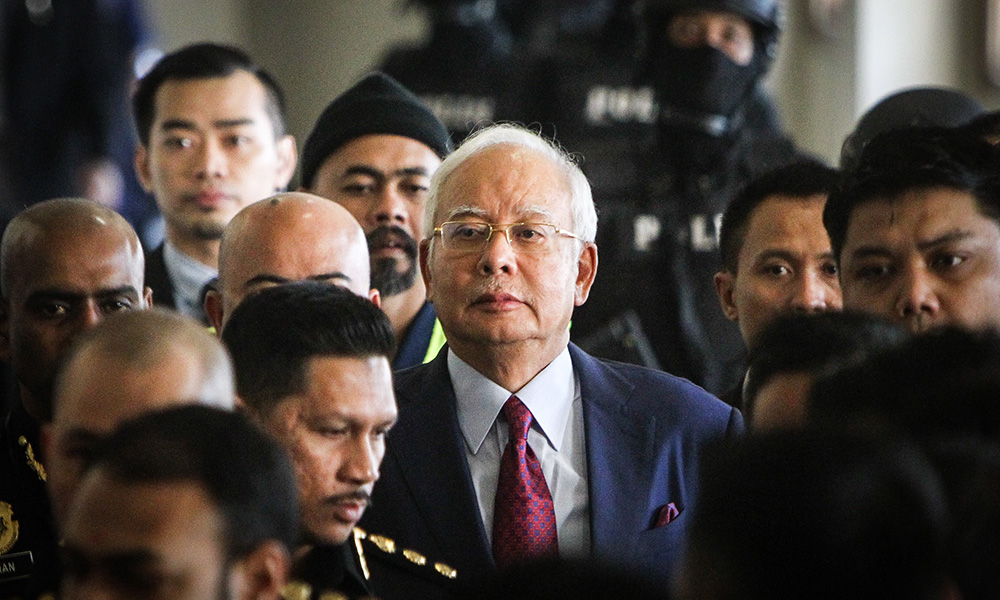

The eclipse of Najib's achievements by 1MDB scandal
Editor’s note: This is the 10th of a 12-part series from former health minister and MCA president Chua Soi Lek’s book, 'Like Me or Hate Me: Rising from the Political Ashes'.
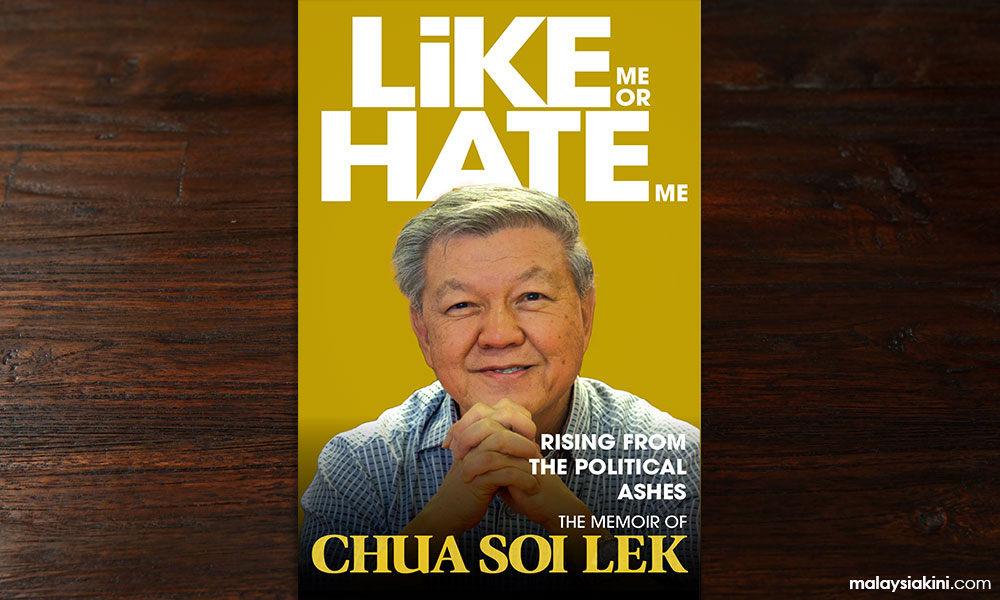
BOOK EXCERPT | This chapter gives my impressions of some of the major personalities I have had dealings with during my political career - Najib Razak, Ong Ka Ting, Tee Siew Kiong, and Wee Ka Siong.
Najib Razak
(Prime Minister: April 2009-2018)
When I was the Minister of Health, Mohammad Najib bin Tun Haji Abdul Razak was the deputy prime minister. When he became the prime minister in 2009, I was the deputy president of the MCA. It was Najib who appointed me as the Chief Coordinator of the Barisan Nasional.
Unlike Pak Lah, Najib is sterner. But while he doesn’t smile often I would not describe him as unfriendly. He is always polite to his guests and his audience.
When I became MCA president in 2010, I met Najib more frequently in my capacity as leader of the party. Later, I was also appointed to the Economic Council that he chaired every Monday.
Najib was very impressive when chairing meetings, particularly when it came to summarising complex issues.
This was obvious in the Economic Council meetings I attended. He would ask pointed questions during discussions and was always quick to understand the point of view of the speaker.
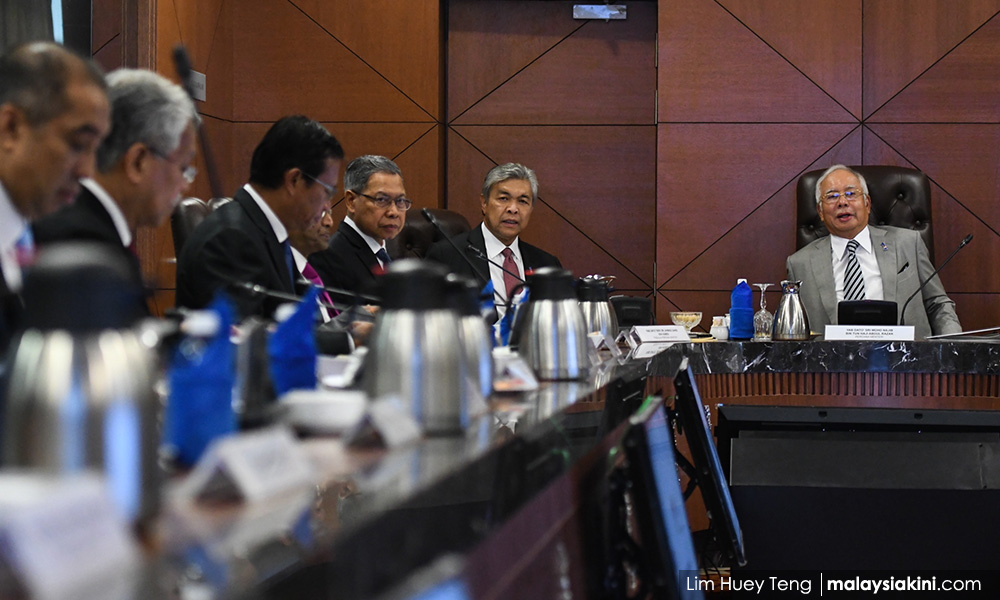
In fact, when he was the deputy prime minister, Najib would often try to highlight the main issue under discussion in an attempt to keep things on track when Pak Lah indulged in his habit of allowing every member to speak.
He had a very good memory and controlled his temper well. The only time I saw him lose his temper was in 2011 during an Economic Council meeting. The issue was the remuneration of civil servants. When he loses his temper, Najib blushes and his ears are red.
When I was the Minister of Health, I always sought his advice and support regarding major issues confronting the Ministry of Health.
It was due to his encouragement and support I was able to implement the Harm Reduction Programme, the two years of compulsory service for housemen, and the closure of Pandan Hospital.
It was also Najib who agreed with me in cabinet that state general hospitals should remain with the Ministry of Health and should not be taken over by the Ministry of Higher Education...
Editor’s note: This is the 10th of a 12-part series from former health minister and MCA president Chua Soi Lek’s book, 'Like Me or Hate Me: Rising from the Political Ashes'.
BOOK EXCERPT | This chapter gives my impressions of some of the major personalities I have had dealings with during my political career - Najib Razak, Ong Ka Ting, Tee Siew Kiong, and Wee Ka Siong.
Najib Razak
(Prime Minister: April 2009-2018)
When I was the Minister of Health, Mohammad Najib bin Tun Haji Abdul Razak was the deputy prime minister. When he became the prime minister in 2009, I was the deputy president of the MCA. It was Najib who appointed me as the Chief Coordinator of the Barisan Nasional.
Unlike Pak Lah, Najib is sterner. But while he doesn’t smile often I would not describe him as unfriendly. He is always polite to his guests and his audience.
When I became MCA president in 2010, I met Najib more frequently in my capacity as leader of the party. Later, I was also appointed to the Economic Council that he chaired every Monday.
Najib was very impressive when chairing meetings, particularly when it came to summarising complex issues.
This was obvious in the Economic Council meetings I attended. He would ask pointed questions during discussions and was always quick to understand the point of view of the speaker.
In fact, when he was the deputy prime minister, Najib would often try to highlight the main issue under discussion in an attempt to keep things on track when Pak Lah indulged in his habit of allowing every member to speak.
He had a very good memory and controlled his temper well. The only time I saw him lose his temper was in 2011 during an Economic Council meeting. The issue was the remuneration of civil servants. When he loses his temper, Najib blushes and his ears are red.
When I was the Minister of Health, I always sought his advice and support regarding major issues confronting the Ministry of Health.
It was due to his encouragement and support I was able to implement the Harm Reduction Programme, the two years of compulsory service for housemen, and the closure of Pandan Hospital.
It was also Najib who agreed with me in cabinet that state general hospitals should remain with the Ministry of Health and should not be taken over by the Ministry of Higher Education.
As MCA president, I had no problem getting an appointment to see Najib. As a prime minister and the chairman of Barisan Nasional, he was also very understanding and sympathetic regarding issues confronting Chinese primary schools, the SMJKs and Chinese independent schools.
It was with his support that the MCA managed to convince the Ministry of Education to channel grants directly to school boards and provide partial subsidies for utility expenses for the SRJKs.
He also supported moves to allow UEC students to enter government teaching colleges, award scholarships to top UEC scholars and establish the Kuantan Independent School. And he supported all these despite the hurdles created by officials in the Ministry of Education.
Najib is also a good listener. Some people could be very long-winded when discussing issues in Economic Council meetings. But Najib would listen patiently to each presentation and was able to summarise the main points. This skill often proved helpful to council members.
When Najib took over from Pak Lah, there were high hopes that he would do a better job.
His Economic Transformation Programme has certainly enabled Malaysia to achieve a respectable economic growth rate despite unfavourable economic headwinds and a volatile geopolitical situation. In fact, in the last few years Malaysia has achieved better economic growth than Singapore, Hong Kong, Taiwan, South Korea and Japan.
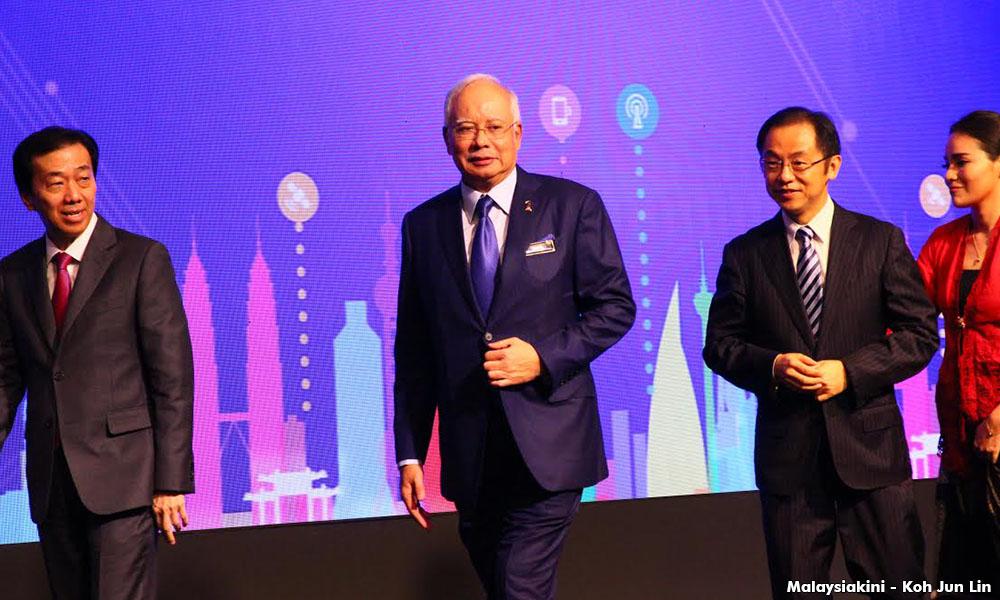
In the Economic Council, there was a lot of discussion on how to improve the traffic congestion in the Klang Valley.
There was also a lot of discussion about the proposed high-speed train from Kuala Lumpur to Singapore. I am grateful to the Economic Council for agreeing to my suggestion that this train should stop at Muar and Batu Pahat in Johor. The hope is that the move will boost the connectivity and the growth of these secondary towns.
Meanwhile, the people of the Klang Valley look forward to the completion of the MRT project. Najib can be regarded as the key driver behind efforts to improve the connectivity of Kuala Lumpur with its surrounding areas.
Knowing the political backlash, Najib must also be given credit for persisting in the rationalisation of the subsidies on petrol, gas, sugar and cooking oil. And it was due to his commitment that the minimum wage was implemented in Malaysia in 2013 and the controversial goods and services tax (GST) was implemented in 2015. Some of these measures may cause the Barisan Nasional to lose votes in the upcoming election. (Editor’s Note: Chua was referring to the 14th general election.)
That said, Malaysia’s progress under Najib towards the goal of moving the country from the middle-income trap to the status of a high-income nation by 2020 is highly commendable.
Unfortunately, all his achievements have been eclipsed by the 1MDB scandal and the allegation that he received a personal donation of RM2.6 billion. He has done well to survive the political storm.
Ong Ka Ting
(MCA President: May 2003-October 2008)
The MCA lost badly in the 2008 political tsunami. The number of parliamentary seats won by the party declined from 31 to 15, while the number of state seats dropped from 76 to 31.
Ka Ting’s response was to decline any cabinet position. He also announced that he would not defend the MCA presidency in the 2008 party elections. That was probably the most honourable thing he ever said.
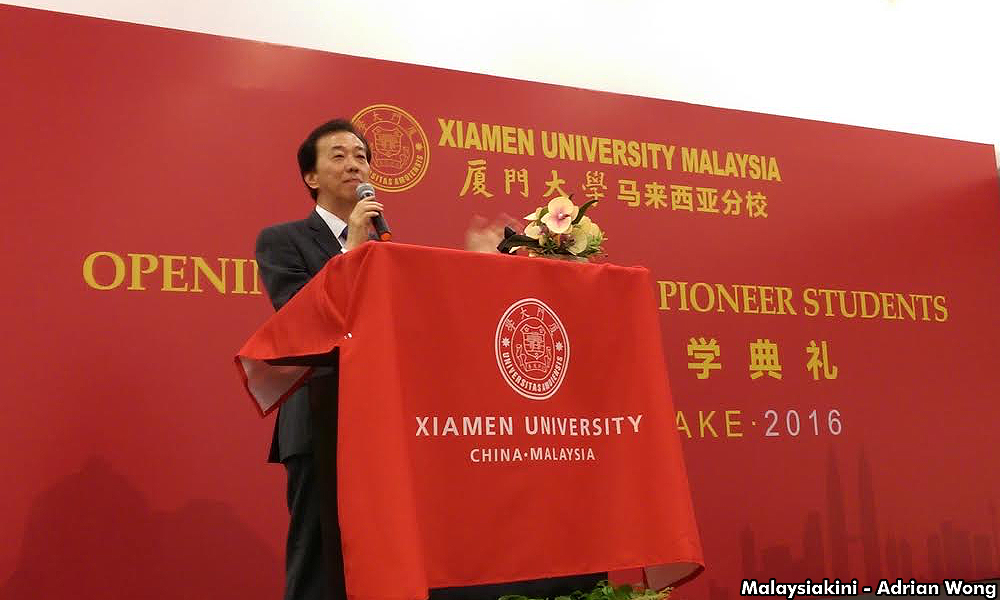
However, it was obvious that Ka Ting (photo) was not going to retire so easily. In reality, he tried hard to consolidate his position.
The first thing he did after the elections was to appoint himself the chairman of the MCA in Johor. He knew this was my political base. Ka Ting’s reasoning was that he wanted to rebuild the Johor MCA. But it quickly became a standing joke among MCA leaders. Why choose Johor for rebuilding when the Johor MCA, despite the political tsunami, won 85 per cent of the seats it contested?
The MCA was completely wiped out in Penang. It won only one seat each in Negeri Sembilan and Selangor. If Ka Ting was committed to rebuilding MCA, he should have appointed himself as the state chairman in Penang, Negeri Sembilan or Selangor.
The reality was that by choosing Johor, Ka Ting was back to his old habit of avoiding major issues. Meanwhile, many grass-roots members and influential leaders blamed the 2008 debacle on his decision to field new and unfamiliar faces as candidates. Vice-President Donald Lim and influential veteran leaders such as Chua Jui Meng, Dr Ting Chew Peh and Yap Pian Hon were among the critics.
Between the divisional elections in May 2008 and the party’s national elections in October of that year, I was invited to participate as a panel speaker in many political forums.
I also officiated many functions organised by NGOs. I spoke about many issues, including the emergence of a two-party system in Malaysia, the future direction of MCA, major economic issues like the fuel hikes and inflation.
However, there appeared to be an almost total blackout of my speeches and activities in The Star and Chinese vernacular newspapers.
There were also continuous attempts from the top to prevent me from meeting party members. Grass-roots leaders were instructed to withdraw invitations for me to officiate at functions.
But I took all these in my stride. In fact, I was happy that despite having no significant position in the party, I was still regarded as a threat to the leadership. That implied that I continued to have significant support within the party.
During his tenure the as MCA president, Ka Ting introduced and imposed service term limits on office bearers. For party presidents, the term was set at nine years. Term limits were also imposed on ministers, right down to councillors. When this was implemented, several elected party senior leaders were forced to retire.
The only exception was Ka Ting’s brother, Ong Ka Chuan (photo), who served six terms in the state and then served in the federal government until 2018. Ka Chuan was also in his second term as the cabinet minister.
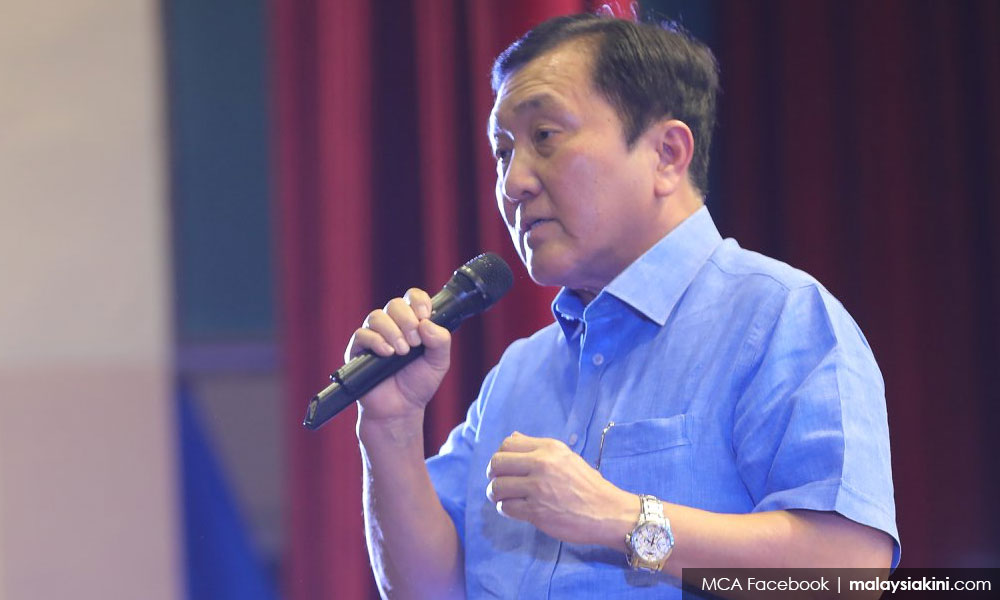
During his first attempt in his parliamentary seat in Batu Gajah in 2004, Ka Chuan lost heavily to his opponent, Fong Po Kuan from the DAP. Ka Chuan predicted he could thrash Po Kuan with a 5,000-vote majority. Instead, he was humiliated when Po Kuan beat him decisively with a 7,927-vote majority.
Undaunted, Ka Chuan became a candidate once again in the 2008 election. This time, he left Batu Gajah and found a safe seat in Tanjung Malim, a Malay-majority seat. Most of the Malays there were from the Felda development scheme, a traditional vote bank for the ruling Barisan Nasional.
Ka Chuan therefore had a comfortable win. After the elections, Ka Ting promoted his brother as a minister and made him secretary-general of the party.
To revive the spirit of the late Tun Tan Cheng Lock, all MCA central committee members were virtually forced to visit his graveyard annually to commemorate his death and contribution to the party and the Chinese community.
I felt there was no harm in honouring our past leaders for their contributions to the party. But visiting the graveyard annually together with the immediate descendants of Tun Tan Cheng Lock was not an effective way to revive the spirit of this leader as one of the founding members of the MCA and an independent Malaya. All it did was to generate media publicity.
Meanwhile, DAP was slowly developing its cybertroopers. They revived many old issues over which the Chinese community had always harboured dissatisfaction against the MCA and the Barisan Nasional.
Pak Lah was portrayed as a kind but ineffective leader. He was not on the top of the issues then confronting the nation.
The criticism was aggravated by the incessant attacks of Dr Mahathir, who argued that the “fourth-floor boys” were more powerful than the prime minister. The DAP’s cybertroopers went to town with the idea that the country was ruled by a prime minister who slept on the job and let his senior aides make decisions on his behalf.
Ka Ting continued to behave like an ostrich, burying his head in the sand in the hope that the storm generated by Dr Mahathir and the misinformation created by DAP cybertroopers would blow away.
When confronted with major issues, he preferred to let junior leaders address such matters through the press. The MCA began to operate like an NGO. Leaders were cautioned about the need to maintain good relations with Umno ministers. Direct confrontation, it was argued, would be harmful to the MCA in the long term.
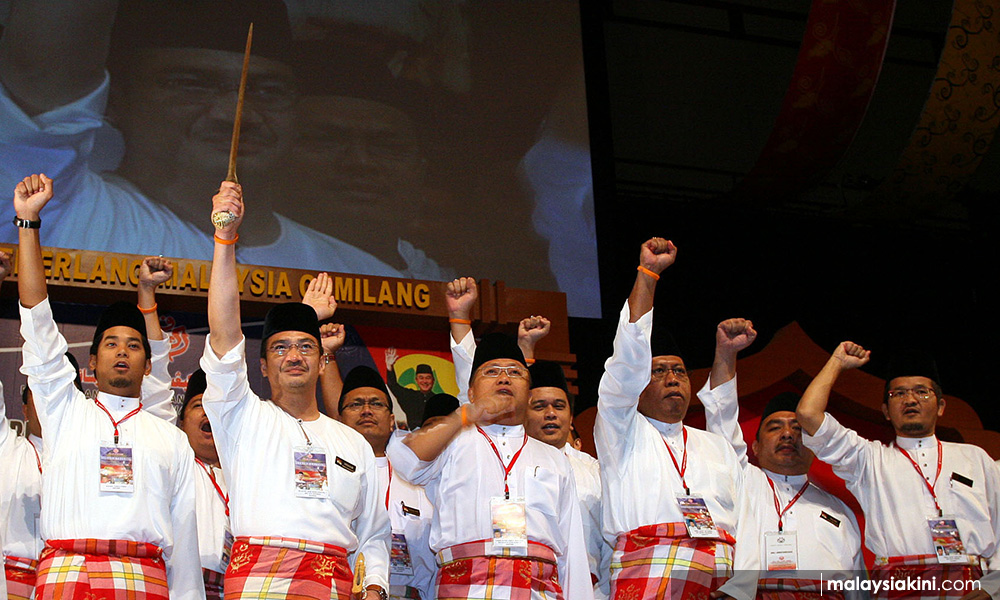
The infamous incident involving Hishammuddin Hussein, the Umno Youth Chief, brandishing the keris in an Umno Youth general assembly (photo) was left unchallenged. In fact, it was not even discussed during presidential council or the central committee meetings.
Ka Ting revived the school of cadre training of MCA members. In fact, he sent his brother to China to study how the Communist Party indoctrinated and trained its members so as to be loyal to the party and be more committed as members.
Ka Ting even suggested that every state should have a cadre training centre. However, the idea never really took off. Many members felt the lecturers tapped from UTAR and KTAR were too theoretical. Attendance was largely by compulsion, and the measure died a natural death.
As part of the Nine Point Platform, central committee member Chew Mei Fun (photo) was also sent to Taiwan to study how the continuous lifelong learning programme was being conducted. Chew Mei Fun was also a Taiwan graduate.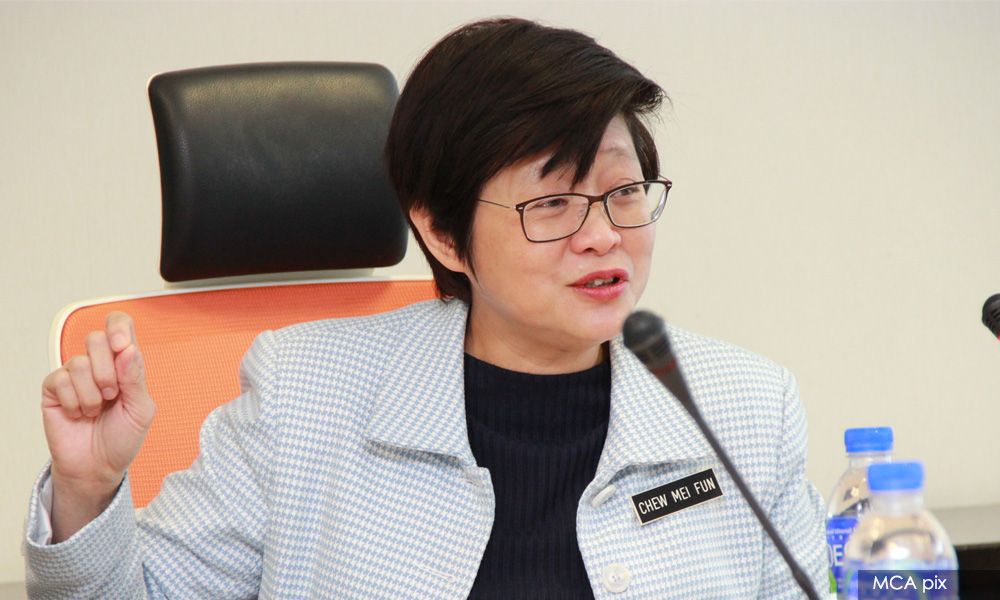
Many MCA members felt the Nine Point Platform should not be the main thrust of a political party, although it could perhaps be promoted among MCA members to equip them for the knowledge-based economy.
This lifelong learning concept became the important part of the political speeches and activities among the MCA’s senior leaders. In fact, some service centres received funding from MCA headquarters to enable them to become continuous lifelong learning centres.
I was one of those who refused to toe the line and felt that the MCA should be engaged in bigger issues affecting the Chinese community in the country. Eventually, Ka Ting’s continuing emphasis on the Nine Point Platform on continuous learning became the butt of jokes among the Chinese community, with many saying that the MCA should be turned into a school.
Meanwhile, no attempt was made to develop and train MCA members to be competent on social media platforms.
Instead, the MCA remained very dependent on Chinese vernacular press for its publicity. Ka Ting and many other MCA leaders believed that social media would not influence the public to any great extent.
He spent a considerable amount of time trying to establish and curry favour with leaders of the Chinese clans and business associations, Chinese scholars and the Chinese press (Sinchew and Nanyang especially). Some journalists even became his guardian angels. And this, as alleged that reporters had to submit questions prior to press interviews.
He also tried hard to project himself as the “Tan Cheng Lock of the 21st century”.
When he returned to re-contest the presidency in 2010, the journalists and academics he had carefully cultivated portrayed him as the only leader who could save the party. Many so-called “community leaders”, many of whom were disliked in the community because they were regarded as “fat cats”, also heaped praises on him.
In short, under Ong Ka Ting’s leadership the MCA reinforced the public perception that the party was a member of the household but had no say in managing the house.
Under Ka Ting, it was always low-key negotiations involving himself and the relevant Umno ministers.
Many issues facing the Chinese community, such as funding for Chinese primary schools, the development of Chinese new villages, deviations in the implementation of the New Economic Policy, the relocation of under-enrolled Chinese- medium schools and need for new ones to be built in heavily populated areas were never really bought up for discussion in the cabinet.
The perception of the Chinese community towards MCA and Ka Ting was that the party had no guts and no political conviction to confront and resolve issues confronting the nation.
The DAP exploited this during the 2008 general elections. There were big posters of Ka Ting and Hishammuddin hugging each other in many Chinese-majority constituencies. This was a reminder to the Chinese voters that Ka Ting as the president had done nothing to confront Hishammuddin and his infamous brandishing of the keris.
Many MCA members feel that Ka Ting will always be regarded as the blue-eyed boy of the Umno leadership by avoiding direct confrontation with Umno’s leadership on major issues.
Tee Siew Kiong
(Johor exco Chairman of the Johor Trade, Consumer and Tourism Committee: 2013-2018)
In 1990, after my appointment as a member of the Johor exco, I began looking for a personal assistant. I finally chose a young man named Tee Siew Kiong.
Siew Kiong was educated in Chinese but could also communicate in Bahasa Malaysia, English and the local dialect.
I chose him over the other candidates because he was humble and had a smiling face. I felt that I needed a personal assistant with a fairly good command of Mandarin so that he could communicate more effectively with MCA members and the Chinese community.
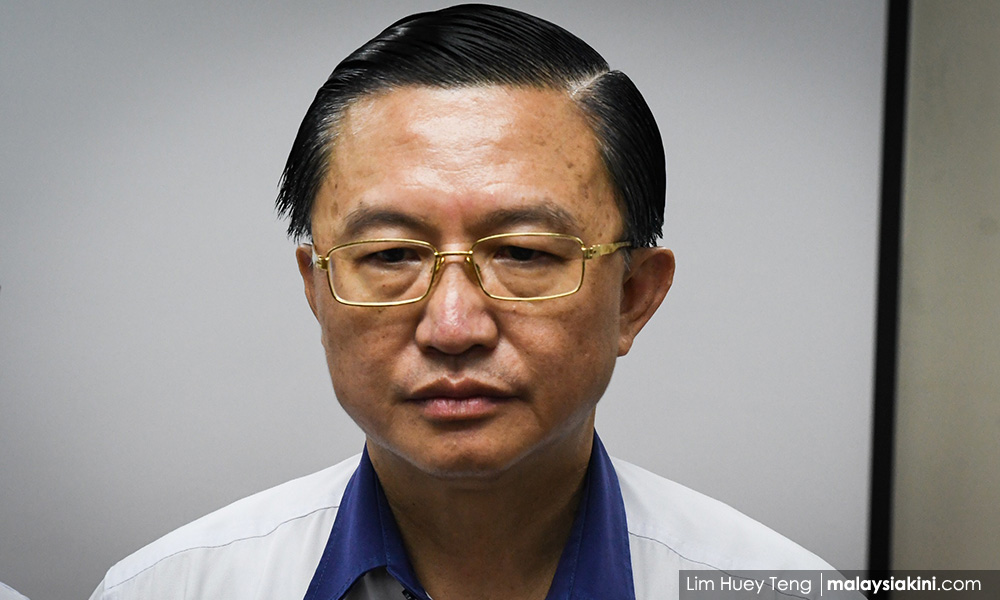
Siew Kiong (photo) was a good choice. He turned out to be very dedicated and committed to his work. He was humble, honest and was able to network easily. He was of great help in my work when I was a member of the exco because he got along well with most Johor civil servants.
For the 2004 general elections, I used my power as state MCA chairman to nominate him as a candidate for the state seat of Pulai Sebatang. He won the seat with a majority of 10,217 votes. In 2008, he defended the seat, winning with a lower, yet comfortable majority of 5,765 votes.
When I was appointed Minister of Health, I named him my political secretary. During this period, he travelled with me throughout the country and played an important role in strengthening and consolidating my position within the party.
Siew Kiong continued to work with me until he was appointed to the Johor exco in 2013. When I became the president of MCA in March 2010, I appointed him as the national organising secretary and also as a member of the presidential council.
After the 2008 political tsunami and the subsequent MCA infighting, the morale of MCA members was at its lowest ebb. During my tenure as the president, I initiated three programmes for MCA members in the hope of uniting them and instilling in them an esprit de corps: appreciation of MCA veteran members, the MCA Happy Mother’s Project, and MCA Group Personal Accident Policy Project.
Siew Kiong did an excellent job in running these three programmes simultaneously. These programmes did, to a certain extent, revived the morale of MCA members. Members felt that the party had not forgotten them.
Unfortunately, such long-serving members were virtually neglected under Liow Tiong Lai.
This development is a classic example of MCA faction politics. Any project or programme initiated by people who are not aligned to you, whether good or bad, is irrelevant. What matters is that they should have a natural death due to neglect or deficiency of funding.
During the 2013 elections, Siew Kiong defended his seat and won. Because of the resolution passed by the MCA in the EGM in 2011 and 2012 not to accept any government posts if the party fared badly, I did not nominate any MCA leaders for government posts at either the state or federal level.
But on 15 May, I received a call from Siew Kiong to say that during an audience with the state assemblymen in Johor, His Royal Highness the Sultan of Johor had commanded the menteri besar to appoint Tee as an exco member. This presented Tee (and myself as MCA president) with a very delicate political problem. I have explained how this situation played out earlier in this book.
Siew Kiong is now serving his first term in the Johor exco and the chairman of the Trade, Consumer and Tourism Committee of Johor. He is doing well as an exco member. (Editor’s note: Tee Siew Kiong served as a Johor exco member from 2013 to May 2018.)
In politics, it is not easy to get a personal assistant who stands by you, rain or shine. For his hard work and dedication, I nominated him for a datukship from Melaka in 2006. He is now happily married with four kids.
Wee Ka Siong
(Deputy MCA President: December 2013-present)
Wee Ka Siong, formerly MCA National Youth Chief, is now the deputy president of the party. I have known Ka Siong for many years. When I was in the exco in Johor, Ka Siong was the Johor Bahru Division Youth Chief (2002-2008).
Ka Siong is an intelligent and articulate leader. He is conversant in all three major languages: Malay, English and Mandarin. He writes well and delivers good speeches. When he attends meetings he has a lot to contribute.
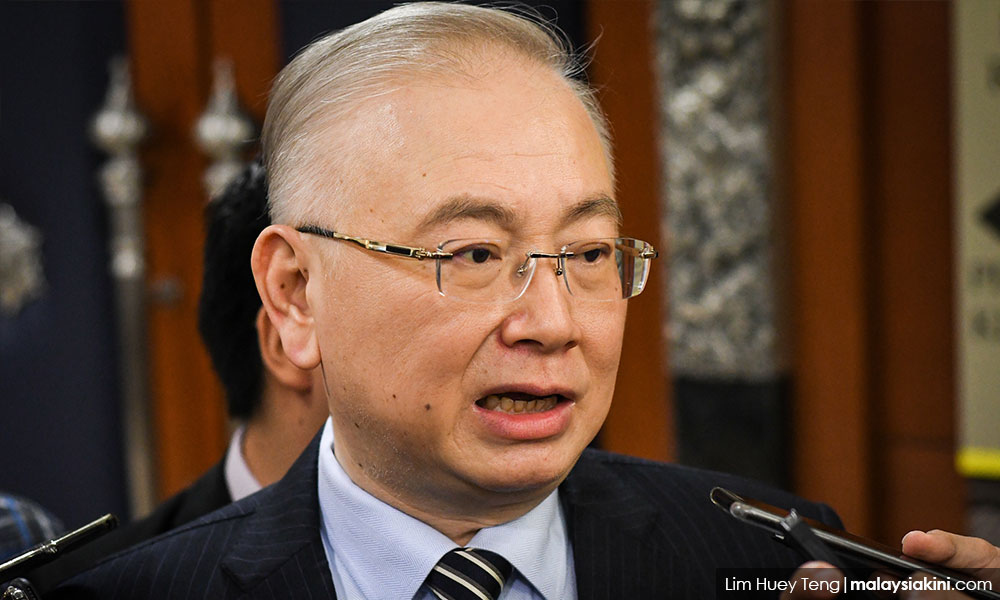
But while he makes impressive speeches and issues good press statements, in my association with him I have found that he is short on delivery. It is a weakness shared by many MCA leaders. That said, it would be fair to describe him as an up-and-coming MCA leader.
Ka Siong is closely associated with former MCA president Ong Tee Keat. At the height of the takeover of Nanyang by the MCA, I tried to persuade Ka Siong to support incumbent MCA President Dr Ling Liong Sik in the takeover attempt. He refused, and remained committed to oppose the MCA takeover.
I also tried to persuade him to support Liong Sik during the Ling Liong Sik-Lim Ah Lek crisis. Again, he turned me down, saying that he was committed to supporting Team B, especially Chan Kong Choy. Somehow, Ka Siong always had a very negative view of Liong Sik.
Although both of us hail from Johor, factional politics has kept us apart. He was associated with Tee Keat, Kong Choy (later, Ka Ting), and now Tiong Lai. But he practised a subtler form of factional politics compared to Tiong Lai’s. After I retired, he would call me now and then to invite me to attend MCA functions.
Every time I bumped into him, he would insist that we catch up for tea or dinner, and that he needed advice. He has been saying this since he became deputy president, but so far we have only met for lunch once.
When the vote of no confidence against Tee Keat was passed at the EGM on 10 October 2009, I was surprised to find that Ka Siong had teamed up with Tiong Lai to try to force Tee Keat to resign. Although the EGM was organised by my supporters, I never really asked Tee Keat to resign. I left it to his political wisdom to decide.
During the 2013 party elections, Ka Siong and I met twice to discuss the possibility that he stand for the presidency. At that time, he was the National Youth Chief. At the last minute, he chickened out. I was informed later that allegedly he succumbed to pressure applied by Kong Choy.
When Ka Siong was the Youth Chief and Deputy Minister of Education, he did some good work gathering information about students who were rejected for scholarships and students who were unable to enter public universities.
When Ong Ka Ting became the president, he was very dependent on Ka Siong for this information. Both leaders tried to extract maximum media publicity for themselves after they succeeded in appealing on behalf of the students. But many Chinese were reluctant to give the MCA the credit. Instead, they blamed the party for the discriminatory policy.
Of late, I noticed that Ka Siong has aged, with greying and falling hair. There is much speculation about his health.
Since I do not have access to any reliable information about this, it would not be fair for me to comment on the matter. I can only wish him well.
Part 1: My resignation and its aftermath
Part 2: The sex DVD - who were the culprits?
Part 3: Finding my replacement for GE13 and the PKFZ scandal
Part 4: Opponents’ attempt to bury me made me work harder
Part 5: How MCA came to own The Star
Part 6: I ensured transparency in MCA's purchase of office tower
Part 7: ‘Avoid factionalism, embrace unity’ - Soi Lek’s parting words to MCA
Part 8: Setting aside personal feelings in 2013 MCA elections
Part 9: 'Muhyiddin told MCA to make a stand on 1MDB'
Part 10: The eclipse of Najib's achievements by 1MDB scandal
Part 11: Broken trust: The Chinese community’s frustration with MCA
Part 12: The hypocrites in the MCA
CHUA SOI LEK is a former health minister and MCA president. Like Me or Hate Me: Rising from the Political Ashes is now available in all good bookstores at RM59 (paperback, English and Chinese) and RM99 (hardcover, English only). It is also available at MPH Online.
The views expressed here are those of the author/contributor and do not necessarily represent the views of Malaysiakini.


Report this comment
Are you sure you want to delete this comment?
This action cannot be undone.