


Amendments to NSC Act sees more teeth, PM's powers stripped
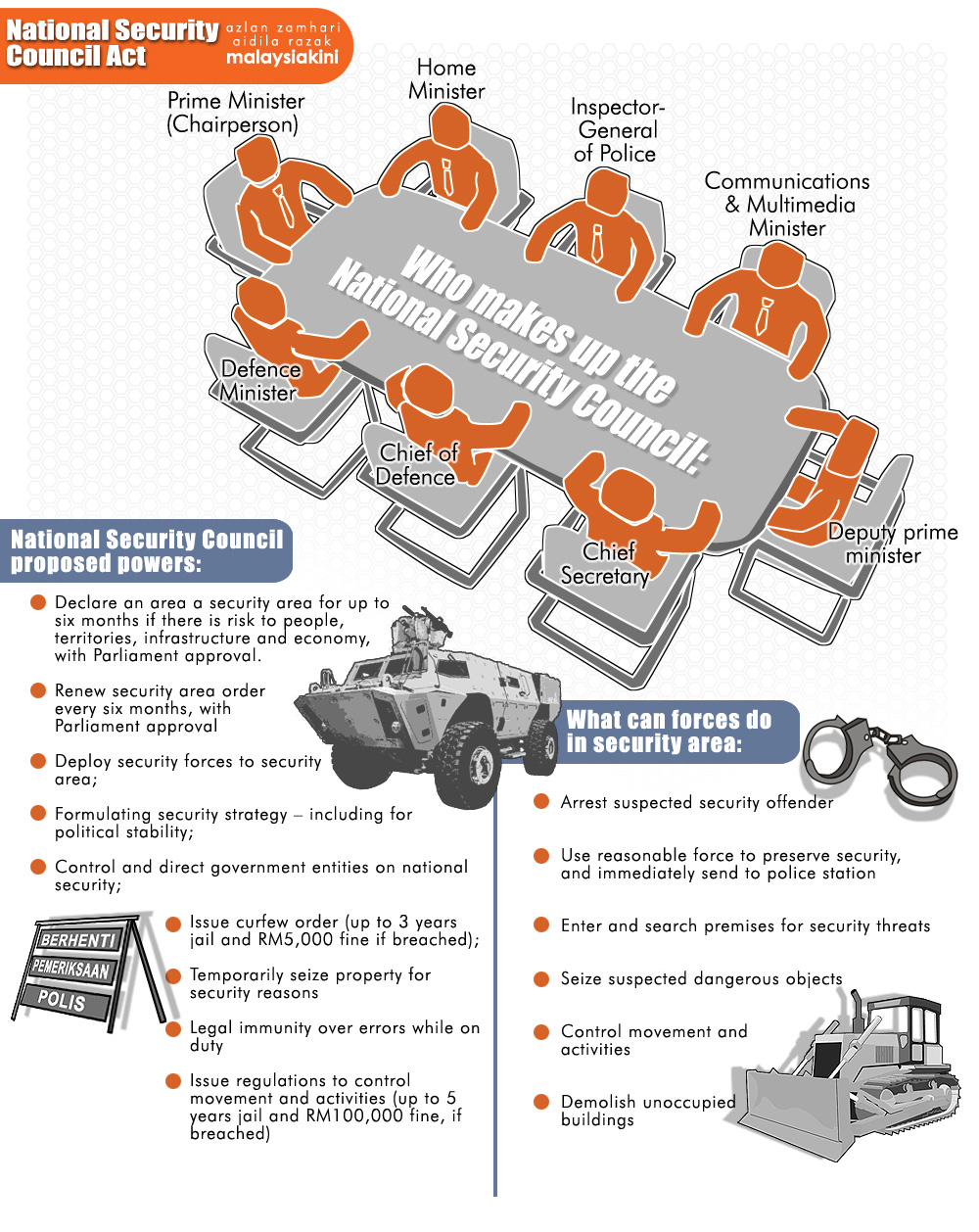
PARLIAMENT | The government has tabled amendments to the controversial National Security Council (NSC) Act 2016 in the Dewan Rakyat, which, among others, will see the prime minister’s powers stripped while further empowering the NSC.
The NSC (Amendment) Act 2019, if passed, will also see more teeth being added to possible prosecution under this law...
PARLIAMENT | The government has tabled amendments to the controversial National Security Council (NSC) Act 2016 in the Dewan Rakyat, which, among others, will see the prime minister’s powers stripped while further empowering the NSC.
The NSC (Amendment) Act 2019, if passed, will also see more teeth being added to possible prosecution under the act including for information leaks and non-compliance by individuals.
In the amendment bill tabled by Deputy Minister in the Prime Minister's Department Hanipa Maidin for first reading today, the power to declare “security zones” is to be transferred from the prime minister to the Yang di-Pertuan Agong, as per Section 2 and Section 18 of the act, upon receiving the advice of the council.
The revised act will also see the prime minister stripped of his power to “make regulations” to control the movements of persons and vehicles; to prescribe prohibitive actions; to prescribe possession of land, buildings and properties as well as to prescribe destruction of buildings in security areas.
Under the amended bill, authority for those has been transferred to the NSC.
However, the prime minister remains the chairperson of the NSC.
The revised act will also now allow the council's director of operations to demand “information and intelligence” from any individual and non-government entities.
Failure to comply will see individuals liable to imprisonment not exceeding five years or a maximum fine of up to RM100,000 or both upon conviction while non-governmental entities could face a fine of up to RM200,000.
Meanwhile, the bill also proposes a heavier penalty - from two years jail term to five - against anyone found convicted of having leaked information pertaining to the council's affairs, including for council members or those with access to its meetings.

Under Section 37(2) of the amended bill, anyone convicted of the offence could face a jail term not exceeding five years or a fine of up to RM100,000 or both.
Hanipa said the Bill is expected to be tabled for its second reading during today’s sitting.
The Pakatan Harapan government previously came under fire from some of its own lawmakers when it was declared that the NSC Act - which Harapan itself had deemed “tyrannical” - was to be revised instead of repealed.
This comes despite Harapan listing the NSC Act in its GE14 election manifesto as among the laws it would abolish.
The then opposition lawmakers had condemned the act as impinging on the powers of the Yang Di-Pertuan Agong because it would grant the prime minister emergency powers.
In the original bill, the prime minister could command operational control over security forces at designated security areas in the name of national security.
Critics also said the act bypassed the Conference of Rulers and that the previous government had not obtained the royal assent before gazetting it as law.
PKR president Anwar Ibrahim had filed a judicial review to challenge the constitutionality of the act in 2016, a day after it came into force under Article 66(4A) of the Federal Constitution.
In March, this year, the High Court allowed the PKR president to refer constitutional questions from his challenge to the Federal Court.



Report this comment
Are you sure you want to delete this comment?
This action cannot be undone.