


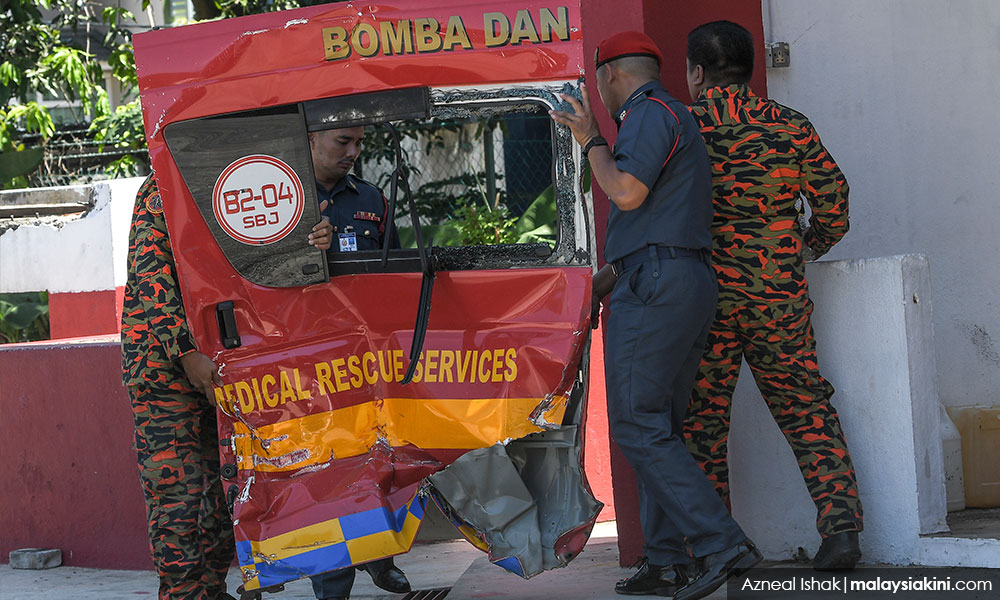

Possible to drag Adib out of EMRS van within 5 to 8 seconds - witness
INQUEST | A retired University Kebangsaan Malaysia (UKM) forensic pathology professor said Muhammad Adib Mohd Kassim could have been dragged out of the EMRS van within five to eight seconds on the night of the Seafield Temple riots late last year.
Dr Shahrom Abd Wahid’s testimony in today’s inquest into the fireman’s death contradicts the one given by an expert from Hospital Kuala Lumpur (HKL)...
INQUEST | A retired University Kebangsaan Malaysia (UKM) forensic pathology professor said Muhammad Adib Mohd Kassim could have been dragged out of the EMRS van within five to eight seconds on the night of the Seafield Temple riots late last year.
Dr Shahrom Abd Wahid’s testimony in today’s inquest into the fireman’s death contradicts the one given by an expert from Hospital Kuala Lumpur (HKL).
The 29th witness told the Shah Alam Coroner’s Court that this was based on his reconstruction of events during the Nov 27 riots, after having looked at event re-enactments done by the Fire and Rescue Department, among others.
As he laid out his version of the sequence of events on how Adib was injured on the night of the riots, Shahrom made reference to several videos played during the proceedings.
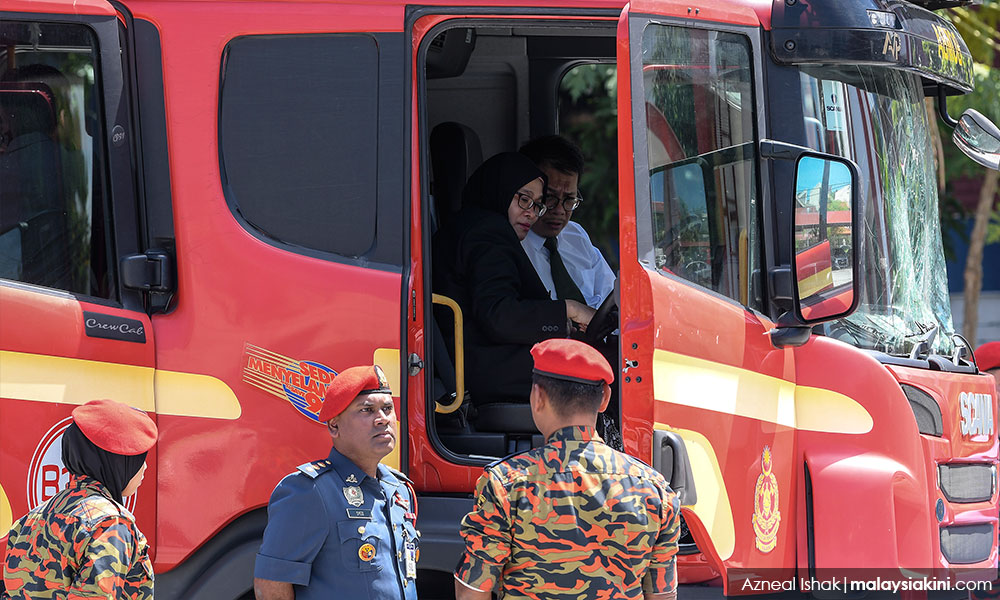
One video showed a fireman (reenacting the event) being pulled out by another fireman as the former had the EMRS front left passenger door kept closed on him.
Another video showed another fireman kicking at the same EMRS van door to demonstrate the possibility of how much force was needed for the door to be exerted on Adib as he was pulled out of the vehicle.
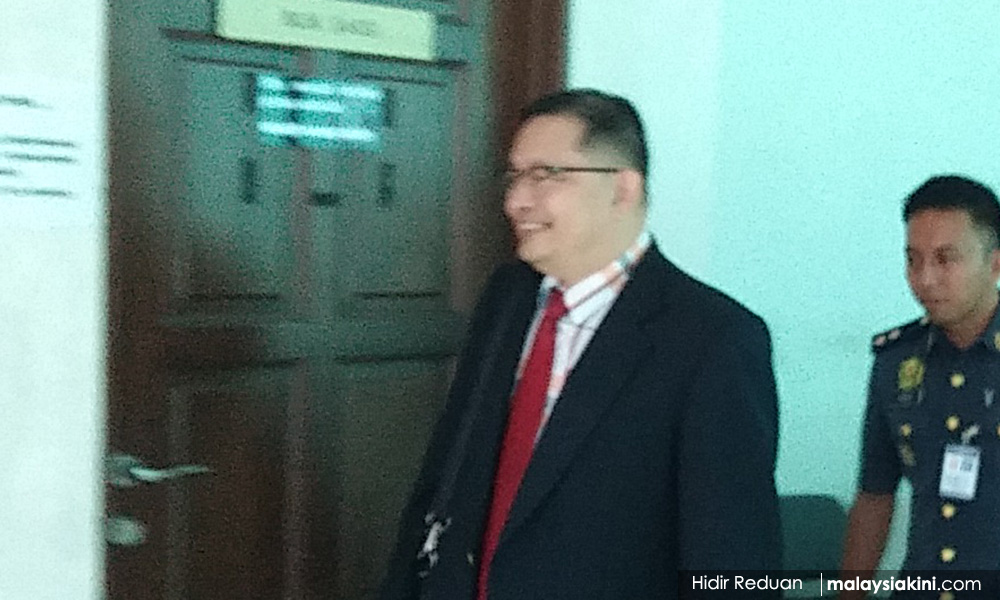
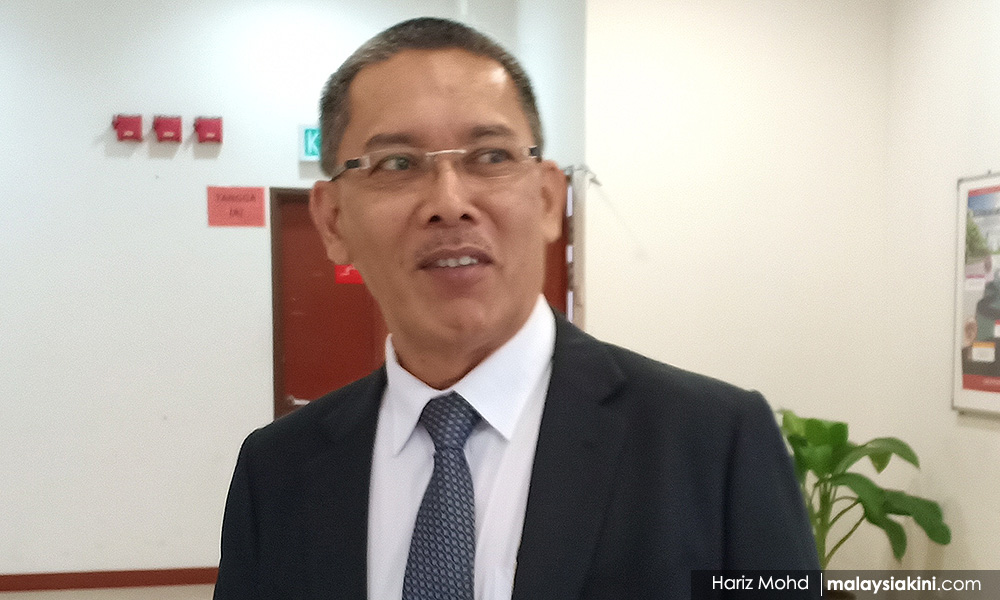
Shahrom (photo) said this when questioned by lawyer Syazlin Mansor, who is representing the Housing and Local Government Ministry.
Syazlin: There were those who said that there was very little time for (Adib) to have been dragged out (of the EMRS van which was at the scene of the riots at Subang).
Shahrom: My reconstruction (of events) showed that (Adib) was pulled out (of the van) and was hit on the front right chest (by force exerted on the van’s left passenger side door). His right forearm hit the left (van door) and he fell (out of the van). It would only take five to eight seconds as the EMRS (van) was slowly reversing.
Syazlin: You have taken into account (the notion) that Adib was dragged out of the van as it was moving?
Shahrom: Yes.
Syazlin: How about the notion that Adib was sent hurtling to the left (side of the EMRS van and to the road curb or some other nearby hard object) by the (van’s front passenger) door?
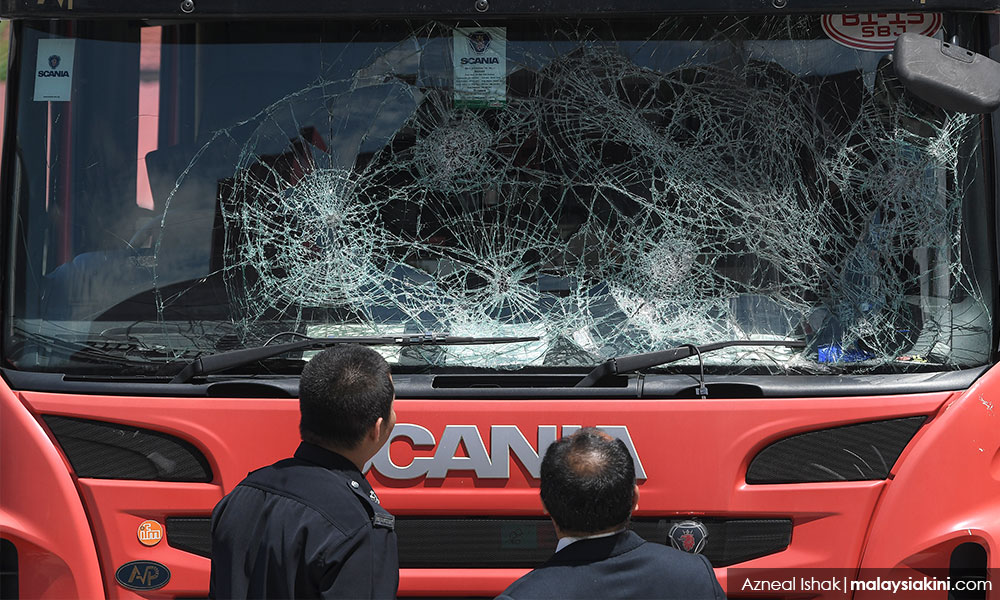
Shahrom: Based on the (first) video (depicting an FRT lorry and the EMRS van reversing to avoid an angry crowd at the scene of the riots), the USJ (CCTV or closed circuit television footage) is clearer (in showing the sequence of events). After having taken into account the first video and the USJ (CCTV) video, (Adib’s body) could not suffer the fractures (on his front right ribs and left rear ribs, if he was sent flying by the van’s door as the vehicle reversed).
In previous inquest proceedings before Coroner Rofiah Mohamad, HKL medical forensics specialist Dr Ahmad Hafizam Hasmi testified that there was too little time window for Adib to have been dragged out of the EMRS van.
Hafizam previously had also testified that it is very likely that the fireman sustained his injuries as a result of being hit by the EMRS van’s open front left passenger door as the vehicle reversed, causing the victim to be flung away and onto a hard object such as a road curb.
'One or two persons kicking at the door'
Shahrom, 61, today also pointed out that his reconstruction of events showed that Adib’s chest and back injuries could only be sustained if the victim been caught between the van’s left passenger door and the vehicle’s door jamb, as a result of being pulled out of the vehicle by one person while another person kicked the door.
He said based on the force needed to be exerted on the van’s door to leave the blunt force trauma type of injuries seen on Adib’s right chest and left back, it is not possible or sufficient for such injuries to be merely caused by the victim himself as he exited the van and by any part of the reversing van.
The retired professor added that it is even possible for there to be two people kicking at the door as Adib was pulled out by another person, pointing out to event reenactment videos performed by other firemen which were played back in the court today.
Syazlin: What is the sequence of events leading to the victim sustaining his injuries?
Shahrom: The victim was sitting in the EMRS (van’s) front passenger seat on the left. There was a big possibility that the door was a bit ajar (during the event) and that he was looking towards the back as the EMRS was reversing.
I noticed that inside such a van, if one wished to look at the side view mirror, one has to roll down the window (on the van’s left passenger side) due to how dark it (the window) was. The side window was rolled down as it (EMRS van) was reversing.
There were several other people nearby (outside the van) and (one of them) there had pulled out the victim (by gripping Adib’s left arm). The direction of the pulling is outwards and downwards, like a 45-degree angle. When it is done this way, there would be laceration (luka sagat) at the (back left) waist.
When he (Adib) was pulled out of the door, then the door’s impact force was exerted on his right chest. Then there was another impact from the door which hit his right forearm.
There were one or two persons kicking (at the door). Then (another person) gripped him, dragged him out, and straightened him up, thus (Adib) getting hit by the door, with the possibility this is with movement (of the van) or slightly static (van). This results in the fractured left rear ribs.
Adib fell onto the road and he was gripped by his shirt and dragged (across the road surface). This is my reconstruction based on forensic science knowledge and available physical evidence.
Conclusion fits with the fact
Shahrom pointed out that when the door is kicked by someone, the resulting impact force would cause the edge of the door to be pressed down on Adib as he was dragged out by another person, leaving the horizontal injury mark on his left back, which is consistent with the shape of the striker (a protruding part of the van’s front left passenger door jamb). He said the fractured left rear ribs was also caused by this.
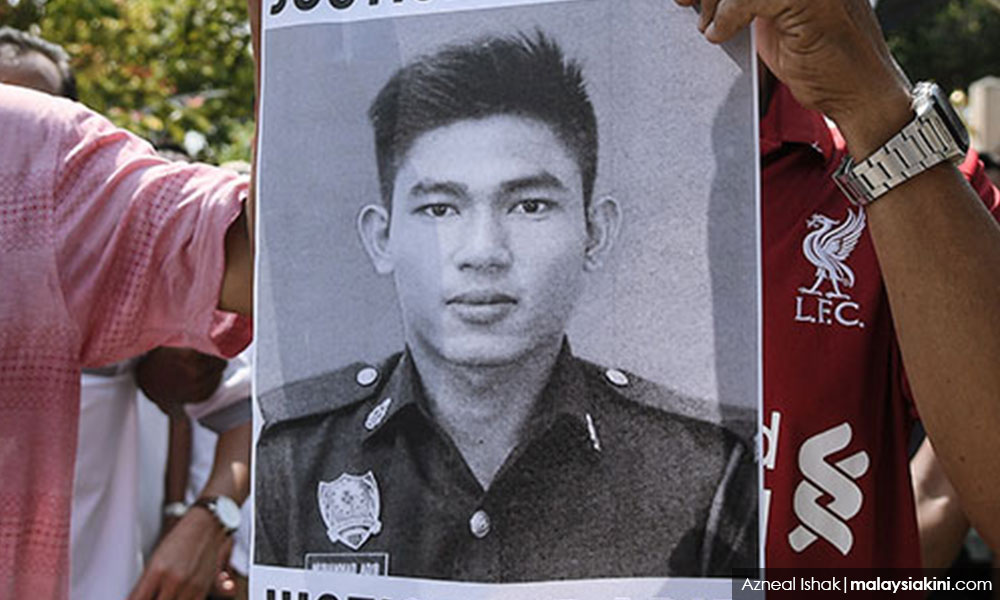
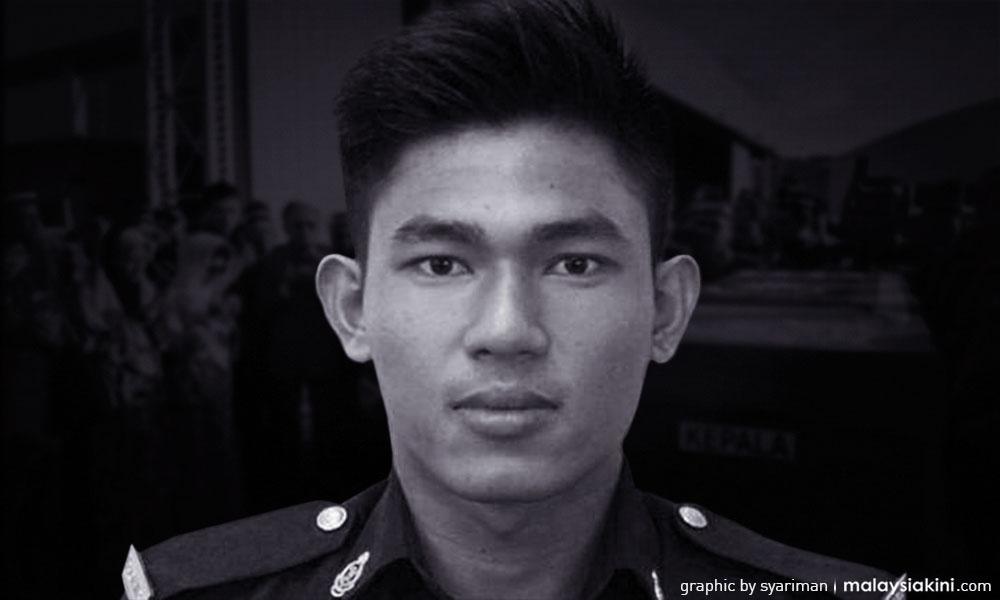
He highlighted the further force by the door on Adib (photo) as he was dragged further out left, the injuries on his front right chest and bruise marks on his right forearm caused by the rubber knob on the edge of the door, among others.
Shahrom said his conclusions were supported by the marks left on Adib’s clothes, which coincide with his fractured left rear ribs, as well as the missing buttons from his uniform.
He said his conclusion fits with the fact that it would require 3,300 newtons or over 300kg of force needed to cause rib fracture seen on Adib, which is possible with a person kicking the van’s door, which hit the fireman as he was pulled out by another person.
Shahrom further noted that if one considers again the scenario of Adib being hit by the EMRS van’s open front passenger door as the vehicle reversed, the vehicle would need to reverse at very high speed, which would then have caused the victim’s front and back to suffer much more intensive fractures, among others.
He added that if Adib had fallen on a road curb, he would have exhibited a specific straight line injury, unlike the ones seen on the victim when he was being treated by medical practitioners.
When Syazlin finished her questions, inquest conducting officer Hamdan Hamzah applied for proceedings be adjourned today and resume tomorrow as they need time to prepare questions for Shahrom.
Hamdan said this is because the oral testimony and event reenactment videos shown in court today were new and they need to study it in order to come up with proper questions.
Rofiah allowed the application and adjourned proceedings, to resume before her tomorrow (April 10).


Are you sure you want to delete this comment?
This action cannot be undone.