


Minister: 1.9m tonnes of palm oil exports to China will aid smallholders
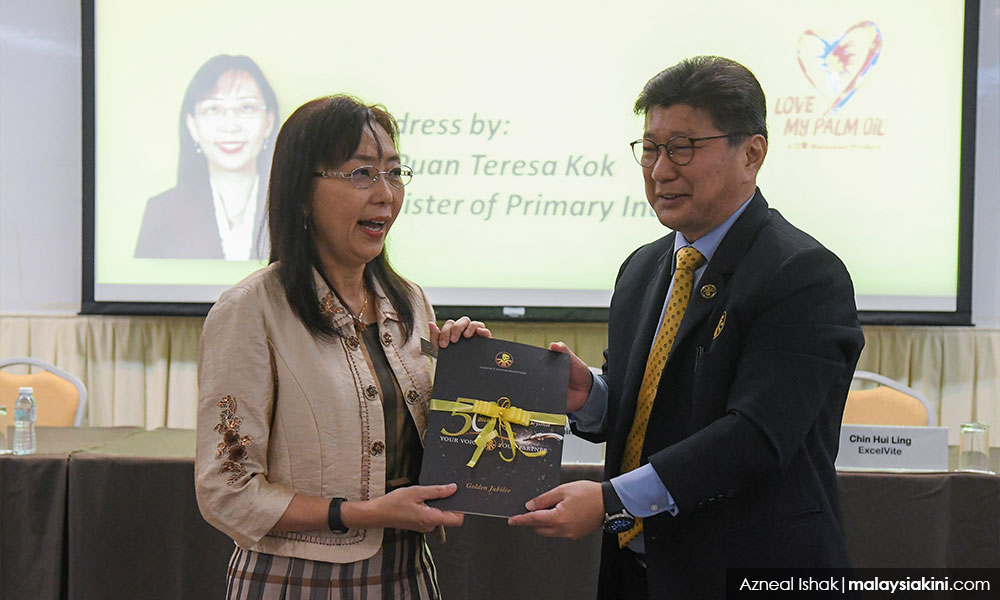
Primary Industries Minister Teresa Kok believes that China's plan to purchase an additional 1.9 million tonnes of palm oil from Malaysia over the next five years will help local smallholders tremendously.
"I cannot tell how it will help the (palm oil) price, because just like the price of petroleum, the price of palm oil fluctuates and changes everyday...
Primary Industries Minister Teresa Kok believes that China's plan to purchase an additional 1.9 million tonnes of palm oil from Malaysia over the next five years will help local smallholders tremendously.
"I cannot tell how it will help the (palm oil) price, because just like the price of petroleum, the price of palm oil fluctuates and changes everyday.
"But definitely, it is a big help to the smallholders," she told the media when attending a forum on B7 biodiesel implementation in Selangor today.
"That's a lot for over five years. We expect an increase of 200,000 tonnes (in palm oil exports to China) in this year," she said.
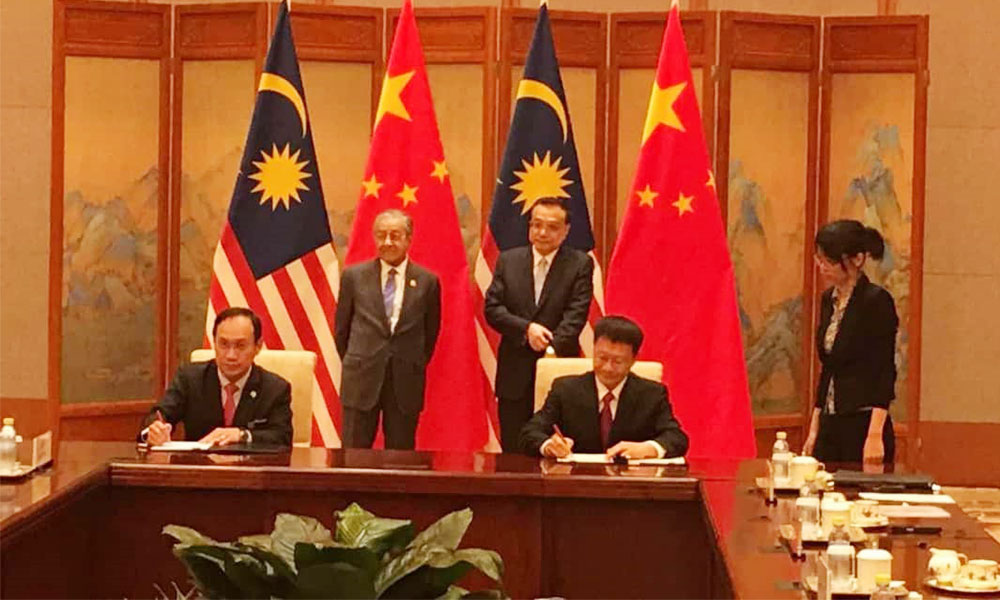
Kok added she will continue to follow up on the matter, and was making arrangements to travel to China in May in hopes of signing more memorandums of understanding.
According to her, a special task force has been set up to closely monitor the additional palm oil exports.
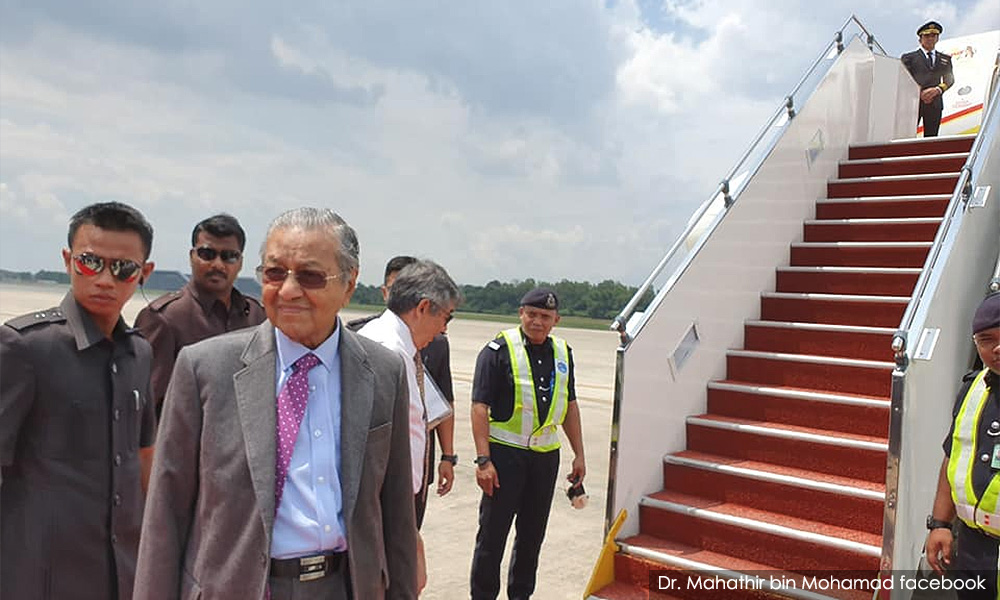
In a press conference last week, Prime Minister Dr Mahathir Mohamad had said that Putrajaya was "taking advantage" of the resumption of the East Coast Rail Link deal to secure China's purchase of palm oil, although the two matters were not directly related.
Biodiesel pricing
Meanwhile, Kok believed that pricing would be a key concern for industry players who use B7 biodiesel starting from July 1.
The manufacturing sector will be compelled to use B7 biodiesel in the supply chain from this date onwards.
B7 biodiesel comprises 7 percent palm oil and 93 percent petroleum diesel.
"At the moment, the price of the B7 biodiesel is slightly higher compared to fossil-based diesel by 0.41 sen per litre," she said.
The government has been pushing for the adoption of biodiesel by various sectors in phases since 2011.
For example, the B10 biodiesel programme for the transportation sector was made mandatory in February.
As a result of the programme, petrol stations nationwide have switched from the B7 biodiesel blend to B10 instead, which contains a higher percentage of palm oil.
Kok urged manufacturers to play their part in reducing the carbon footprint of their production processes.
She also appealed to them to help the 650,000 smallholders who were being impacted by low palm oil prices.
"Please don't say that this has nothing to do with us. If they cannot survive, that means the rest of us will be affected," she said.
The minister noted that there would be a slight increase in operating costs incurred with implementing the use of B7 biodiesel.
Kok said the government will step in if the price of palm oil increases to RM4,000 per tonne.
"When the price goes up, we can reduce the (biofuel) blend accordingly," she said.
"But at the moment, the difference in price - 0.41 sen per litre, not even 1 sen - is actually nothing," she said.
"At this stage, let's not talk about the price yet; unless the price really shoots up to RM4,000 per tonne, then we will discuss it," added the Seputeh MP.
According to the Malaysian Palm Oil Board, the price of crude palm oil as of Apr 25 is RM2,025.50 per tonne.
In resposne to another question, Kok said the government has no plan to impose a carbon tax.
"It is better not to introduce so many taxes, if not people will say Pakatan Harapan will tax everything," she said.



Are you sure you want to delete this comment?
This action cannot be undone.