


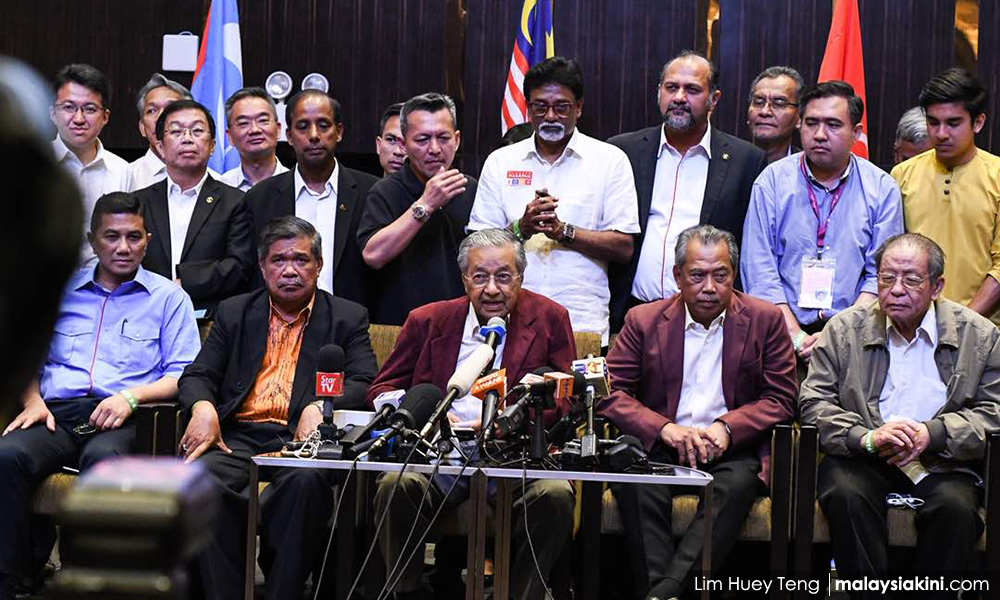

Penangites see hope, but view 'new Malaysia' with critical eye
Pakatan Harapan's dramatic rise to power on May 9 last year signalled a new beginning for all Malaysians who had been under what seemed like a never-ending rule by BN.
But the historical victory of the people's power also raised the bar higher for the incoming politicians and with a load of promises came disappointments too as Harapan leaders backtracked on some pledges.
Pakatan Harapan's dramatic rise to power on May 9 last year signalled a new beginning for all Malaysians who had been under what seemed like a never-ending rule by BN.
But the historical victory of the people's power also raised the bar higher for the incoming politicians and with a load of promises came disappointments too as Harapan leaders backtracked on some pledges.
Although Penang has been under Harapan (formerly Pakatan Rakyat) rule since 2008, most Penangites think the honeymoon is over.
The current sentiment is that it is time to view development on the island with a critical eye and shoot reminders when necessary so that the state government does not slip into complacency as did their predecessors.
Has the new leadership of Chief Minister Chow Kon Yeow kept the pledges listed Harapan's 14th general election manifesto? At the last state legislative assembly sitting, Chow claimed that 43 out of the 68 promises in Harapan's Penang manifesto had been achieved.
"Eleven are in the process of being implemented, 10 still in the planning stage, while four are (stuck) at the federal level," Chow said.

But how do local Penangites view the proverbial "New Malaysia", do they still see hope for a better Malaysia or are they shattered after seeing how rocky the road to true reforms is?
Malaysiakini spoke to several residents and these are their views.
Nusrat Mohamad, a graduate student, and mother of two children, aged 4-6 years, said: "While Penang leads on many fronts, their treatment of the environment lacks political will.
"Penang needs to conduct proper studies on development and the environment to benefit both people and nature. Time to work closely with our environment, not just by banning plastic bags and straws [...] these are superficial moves when respecting our land," she said.
"We must instead spend more resources on educating the people to love this island. Educate people to love art and preserve culture and to have a sense of belonging to our place and nature.
"We have been developing this island from no bridge to two bridges and yet we still complain about road congestion, too many cars. I am afraid the way we try to remedy it will only bring more pain to this island."

Nusrat was referring to the mega Penang Transport Master Plan (PTMP) and Penang South Reclamation (PSR) projects which have attracted both accolades and brickbats from the local community.
Lately, the now approved Kulim International Airport (KXP) in Kedah and its "negative impact" on Penang had also captured the attention of locals who fear the Penang International Airport (PIA) may be shut down one day.
To Nusrat, the way Chow had handled Kulim airport issue was rather "disturbing".
"Was there any basis to say that the PIA will shut down? Where is the proper research to back up such a claim? None. And the worst part is the people believe it, thus creating worry and unstable market conditions," she lamented.
However, all is not gloomy for Nusrat as she loves the way the local council organises small community projects in the children and women sectors.
"Such community programmes help improve quality of life of the rakyat from the education, economy, social and cultural aspects, creating peace and unity among the people," she said.
Another Penangite, Boo Soon Yew, said a year has passed a year adding it was a year of new hope in a "new Malaysia" and "we are surely on track towards it".
He said "doubters and scoffers" would look back with negativity on the past 12 months but he looked forward with positivity to the coming years.

"I speak as one who has enjoyed the 10+1 year rule of Harapan in Penang, seeing with my very own eyes and actively interacting with government agencies directly like the Penang Island City Council and the Penang Water Supply Corporation.
"They have been pretty efficient in dealing with complaints with more improved ways for the public to relay their thoughts," said Boo, an educator by profession.
"As for federal agencies, the unfolding of our nation's debt will now explain why for example, roads (under the purview of the PWD) faced limitations in road maintenance even for the simple task of road demarcations and arrows [...] all down to the lack of funds channelled to them," he noted.
" This, I'm sure, will explain many other federal agency projects that seemed stuck in the past".
Boo looks forward to a proper and efficient disbursement of funds by the Finance Ministry to the various ministries so that what should be done is finally done.
He also applauds how some ministers, deputy ministers, directors-general and secretaries-general have been very visible and active on social media.

"Keep it up! It's a platform for many to reach to you when all other proper channels may have been exhausted," Boo said. "Sieve through the snide remarks and you will do well as one in touch with the present digital generation.
"Thank you, Harapan and may you continue to finetune your efforts for the betterment of Malaysia and for Malaysians," said Boo.
Local activists, though, were not so kind in their assessment of Pakatan Harapan which they supported in the last national polls dubbed by some as "the grandmother of all elections" as it managed to topple the scandal-ridden government of Najib Abdul Razak.
But MTUC Penang branch secretary K Veeriah said looking at the bigger picture, there hasn't been any "meaningful" progress in terms of policies or socio-economic reforms.
He said the Harapan state government has just carried on where it left off pre- GE14. "The people are still facing the problem of the escalating cost of goods and services which are driving up the cost of living factor.

"Houses priced at RM200,000 or more cannot be termed 'affordable' to the bottom 40 (B40) of the population and to some extent that would be also true for a sizeable portion of those in the middle 40 (M40) segment," Veeriah observed.
"So affordable home ownership still remains a challenge." Veeriah also feels that the state leaders do not listen enough to the people and are bulldozing through their plans without considering public feedback.
"The state is geared to go ahead with the reclamation plan in the southern part of the island and the massive Pan-Island Link (PIL) highway project despite well- documented arguments against them," Veeriah said.
"Yet again, the state's disregard of public opinion on the matter is regrettable."
As for the economy, Veeriah said besides the traditional economic sectors such as manufacturing, tourism and private medical service, very little was being done to diversify Penang's economic base.
"Whilst major development activities are focused on the island, there is an urgent need to look at the bigger part of the state which is the mainland of Seberang Perai," he reminded.
Umno's Azizi Safar shared Veeriah's view, and said: "Nothing much to say (about the one-year Harapan rule in Penang) as it is the same government since 2008".
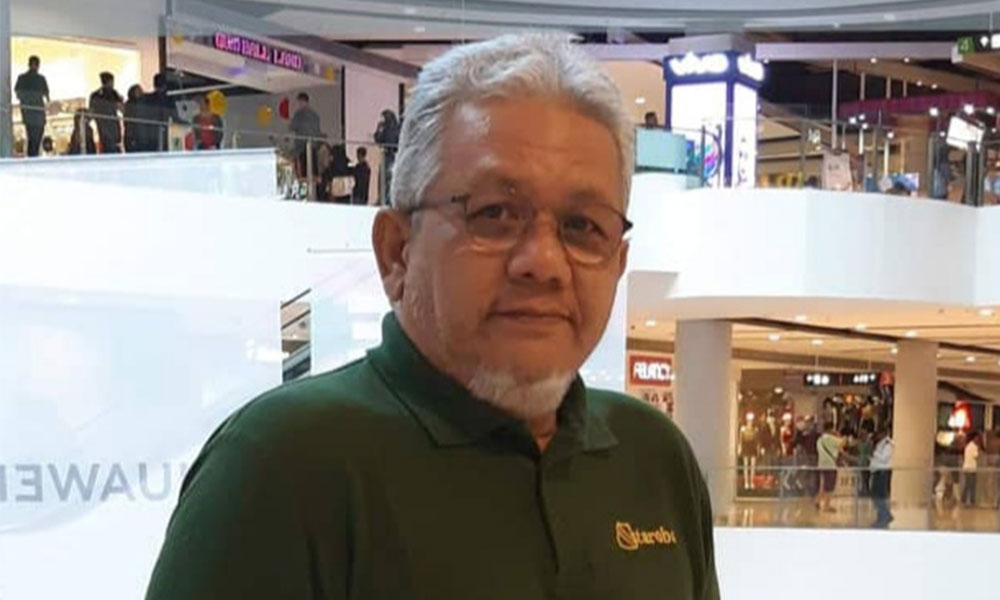
"Chow is merely continuing from where the former CM, now Finance Minister Lim Guan Eng, left off. Mega-projects like reclamations, PIL1, PTMP continue. It seems like there is just no more state land to sell, I presume. That is until the PSR is fully implemented," Azizi said.
He also cited the KXP controversy as being "quite a notable issue" where while Chow was against it, Guan Eng was not, saying it would be privately funded.
"On the other hand, Deputy Chief Minister II P Ramasamy is being too dramatic as always by playing the racial card," said Azizi, the former Penang BN executive secretary.
Ramasamy had been vocal on Harapan's response to the quota system imposed on the intake for matriculation programmes and the government's "protection" of the controversial preacher from India, Zakir Naik.
Azizi is also on the same page with Chow on KXP's impact on Penang, saying: "Whether is it is privately funded or not is not relevant. The existence of KXP in the long-run will kill off Penang industries and economy".
He, however, said he was amused by Chow claiming that Penang was still being "treated like a stepchild" by the present Harapan federal government.
"One thing to note is that the Penang state government is getting more arrogant with each passing day. They no longer listen to critics, even those from civil societies that voted them in in 2008," Azizi said while describing himself as a keen political observer.
Despite the brickbats and disappointments, Penang-based social activist Stanley Sudhagaran feels that Harapan leaders are working hard.
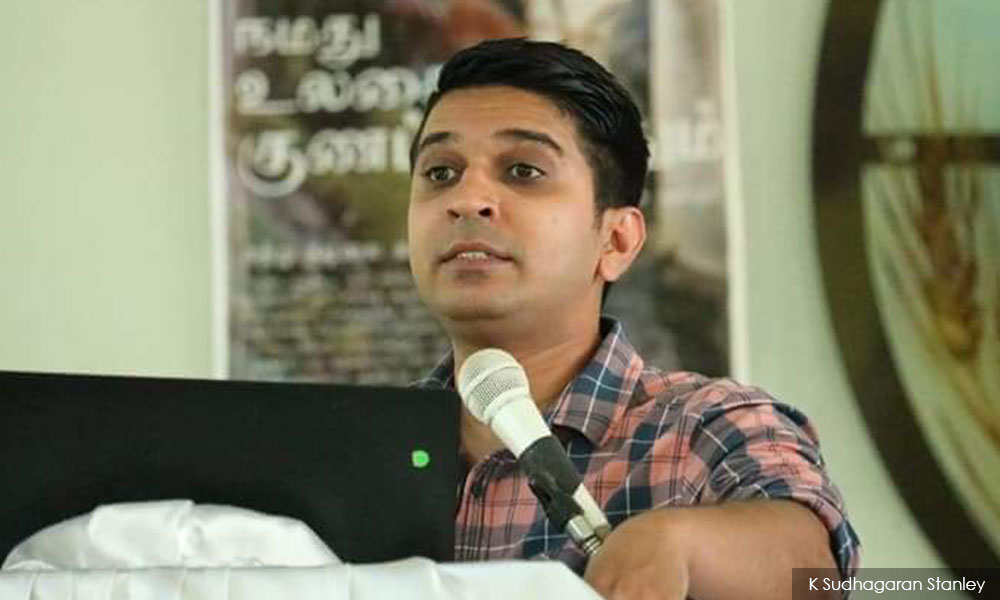
" There is no doubt about that. Various reforms are taking place. However, their handling of race and religion issues has been a disappointment so far. They have failed to do the right thing and to stand up against extremist ideology, " Sudhagaran said.
"This is surprising for me because they are in control of the whole government machinery and yet they seem to be losing the fight against extremists in this country," said the activist who is the coordinator for the Center to Combat Corruption and Cronyism in Penang.
"They need to understand that one of the main problems holding back Malaysia from succeeding right now is the inequality among Malaysians when it comes to race and religion.
"They need to ensure fair treatment for all regardless of race and religion. This should apply to education, employment, the economy and religion. They need to come down hard on extremist ideologies and on preachers that create disunity by propagating supremacy. Malaysia belongs to all equally," he stressed.
Sudhagaran urged Harapan leaders to return to their "Buku Harapan" manifesto which he described as "an inspiration to all".
"It's was because of those promises and hope, Malaysians voted for Harapan. They cannot run away from Buku Harapan. I understand that they cannot do it in one year but they've got five years.
"My hope is for them to fulfil all the promises in Buku Harapan before the next GE. That would create a big impact in Malaysia. Work hard for that. We can't afford to rest, " said Sudhagaran.



Report this comment
Are you sure you want to delete this comment?
This action cannot be undone.