


Minister stands firm on 'tint' ruling despite police's objection
The Transport Ministry will not reverse its decision to remove tint limits for specific types of car windows, despite the police claiming it could hamper their enforcement duties.
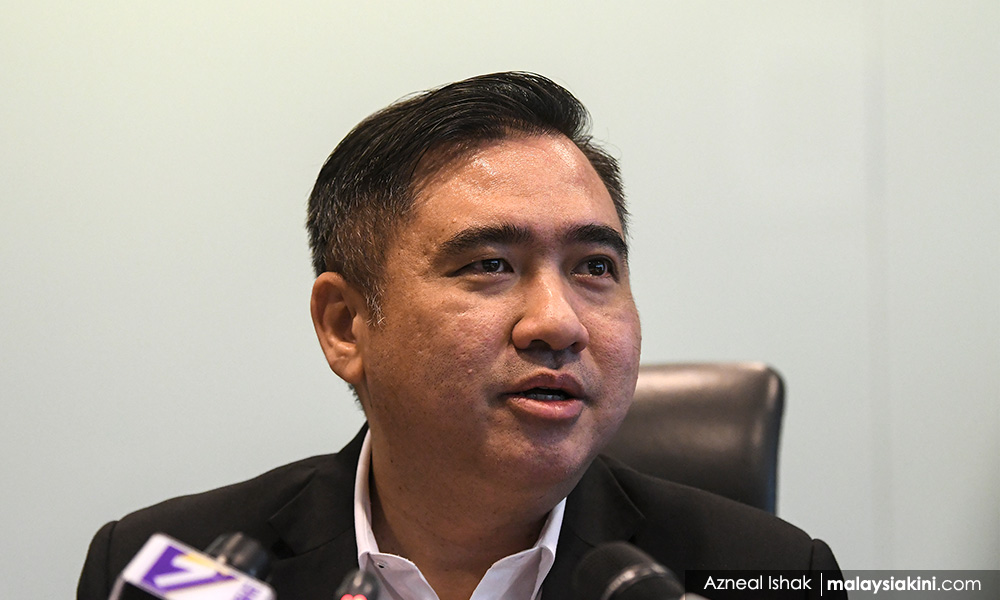
Speaking at a press conference in Putrajaya this afternoon, minister Anthony Loke said the amendments to the existing regulations were made based on feedback from the police and a special workshop held on this matter in June 2014...
The Transport Ministry will not reverse its decision to remove tint limits for specific types of car windows, despite the police claiming it could hamper their enforcement duties.
Speaking at a press conference in Putrajaya this afternoon, minister Anthony Loke said the amendments to the existing regulations were made based on feedback from the police and a special workshop held on this matter in June 2014.
He added that the Motor Vehicles (Prohibition of Certain Types of Glass)(Amendment) Rules 2016 still applied.
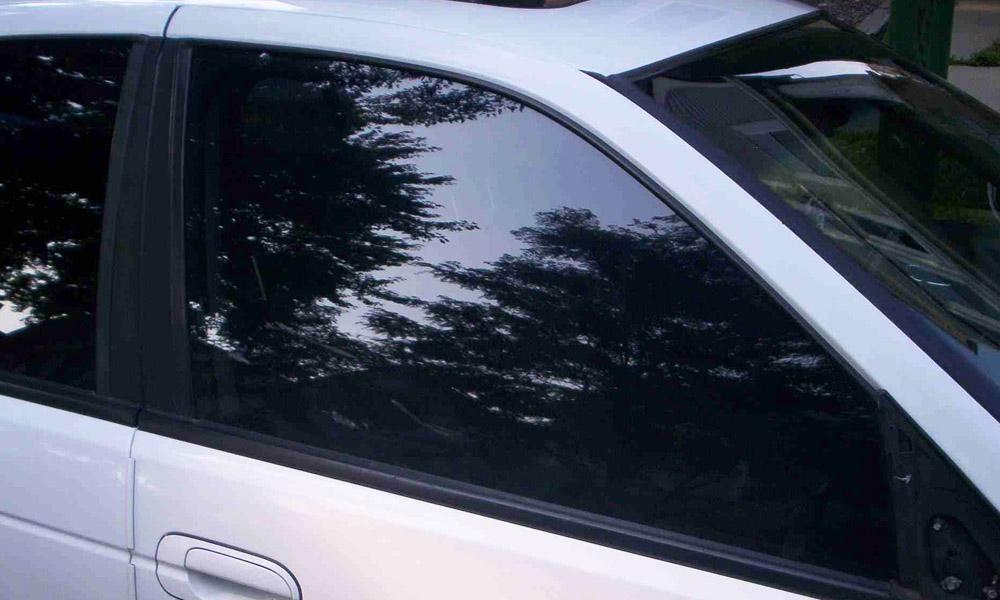
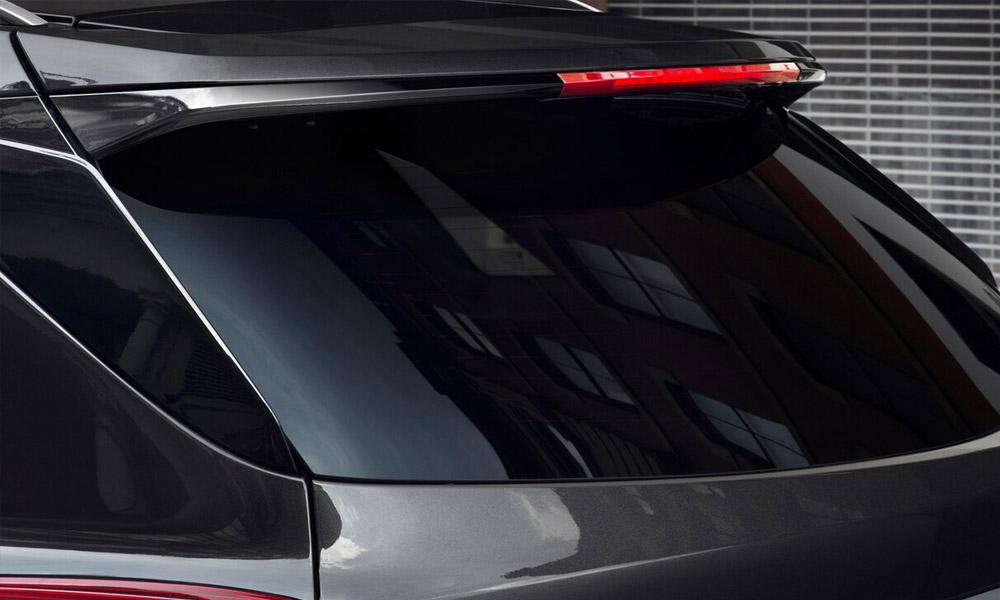
Loke had recently announced, effective yesterday, rear side windows and windshields of private cars could be fully tinted.
Federal traffic police chief Azisman Alias had said he felt slighted because the police's input was not sought before the new ruling was announced.
The minister said today he “celebrated” the differences in opinion which arose from his announcement on the tinting levels.
“However, the decision took into account the interests of all parties before the amendment was made, especially (feedback) from the workshop held before this.
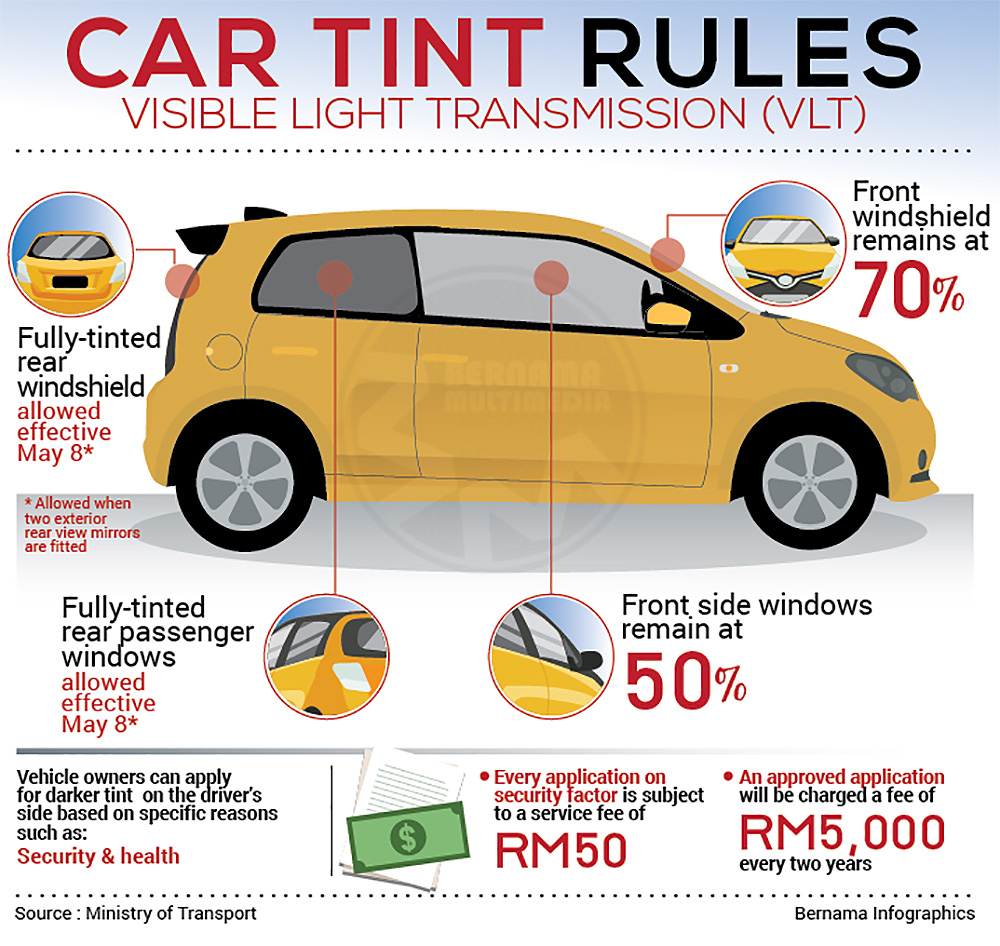
“The majority of workshop participants, including police, agreed to retain the visible light transmission (VLT) for the front and driver’s side windows at 70 percent and 50 percent, (this) was honoured,” he told reporters.
He added that the decision was also in line with international standards. International cars, including Japanese imported sport utility vehicles (SUVs) and multi-purpose vehicles (MPVs) often failed Malaysia’s standards, he said.
“Because of this, owners of these imported cars were forced to rent windows and windshields with which met the VLT standards at RM800, just to get by computerised vehicle inspection centre (Puspakom).”
Previously, the tint level for rear side windows and windshields of private cars had been regulated at 30 percent.
The new ruling does not apply to front side windows and windshields, which remain regulated at maximum 70 percent and 50 percent, respectively.
However, car owners can apply for a darker tint on the driver’s side if specific reasons are cited, such as security and health.
Applicants will be charged a service fee of RM50 and a further RM5,000 upon approval. The permit for darker tinting must be renewed every two years.
RTD to meet police
This fee, Loke elaborated today, was decided on to help generate income for the government, and took into account the risks of corruption.
He claimed there had been cases of previous Transport Ministry staff accepting a “payment” of RM8,000 for approval.
“The (previous) government never got a sen, but (such payments) lined the pockets of certain quarters. We might as well charge a fee…
“According to statistics, there are 17,186 permits for dark tinting that are set to expire. Those wishing to renew their permits must pay the RM5,000 fee if approval is granted,” he said, adding that the move will generate an estimated income of RM85 million for the government.
When asked about the police’s safety concerns, Loke said Road Transport Department (RTD) director Shaharuddin Khalid will be meeting with the police soon.
This is to iron out details, such as efforts to conduct checks and roadblocks with the new ruling in place. This, he said, would be in line with the latest circulation on utilising other, newer methods of tracking criminals, including the use of CCTV and facial recognition technology.
Even so, he added: “I wish to stress that the amendment to the window tinting, according to the Road Transport Act 1987, is under the purview of the Transport Ministry, and as such, we do not need to hold discussions with the police.”


Report this comment
Are you sure you want to delete this comment?
This action cannot be undone.