
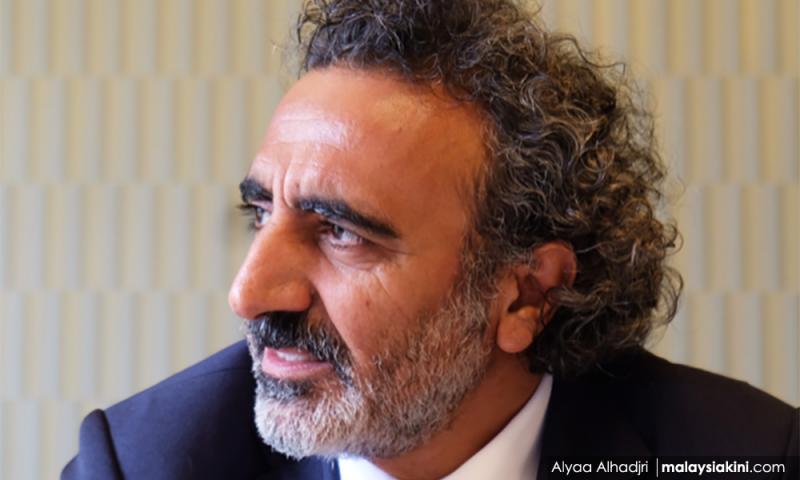
INTERVIEW | The key to assisting refugees in starting new lives is to allow them access to work, says US-based Tent Foundation founder Hamdi Ulukaya (above).

Despite Malaysia not being a party to the UN Refugee Convention, he said, millions of refugees have made their way here with the initial intention to be resettled in a third country.

However, for many, any plans of returning home or setting up a new life in Europe or in other developed countries often remain a dream and they are forced to make ends meet here in Malaysia instead.

Unlike countries like Canada and Netherlands that allow companies to legally hire refugees, Ulukaya noted that the Malaysian government had yet to decide on whether to formally recognise refugees.

"All these people have IDs from UNHCR and they are not being sent back.

"Malaysia is recognised as a stepping point to somewhere else, but the reality is that they are not going anywhere," the 46-year-old billionaire philanthropist told Malaysiakini in an interview in Putrajaya.

It is with this understanding in mind that Ulukaya came to Malaysia last month to share Tent's ongoing refugee partnership projects with local businesses and lawmakers.

"I'm not here to convince anybody to do anything. We named this trip as 'Learn and Share'.

"Share means what we have seen in other areas like in Turkey, a country currently providing one of the most generous refugee policies anywhere around the world," said Ulukaya, who was born in Turkey and later emigrated to the US and founded New York-based Chobani, the largest Greek yoghurt brand in America.

More than just policymakers, Ulukaya noted that businesses should also be aware of how they can contribute to assisting refugees, while at the same time benefiting from their operations.

Expanding on his experiences of meeting stakeholders and travelling to refugee camps around the world, Ulukaya said the Tent Foundation was set up in 2015 with a realisation that there were large communities of refugees - including those who arrived via Malaysia - settled in upstate New York where his yoghurt factory is located.

"They faced many challenges, including language, training, transportation and others.

"We brought them into our plants and let them work to rebuild their lives," said Ulukaya, adding that this experience in managing those refugees was invaluable when the refugee crisis struck Syria.

More than just providing a one-time aid or assistance, Ulukaya stressed there was a growing need for countries like Malaysia to develop best practices and policies for assisting refugees.

"I realised that wherever they are, the best we can do is to let them stand on their own feet and be a part of the community. The entrance to that (process) is access to work," he said.

"We say the minute a refugee has a job, that's the minute they stop becoming a refugee. That's the minute they start becoming a part of life, that's the minute they start becoming a part of the community, that's the minute they restart their lives," he said.

At present, Ulukaya said, approximately 130 companies have committed through the Tent Foundation to provide thousands of job opportunities for refugees, with the latest being 16 large corporations form the Netherlands.

He said Tent has partners in 34 countries worldwide, including furniture retail outlet Ikea and coffee chain Starbucks.

Refugees in Malaysia are not allowed to be legally employed and those with UNHCR cards are subject to immigration raids as their status is the same as an undocumented migrant.

To make ends meet, many resort to various odd jobs with high risks of exploitation and some end up as beggars.

The lack of support for refugees in Malaysia has also exposed them to involvement in various social ills, including links to terrorist groups either here or in their home countries.