


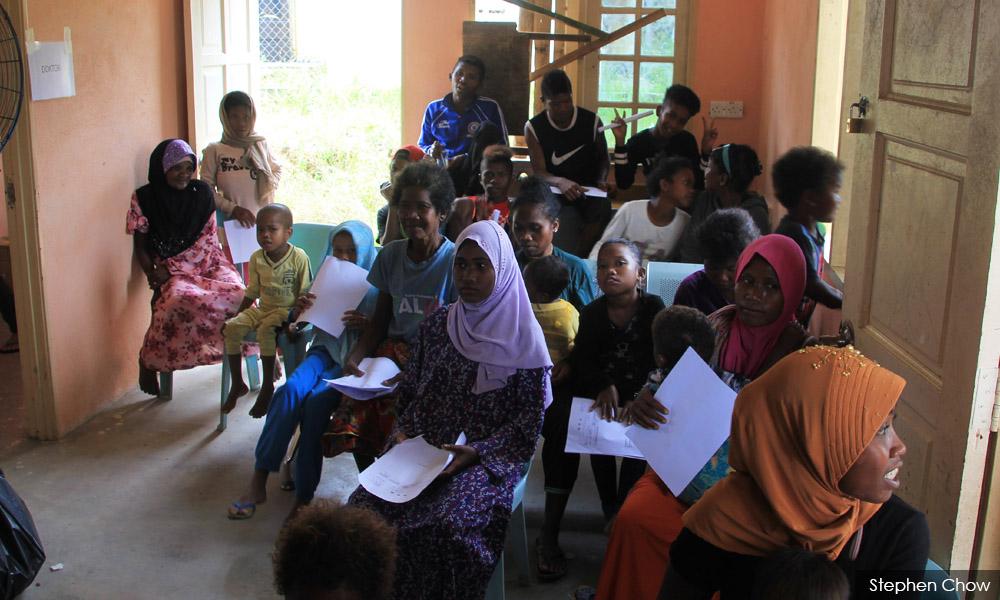

Orang Asli community dying from neglect, appalling conditions, says doc
"I do not think this is a straight-forward airborne disease. This is a community left behind, dying from neglect. Cordoning off the place is not the answer. They need help. Lots of help from all public agencies."
Dr Steven Chow was upset and angry as he conveyed his thoughts over the unfolding crisis at Kampung Kuala Koh, Gua Musang, where 14 Bateq villagers have died since early May.
As the team leader of the Federation of Private Medical Practitioners’ Associations Malaysia (FPMPAM) medical outreach programme, Chow has been involved in providing healthcare to indigenous communities since...
"I do not think this is a straight-forward airborne disease. This is a community left behind, dying from neglect. Cordoning off the place is not the answer. They need help. Lots of help from all public agencies."
Dr Steven Chow was upset and angry as he conveyed his thoughts over the unfolding crisis at Kampung Kuala Koh, Gua Musang, where 14 Bateq villagers have died since early May.
As the team leader of the Federation of Private Medical Practitioners’ Associations Malaysia (FPMPAM) medical outreach programme, Chow has been involved in providing healthcare to indigenous communities since 2010.
He visited Kampung Kuala Koh just a week before the crisis unfolded and was appalled by the conditions in the village.
"We brought in a medical team comprising volunteers, nurses, senior GPs (general practitioners) and dermatologists there on April 28 in response to a call for help from another NGO following an article in the Utusan (Malaysia) regarding a ‘mysterious skin disease’ afflicting many patients," Chow told Malaysiakini in an email interview.
"This was earlier highlighted to us at a meeting with the Hospital Orang Asli Gombak (HOAG). We also had the support of a medical team from the Klinik Kesihatan Airing, Gua Musang, arranged by HOAG.
"This was also a follow-up visit from a previous camp done by our team from Kedah," he said.
Water tanks empty
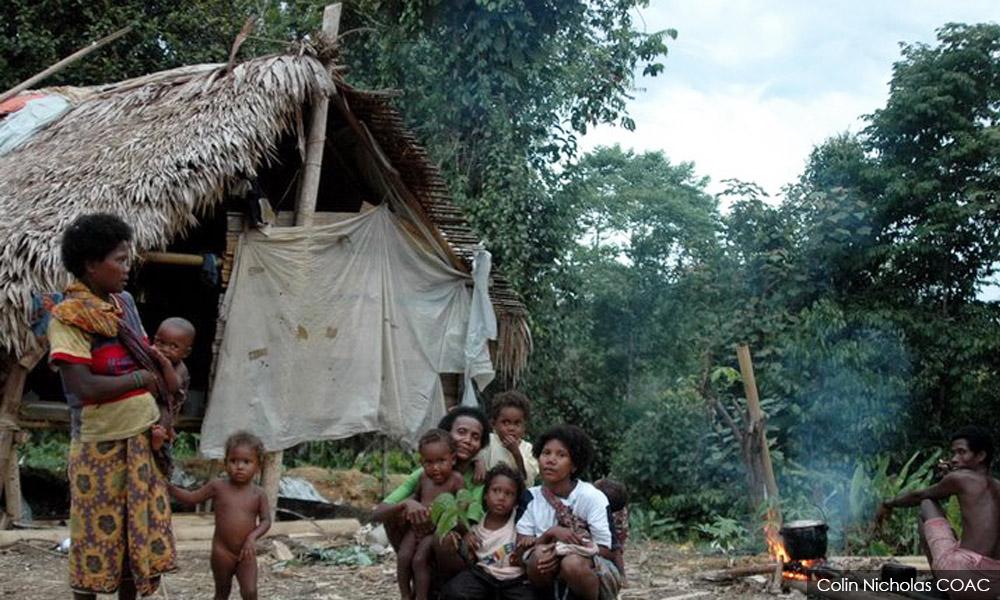
Upon his arrival there, Chow was deeply disturbed by what he saw.
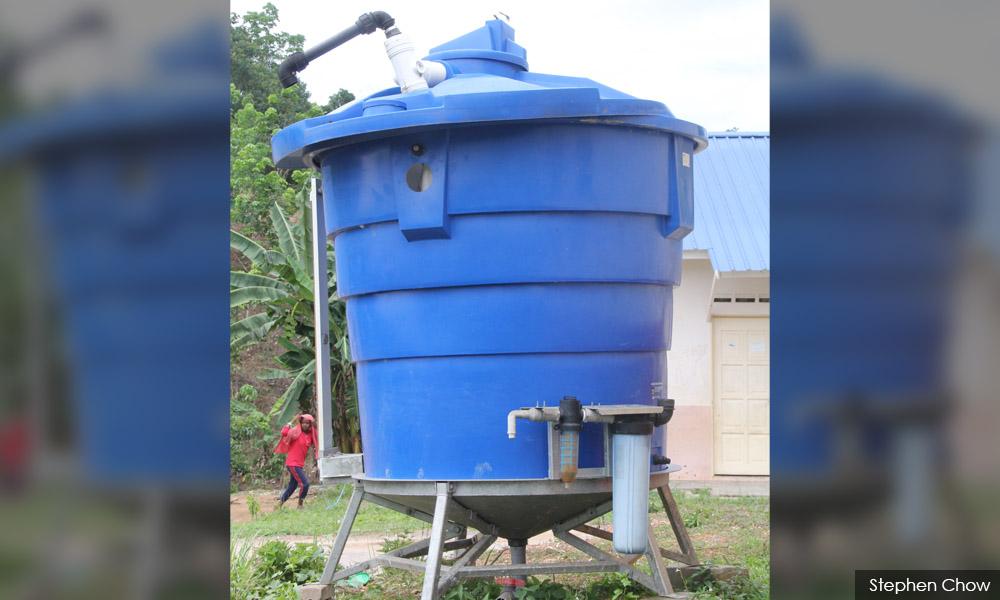
"It was appalling. There was no running water. All the water tanks were empty. Pipes were broken. All we had was the bottled water that we brought along for the patients and the medical team.
"With no running water, the standard of sanitation was terrible. We saw patients from more than 60 families, many with multiple health problems. Almost all had infections affecting either the respiratory or gastrointestinal (systems), or the skin.
"There were 32 cases of tinea imbricata (an extensive fungal skin infection), the so-called ‘mysterious skin disease’. Almost all the children had worm infestation and malnutrition," Chow said.
"We also heard that the tok batin (village head) and his brother had died earlier, before the recently reported spate of deaths. Something is obviously not right."
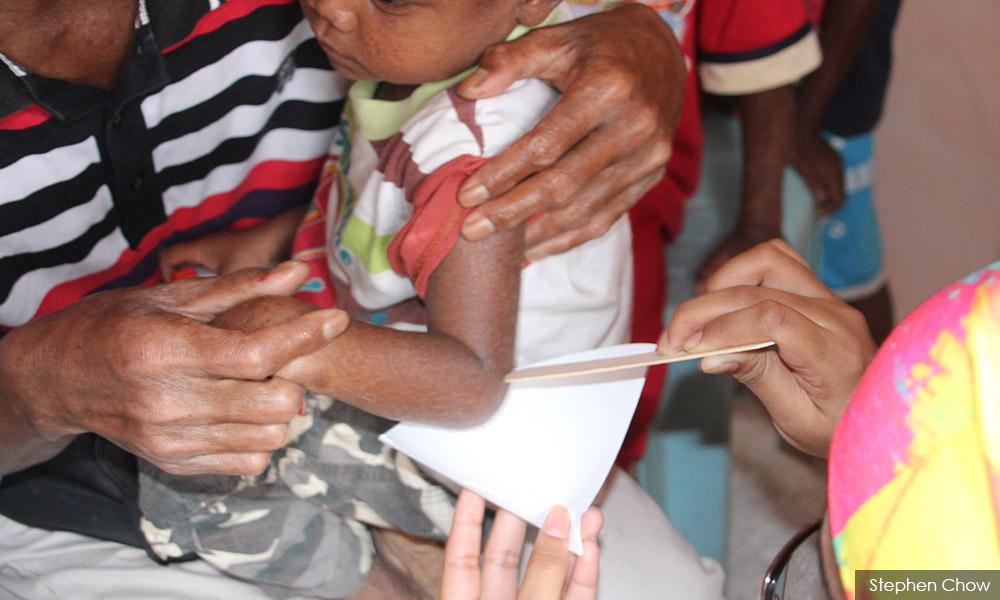
Chow is unable to comment as to whether or not the water supply to the village was contaminated as he "did not have the time and opportunity to visit the water source."
Yesterday, Kelantan Health Department director Dr Zaini Hussin said that the village would be cordoned off, as the authorities work to identify the cause of the deaths and to contain the situation.
Chow called for greater preventive measures to ensure that this sort of crisis does not befall other rural communities.
"Mobile clinics must be regular and able to provide basic medical care. Kampung Kuala Koh is accessible by reasonable road travel.
"There is no reason for the state of neglect after 60 years of development in the nation.
"The answer is for the government to mean what it says, that is ‘to leave no one behind’. It must prioritise its effort to improve access to basic medical care for these communities.
"There must be proper water and sanitation provided, urgently," he said.
Herculean task
In 2006, FPMPAM launched the Citizens Action in Response to Emergencies (Care) programme to carry out work in marginalised communities, both in urban, as well as difficult to access areas of Peninsular Malaysia and Sabah and Sarawak.
This year, with the support of the deputy minister of health, the private doctors’ organisation initiated a ‘DrsforAll’ programme to focus outreach work for Orang Asli communities.
It is a private-public partnership and corporate social responsibility (CSR) initiative with the Health Ministry, together with the support and collaboration of HOAG and the Orang Asli Department (Jakoa).
However, Chow said this was a herculean task for volunteer emergency medical practitioners, particularly if the root cause of the problem is not addressed.
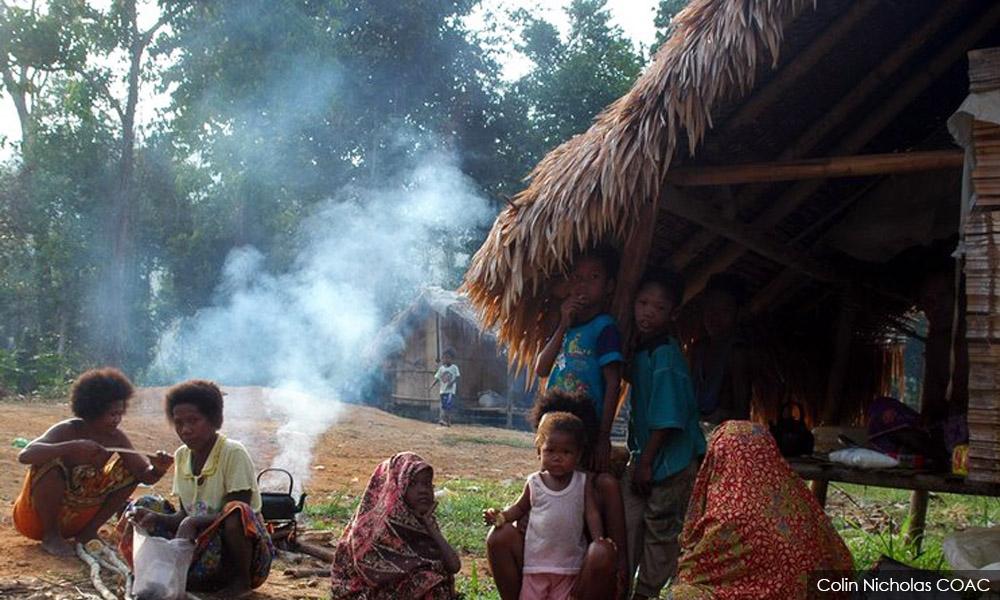
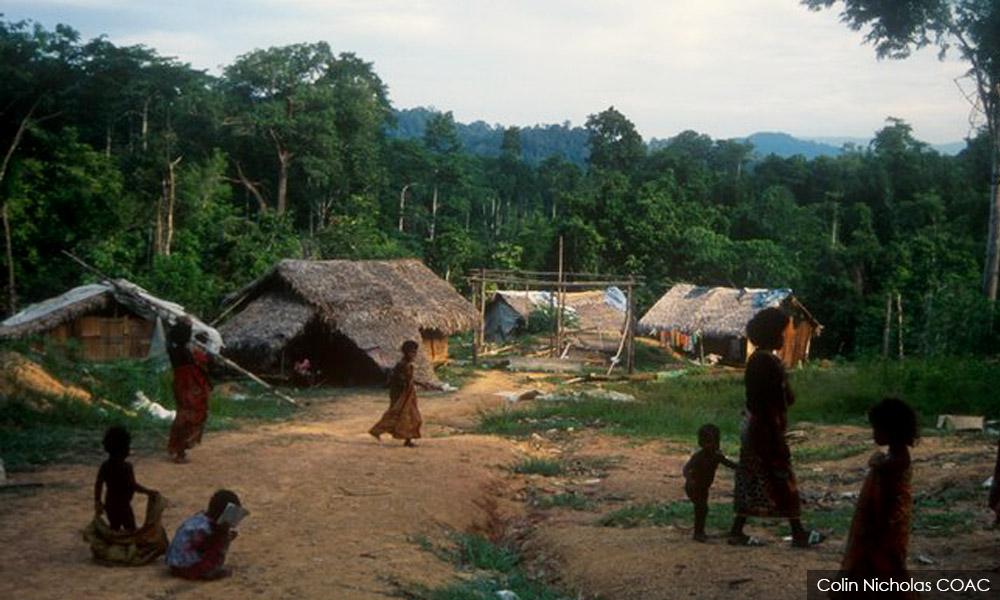
"After their land was taken away for plantations, these people were essentially left to fend on their own and were virtually cut off from the resources of the jungle which they had previously depended on for their survival," Chow said.
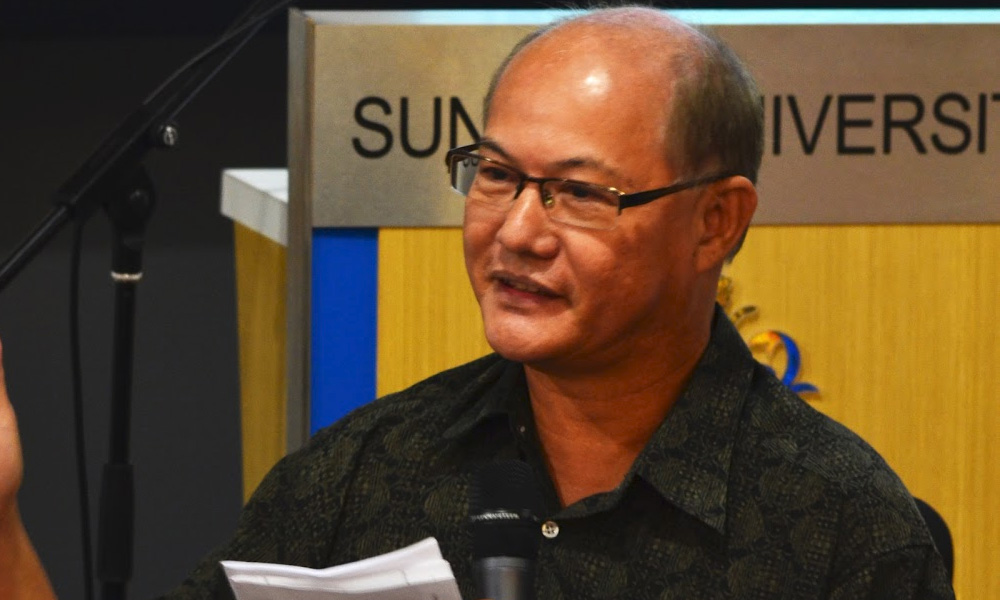
Chow's testimony echoes that of Colin Nicholas, the executive director of the Centre for Orang Asli Concerns (COAC), who said that the current crisis is a direct result of a situation “when people’s rights to their customary lands are not recognised and that land is destroyed”.
"Just seven to 10 years ago, if you visited them, they were perfectly healthy and psychologically happy.
"But their land has been taken away, in this case by the Kelantan state government. And their resource base has been destroyed," said Nicholas, adding that the villagers used to have a system that enabled them to live off the land.
Chow lamented the lack of access to healthcare by marginalised communities.
"We cannot have another ‘Kam Agong’ case," he said in reference to a woman who died after childbirth in the Lun Bawang village of Long Semadoh, Sarawak, due to medical negligence.
He urged the government to look into the situation to ensure such tragedies are not covered up, nor repeated again.
"A full multi-agency investigation into the deaths is warranted,” he said.
RELATED REPORTS
Minister: Kuala Koh villagers' immunity compromised
DOE: Kuala Koh water sample results in two days
DPM chairs emergency meeting on Kuala Koh Orang Asli
Ministry rules out leptospirosis, TB in hospitalised Orang Asli


Report this comment
Are you sure you want to delete this comment?
This action cannot be undone.