



Anti-haze efforts reach the sky
PHOTO ESSAY | The unrelenting haze has left Malaysians gasping for breath.
Caused largely by forest fires in the Indonesian provinces of Kalimantan and Sumatra, the haze first reared its head this year in the second week of August when parts of Sarawak registered high API readings of between 200 to 300.
PHOTO ESSAY | The unrelenting haze has left Malaysians gasping for breath.
Caused largely by forest fires in the Indonesian provinces of Kalimantan and Sumatra, the haze first reared its head this year in the second week of August when parts of Sarawak registered high API readings of between 200 to 300.
In the past week, the situation has escalated with hundreds of schools having to close with parts of Kuala Lumpur, Selangor, Johor and Sarawak enveloped in thick smog.
In Sri Aman, Sarawak, API numbers shot up to more than 400, which is classified as "hazardous".
On Sept 11, Malaysia's Energy, Science, Technology, Environment and Climate Change Minister Yeo Bee Yin told her Indonesian counterpart Siti Nurbaya Bakar not to be in denial over the cause of haze in the region, after the latter accused Malaysia of not being transparent over its own forest fires.
This Monday, cloud-seeding operations began in an effort to alleviate the situation.
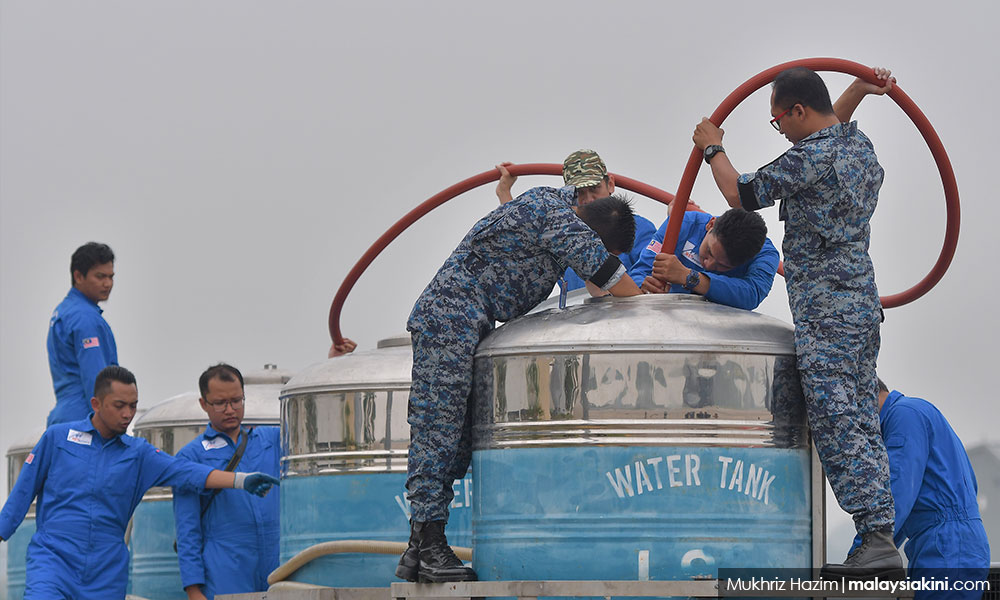
Cloud-seeding is a type of rain-inducing technique that aims to change the amount or type of precipitation that falls from the clouds by dispersing substances into the air that serve as cloud condensation.
The intended effect being to spur rainfall.
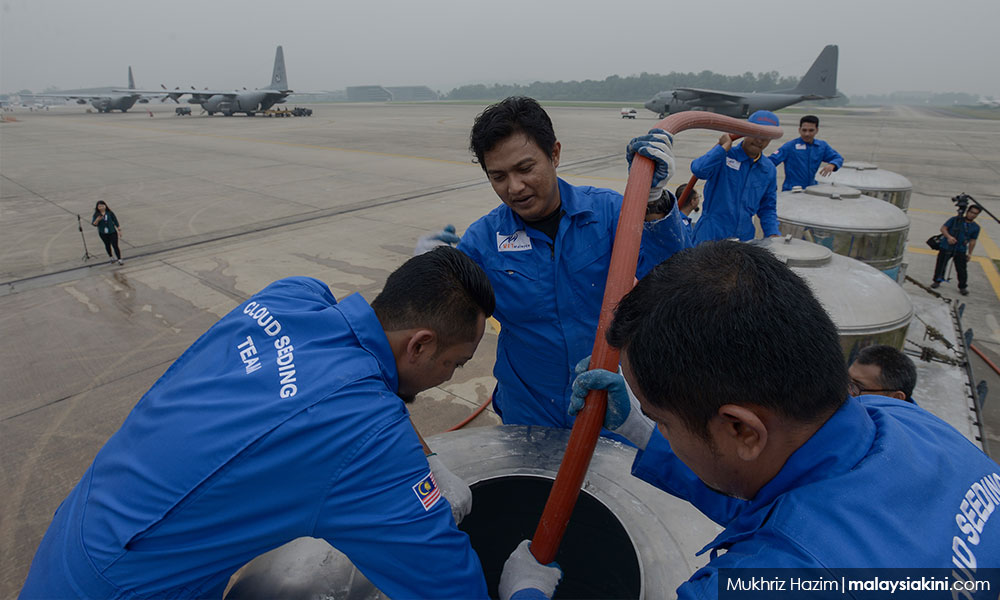
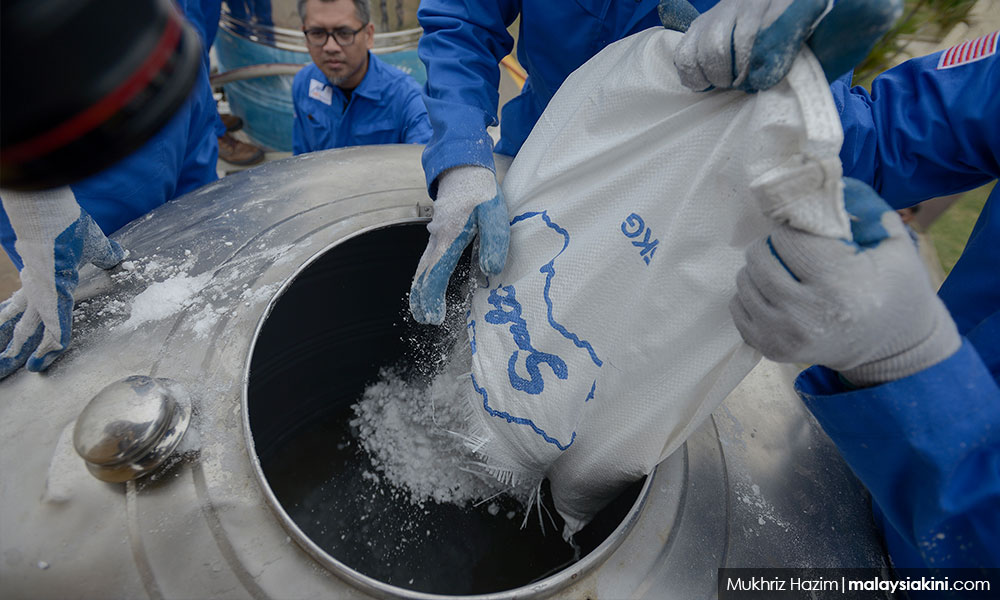
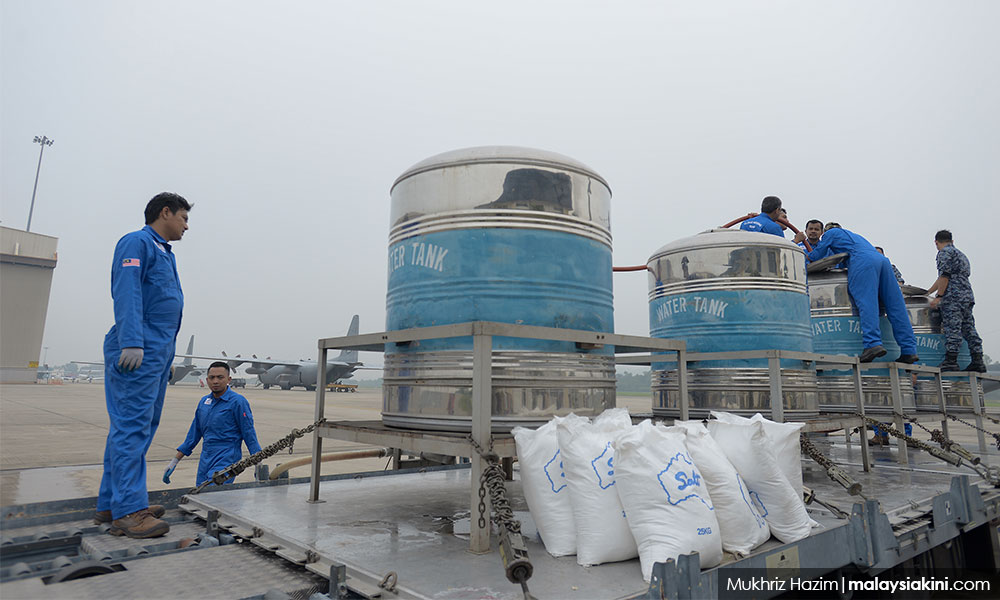
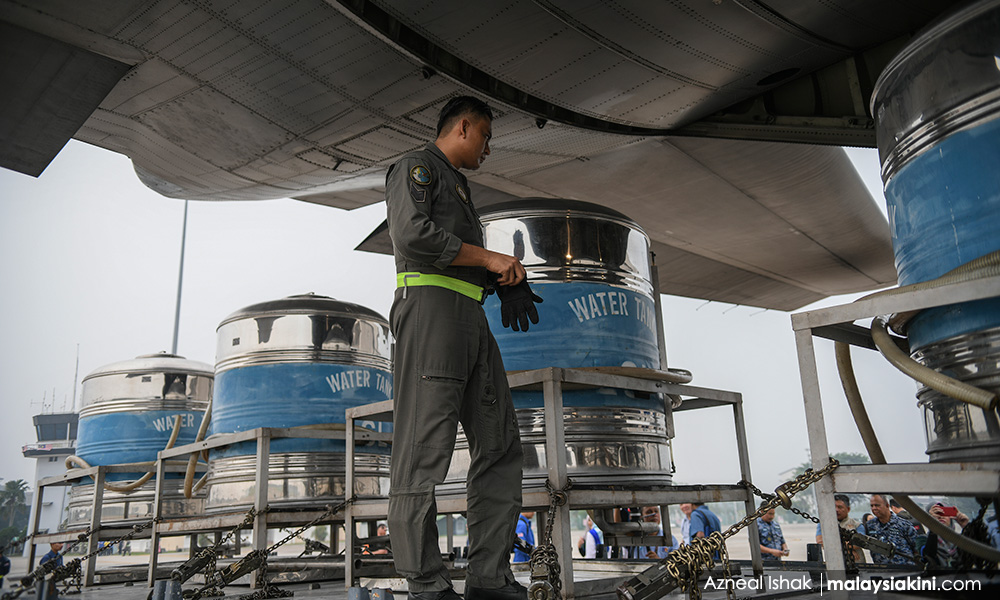
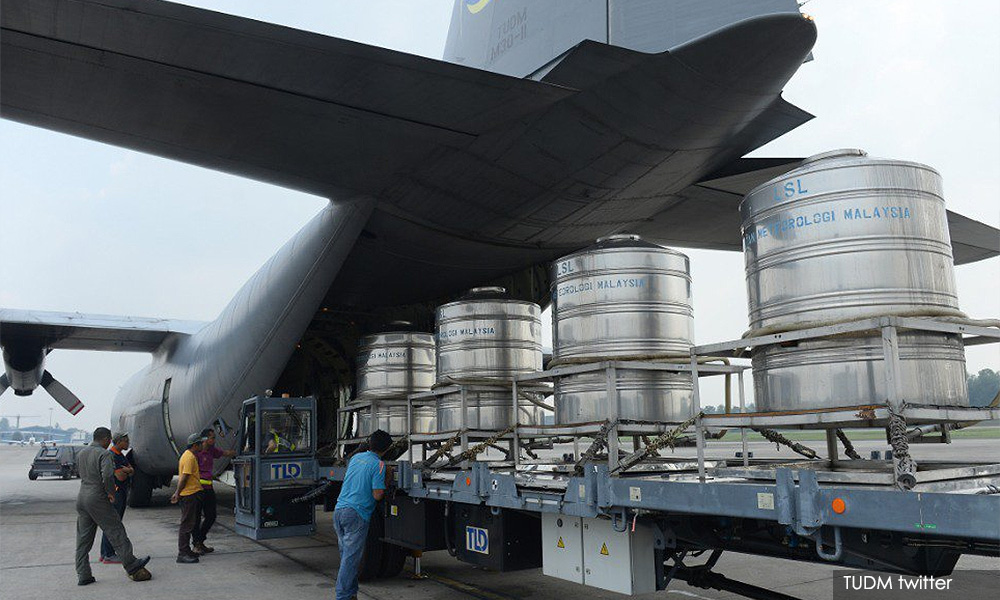
Royal Malaysian Air Force (RMAF) and Meteorological Department Malaysia personnel were seen at the RMAF base in Subang, Selangor, mixing sodium chloride and water for a solution.
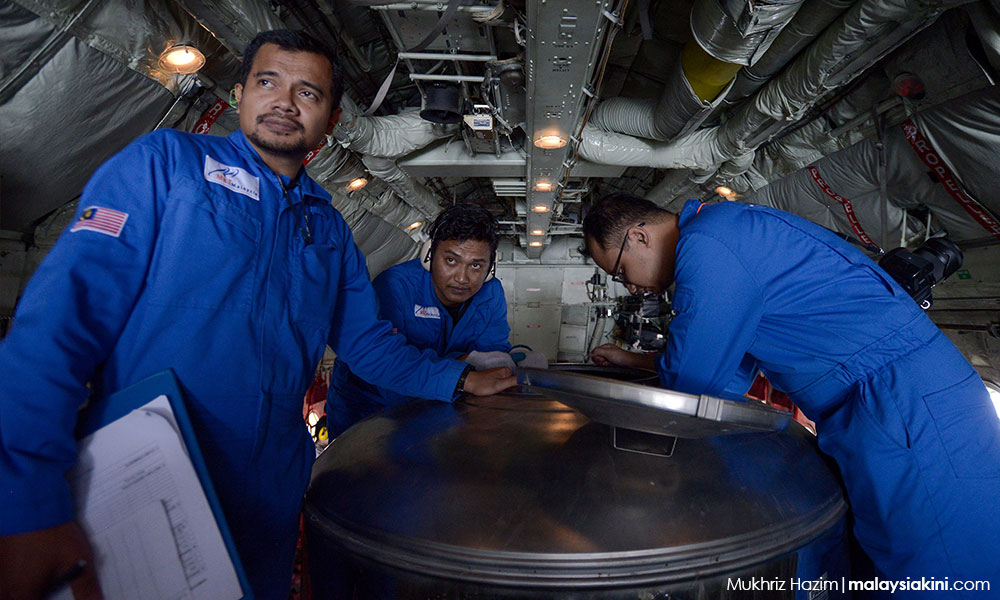
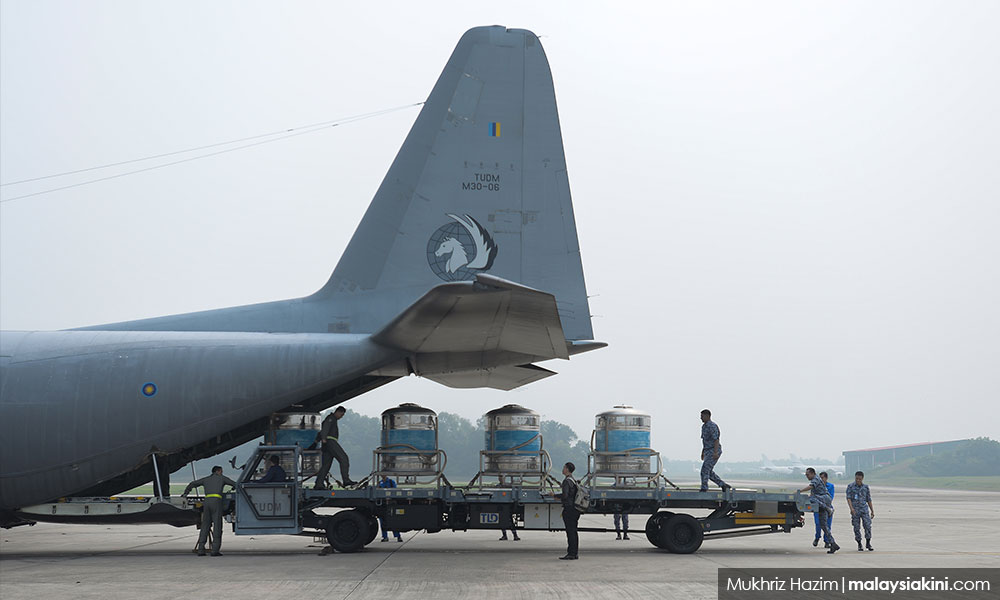
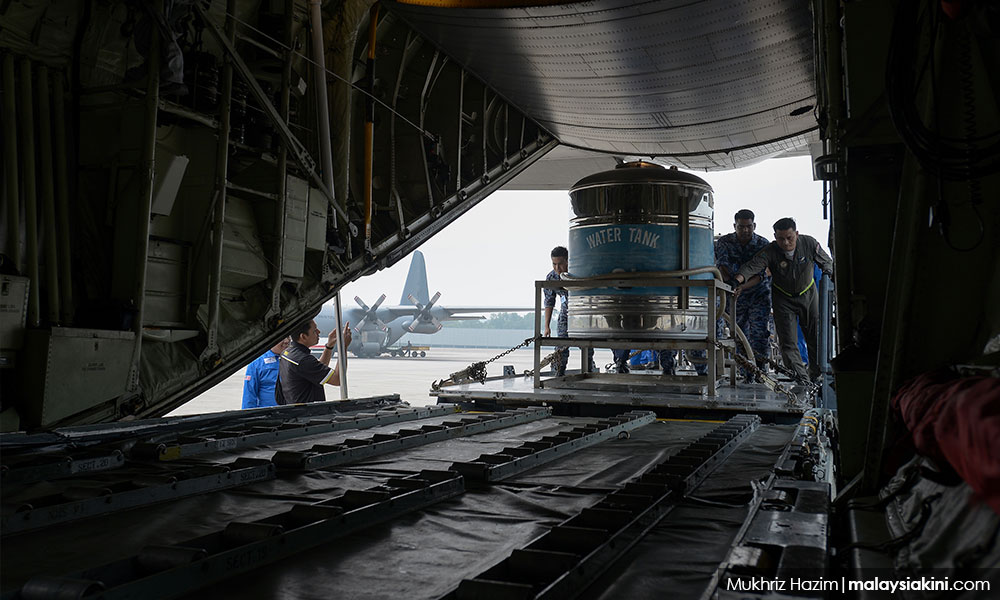
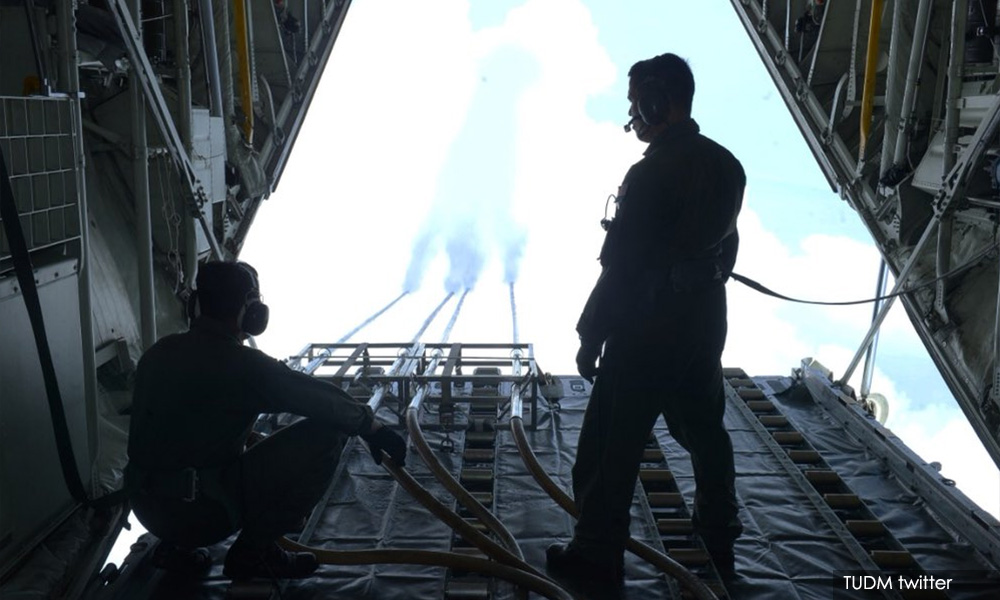
Tanks containing the solution of water and salt were then loaded onto the C-130 military planes at the Subang airbase.
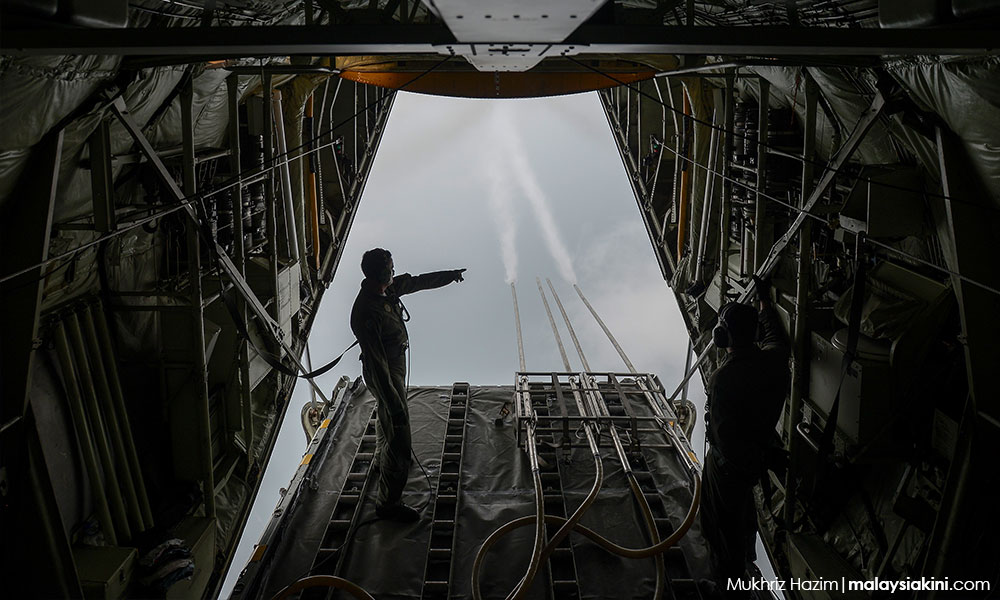
Once in the air, pipes released the mixture into the atmosphere.


Report this comment
Are you sure you want to delete this comment?
This action cannot be undone.