
Gov't urged to establish bipartisan committee to set narrative on racial issues
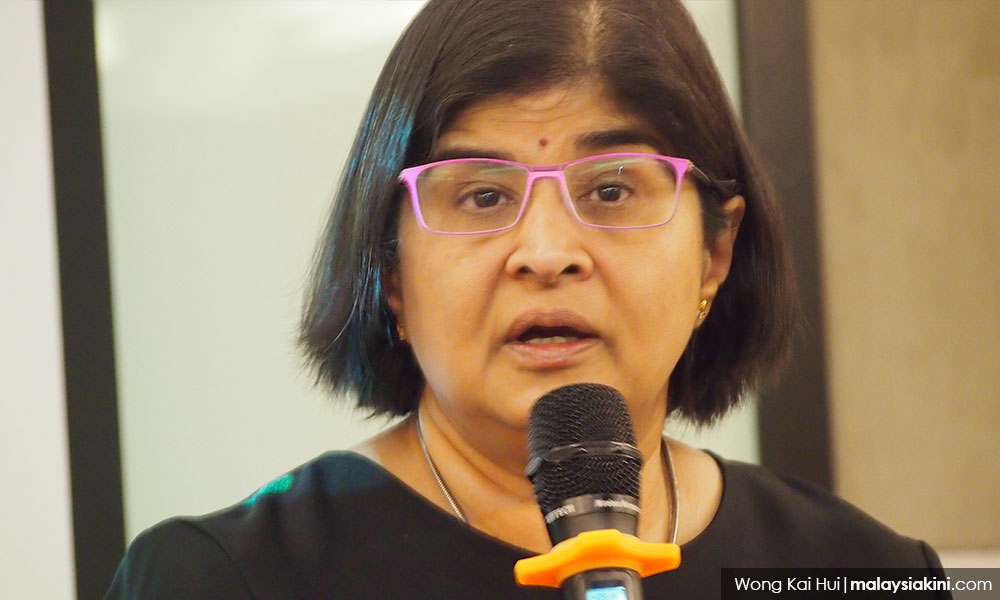
The government must set up a bipartisan committee and rope in all political parties to discuss racial issues in the country, says former Bar Council chairperson Ambiga Sreneevasan.
She said this committee should rope in politicians from across the divide, including Umno and PAS, so that all would be shouldering the responsibility to build a national narrative over matters related to religion and races.
Ambiga, who is also a human rights activist, stressed that unhealthy rhetorics including hate speech should be stopped as soon as possible before it cost the country its peace and harmony...
The government must set up a bipartisan committee and rope in all political parties to discuss racial issues in the country, says former Bar Council chairperson Ambiga Sreneevasan.
She said this committee should rope in politicians from across the divide, including Umno and PAS, so that all would be shouldering the responsibility to build a national narrative over matters related to religion and races.
Ambiga, who is also a human rights activist, stressed that unhealthy rhetorics including hate speech should be stopped as soon as possible before it cost the country its peace and harmony.
"This bipartisan committee should invite all parties, Umno, PAS, MCA, MIC and all. Because everyone must take responsibility for the peace and harmony of the country.
"If the government doesn't do it, the people must do it. We cannot allow the current situation to go on. We have to find a solution," Ambiga told reporters at Universiti Malaya today.
She was there as a forum panellist during the "Freedom of Expression in Malaysia Baharu: Sembang Or Reality" event organised by the Centre for Governance and Political Studies.
Earlier, Ambiga told the audience at the forum that the current government was not showing leadership qualities when it comes to addressing racial issues.
She said the Pakatan Harapan administration had failed to set the narrative while at the same being silent when hate speech was peddled by members of the opposition parties.
"Right now they think they can be even more racist than before. Because they are not in control and they do not have the responsibility of governing, they can say what they want.
"But what are the people in the government doing? Keeping silent. They are pandering to all of this," she said at the forum.
The political arena allows politicians to be racist
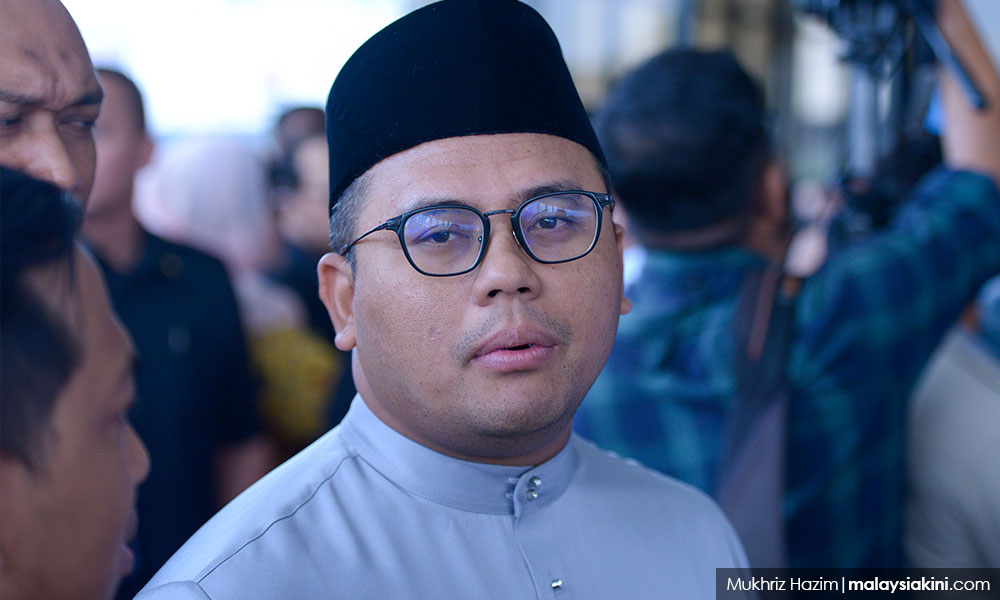
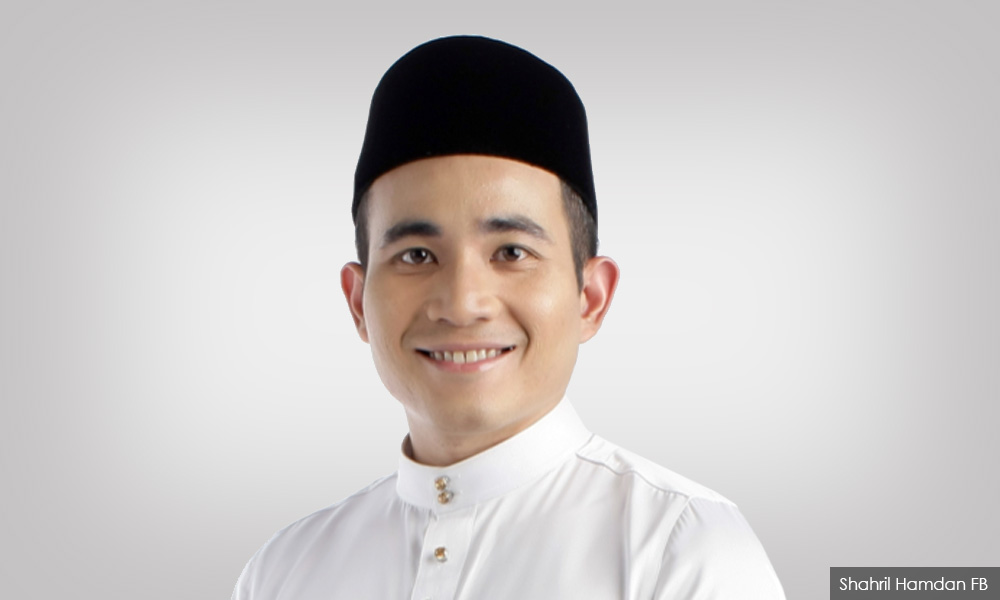
Meanwhile, another panellist, Umno Youth deputy chief Shahril Hamdan (photo, below) spoke about how the country's political system today allows for hate speech to grow among politicians.
"[...] It is possible to win, to create and maintain a lengthy political career simply by being popular to your base.
"That is the problem with our system. You can be a Malay nationalist, or -I say this with no prejudice - a Chinese chauvinist or a Hindraf type of Indian person, you could be champions in your own community. And you can have lengthy (political careers) when using those rhetorics doesn't get you penalised.
"You win (elections) and you get into parliament where you say things which will further rile up your supporters, and they will call you 'Hero Malaya'. This is the problem of our political situation," he said.
According to him, this, however, can be changed.
Shahril stressed to the audience that it is the people, especially the younger generation who can show politicians that such a practice is no longer acceptable by the rakyat.
This, according to him, can be done by voting in progressive leaders instead of those who continue to peddle on racial issues.
"You need to assist the more progressive politicians to make the argument that this (hate speech) doesn't work. This needs to come out more," he said.
Shahril added that the politicians, on the other hand, should also be principled instead of just putting importance on being popular.

Meanwhile, Rembau MP Khairy Jamaluddin (photo), during a subsequent forum at the same event, spoke about how political survival could change a leader from being progressive to an authoritarian.
Khairy, who is a former Umno Youth chief, gave the example of former prime minister Najib Abdul Razak, whom he described as a liberalist during the early days of his premiership.
According to him, Najib was very sincere in reforming draconian laws in the country, including the Internal Security Act, which had been repealed during Najib's time, and the Sedition Act.
However, Khairy said, Najib made a u-turn when his position in the Malay-based party was threatened.
"If you ask me which is Najib's DNA, I would say Najib part one (liberalist).
"But he U-turned not because he did not believe in the cause but because of politics," he said.
"I still can remember at one Umno General Assembly, his position was really weak. At that time, the RM2.6 billion (1MDB case) had started to come out.
"There were talks that if he does not do something to show to Umno, his position (as party president) will be in danger. And I still remember how when he announced during the assembly that the Sedition Act would not be repealed, the chants in support of him was very loud.
"This is what had exactly happened," he said.
Khairy added that this was due to the draconian law being so close to the heart of the Malays. To them, without the law, Malays believe their religion, race and position of the Malay rulers would be threatened.