




Develop the skills needed for employment
COMMENT | If you plan to embark on the highest paying careers, do you think a university degree guarantees you a high paying job? Little do we know that one can have many qualifications, but if you don’t have the right skills, you will be a graduate with an unemployment problem.
Skills are seen as one of the most important tools to prepare the young for future jobs. With the increasingly globalised market, the nation requires youth with relevant skills for employment.
The hard truth is that university degrees alone aren’t sufficient to land Malaysian millennials (ages 18-24) a job...
COMMENT | If you plan to embark on the highest paying careers, do you think a university degree guarantees you a high paying job? Little do we know that one can have many qualifications, but if you don’t have the right skills, you will be a graduate with an unemployment problem.
Skills are seen as one of the most important tools to prepare the young for future jobs. With the increasingly globalised market, the nation requires youth with relevant skills for employment.
The hard truth is that university degrees alone aren’t sufficient to land Malaysian millennials (ages 18-24) a job. The youth need to be better prepared to embrace new technologies.
Malaysia’s top emerging jobs are all related to the tech industry. Data scientist, medical, robotics, aircraft engineers, cybersecurity expert, physiotherapist, certified account, digital marketer, content writer – all of these careers have promising futures.
Recently, I had a coffee chat with a retired aircraft engineer. He stressed that the nation requires human capital with skills. He further argued even obtaining a masters or a PhD will not guarantee anyone a job and with the high cost of living in the city, this means graduates have no time to be picky about jobs.
One of the keys to empowering the youth is with skill development. The retired engineer also warned that robots are about to put everyone, from factory workers to engineers, out of a job with white-collar workers also suddenly vulnerable to automation.
Up to 20 million manufacturing jobs around the world could be replaced by robots by 2030, according to analysis firm Oxford Economics. The advancement of artificial intelligence (AI) has automated many different types of jobs.
Young graduates are in a quandary as they have no choice but to adapt to a more sluggish job market. Most say they are willing to accept a smaller salary so that they can secure employment.
Developed and industrialised countries have a higher number of students in the technical stream. Since there are a plethora of unskilled jobs here taken by foreigners, his advice is that the young differentiate themselves from the pack.
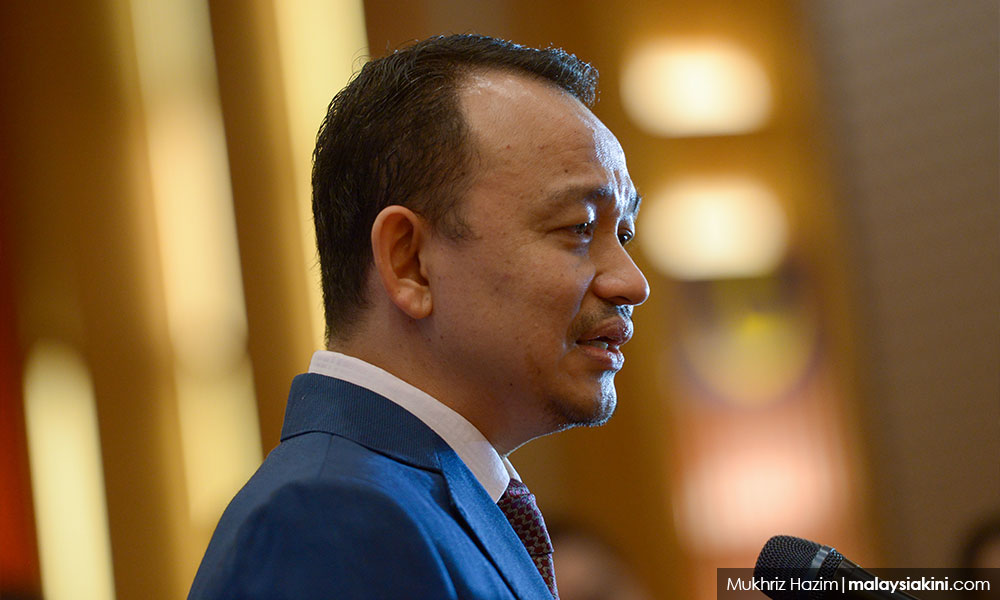
According to Education Minister Maszlee Malik (photo), almost 60 percent of first-degree holders and above remain unemployed even after one year of graduation.
This is shocking news to many of us. What are the steps have been taken by the Education Ministry to address the issue?
This suggests that the economy has not created sufficient high-skilled jobs to absorb the number of graduates entering the labour force.
I wish that more young people understood this before they waste years of their lives and a huge amount of money on degrees that no one cares about. Therefore, the easiest way to do so is by honing a particular skill that will allow you to set yourself apart.
By the way, the country's central bank - Bank Negara Malaysia (BNM) - said between 2010 and 2017, the number of tertiary graduates entering the workforce surpassed the number of jobs created for them.
On average, 173,457 diploma and degree graduates entered the workforce annually over that period. But only 98,514 high-skilled jobs were created over that time.
As Malaysia moves into a higher skill level workforce, youths need to prepare for a variety of roles in a future that is being transformed by digitisation and automation.
The youth unemployment rate in Malaysia at 10.9 percent is more than triple the national rate of 3.3 percent and has been gradually rising.
This could be a result of youths being choosy of jobs, poor character, poor command of English, poor communication skills and probably have unrealistic salary expectations.
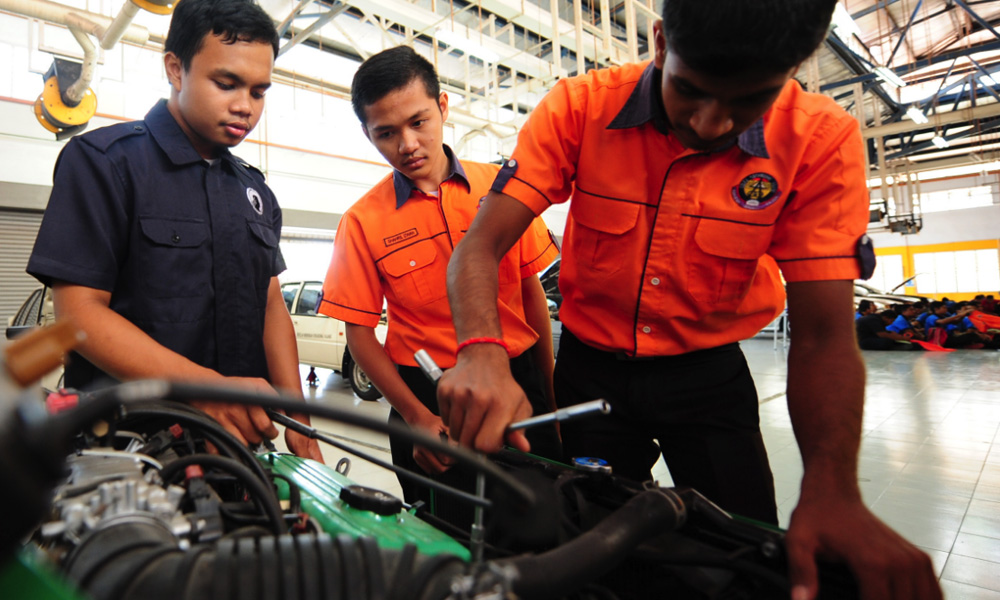
Despite the ongoing issues, the recently launched Shared Prosperity Vision 2019 encompasses the 12th and 13th Malaysia Plans - spanning 10 years from 2021 to 2031 - which prioritises sectors such as TVET (technical and vocational education and training) and skills training.
The framework of shared prosperity vision was also explained by the Prime Minister Dr Mahathir Mohamad in his speech on May 9, in conjunction with Pakatan Harapan’s one year in government.
In the public sector alone, there are easily 500 training institutes. The question before us, is the RM 5.9 billion allocated in Budget 2020 to TVET enough?
Alternative funds and incentives should also be given to students in private TVET institutions. The government must chart the way forward and know its area of priority. Many students discontinue their studies due to inadequate allocations to the Skills Development Fund Corporation.
It is also vital for educational institutions to expose students to cross-industrial training to make them employable.
Career evolution through technological training is vital. In this technological age, senior workers and those re-entering the job market must be trained in digital and green technologies as a way forward in the context of industry 4.0. Entrepreneurial skills can also be honed in this context.
M VIVEK served as an aide to several former MIC deputy ministers.
The views expressed here are those of the author/contributor and do not necessarily represent the views of Malaysiakini.





Are you sure you want to delete this comment?
This action cannot be undone.