




Youth-run ‘Parlimen Digital’ ends Day One with aye on economic boost package
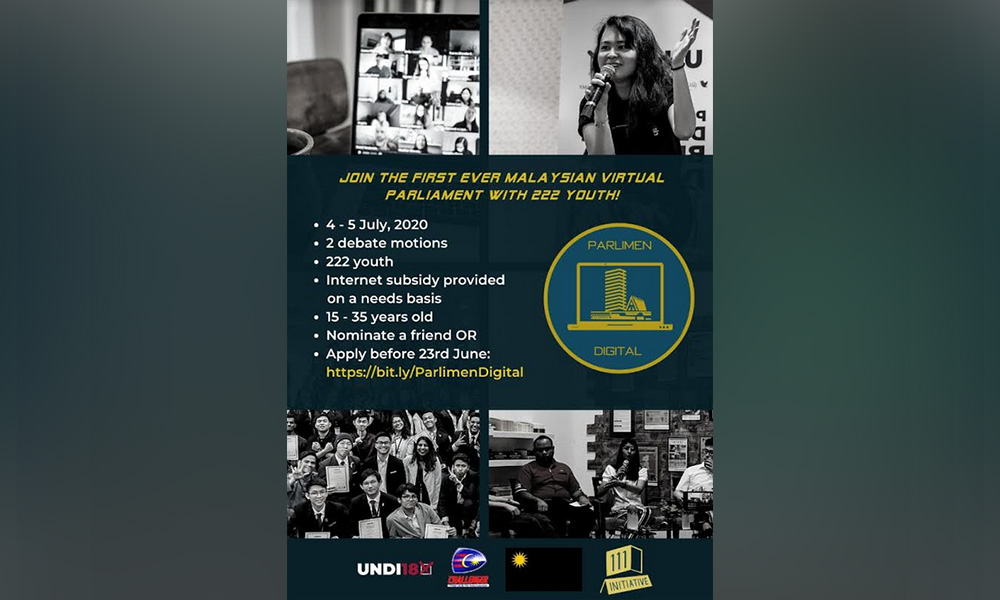
The first-ever virtual 'Parliament session' in Malaysia today passed a motion on the need to launch an economic booster package targeted specifically towards the youth.
Organised by a group of youth NGOs, the motion debated by 24 representatives was passed at the end of three-hour proceedings chaired by constitutional lawyer Lim Wei Jiet who took on the role of a speaker...
The first-ever virtual 'Parliament session' in Malaysia today passed a motion on the need to launch an economic booster package targeted specifically towards the youth.
Organised by a group of youth NGOs, the motion debated by 24 representatives was passed at the end of three-hour proceedings chaired by constitutional lawyer Lim Wei Jiet who took on the role of a speaker.
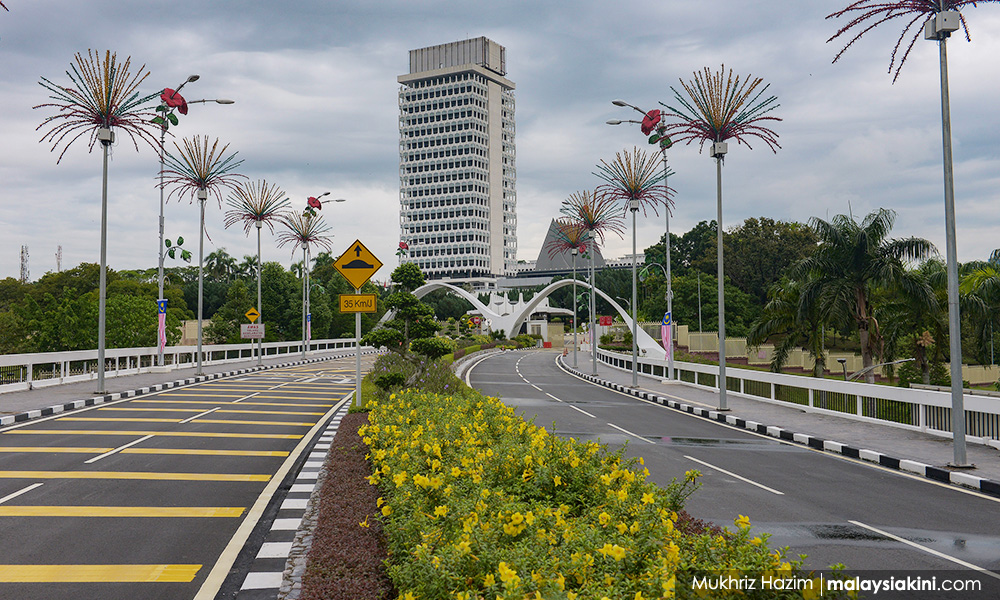
The 'Parlimen Digital' session was organised to mirror a Dewan Rakyat sitting with 222 representatives selected to represent each parliament seat.
However, unlike an ordinary Dewan Rakyat sitting, there was no opposition to today's motion.
Also, where the point of orders in parliament are typically raised to reprimand another MP, the virtual proceedings saw two representatives raising orders to thank organisers and sponsors of the two-day session.
Each of the participants was given four minutes to argue their points, after which they can answer up to three supplementary questions from the 'virtual floor' within another three minutes.
Failure to keep to the time limit saw some of their microphones muted by Lim.
Kubang Kerian representative Ahmad Fadhlullah Mohamed Rafi’e was the first to speak and the session was closed at around noon by Bandar Tun Razak representative Ng Siew Sanz.
Most of their arguments were made in the context of the Covid-19 outbreak and how the youth would benefit from a dedicated economic booster package.
Among others, representatives from rural constituencies in Peninsular and East Malaysia raised the issue of assistance to encourage youth participation in the agriculture sector.
From short-term microloans to expanding online marketplaces for local produce, they argued that such measures would not only benefit the youth as its targeted recipients but also help reduce dependency on imports.
There was also a call for gender mainstreaming at all policy-making levels, including in any economic booster package introduced.
It was pointed out that the immediate cost to improve protection facilities for women and girls caught in a domestic violence situation would be lower than the long-term impact of reduced women participation in the workforce.
In closing today's session, Lim noted its success, with the average age of debaters at 21 years old, compared to the Dewan Rakyat average of 50 years old.
The proceedings, hosted on Microsoft Team, will resume with its second and final day tomorrow.
‘Parlimen Digital’ is organised by three youth-led politically independent organisations namely Challenger Malaysia, Undi18 and Liga Demokratik Malaysia.
Malaysiakini is its official media partner.


Report this comment
Are you sure you want to delete this comment?
This action cannot be undone.