



'Major power' building maritime empire in South China Sea not us: China
In the latest salvo of words fired over the South China Sea, the Chinese Embassy in Kuala Lumpur has accused US Secretary of State Mike Pompeo of deliberately distorting facts on the issue.
"China never stirs up trouble, but when our maritime rights are infringed, we have to make necessary reactions, even so, the reactions are all moderate.
In the latest salvo of words fired over the South China Sea, the Chinese Embassy in Kuala Lumpur has accused US Secretary of State Mike Pompeo of deliberately distorting facts on the issue.
The embassy stated that China would not stir up trouble, but when its maritime rights are infringed, it would take the necessary "moderate" reactions.
"We never seek to build a 'maritime empire' in the South China Sea.
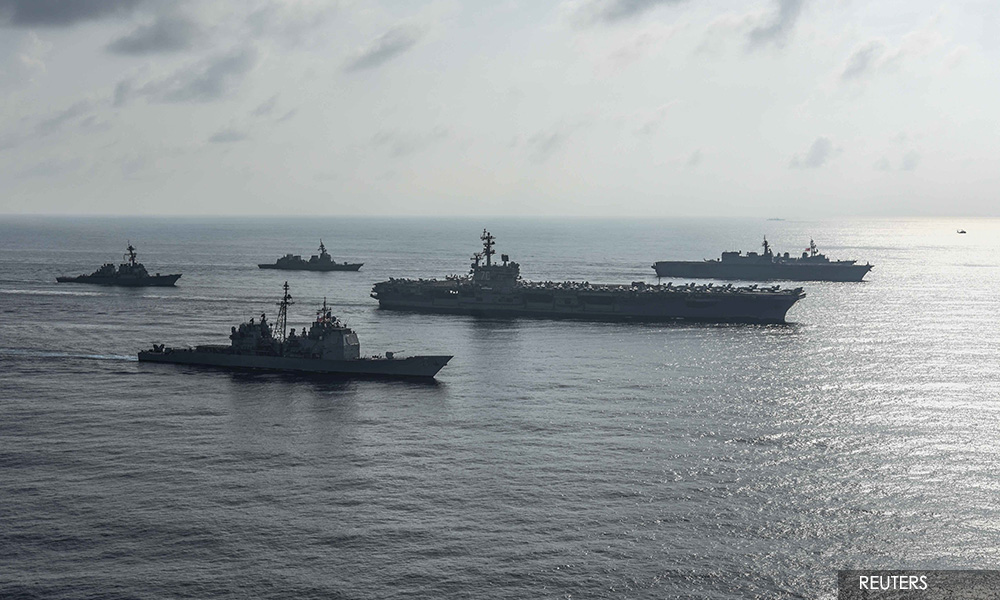
"On the contrary, a certain major power outside the region has constantly flexed its muscles by sending advanced warships and fighter planes to the region and conducting excessive military drills with its aircraft carrier battle groups," said an embassy spokesperson on its Facebook page.
Under the guise of "freedom of navigation", the spokesperson said this country had frequently approached and encroached into China's waters and airspace near the relevant reefs in the South China Sea, a move seen as threatening China's sovereignty and security.
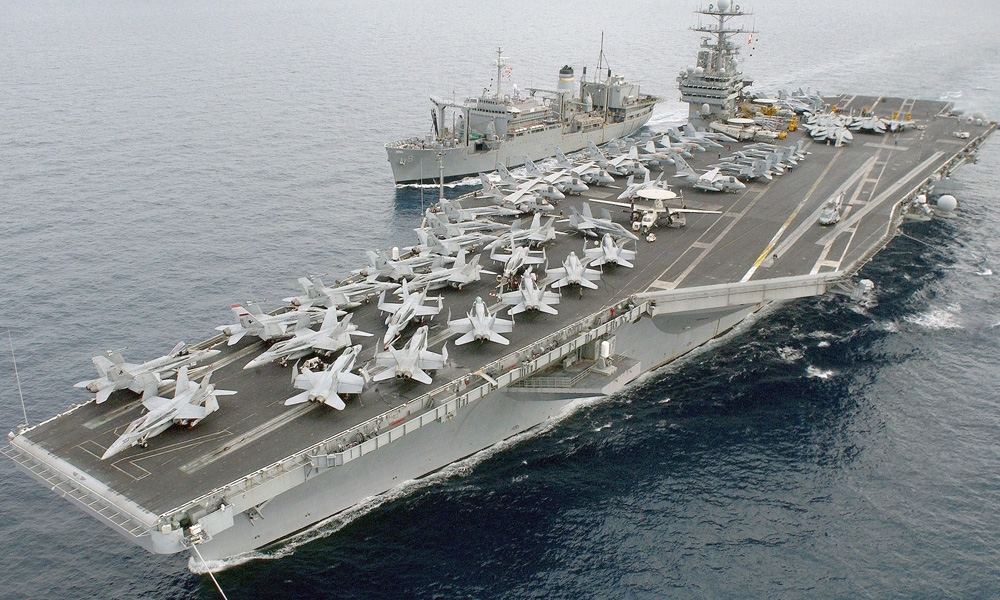
"It is quite clear who is seeking to build a 'maritime empire' and playing power politics in the South China Sea," the spokesperson added, in what seems to be a reference to the USS Nimitz and USS Ronald Reagan.
The two US Navy supercarriers had conducted operations and military exercises in the contested waterway between July 4 and July 6, and returned to the region last week.
Last week, Pompeo had said that the US rejects China’s disputed claims to offshore resources in most of the South China Sea, saying that it had offered no coherent legal basis for its ambitions in the area and for years had been using intimidation against other Southeast Asian coastal states.
“We are making clear - Beijing’s claims to offshore resources across most of the South China Sea are completely unlawful, as is its campaign of bullying to control them,” said Pompeo (below), a prominent China hawk within US President Donald Trump's administration.
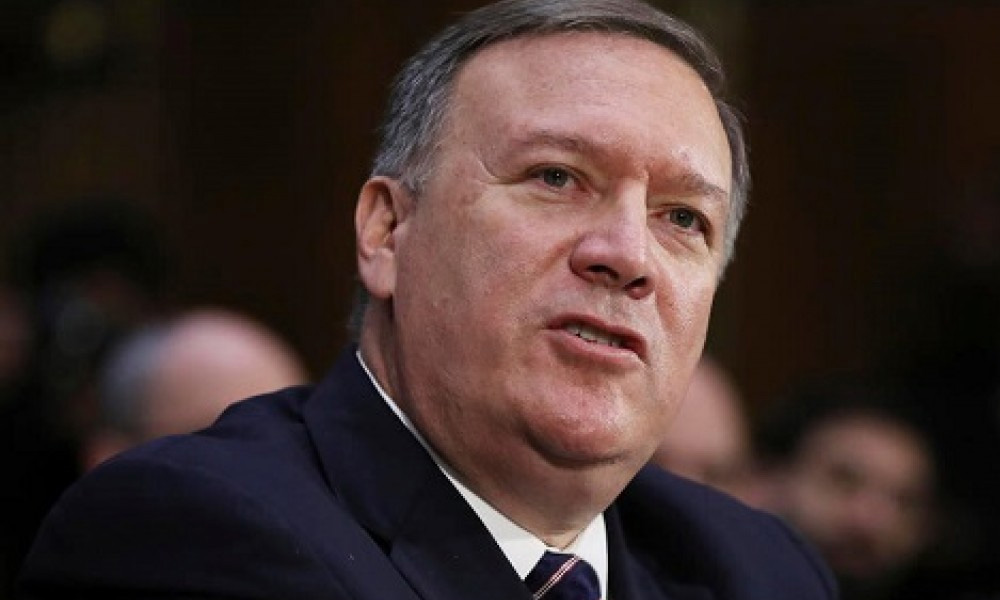
“The world will not allow Beijing to treat the South China Sea as its maritime empire,” he added.
Taking issue with this statement, the Chinese embassy spokesperson said that Pompeo had deliberately distorted facts about the South China Sea and international laws including the United Nations Convention on the Law of the Sea (UNCLOS).
"Firstly, China always addresses the South China Sea issue by a dual-track approach and upholds the principle that all countries are equal.
"It is a traditional ethic in China that 'the strong should not oppress the weak and the rich should not bully the poor', and China has always pursued a good-neighbourly foreign policy and insists that all countries, big or small, rich or poor, strong or weak, should be equal.
"By sticking to the principle of mutual respect and equality, China has solved border issues through negotiations with its 12 land neighbours," said the spokesperson.
With that, the embassy said specific disputes are to be peacefully resolved through negotiations with the concerned countries on the basis of respecting historical facts and international law, peace and stability in the South China Sea which are to be jointly upheld by China and Asean countries.
The embassy claimed that through the joint efforts of China and Asean countries, the situation has been improving.
"China confines its oil and gas development and fishing activities in the South China Sea strictly within waters under China’s jurisdiction, which is in accordance with international laws including UNCLOS and China’s domestic legislation.
"China has exercised great restraint over oil and gas development in the disputed waters and none of the working drilling oil rigs among the thousands (there) is China’s."
US-China relations had grown increasingly tense over the past six months over Beijing’s handling of the coronavirus pandemic, its tightened grip on Hong Kong and its crackdown on China’s Uyghur community.
China claims 90 percent of the potentially energy-rich South China Sea, but Brunei, Malaysia, the Philippines, Taiwan and Vietnam also lay claim to parts of it, through which about US$3 trillion (RM12.8 trillion) of trade passes each year.
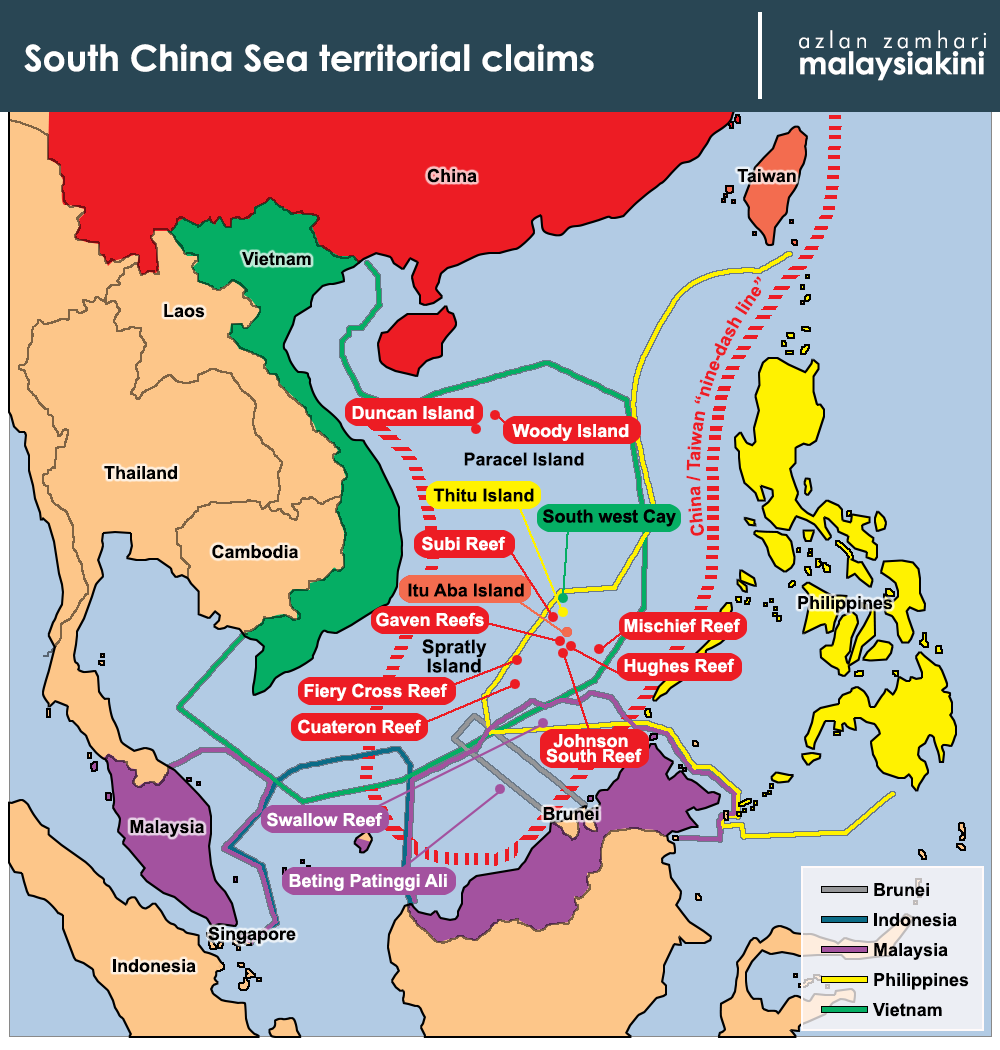
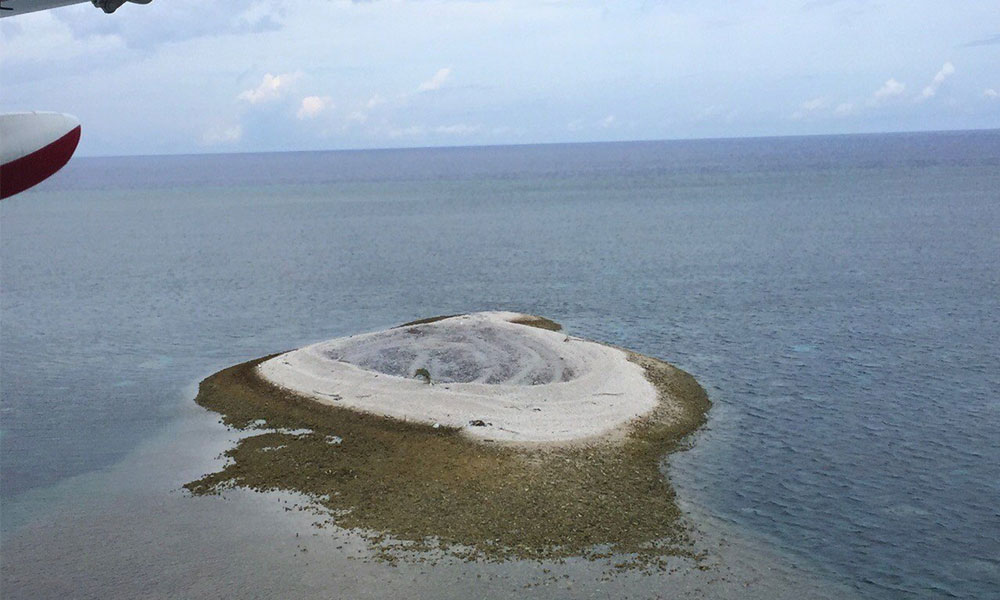
Beijing has built bases atop atolls in the region but says its intentions are peaceful.
In July 2016, an independent arbitral tribunal established under the UNCLOS published a clear and binding ruling against China’s claims in the region but China has continued to reject it.
"The arbitral tribunal itself was established on an unlawful basis. It willfully expanded its power to exercise jurisdiction and make an award, which is null and void. China does not accept or recognise that," said the spokesperson.
"China is a staunch supporter of the international law and as a state party of the convention, China values the rules and regulations set by the convention, upholds the convention in a careful and responsible manner, but we do not accept the act of exaggerating the role of the convention and abusing the international maritime law by some parties.
"Territorial issues are not subject to the convention and the maritime delimitation disputes have been excluded from the UNCLOS compulsory dispute settlement procedures by China’s 2006 declaration, thus the tribunal has no jurisdiction over the case," the spokesperson added.
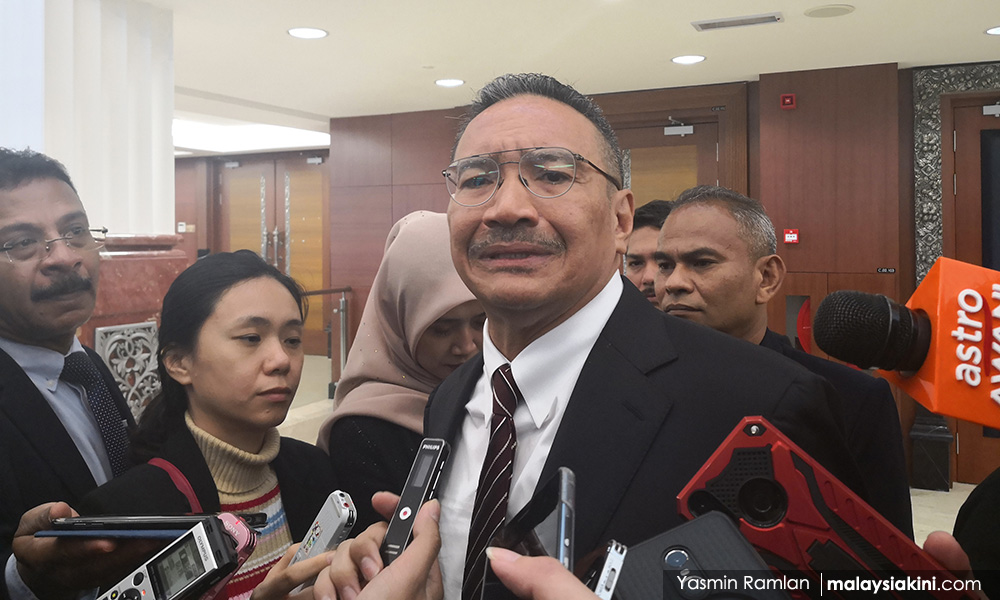
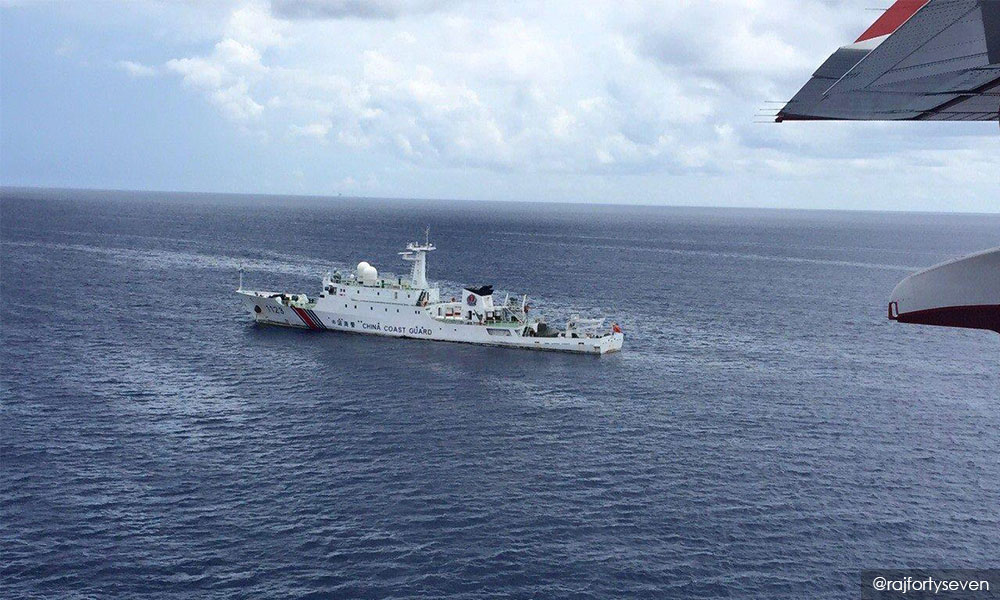
Recently, Foreign Minister Hishammuddin Hussein (below) courted flak from his predecessor Anifah Aman for claiming that Chinese coast guard vessels had not encroached into Malaysia’s maritime areas in the South China Sea since Perikatan Nasional came to power.
According to Anifah, it was only in April that a flotilla of Chinese enforcement vessels was sighted accompanying a Chinese survey vessel within Malaysia's maritime areas.
He went on to say that Hishamuddin was either in denial, ignorant of the facts, or playing politics with Malaysia’s maritime and strategic interests.
This came after the National Audit Department (NAD) said the China Coast Guard (CCG) and People's Liberation Army Navy (Plan) were recorded encroaching Malaysian waters 89 times between 2016 and 2019.
The auditor-general also noted that the Chinese government repeatedly ignored protest notes on the incursions.
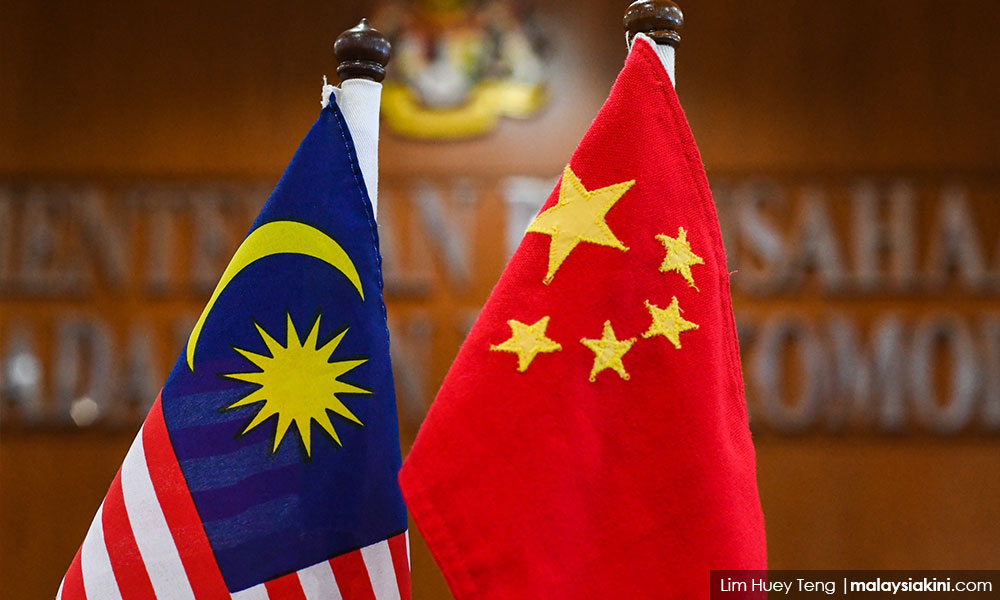
The Chinese embassy spokesperson said that peace and stability over the South China Sea are of common interests to China and Malaysia.
"China is always ready to cooperate with Malaysia, to deepen our mutual trust, and to continue to properly settle the relevant issues through bilateral friendly consultations.
"Before the disputes are settled, China will continue to work with relevant parties including Malaysia to put aside differences, promote common development on oil and gas resources and advance the cooperation on maritime environment protection and fishing resources preservation, in order to build the South China Sea into a sea of peace, friendship and cooperation," added the spokesperson.


Report this comment
Are you sure you want to delete this comment?
This action cannot be undone.