


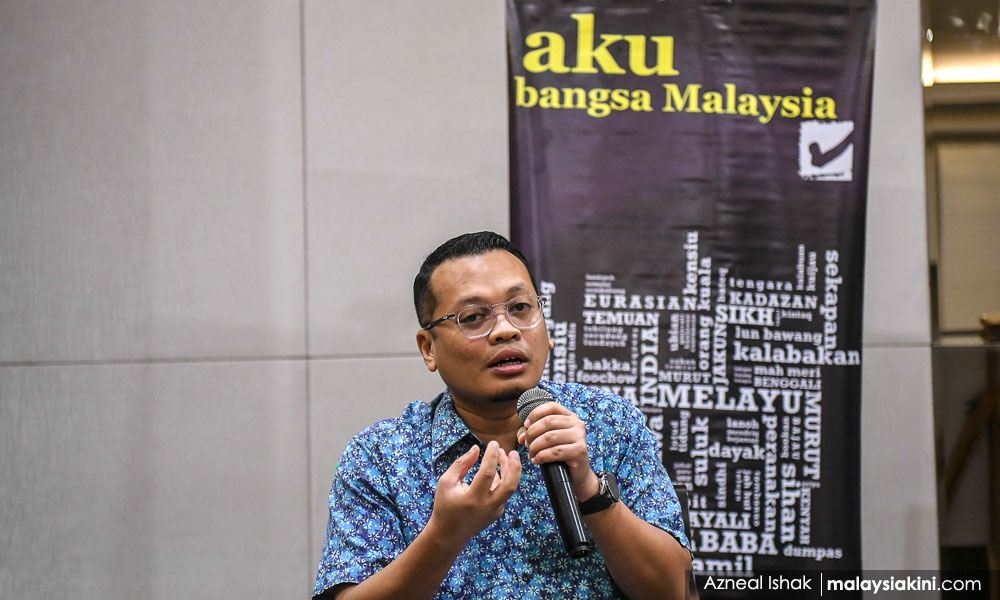

Nik Nazmi: Harapan didn't do enough on racial discrimination when in power
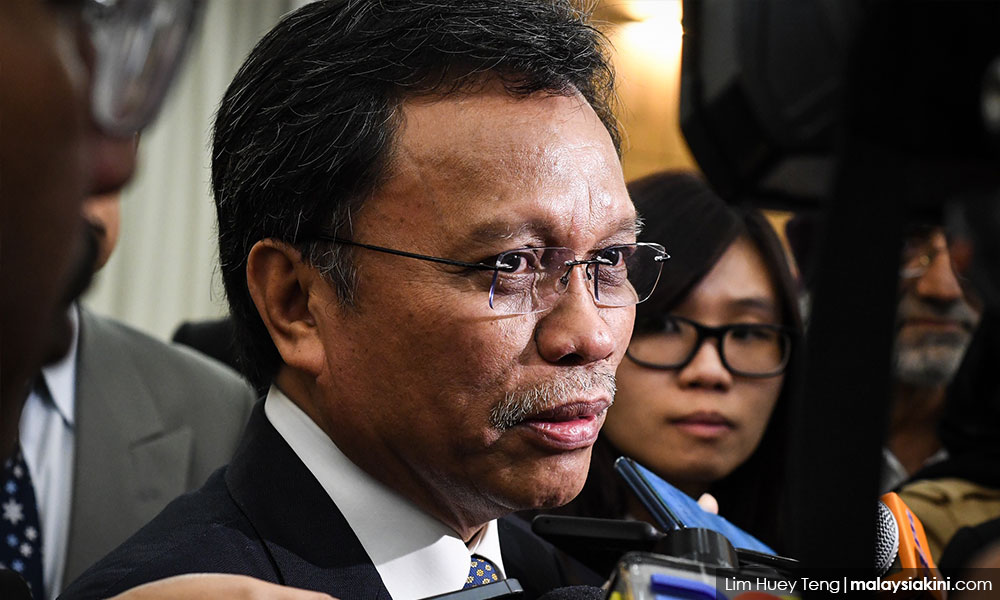
Pakatan Harapan could have done more to address the issue of racial and religious discrimination in the country when it was in power, says Setiawangsa MP Nik Nazmi Nik Ahmad (above).
Speaking at a forum last night, the PKR representative gave an example of the Harapan government failing, in 2018, to communicate its plan to ratify the International Convention on the Elimination of All Forms of Racial Discrimination (Icerd)...
Pakatan Harapan could have done more to address the issue of racial and religious discrimination in the country when it was in power, says Setiawangsa MP Nik Nazmi Nik Ahmad (above).
Speaking at a forum last night, the PKR representative gave an example of the Harapan government failing, in 2018, to communicate its plan to ratify the International Convention on the Elimination of All Forms of Racial Discrimination (Icerd).
"Frankly, we didn’t do enough when we were in power. I mean, now we have the benefit of hindsight.
"Looking back, I believe that Icerd, for example, was handled badly in terms of communications and all that," Nik Nazmi told the forum organised by Pusat Komas in Petaling Jaya.
He was one of two panellists at the forum, which was held to discuss a report prepared by Pusat Komas on racial discrimination in Malaysia.
According to the politician, the Harapan administration failed to engage all stakeholders, but had instead focused on their own circle before going to town with the policy.
He said what they should have done was to follow the example of an international group that advocated for the convention against torture.
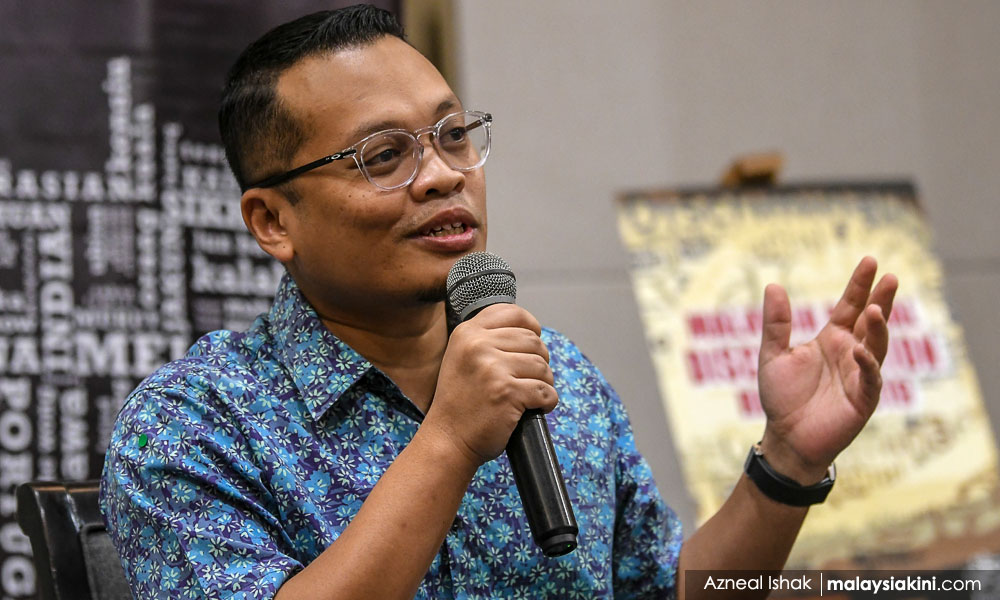
The advocates, according to Nik Nazmi, went to the extent of establishing communication with far-right groups in Malaysia, such as Ikatan Muslimin Malaysia (Isma), to relay their messages.
"What is remarkable is that they actually worked together with Isma. They came to talk to Isma, to PAS and to the ulama association to communicate on the convention against torture and informed the groups that there was nothing in the convention to stop syariah law and all the laws that are existing in Malaysia from continuing.
"And this was not in place when we planned to ratify Icerd or the Rome Statute," he said.
Should Harapan get the opportunity again...
Nik Nazmi added that should Harapan get the opportunity again, they should handle the matter properly and prioritise it.
Icerd is a United Nations convention that commits its members to the elimination of racial discrimination and the promotion of understanding among all races.
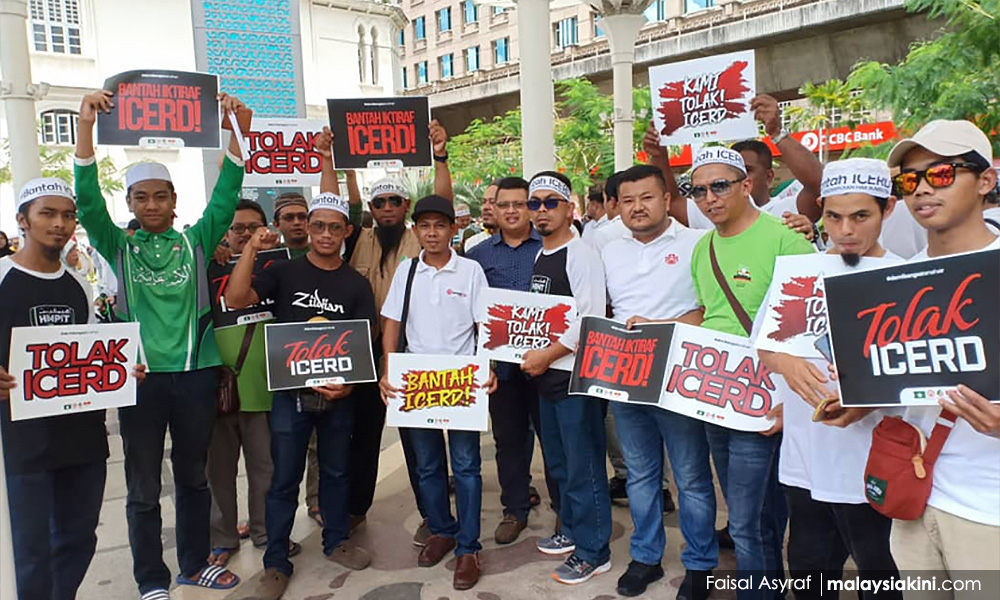
It was initiated by the UN in 1965 to deal with global racial intolerance. However, in Malaysia, it was perceived as a threat to bumiputera special privileges (Article 153) and Islam.
An attempt by the Harapan government to bring Malaysia into signing the convention had caused an uproar, especially among pro-Malay groups. Harapan then shelved the plan.
Similar opposition was received by the then Harapan government last year, when it signed the Rome Statute of the International Criminal Court, the treaty that established the International Criminal Court.
The ratification of the Rome Statute also received similar fate as Icerd, with Putrajaya then withdrawing its signature from the statute.
Heavy punishment against racists
The forum last night also saw Pusat Komas launching its latest 'Malaysia Racial Discrimination Report 2019' (photo, below).
It is the fifth such report that the human rights organisation has prepared since 2015.
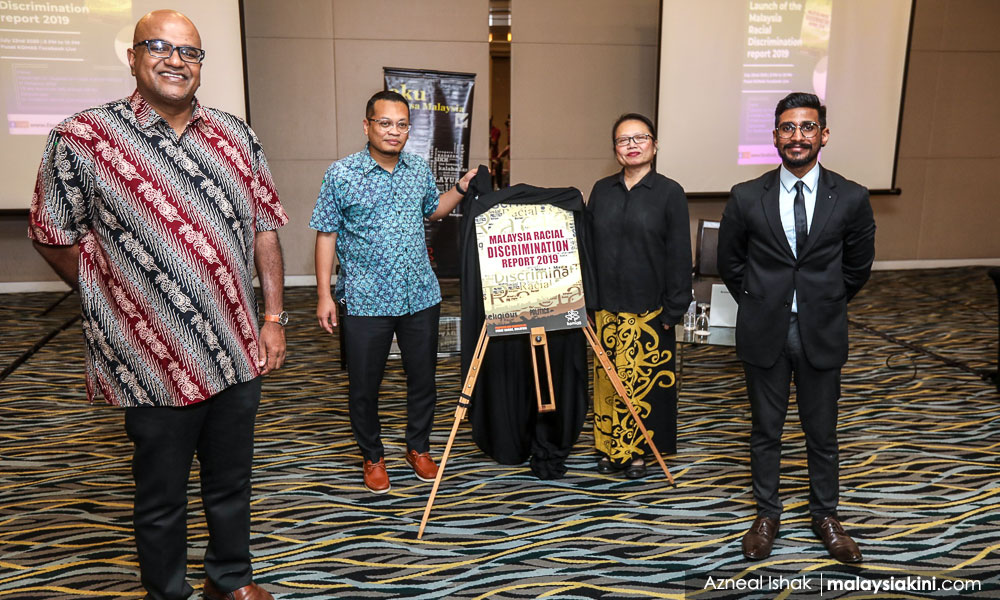
The report categorises racism in the country into seven groups, with the findings made from the NGO’s observation of news and complaints it received directly, through its 'Report Racism' smartphone application.
According to the report, racial and religious politics continue to top the list, followed by racial incitement and racism in social media.
"Political actors and parties have exploited the issue of race and religion to gain political mileage and to ensure their political survival," Pusat Komas said in the report.
One of the suggestions made in the report was urging the government to impose heavy sanctions against anyone who exhibits racist and discriminatory tendencies.
"The government must be willing to impose heavy legal and formal sanctions (in line with international human rights norms) on any government ministers, senior officers, elected representatives, organisations and groups, individuals, politicians, mass and social media groups that exhibit racist and discriminatory tendencies in speech and actions," it said.


Are you sure you want to delete this comment?
This action cannot be undone.