



Govt, opposition MPs want better fiscal discipline in supplementary budgets
- UPDATED 4.40PM | Added Wong Chen's comments on supporting a limit to supplementary budgets.
PARLIAMENT | Lawmakers from both sides of the divide want the government to improve on the practice of tabling supplementary budget, after the government spent more than they originally budgeted for.
The matter arose while MPs debated a bill for a supplementary budget of RM7 billion to cover operation expenditure from last year. The government has also attached to the bill a request for RM4.97 billion to cover additional 2019 development expenditure....
- UPDATED 4.40PM | Added Wong Chen's comments on supporting a limit to supplementary budgets.
PARLIAMENT | Lawmakers from both sides of the divide want the government to improve on the practice of tabling supplementary budget, after the government spent more than they originally budgeted for.
The matter arose while MPs debated a bill for a supplementary budget of RM7 billion to cover operation expenditure from last year. The government has also attached to the bill a request for RM4.97 billion to cover additional 2019 development expenditure.
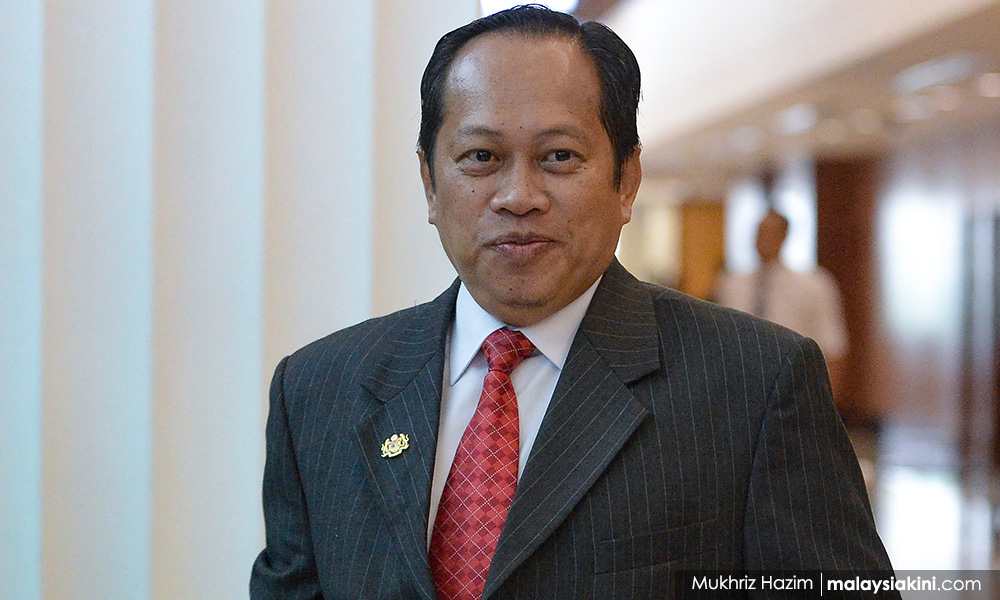
Ahmad Maslan (above) (BN-Pontian) proposed that the government set a limit on supplementary budgets to encourage better fiscal discipline.
The former deputy finance minister said setting a ceiling on supplementary budgets would make sure that ministries are more judicious and efficient in spending.
"Is there a ceiling for supplementary budgets? If not we need to discipline the ministries by putting a certain ceiling.
"You can have a supplementary budget, but it can't exceed RM5 billion, for example," he added.
Ahmad further stated that there should not be more than one supplementary budget, unless there are exceptional circumstances such as the Covid-19 pandemic.
Supplementary budgets have been a regular practice in Malaysia, which critics say allows the government to spend more money than had been allocated in the annual budget and have it approved later.

Former BN-era deputy finance minister Johari Abdul Ghani (above), however, said that this was unavoidable, but efforts have been made to reduce the number of supplementary budget bills from up to four times a year, to just once.
In his speech today, Ahmad added that supplementary budgets should not be used for all government spending.
Citing this current supplementary budget bill, he said items such as emoluments for agencies such as the Standard and Industrial Research Institute (Sirim), Malaysia External Trade Development Corporation (Matrade), and Mimos should be pre-budgeted, and that there is no reason for the government to ask for additional allocations for this purpose.
"Some things require a supplementary budget, some don't. Don't do it just because. If it is in the fixed planning, there should not be a supplementary budget," he stressed.
Exceptions, he said, include expenses incurred by the Election Commission for by-elections, as it is not possible to predict how many by-elections there would be in a year.
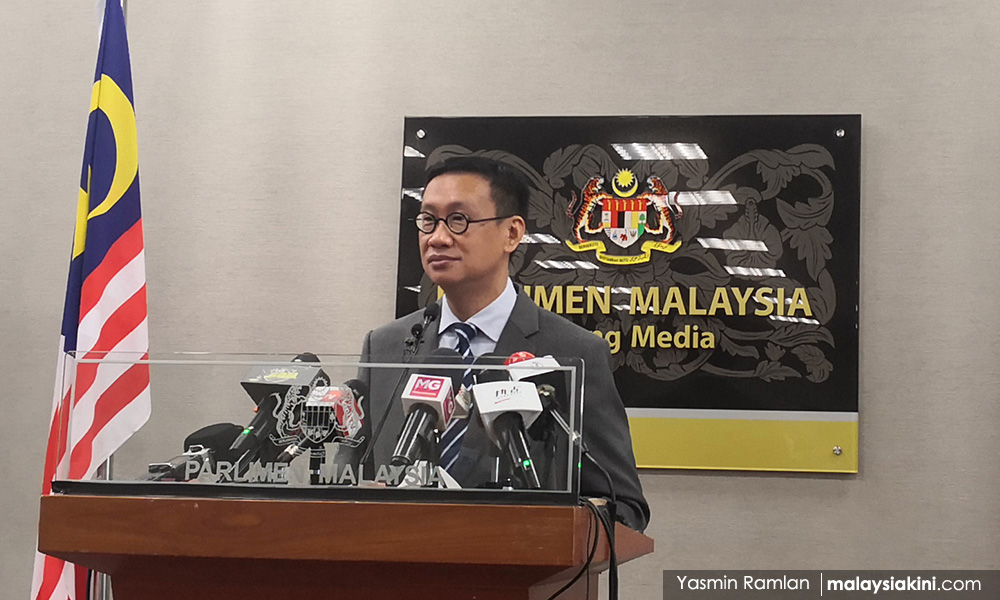
Later, Wong Chen (above) (Harapan-Subang) said that supplementary budgets meant either the annual federal budget was not well prepared, or that ministries were "not disciplined or wasteful in spending public funds".
In an effort to curb this, Wong proposed a bill, that would require the government to get immediate approval from Parliament if it was on track to exceed the budget by more than 2 percent.
This, he said, would require the government to publish its management accounts every quarter, so that government spending can be closely monitored.
Putrajaya, he added, should give full authority to the parliamentary select committee on budget to keep tabs on this for the House.





Are you sure you want to delete this comment?
This action cannot be undone.