



KiniGuide: What is it with the Delta variant?
KINIGUIDE | It has been nearly a year since the Covid-19 Delta variant was first detected on Sept 7, 2020, and subsequently took over the world by storm.
It proved fitter than all Covid-19 variants that came before, driving the outbreak in India in February and spreading to at least 132 countries across the globe.
In that time, many painful lessons have been learned from this dangerous new foe that had the US Centres for Disease Control (CDC) reckoning “the war has changed”.
While our understanding of the Delta variant is still evolving, this instalment of KiniGuide will attempt to sum up what we know so far.
What is the Delta variant?
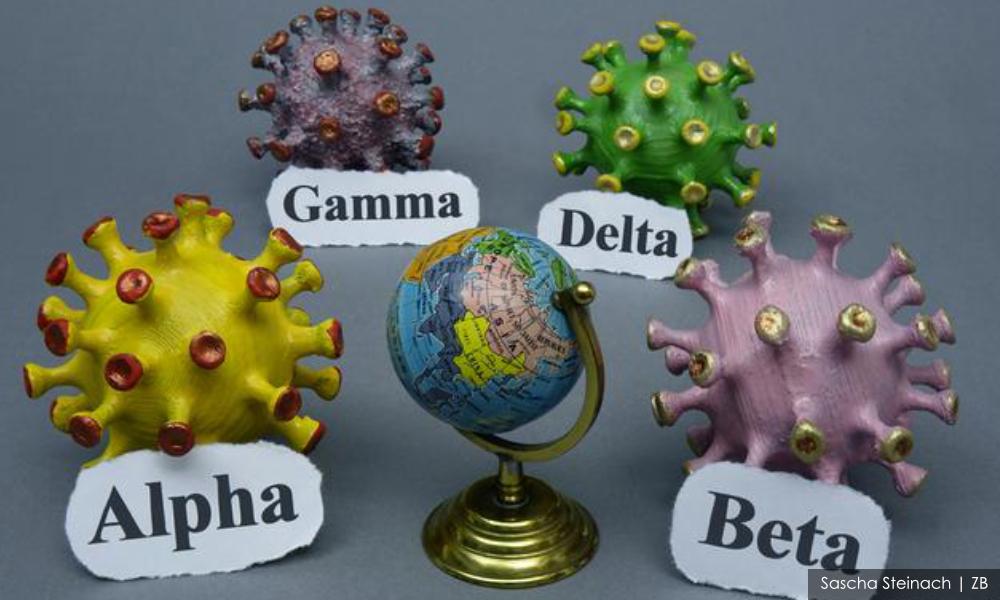
The Delta variant (also known as B.1.617.2) is a variant of the SARS-CoV-2 virus that is distinguished from other variants by several key mutations.
The variant was first sequenced on Sept 7 last year, but the significance of those mutations did not become clear until months later when it propelled the outbreak in India...
KINIGUIDE | It has been nearly a year since the Covid-19 Delta variant was first detected on Sept 7, 2020, and subsequently took over the world by storm.
It proved fitter than all Covid-19 variants that came before, driving the outbreak in India in February and spreading to at least 132 countries across the globe.
In that time, many painful lessons have been learned from this dangerous new foe that had the US Centres for Disease Control (CDC) reckoning “the war has changed”.
While our understanding of the Delta variant is still evolving, this instalment of KiniGuide will attempt to sum up what we know so far.
What is the Delta variant?
The Delta variant (also known as B.1.617.2) is a variant of the SARS-CoV-2 virus that is distinguished from other variants by several key mutations.
The variant was first sequenced on Sept 7 last year, but the significance of those mutations did not become clear until months later when it propelled the outbreak in India that lasted from around mid-February until mid-May.
In recognition of the threat it poses, the World Health Organisation (WHO) flagged it for closer scrutiny by classifying it as a “variant of concern” (VOC) in May.
It is the most infectious Covid-19 variant yet, as well as being potentially deadlier than the original strain that was first detected in Wuhan, China.
In addition, while vaccines still offer protection against the variant, some of its original potency is lost when faced with this new threat.
How prevalent is it in Malaysia?
Health Ministry director-general Dr Noor Hisham Abdullah had said the Delta variant is the dominant Covid-19 variant in the country, but so far, no estimate has been given on its prevalence.
The Health Ministry does regularly announce findings from its genomic surveillance efforts, where genetic sequencing is used to identify the variant involved in certain Covid-19 cases.
In the latest update on July 28, Noor Hisham said the Institute of Medical Research has sequenced 10 Covid-19 samples from July 22 up to that date.
All samples turned out to be of the Delta variant.
This does not necessarily mean all Covid-19 cases in Malaysia are of the Delta variant, however, further analysis would be needed to make an estimate based on the small number of Covid-19 samples that have been sequenced.
How infectious is it?
Estimates suggest that the Delta variant is 97 percent more infectious than other variants that are neither classified as VOCs, or variants of interest (VOI), making it by far the most contagious variant yet.
For comparison, the same estimate published in the journal Eurosurveillance last month says the highly contagious Alpha variant is only 29 percent more infectious than non-VOI/VOC variants, and Beta is only 25 percent more infectious.
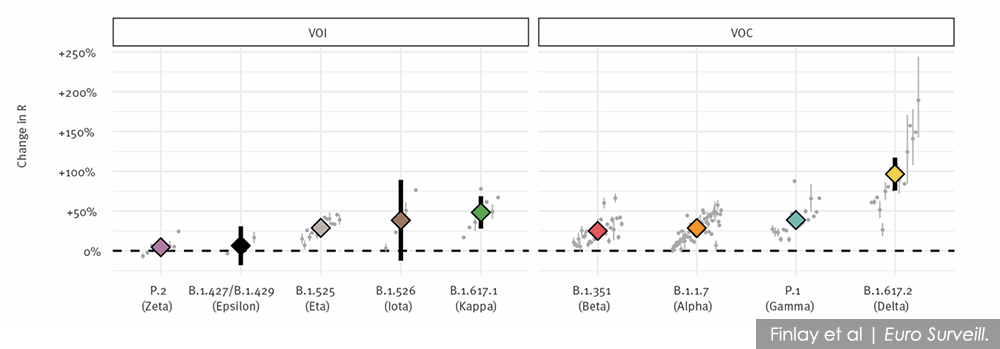
Estimated change in
effective reproduction number of SARS-CoV-2 variants relative to non-variants
in 64 countries, data until June 3, 2021. Estimates for individual countries are marked in grey, while the pooled estimate for the Delta variant is marked in yellow.
Noor Hisham said the Delta variant has a basic reproduction number (R0) of between five and eight, meaning that every 100 people infected with the variant would go on to infect between 500 and 800 people. The cycle would then start afresh with a greater number of infectors to spread the disease.
It is understood that this particular scenario assumes a pre-pandemic situation where no precautions were taken against the disease.
For comparison, the R0 during the outbreak in Wuhan last year prior to the city’s lockdown was estimated to be around 2 to 2.5. Any number higher than 1.00 indicates an outbreak that is growing faster and faster.
Malaysia’s latest effective reproduction number (Rt) - which accounts for prevention measures and immunity - is 1.07 as of Aug 2.
Meanwhile, Australian media highlighted a case of Delta variant transmission at a Sydney shopping mall, where health authorities scrutinising the mall's CCTV footage found the two strangers involved had only briefly crossed paths.
“We actually have CCTV footage of the encounter and it is basically a crossover of individuals. They are clearly facing each other but it is literally someone moving across from each other for a moment, close, but momentary,” New South Wales chief health officer Kerry Chant was quoted as saying by ABC.
The report did not mention whether the individuals were masked, which was only made mandatory several days later in response to the incident.
More recently, a study - which has yet to be formally vetted by other experts - found clues on how the Delta variant became so infectious.
Researchers reported that after close contact with a Covid-19 patient with the Delta variant, the newly infected people would start testing positive for Covid-19 during RT-PCR tests around four days later, compared to around six days for cases studied in 2020.
Moreover, these individuals carried 1,260 times more of the virus in their noses and throats compared to those infected with earlier strains.
A pre-print of a study in Singapore not only found higher viral loads in Delta variant patients, but the viral load also remained elevated for 18 days compared to 13 days for non-VOC variants.
In other words, people who get infected with the Delta variant may become contagious sooner, and when they do, they may be shedding more viral particles into their surroundings and for longer periods of time – if the findings of these studies are validated in further studies.
Even fully vaccinated people are not spared. While they are less likely to become infected in the first place, it appears that they could become as contagious as unvaccinated people once an infection takes hold.
According to a report published in CDC’s 'Morbidity and Mortality Weekly Report' on Friday, fully vaccinated people had viral loads just as high as people who are unvaccinated or only partially vaccinated.
This is in stark contrast to earlier studies involving other variants, where even partially vaccinated people are found to be less likely to spread Covid-19 if they become infected.
The revelation has prompted the CDC to backtrack on its relaxed masking recommendations for fully vaccinated people and advocate universal masking.
Is the Delta variant more dangerous?
Yes, and in more ways than one. The fact that it is more contagious means it is more likely to overwhelm healthcare systems.
This alone will cause the quality of care to deteriorate for everyone in the event of an outbreak – for those with Covid-19 or not.
Meanwhile, several studies have found that the Delta variant is associated with increased risk of hospitalisation, ICU admission, and death; though estimates vary on the extent of this increase.
The following estimates should be considered preliminary due to the small size of each study and many have not undergone peer review:
Health authorities in England estimated a 126 percent increase in the risk of requiring hospitalisation with the Delta variant compared to the Alpha variant, within 14 days of testing positive.
In Scotland, the risk of hospitalisation is estimated to be 85 percent higher compared to the Alpha variant.
In Singapore, the Delta variant is estimated to be 88 percent more likely to result in supplementary oxygen requirement, ICU admission, or death compared to non-VOC variants.
In Canada, the variant is associated with a 120 percent increase in hospitalisation risk, 287 percent increase in ICU admission risk, and 137 percent increase in the risk of death; compared to non-VOCs.
How do we prevent it?
The methods of preventing Covid-19 infection has not changed much since the advent of the Delta variant, even though the virus is now better adapted to exploit any gaps in these defences.
These measures include physical distancing, masking, frequent handwashing and good ventilation.
Physical distancing of one metre or more can reduce exposure to the virus, while good ventilation prevents the virus from accumulating in indoor spaces where it could linger for hours.
The Occupational Safety and Health Department (Dosh) has released guidelines urging building managers of public areas to “maximise ventilation” and “minimise indoor air recirculation”. Guidelines have also been issued for residential, non-residential, and healthcare facilities.
Meanwhile, WHO recommended a ventilation rate of 10 litres per second for each occupant in the room, failing which, the shortfall should be made up using several strategies including standalone air filters.
The WHO also recommends slightly higher quality air filters than those recommended by Dosh, stipulating the MERV 14 standard instead of the MERV 13.
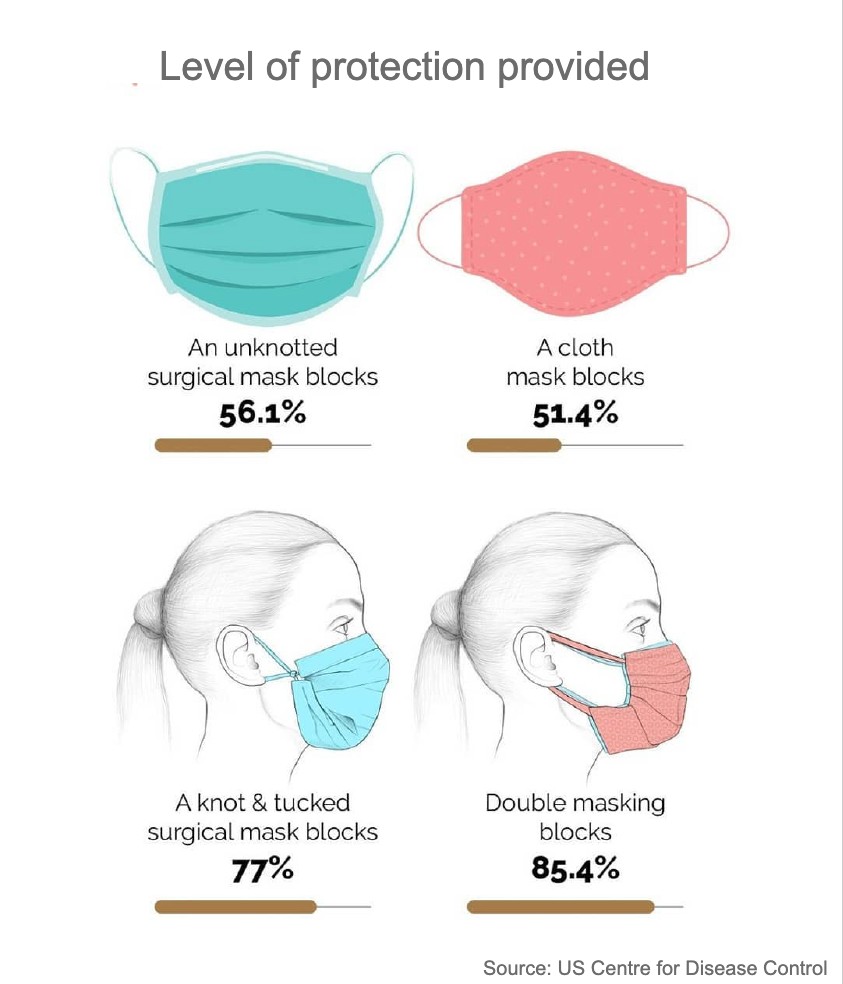
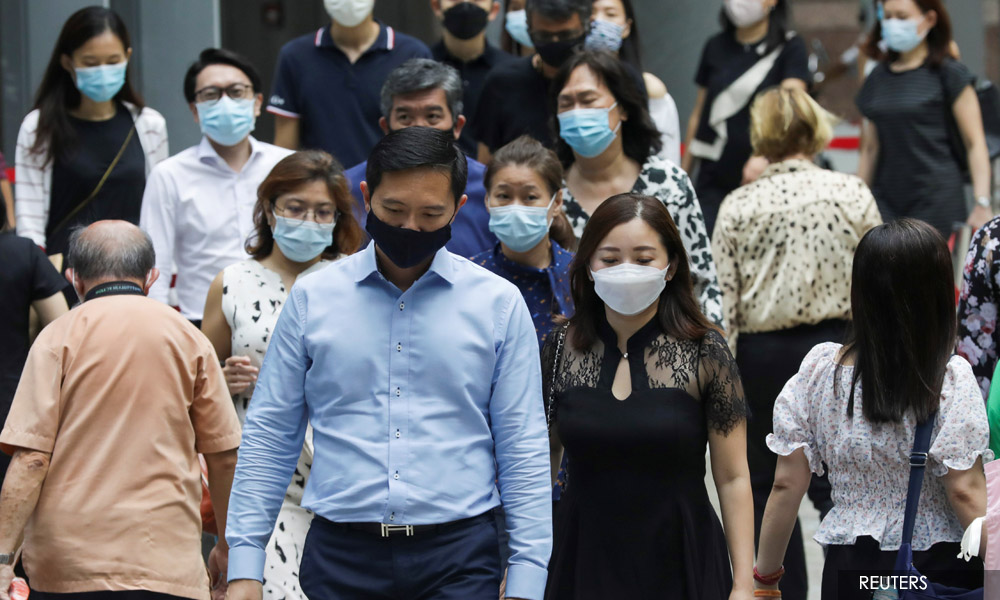
Meanwhile, proper masking will still limit the number of infectious particles spread by infected persons, which is particularly important since even asymptomatic individuals can be infectious and may not be aware they are a danger to others.
It also reduces healthy individuals’ exposure to infectious particles by filtering the air.
The US CDC has been recommending higher quality masks such as those meeting the KN95 standard, but continue to insist the gold-standard N95 masks should be reserved for healthcare workers.
It also recommended several ways to improve the fit of surgical masks, such as by wearing a cloth mask over it to seal its edges and improve fit, by tucking in its sides, or by wearing a mask brace.
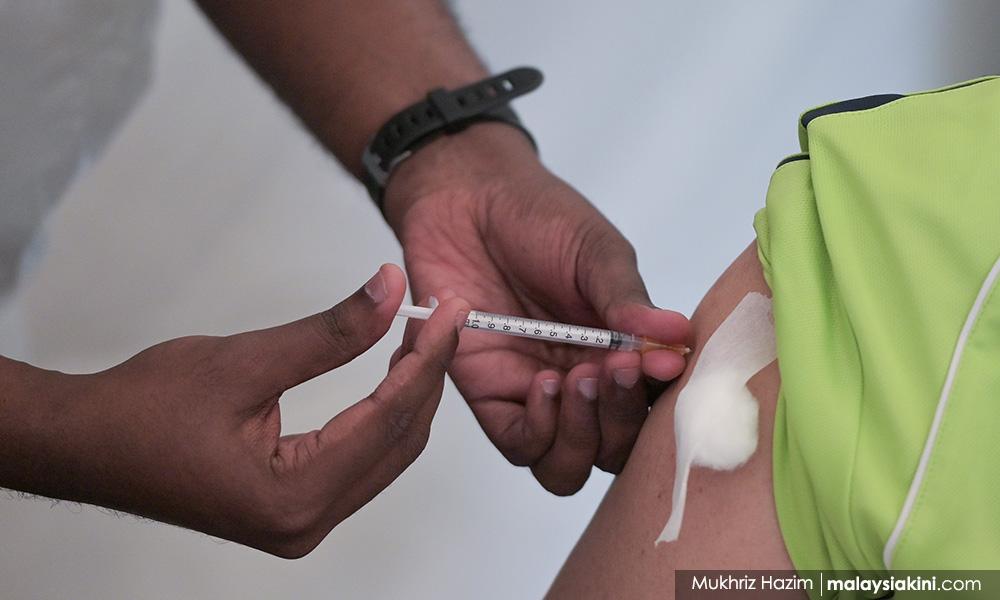
When all else fails, vaccines help ensure that the body’s last line of defence will be able to mount a swift and effective response against the virus.
How well do vaccines work against the Delta variant?
When it comes to the prevention of all Covid-19 symptoms, vaccines generally have slightly reduced effectiveness against the Delta variant compared to non-VOC strains but the remaining protection is still significant.
Moreover, vaccines still retain much of their original potency when it comes to preventing Covid-19’s worst outcomes – hospitalisation and death.
For the Pfizer vaccine, studies in Canada, England and Scotland have come up with estimates varying from 83 percent to 88 percent protection against symptomatic infection. Israel is an outlier in this respect, with a much lower estimate of 64 percent.
Nevertheless, the Israeli Health Ministry said the vaccine remains 93 percent effective in preventing serious illness and hospitalisation, while Public Health England (PHE) estimated it to be 96 percent.
For the AstraZeneca vaccine, PHE estimated it to be 67 percent effective against Delta variant symptoms and 92 percent against hospitalisation, while its Scottish counterpart estimated it to provide 61 percent protection against symptomatic infection.
No data is available yet for the Sinovac vaccine’s effectiveness against the Delta variant, but the company assured that it is still effective.
“It was more than 90 percent effective against severe infection and hospitalisation. We also noticed that the infection rate after vaccination has been very low in these countries, and the symptoms too very mild in most circumstances," a spokesperson reportedly told Bernama.
“Although there is a reduction in its neutralising effect, Sinovac’s current vaccine (CoronaVac) remains effective against the Delta variant."
It should be noted that lower vaccine effectiveness and higher contagiousness are both factors that will increase the number of people who need to be vaccinated to achieve herd immunity against the disease, though vaccines will still provide protection to the vaccinated individual.
Is it time for a third vaccine shot?
That depends on who you ask. Most experts would agree that the longer this pandemic drags on, the more likely a booster will become necessary to bolster the immune system. The question is: When?
Part of the problem - according to an explainer published in The Atlantic on June 24 - is that there is no consensus on what would constitute a worrying rise in breakthrough cases (i.e. Covid-19 infections despite full vaccination, especially if they cause symptoms) that would signal a need for booster shots to be administered.
"Instead, the experts are left to determine their own benchmarks for boosters, by evaluating the available information on antibody levels, breakthroughs, variant surveillance, and how different versions of the virus fare in labs and animal models, all while being mindful of the pandemic’s progress on scales both local and global.
“All of this intel then gets fed into a risk-benefit analysis, to determine whether the need for boosters outweighs any possible costs, which can span the medical to the economic,” the report said, quoting paediatrician Dr Grace Lee who advises the CDC on vaccine matters.
So far, Pfizer is the most outspoken on the need for an additional shot and has already applied for US Food and Drug Administration (FDA) authorisation to do so.
AstraZeneca and Sinovac are still exploring the need for boosters but have not made any recommendations yet, though a group of Chilean researchers studying the Sinovac vaccine have recommended a third dose.
There are also issues of vaccine inequity to consider – the WHO has spoken out against rich countries ordering booster shots at a time when some countries don’t even have enough vaccines to protect their healthcare workers.
Such considerations are not purely altruistic. There are concerns that leaving large groups of people unvaccinated in any part of the world would create fertile ground for new variants to emerge and threaten the rest of the world.
Ultimately, however, it is up to each country’s health authorities to decide whether to approve additional doses, not pharmaceutical executives or small groups of researchers.
So far, the FDA has rebuffed Pfizer’s application and a closed-door meeting between Pfizer and US regulators on July 12 failed to persuade the regulators to change their minds.
Meanwhile, Israel has already started administering third Pfizer doses to those above 60 years old.
Thailand has started offering the Pfizer vaccine as booster shots for its healthcare workers, while Indonesia is doing the same with the Moderna vaccine. Both countries’ healthcare workers are mostly fully vaccinated with the Sinovac vaccine.
Germany will be offering mRNA vaccines as booster shots either from Pfizer or Moderna to senior citizens and immunocompromised people starting next month, regardless of what vaccines they previously received.
In Malaysia, an expert panel under the Special Committee on Ensuring Access to Covid-19 Vaccine Supply will make recommendations on Friday regarding booster shots.
They will also make recommendations on whether those initially vaccinated with one vaccine can be given a different vaccine later.




Are you sure you want to delete this comment?
This action cannot be undone.