


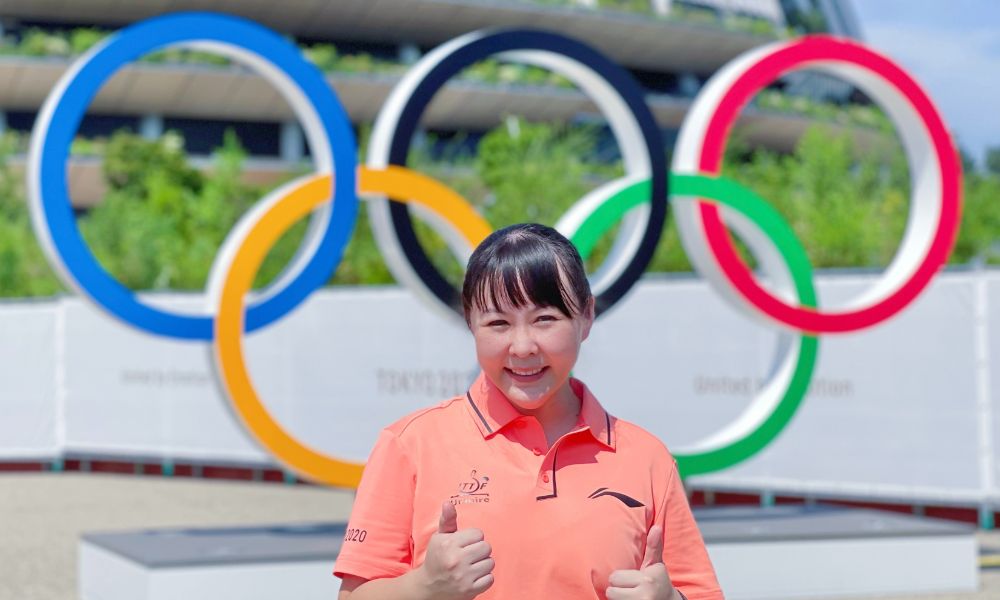

The Malaysian dentist who just umpired an Olympic final
MALAYSIANSKINI | It was 10pm local time when Elaine Lim finished her match inside Tokyo Metropolitan Gymnasium.
Throughout the game, Malaysians were glued to their television watching her every move.
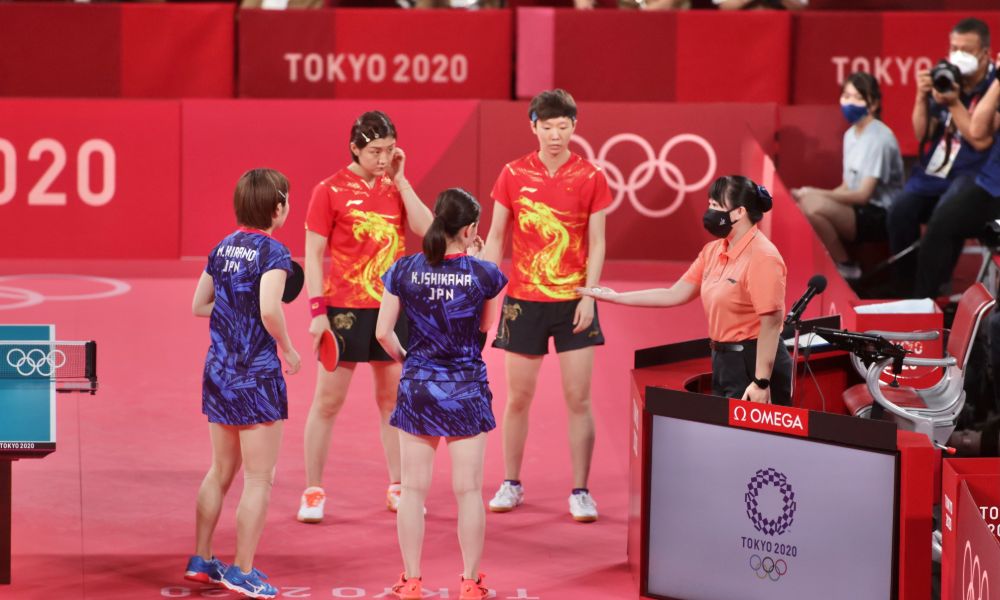
It was the gold medal match between China and Japan in the women’s team table tennis event at the recent Tokyo Olympics and a Malaysian was in the thick of things.
Dr Elaine Lim, a dentist, was the umpire for the match. Her appearance received widespread attention from Malaysians alike.
After all, finding a Malaysian in a final match at the Olympics is not an easy sight.
“I think most people will be very curious or feel strange why a normal person would just enrol into umpiring,” she told Malaysiakini during a virtual interview recently.
“When most people talk about sports, they’ll talk about athletes and coaches, rarely would they think about umpiring.
“But my uncle was a badminton umpire, so I was exposed very early on in my life to the profession,” she said.
Lim was 15 years old when a teacher nominated her to sit for the umpire exam in her home state of Kedah.
By then, she had been playing table tennis for eight years and participated in various competitions as a school athlete.
“I started playing table tennis when I was seven,” Lim recalled.
Initially starting as just fun and games with her father and sister, Lim quickly grew fond of the sport.
She would train two to three hours a day, and her mother would bring her to the local table tennis club where she played with people much senior to her.
“I thought It was really fun because I was really young and I could play with people who were older,” she added.
There, she gained invaluable experience and a deep understanding of the game as a player.
At age 15, she figured accepting the nomination to the umpire exam would be a...
MALAYSIANSKINI | It was 10pm local time when Elaine Lim finished her match inside Tokyo Metropolitan Gymnasium.
Throughout the game, Malaysians were glued to their television watching her every move.
It was the gold medal match between China and Japan in the women’s team table tennis event at the recent Tokyo Olympics and a Malaysian was in the thick of things.
Dr Elaine Lim, a dentist, was the umpire for the match. Her appearance received widespread attention from Malaysians alike.
After all, finding a Malaysian in a final match at the Olympics is not an easy sight.
“I think most people will be very curious or feel strange why a normal person would just enrol into umpiring,” she told Malaysiakini during a virtual interview recently.
“When most people talk about sports, they’ll talk about athletes and coaches, rarely would they think about umpiring.
“But my uncle was a badminton umpire, so I was exposed very early on in my life to the profession,” she said.
Lim was 15 years old when a teacher nominated her to sit for the umpire exam in her home state of Kedah.
By then, she had been playing table tennis for eight years and participated in various competitions as a school athlete.
“I started playing table tennis when I was seven,” Lim recalled.
Initially starting as just fun and games with her father and sister, Lim quickly grew fond of the sport.
She would train two to three hours a day, and her mother would bring her to the local table tennis club where she played with people much senior to her.
“I thought It was really fun because I was really young and I could play with people who were older,” she added.
There, she gained invaluable experience and a deep understanding of the game as a player.
At age 15, she figured accepting the nomination to the umpire exam would be a good idea to help balance her studies and her love of table tennis.
“I thought, okay, why not just do it because I really love table tennis.
“But I don’t have much time to go for professional training as an athlete because studying was really important to me,” she said.
Lim remembered during her preparation for the Sijil Pelajaran Malaysian (SPM) exam, she enrolled in 10 tuition subjects and the hectic schedule was hard for any sports player.
Realising it was not feasible to become a pro-player under such conditions, she decided to pursue umpiring as a long term tribute to her table tennis passion.
First-ever match
Lim has fond memories of her debut as an umpire for the Kedah north region some 17 years ago.
“It was really fun because I played in that tournament as well, and I umpired for matches at the same time,” she shared.
After that, she soon graduated from secondary school and moved to Kuala Lumpur to study dentistry at Universiti Malaya.
Her career moved alongside her to the capital as well, as Lim would begin officiating tournaments held in the capital.
Lim remembered her dental student life well.
“I would usually have 8am to 5pm classes, doing clinical training or sessions with our patients in the hospital,” she said.
Then, Lim would walk from the first residential college at UM to the nearby Universiti LRT station, taking the train to tournament venues.
“I can’t describe how tough it was, but I had to plan my time to every single detail,” she said of her varsity life, split between studying and table tennis.
“I needed to spend more time to plan and know exactly what I was doing, so I can pass my tests and exams in university,” she added.
Lim had to sacrifice a lot of luxuries that her average peers could afford like socialising or enjoying movies.
In her eyes, nothing was more important than gaining experience at tournaments so she could later pass the international umpiring exam to officiate world tournaments.
“There was a time in my second year where I went absent for a whole month in university because I was involved in four tournaments continuously.
“Experience counts. I believe that is the same for every career.
“I knew I had to make those sacrifices because I really wanted to become an international umpire,” Lim said.
It was there that she tasted her first experience officiating an international event at the 2008 Southeast Asian Junior Table Tennis Championship.
With Malaysia as the host nation, Lim was given the opportunity by the Table Tennis Association of Malaysia (TTAM) to take part in officiating matches.
From there, she rose through the ranks slowly and steadily, and eventually became a Blue Badge international umpire just as she wanted.
International umpires have two levels of certification, the basic White Badge and the advanced Blue Badge.
“My first world event was the Japan Open 2013 in Yokohama.
“It was very memorable to me, as I was training for my Blue Badge certification and the referee gave me an opportunity to officiate the final match of under-21 women singles,” she said.
Qualifying for Tokyo Olympics
It took a minimum of two to three years of experience to progress from a national umpire to an international umpire.
Afterwards, advanced training and exam were needed to qualify as an International Table Tennis Federation’s (ITTF) Blue Badge umpire.
To officiate at the Olympics, a candidate needs to be a Blue Badge, on top of meeting various requirements set by the ITTF, and the Blue Badge pass rate was very low.
“I sat for the exam in Japan. There were probably about 20-30 candidates, and less than seven or eight of them passed the exam,” she recalled.
Table tennis umpires do not have the assistance of technology yet like Hawkeye in badminton to determine difficult line-calling, relying instead solely on human judgement.
This added more challenge for candidates, as they were sent to officiate real matches and were evaluated on their performance as part of the practical component of the exam.
Wanted to prove them wrong
Fast forward to 2019, one year before the 2020 Tokyo Olympics were supposed to be held, Lim received a name list from her overseas friends stating that she has been selected for the Olympics, but she was doubtful of it as the national association did not send an email to her.
She thought she had missed out and was ready to move on with other plans.
“Many of my friends posted on Facebook that they’ve been selected for the Olympics and I was really sad at the time because I didn’t receive anything.
“But not being selected was actually acceptable to me, everyone was among the best of the best, and I’ve planned for Paris 2024,” she said.
As it turned out the national association had delayed the information as they were getting verification from ITTF on Lim’s status.

“I couldn’t believe it, I was really happy. But at the same time, there were a lot of emotions for me.
“People used to say to me, you couldn’t do it and things like that,” she said, revealing that during the early phase of her umpire journey, many doubted her capabilities.
She said as a young umpire and a woman, she received negative treatment due to her age and gender.
“It crossed my mind to give up. I was only 18 and I came to Kuala Lumpur alone, I didn’t have any family or relatives there to support me.
“I just wanted to prove them wrong,” she said of those without faith in her skills.
Lim said she was lucky to have the support of her family members back in Kedah, who was the first she called when she received news of her going to Tokyo, as well as her mentor Cyril Sen.
Sen was the last Malaysian to officiate an Olympic table tennis match at Athens in 2004.
At the Olympics
The Tokyo Olympics finally happened after it was delayed to 2021 due to the Covid-19 pandemic last year.
“I was full of anxiety before I went to Tokyo,” Lim said as her occupation as a dental surgeon required her to face patients physically, adding to the immense risk of exposure to the virus.
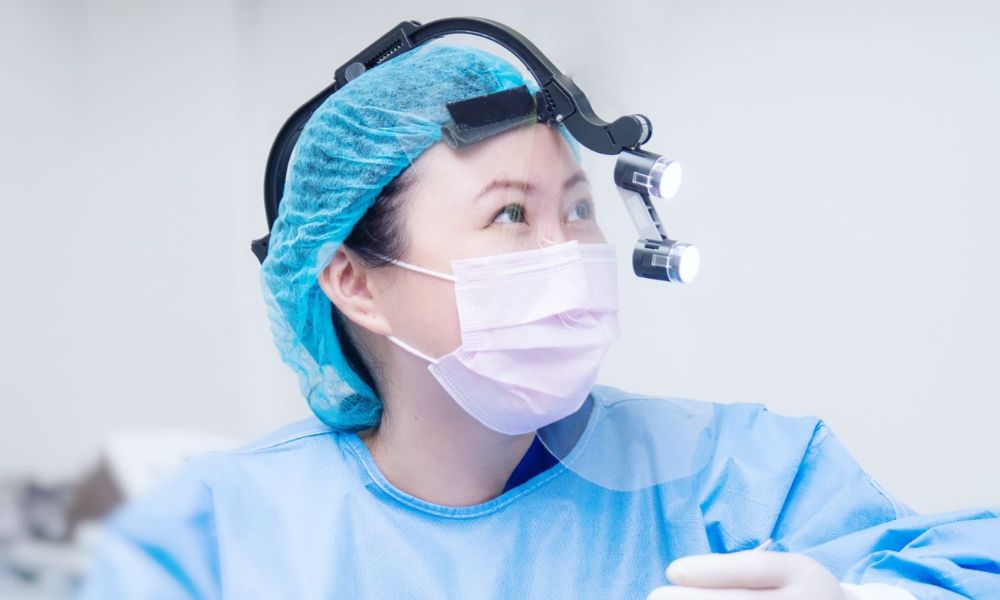
However, things went well and strict measures were put in place by the Olympic committee and the Japanese government against Covid-19 in Tokyo.
But the danger did not linger far, as news emerged of some staying in the Olympic village were tested positive for the virus.
“I was treating every match as my last because if one of us tested positive or became a close contact to another Covid-19 positive umpire or player, then we may not be able to go for the following matches,” she said.
Lim remembered waking up on the day of the gold medal match at around 5am.
She was completely oblivious to the fact that she would be officiating the match as umpire rosters were only announced hours before a match.
“I ate my breakfast, got dressed and went to the shuttle bus station at 7.30am,” she recalled.
Once she arrived at the venue, she met other umpires and officials, as usual, to take part in the daily briefing and watch telecasts of her colleagues working on the courts.
At lunch, the rosters were announced to reveal her name was on the list.
“I had to stay calm but inside my heart was full of emotion. I’d been waiting so long to come to the Olympics and now I get to officiate a final match.
“It’s a dream for every umpire to be selected for the Olympic Games, and for us, it’s something really big in your life as the Olympics is a once in a lifetime opportunity,” she added.
The atmosphere at the match was surreal, Lim remembered, with no spectators allowed at the venue due to Covid-19 restrictions.
“You have plenty of microphones surrounding you, on the chair, at the edge of the table, everywhere.
“You have multiple cameras from different angles focusing on you, the world is watching,” Lim said, recalling the intense pressure she was under.
Everything had to be perfect, from keeping her posture to not making any sound and watching every play by the players closely.
The match ended with China being crowned as the gold medal winner, beating Japan 3-0.
The whole event lasted till 10pm and by that time Lim had already missed her dinner, although hunger wasn’t what she first thought of when she reached her hostel that night.
“It took me hours to cool myself down and only then did I feel hungry and needed to eat something.
“Afterwards, I sat down and started writing an appreciation post on my Facebook,” Lim said, adding that she only went to bed at around 2am.
Nothing comes easy
“If you really want something, you’ll find a way to achieve it.
“The journey can be really tough, and nothing comes easy. You don’t have to follow other people, you can create an opportunity if you want something and you do it,” she said.
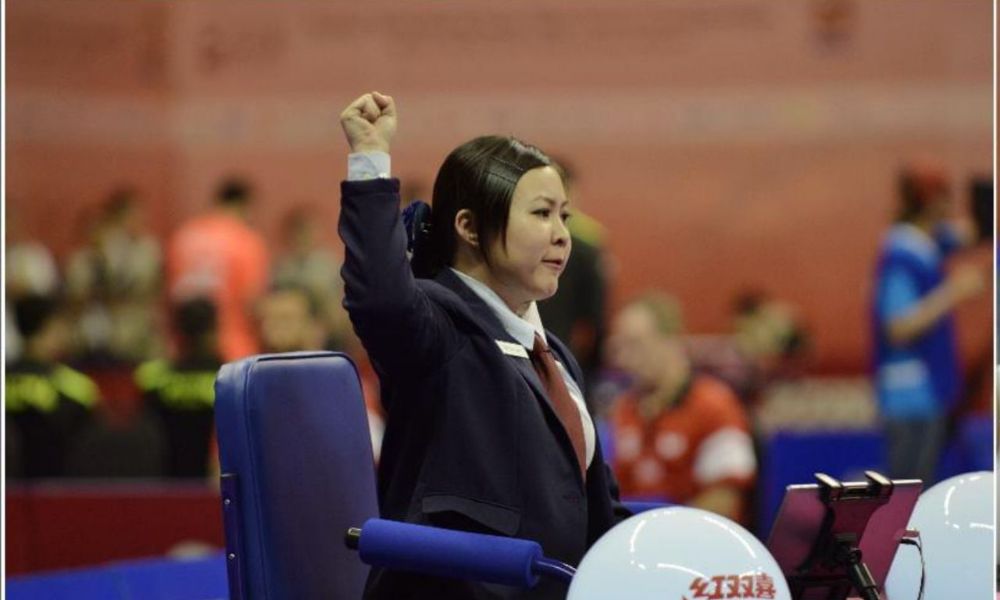
Preparation is also key, as she often plans for table tennis events two years in advance in order to get the paperwork and leave application completed.
When asked about her future plans and dreams, Lim said she had always wanted to organise her own tournament and create her own table tennis team.
Lim hopes to give opportunities to young talented Malaysians to hone their table tennis skills early on in life by providing them with the financial backing they need and raise the standards of table tennis in Malaysia.
“One day we can have more than the umpires, we can have more players qualified to play in high ranking events like the Olympics."
Lim believes determination will eventually lead to success no matter how distant a dream may be just as her umpiring journey proved.
“It might seem impossible, but one step at a time and eventually you’ll be there,” she added.
MALAYSIANSKINI is a series on Malaysians you should know.
Previously featured:
Standing up to defend Penang’s fishing community
Captain Planet to Family Frontiers - Activist's long journey to save forests, families
Half-Malay, half-Chinese Jamaliah sees bridging racial divide as key
Losing his father helped shape Khor's commitment to public health policy
Filmmaker Hidayah confronts past in gripping documentary Ayahku, Dr G
Grieving Yuna doesn’t want return to old normal but a better world





Are you sure you want to delete this comment?
This action cannot be undone.