


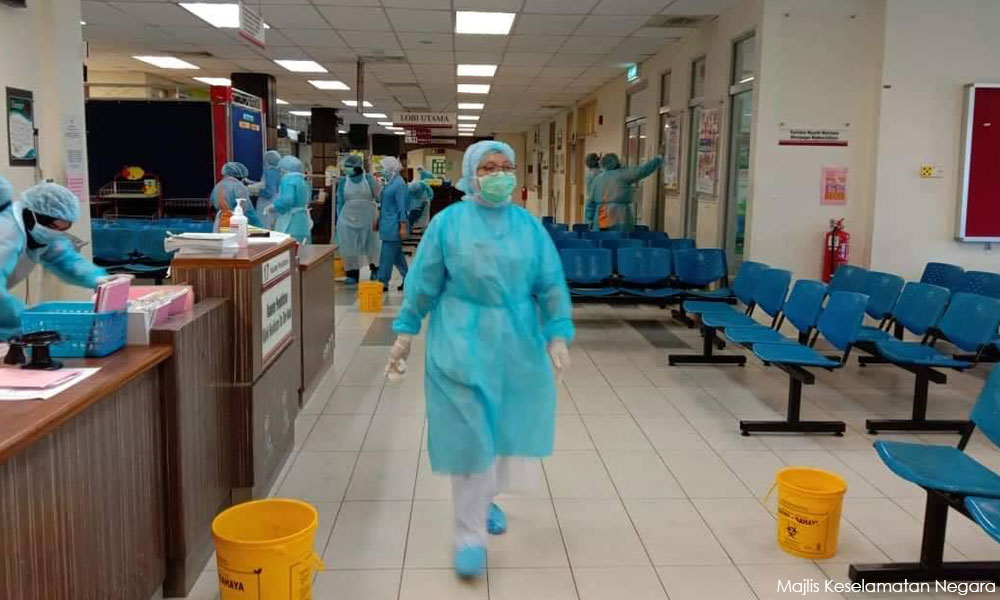

Medical associations laud additional spending to improve healthcare
BUDGET 2022 | Medical associations have lauded Putrajaya's proposal to allocate a total of RM32.4 billion budget for the Health Ministry next year, including RM4 billion dedicated for efforts to battle the Covid-19 pandemic.
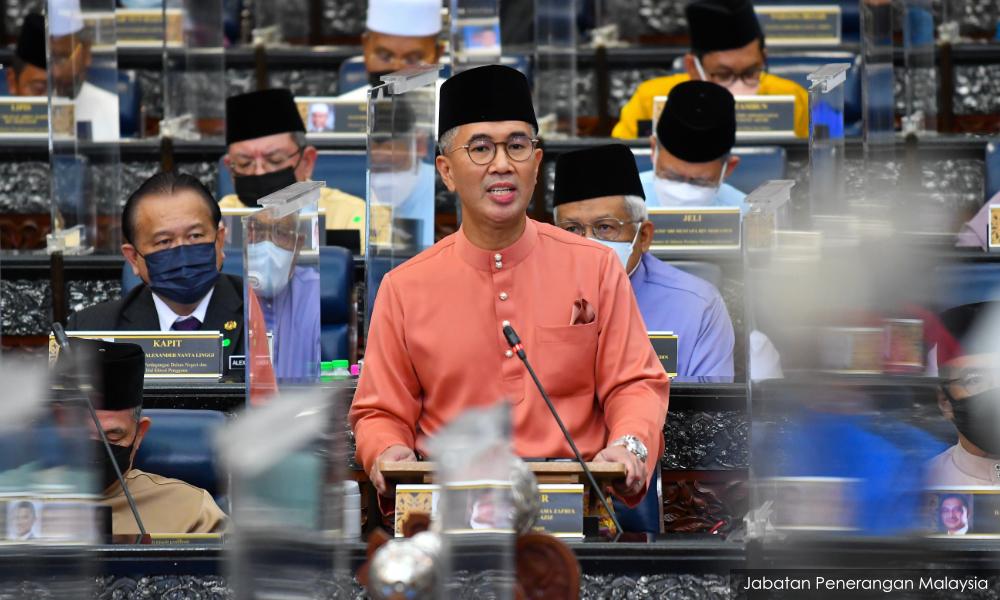
The Malaysian Medical Association (MMA) regarded Budget 2022 tabled by Finance Minister Tengku Zafrul Abdul Aziz earlier today as something that prioritised the country's healthcare system.
"It is good to note that health has been...
BUDGET 2022 | Medical associations have lauded Putrajaya's proposal to allocate a total of RM32.4 billion budget for the Health Ministry next year, including RM4 billion dedicated for efforts to battle the Covid-19 pandemic.
The Malaysian Medical Association (MMA) regarded Budget 2022 tabled by Finance Minister Tengku Zafrul Abdul Aziz earlier today as something that prioritised the country's healthcare system.
"It is good to note that health has been prioritised and that an allocation of RM32.4 billion has been allocated to the Health Ministry, which is second only to the Education Ministry.
"The additional RM2 billion each towards the cost of the immunisation programme and for the capacity building of public health services is also appreciated," said MMA president Dr Koh Kar Chai in a statement.
He also welcomed the government's decision to continue outsourcing healthcare services to private hospitals and facilities under various ministries and suggested that the practice be expanded.
1.47pct increase
In his budget tabling speech this evening, Tengku Zafrul announced that the RM32.4 billion is for the Health Ministry's management expenses and development.
It is a 1.47 percent increase from last year's budget allocated for the ministry (RM31.94b).
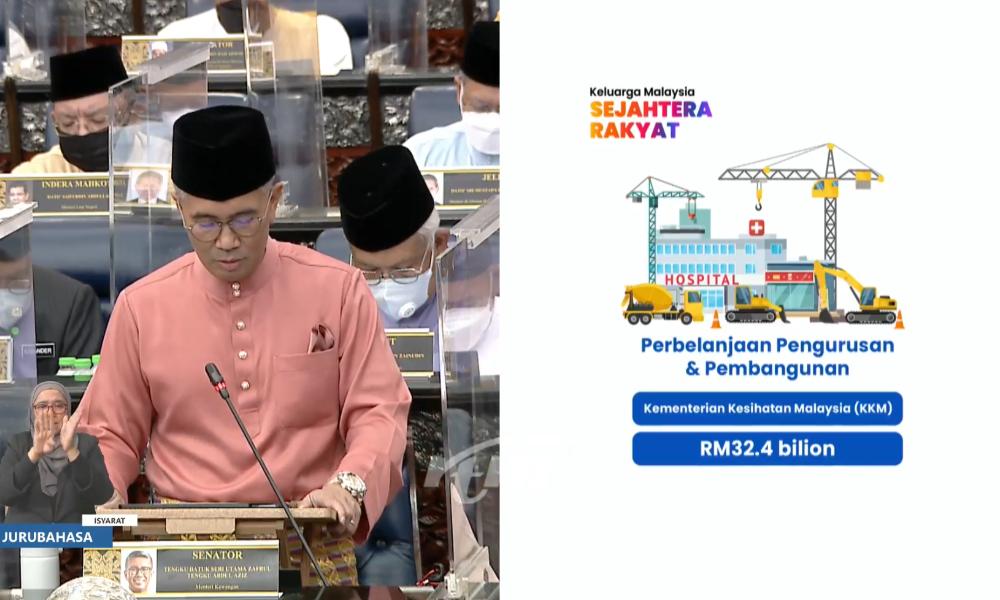
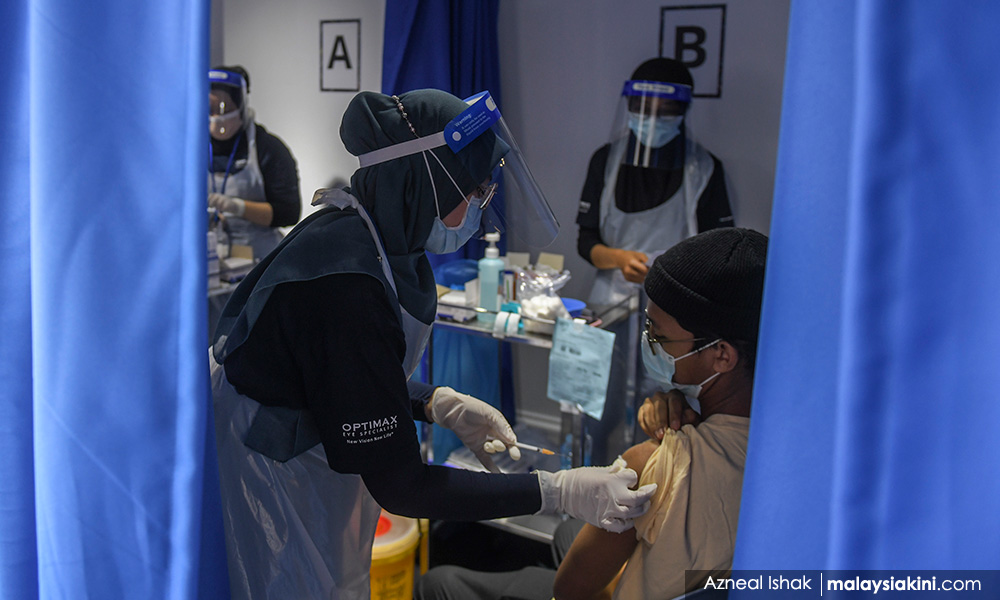
"An additional RM4 billion is also allocated to continue the country's agenda in addressing the Covid-19 pandemic, including RM2 billion for the vaccination programme while the other RM2 billion is to enhance the capacity of public healthcare facilities - to procure medicine, single-use equipment, personal protective equipment and health kits.
"In the spirit of Keluarga Malaysia, the Health Ministry has also outsourced its services to private hospitals and hospitals that are under other ministries in order to optimise the country's healthcare capacity," Zafrul said.
Drugs and vaccines
According to the minister's speech, the government also plans to procure antiviral drugs that are found to be effective in fighting viruses including Covid-19.
Putrajaya has also signed agreements to procure 88 million doses of Covid-19 vaccines, enough for more than 140 percent of the country's population, including to administer a third dose to all residents aged 12 and above.
On this, Koh said the vaccination programme has been a success and should be continued and expanded.
He suggested that the Health Ministry should also look into procuring medical therapeutics "which are low cost but equally effective".
Similarly, the Association of Private Hospitals Malaysia (APHM) said they are happy to see the additional allocation for the Health Ministry.
"The allocation includes for buying services from private hospitals and also for vaccination, particularly booster doses. The strengthening of public healthcare will be good to serve patients who require care in public hospitals.
"RM32.4 billion for healthcare is a good budget in total for healthcare and it's very timely for this budget for the healthcare sector," said APHM president Dr Kuljit Singh in a text message to Malaysiakini.
'Could be better'
While welcoming the allocation proposed by Putrajaya, a think-tank claimed that it's only a small increase for the Health Ministry.
Galen Centre for Health and Social Policy chief executive Azrul Mohd Khalib said it was arguably the smallest increment to the country's health budget in more than a decade.
"I am very concerned that there has barely been an increase in the health allocation compared to what was allocated for 2021.
"It is an increase of 1.5 percent, the amount is arguably the smallest increment to the health budget in more than a decade.
"It gives the wrong impression that despite the crisis that Malaysians have endured over the past 22 months, somehow health needs and service delivery remain the same," said Azrul.

He also pointed out that a budget of RM319.5 million for mental health was lower than what the government provided for last year, despite the issue being prominently highlighted in Zafrul's speech.
"Dealing with the consequences of the Covid-19 crisis such as depression, mental illness and suicide, more should have been provided as the majority of the population still depend on services provided through the public healthcare system," Azrul added.
Echoing Azrul’s comments, health policy researcher Lim Chee Han told KiniTV that he is also disappointed with the allocation provided to the Health Ministry, which he believes should be increased further to make up for decades of under-investment in public healthcare.
He said there is only a slight increase in the ministry’s operational budget mainly due to salary adjustments. The ministry’s development budget this year was among the highest but will see a decrease next year.
"It is as though they don't think we should continue developing the Health Ministry's infrastructure. I believe there are still many areas for improvement,” he added.


Are you sure you want to delete this comment?
This action cannot be undone.