




For new Amnesty boss Anjhula, activism begins at home
INTERVIEW | When Anjhula Singh Mya Bais was at a recent bonding session with other staff of Amnesty International, each participant was posed the question - “What was your first act of activism?”
“I said my first act of activism actually wasn’t civil disobedience, but domestic disobedience.
“Because I broke hundreds of years of royal protocol and married outside of my caste,” the newly appointed chairperson of Amnesty International told Malaysiakini in a recent interview.
Born into an aristocratic family from Rajasthan, India, Anjhula said she was raised to determine her own destiny rather than follow the path laid down by others.
She said her father Thakur Birendra Bikram Singh Bais chose to pursue an academic path and made that available to all his children regardless of gender.
“My father always said I will educate you as well as, if not better than your brother, which is very uncommon."
She added that her father purposely gave her the name Anjhula, which carries no specific meaning because he wanted his daughter to determine her fate.
“So when I look back, it all connects, I’m paving my own path,” she said.
Nonetheless, a lot of expectations were still placed on her growing up, but the former chairperson of Amnesty's Malaysia chapter was never the person to...
INTERVIEW | When Anjhula Singh Mya Bais was at a recent bonding session with other staff of Amnesty International, each participant was posed the question - “What was your first act of activism?”
“I said my first act of activism actually wasn’t civil disobedience, but domestic disobedience.
“Because I broke hundreds of years of royal protocol and married outside of my caste,” the newly appointed chairperson of Amnesty International told Malaysiakini in a recent interview.
Born into an aristocratic family from Rajasthan, India, Anjhula said she was raised to determine her own destiny rather than follow the path laid down by others.
She said her father Thakur Birendra Bikram Singh Bais chose to pursue an academic path and made that available to all his children regardless of gender.
“My father always said I will educate you as well as, if not better than your brother, which is very uncommon."
She added that her father purposely gave her the name Anjhula, which carries no specific meaning because he wanted his daughter to determine her fate.
“So when I look back, it all connects, I’m paving my own path,” she said.
Nonetheless, a lot of expectations were still placed on her growing up, but the former chairperson of Amnesty's Malaysia chapter was never the person to bow her head and buckle under pressure.
She remembers her days at Lady Shri Ram College in New Delhi, which she described as the most prestigious and feminist-leaning college of the time.
Anjhula found that the majority of the girls there still conformed to societal expectations and many were already engaged by the third year.
Soon she found herself under the same pressure.
“My first partner in life was a fellow royal, and I remember at the age of 21 there was just so much societal pressure.
“Everyone was saying we were such a good match, perfect, and my mom was really keen (on us).
“I remember saying to myself, but what does this guy actually do?” Anjhula said with a chuckle.
Going against her mother’s wishes and others' expectations, Anjhula broke off her relationship.
She’s now married to her husband, philanthropist Satish Selvanathan and the couple have three cats at home.
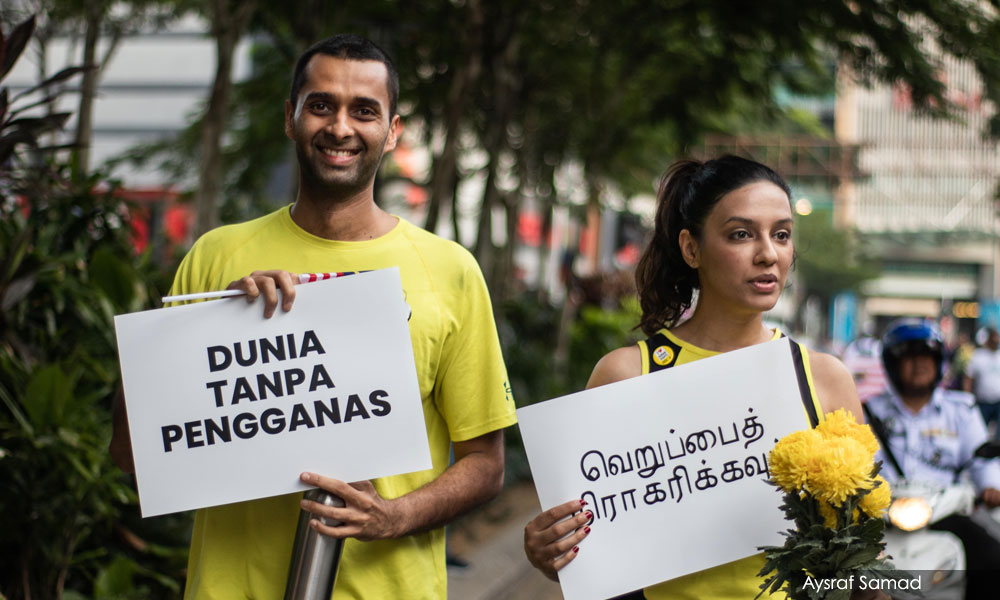
Together, they were also formerly the legal guardians of an orphaned boy in Rwanda until he became of age. That too, Anjhula said, was faced with some sceptical eyes and even racism.
“My activism was forged through personal life experiences. So I’m not surprised by what I do and where I am today.
“My family never stood in my way per se. They haven’t made it easy, but I was always going to have my way,” she added.
New chair of Amnesty
A psychologist by trade, Anjhula was recently appointed as chairperson of the International Board of Amnesty International.
She described the appointment as a privilege of a lifetime and is grateful for the trust given by the organisation.
“I have quite a love story with Amnesty, I think it's an amazing organisation. I wouldn't give up myself and my time as generously and put in the hard work if the values weren’t aligned with mine.
“I have deep gratitude that the board has put their trust in me and the movement,” she said.
As the new chairperson governing one of the largest human rights organisations in the world, Anjhula said Amnesty is focusing on a global growth strategy.
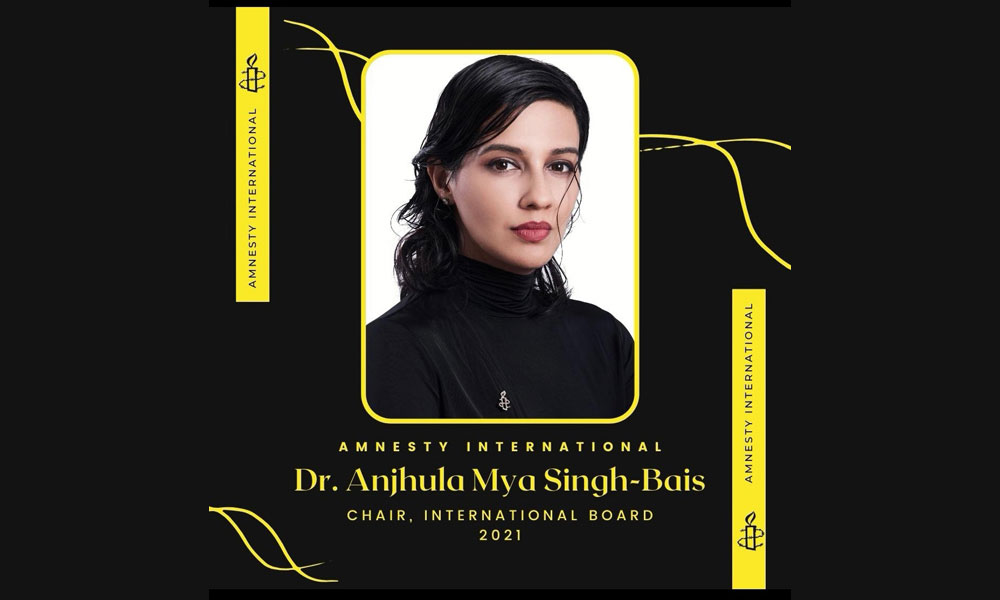
“We want to also excel in feminist, anti-racism leadership and also on wellbeing.
"There’s been a lot of talks on Covid-19 fatigue and toxic workplaces, and that is a very important priority for the board to address,” she added.
Death penalty
Among the human rights issues she discussed during the interview was the death penalty.
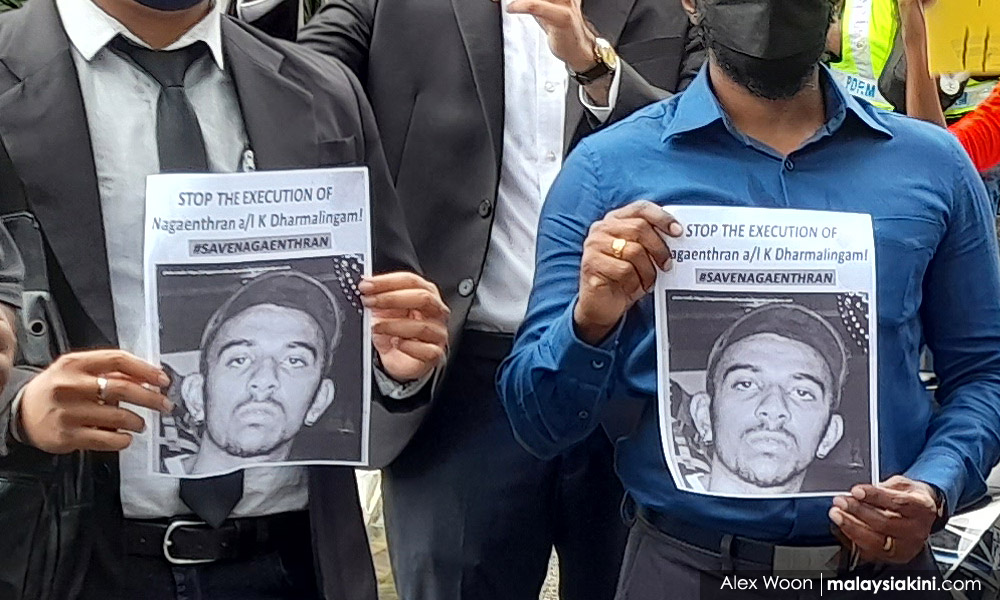
Recently, Malaysian Nagaenthran Dharmalingam was due to be executed in Singapore for drug trafficking.
He was given a temporary reprieve by the Singapore government after the public and civil societies in Malaysia pleaded for his life.
Nagaenthran was diagnosed with reduced cognitive abilities and his lawyers contended he could not comprehend the consequences of his actions.
The case reignited debate over the death penalty and Anjhula weighed in on the matter.
“Just to be very clear, Amnesty is against the death penalty, period.
“However, you have some people in the debate who said the death penalty should be reserved for the most heinous crimes.
“How is Nagaenthran, a man with a disability, the example of that?” she questioned.
Without dismissing the fact that Nagaenthran did commit a crime, Anjhula said from her perspective as a professional psychologist, she can attest that someone with Nagaenthran’s condition simply does not have the mental capacity to make sound decisions.
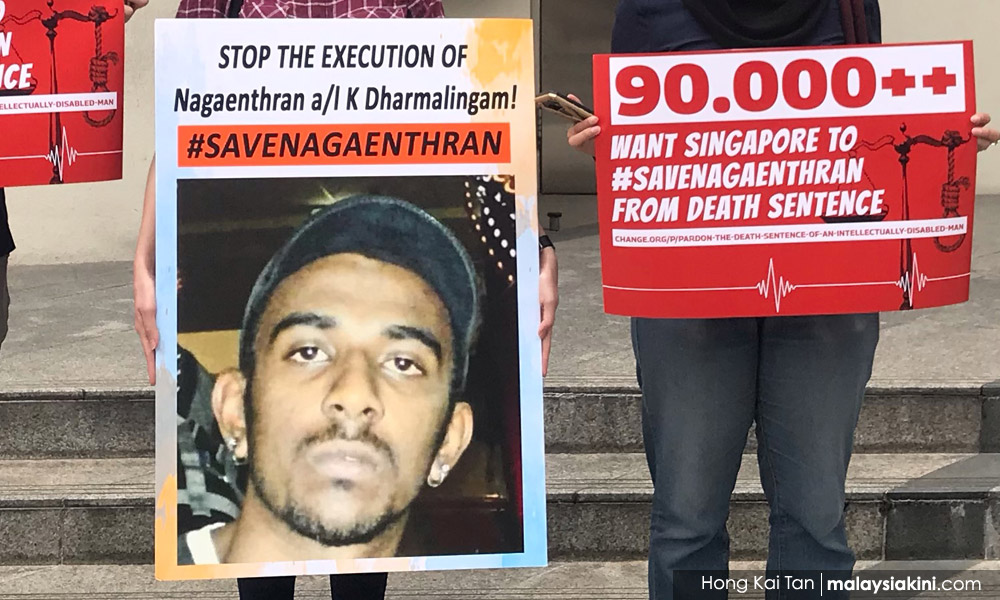
She also cited the inadequate mental health care in the country and past research on the criminal justice system to argue against Nagaenthran’s death penalty.
“There is one psychologist for every 18,000 people in Malaysia. He was not able to access the help that he needs, and we need to think about being a compassionate society because that benefits everyone.
“Judgements are easy to pass or make because they don’t require research. Research has shown that the death penalty is not a deterrent, so we need to be listening to research.
“He needs to be rehabilitated with mental health assistance, not killed,” she argued.
There is still progress
Anjhula conceded that there has been some progress in the region in terms of human rights, most notably the moratorium on the death penalty announced by the government in 2018.
Although the government under Pakatan Harapan did not abolish the death penalty outright in 2019, the moratorium nonetheless stayed while a government review is still underway.
She thanked the government for its commitment to the issue despite facing possible public backlash.
“That is humanistic leadership, and we also need to praise when people do things right."
Rise of intolerance
Anjhula touched on the topic of intolerance rising around the globe.
In recent years, marginalised communities have been at the receiving end of human rights violations such as the Uyghurs in China, the Rohingya in Myanmar, and sexual minorities worldwide.
Anjhula said this intolerance perpetuated by some governments and groups has to do with cognitive leadership.
“It is a cognitive shortcut with the fastest way to assume power, which is to divide and conquer.
“If you look at your own friend circle, what’s the fastest way to bond with your friends if you’re not enlightened enough? Gossip.
“Take that one step further and you have societies going their race, their sexualities are not the right ones, we’re the 'in' group and they are the 'out' group,” she added.
Power has a strong addictive nature, Anjhula explained, as she pointed to the political situation in Malaysia.
“We saw this in Malaysia repeatedly, how hard it was for leaders to give up power, even when the cohort of the rakyat was asking them to leave.
“They (political leaders) are not listening because it's a power trip,” she said.
As the first person with a psychology background to be appointed chair of Amnesty, Anjhula challenges the notion that human rights issues can only be solved through law and political science avenues.
She’s attempting to bring in a new psychological perspective when it comes to addressing people’s attitudes toward intolerance and human rights violations.
“Psychology has a huge role to play in human rights and humanitarianism. Lawyers and political scientists would be concerned about what we do on an issue, psychologists would ask why is it happening?
“I don’t think people ask that question enough, and once people can understand an issue through research, thinking and debate, then they can put policies in place,” she argued.
Time at Amnesty Malaysia
Speaking of her past experience in the human rights field, Anjhula shared memories working at Amnesty Malaysia.
While there were times when she encountered patriarchal undertones, she was glad to be working with passionate people during her time there.
Asked whether anyone has questioned her about her identity as someone with foreign roots heading a local human rights organisation, Anjhula promptly said no.
“Absolutely, honestly, truthfully, I have never faced anyone saying that, at least to my face.
“I actually think that’s a testimony at least to the people within Amnesty Malaysia and the broad-mindedness in their conceptualisation of human rights.
“To some extent, I think a passport exists as an easy organising principle in terms of travel and identity. But it goes far beyond that piece of paper and I am so much more than just my passport,” she said.

Anjhula believes her work here speaks for itself, citing the push for the death penalty moratorium and the campaign in solidarity with political cartoonist Zunar among others.
During her time at Amnesty Malaysia, she also created several firsts, including the set up of key performance indicators (KPIs) for the organisation and pushed for its annual general meeting (AGM) for 2019 to be held in Ipoh rather than Kuala Lumpur as usual.
“When I showed the KPIs, when I pushed on to move the AGM to Ipoh for inclusivity, do you know how the people in Ipoh felt?
“They are one of our strongest local groups in Amnesty. They felt very seen for the first time - do you really think they cared if it was a foreigner or not? The right things are being done,” she added.
Bottom line
Anjhula splits her time between working as a psychologist from morning till afternoon, then focusing on Amnesty work in the evening.
Moving forward, she said Amnesty will focus on streamlining its organisation and working to be more agile.
“We are always thinking of the next move and it's about not only calling out injustices and human rights violations but setting the agenda for the world,” she added.
Looking back at her journey and the progress of human rights around the world so far, she said the hard work will continue and people should not become cynical when progress doesn’t come as fast as they hoped for.
She cautioned that with the rise of social media, people can easily get caught up in a wave of negative news, creating an impression that not much progress has been made when remarkable things are happening.
“Look at Taiwan, they just legalised gay marriage, isn’t that a huge win? What I don’t think many people realise is that dictators are not born overnight, demonisation processes aren’t born overnight.
“Why would we think it can be undone overnight? I think we need to reframe that so we don’t give up the good fight and we don’t get burnt out,” she said.
Anjhula believes every fight for human rights takes time, and people no matter who they are can play a role.
“You might see somebody like (Segambut MP) Hannah Yeoh diligently fighting for women rights in Parliament, you see (activist) Heidy Quah literally on the ground working in these abysmal conditions of refugees, or tv host Thanuja Ananthan who has been so helpful to Amnesty.
“Then you might ask yourself - what can I do? Well, you have human rights conversations at dinner tables with your family or you practice tolerance.
“It has to be a relay, like passing a baton to the next person when you're tired and it needs to be a critical mass of people doing it," she said.
“For sure, all of us want to speed things up but we need to be optimistically realistic, not living in a fantasy land and always keep that hope alive,” Anjhula added.




Report this comment
Are you sure you want to delete this comment?
This action cannot be undone.