


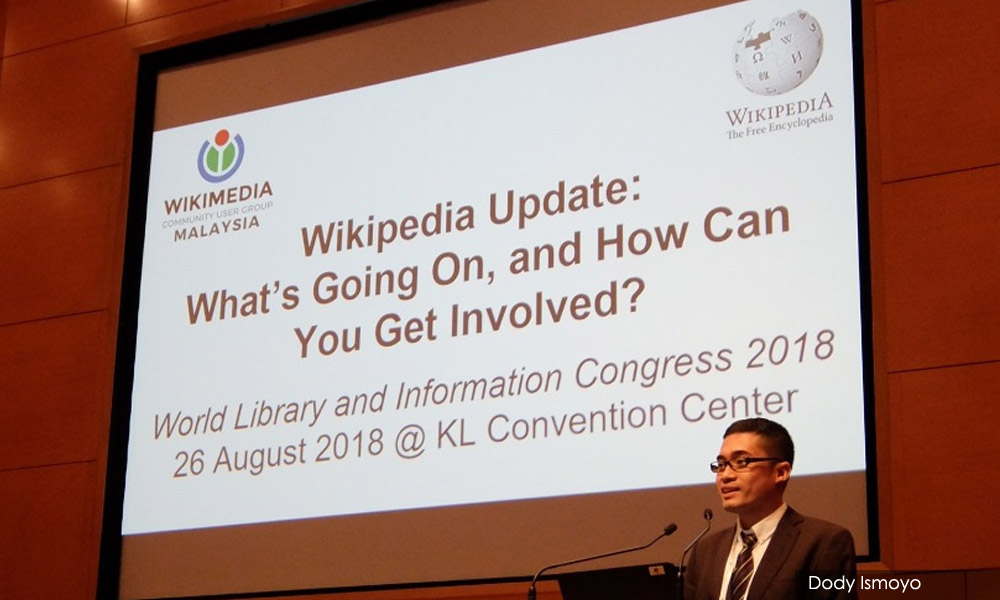

How engineer Dody Ismoyo became a leading Wikipedian in M'sia
A native of Indonesia and with a master's degree from Australia, Dody Ismoyo might seem to be an unlikely candidate for the role of founder and president of the Wikimedia Community User Group Malaysia.
But he has spent more than 12 years in Malaysia and even ranks among the most active Wikipedia contributors in the world, thanks in no small part to his interest in science.
Since making his first Wikipedia edit in 2009, he has created more than 2,200 new Wikipedia articles, uploaded nearly 2,500 photos to Wikimedia Commons and made over 200,000 edits overall.
Now 36, the graduate of Universiti Teknologi Petronas works as an application technology engineer in Johor but he is not all about science – he is also a passionate fan of cosplay as he told Malaysiakini in an email interview.
What led you to be so passionate about Wikipedia?
It all started when I was...
A native of Indonesia and with a master's degree from Australia, Dody Ismoyo might seem to be an unlikely candidate for the role of founder and president of the Wikimedia Community User Group Malaysia.
But he has spent more than 12 years in Malaysia and even ranks among the most active Wikipedia contributors in the world, thanks in no small part to his interest in science.
Since making his first Wikipedia edit in 2009, he has created more than 2,200 new Wikipedia articles, uploaded nearly 2,500 photos to Wikimedia Commons and made over 200,000 edits overall.
Now 36, the graduate of Universiti Teknologi Petronas works as an application technology engineer in Johor but he is not all about science – he is also a passionate fan of cosplay as he told Malaysiakini in an email interview.
What led you to be so passionate about Wikipedia?
It all started when I was studying for my bachelor’s degree in university where I used Wikipedia a lot for study and to do my assignments as well as projects. It continued when I did my master’s degree and even after I start to work.
What makes me really interested in Wikipedia is how it can interlink one thing to another in a very systematic and integrated way, with a cross-check mechanism. That itself is a really new perspective for me in learning new things and it continues until now.
How long does it take to work on a submission?
If you wish to start to contribute to Wikipedia as a beginner, you need to draft the article first in the draft space, then submit it for evaluation by senior editors. The senior editors will then give feedback on what needs to be improved.
You then follow the advice for the article to be finally published. Depending on the availability of senior editors to evaluate and how fast the writer can make improvements to the submitted article, the whole process takes about a week or even up to a month.
If you have submitted many articles correctly according to the rule of Wikipedia, you will be given special authority where your written article will be automatically published once you submit it.
So, the beginning may look a bit difficult, but with some practice and learning from others, you can easily become an expert in a few months.
Most of your 2,200 entries are science-related?
I initially started to write articles with topics related to electrical engineering, which I studied during university. But most of the engineering-related articles have been well-written by other editors years ago.
So, to have more experience and play around with Wikipedia, I tried to think of topics that people don’t really write about much. I finally figured out if I write about people’s biography, especially on politicians, there are many chances for me to do so. Because every year or during certain periods, there are always new politicians in Parliament or new ministers appointed to the cabinet.
I also found out that I can easily write about many museums around the globe because many of them are notable yet not many have been written about yet in Wikipedia.
I tried to explore new topics to learn more stuff that not many people write about, such as educational institutions, geological features (caves, forest, river, lakes, parks, mountains), infrastructures (bridges, dams, harbours, incinerators, train stations), buildings (cultural centres, lighthouses, religious places) etc.
Basically, every time I find new information from the Internet, I immediately try to search about it on Wikipedia. If there is no article about it yet, then I will write about it.
Once that article has been published, I can feel the satisfaction of adding another “missing link” of information to this fully integrated information website.
Wikipedia is not really about these articles. Wikipedia is only one of the projects under Wikimedia Foundation (the parent organisation of Wikipedia). Under it, there are other projects similar to Wikipedia, such as Wikimedia Commons (the photo database) and Wikidata (the database for all of the information used in all Wikimedia projects).
In Wikimedia Commons, I have uploaded close to 2,500 photos taken from several countries and regions, with the most being in Johor. Most of the photos taken are public places, such as nature, buildings or events. So, there is so much for us to explore and contribute to Wikimedia projects than just writing articles.
Do you ever question why you do it for free?
I believe it is the same as many other people who do other charity, such as fighting for poverty, keeping our earth clean, helping disabled people and the elderly, joining rural development programmes etc.
There is this personal satisfaction when you can do a bit of your part to make this world better, such as meeting people thanking you because your articles or photos have helped them (with proper referencing).
But talking in a broader sense, while it is true that Wikipedia editors do not get paid for what they write, there are many benefits an editor can get from this free knowledge movement.
An active editor who has done enough article contributions as well as doing outreach work by teaching Wikipedia to the public offline will have the chance to attend fully paid Wikimedia-related conferences around the globe (before Covid-19 lockdown).
You will be able to build up your global network and meet with like-minded people from various backgrounds and professions, and basically, we all keep in touch with each other, so wherever you travel, you can always meet the local Wikipedia community.
There is also so much research that can be done within Wikimedia projects (especially pertaining to data) which can then be used as the topic for your research paper publication.
We also organise several online competitions where the winners will get some prizes. Those competitions are about submitting Malaysian food photos (WikiSelera in Wikimedia Commons), writing health-related articles (WikiSihat in the Malay-language Wikipedia), writing vocabularies in the indigenous languages of Malaysia ('WikiKata in Malay-language Wiktionary) etc.
Are you tempted to compile your entries in book form later on?
That is one thing I have never thought about before. While I like to write about other people or things, I’m not sure if I have enough stories to tell about my whole journey on Wikipedia.
It is still easier to write about other people because you can write things more objectively without conflict of interest, and this is what Wikipedia always emphasises to editors, that we shall not write about ourselves or our institution (school, organisation, company) to avoid bias content. But of course, I am always open to such book-writing opportunities one day if there is a chance.
Early Wikipedia was very open and many people made false claims. However, some say it is too stringent now, is there an overreliance on contributors having to prove online sources?
In the early years, yes, Wikipedia could be edited easily by anyone. But as the content grew bigger over time, the rules of the writing style also became strict. This is in order to protect the integrity of the information inside it.
It may look strict for a new editor, but if you join the Wikipedia meetup and training conducted by our team, we can show you all the important steps and how to navigate around it so that you don’t have to face all of the unnecessary hassles in becoming an expert Wikipedia editor.
Wikipedia relies heavily on the availability of online sources because every information written on the platform has to be verifiable and without copyright and in the public domain. So for that, online sources are the easiest form of reference that can be used in writing Wikipedia articles.
For information available only through books, editors can still write that information on Wikipedia by having the International Standard Book Number (ISBN) with a more specialised way of reference writing, which is available inside the rules of Wikipedia writing.
It may require more complicated steps, but it is doable. For some other countries, the local Wikipedia community has done some digitisation and archiving works for old publications (where the copyright has expired) and uploaded them onto Wikisource, another project of Wikimedia which is an online digital library of free content textual sources. From there, people can use that Wikisource material as a reference for Wikipedia articles.
We used to have cassettes or CDs for music where we need to purchase them. Now all of them are on YouTube available for everyone to see and listen to, but with proper payment method to the original singer or uploader. The same goes to books as well.
With this digitisation and information era, information moves so fast and gets updated every single second.
So what I see in Wikipedia bridges the gap between the conventional type of information where books are stored in the library and the fast-moving information where we receive it from social media and messaging apps every day with many of them having no verification method or proper references to check truthfulness.
What Wikipedia does is that it captures all of this new and fast-changing information to the platform, but only from those websites with third-party verification and reliable sources, written in a neutral and objective way.
We only write facts, not opinions.
How do you work as a team?
For all Wikipedia editors in Malaysia, we have an organisation called the Wikimedia Community User Group Malaysia.
It all started when we had a small gathering in Iskandar Puteri (then Nusajaya) in Johor back in 2016 among a few Wikipedia editors. Soon after that, we agreed to officially form the group and ask for approval from the Wikimedia Foundation.
It was approved in 2017 and we got registered locally in 2020 with the Home Ministry's Registration Department.
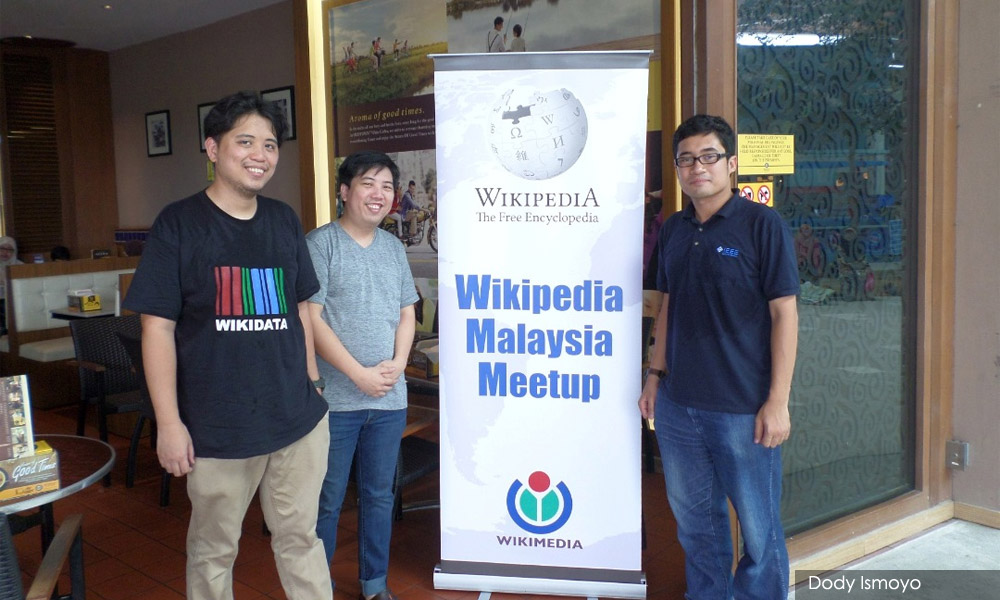
Basically, it is just a small group of very enthusiastic Wikipedia editors from around Malaysia where we exchange knowledge and help out when we do our routine Wikipedia meetup - an offline outreach to the public to teach them about using and editing Wikipedia and other Wikimedia projects.
So far, we have conducted 36 meetups around Malaysia, from Kedah to Sabah with the most held in Johor.
Where are you from?
I am an Indonesian. I first moved to Malaysia in 2004 when I got the opportunity to study at Universiti Teknologi Petronas. After graduation, I worked for a while in Malaysia before continuing my master’s degree in Australia. Upon graduation, I moved back to Indonesia and worked there. A few years later, I decided to move back to Malaysia until now. In total, probably I’ve lived in Malaysia for almost 12 years.
Even though I am a non-Malaysian in a Malaysian society, I try to maintain neutrality at all times. We strive for minimum bilingualism in English and Malay for our user group, with plans to add Chinese, Tamil and one of Malaysia’s indigenous languages.
I also very rarely write articles about Indonesia in my Wikipedia contribution.
Do you have other passions aside from science and Wikipedia?
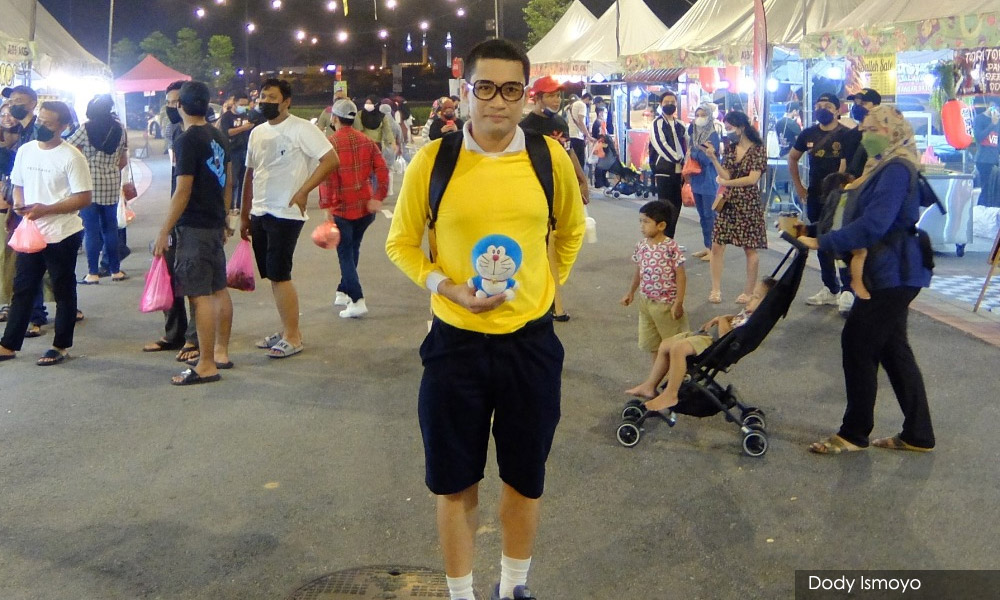
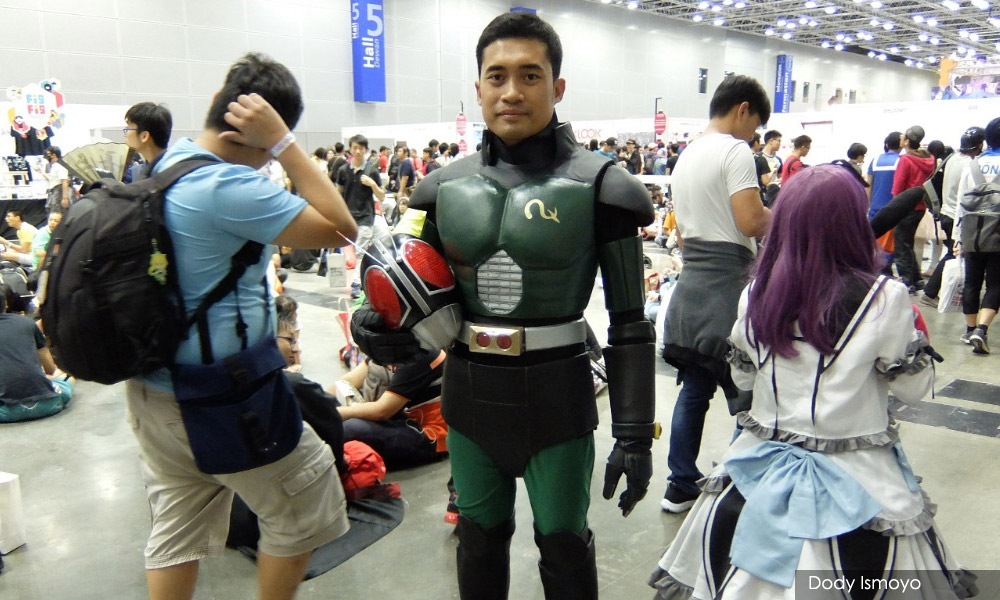
Yes, I am a very passionate cosplayer. It all started during high school where my sister and I used to dress up as goths to go to the school music festival. I continue doing cosplay during my free time, where most of the characters I have cosplayed are from the 80s and 90s movies, such as Captain Planet, Kamen Rider Black RX, Saint Seiya etc.
Previously I was invited as a guest cosplay performer to be Lion-O of Thunder Cats, and recently I was invited as a judge for a cosplay competition in Johor called the Sutera Cosplay Fiesta 2021 where I cosplayed as the Airwolf pilot.
During that event, there was a different session where I had the opportunity to present Wikimedia projects for the cosplay world. So that was when cosplay and Wikipedia were combined together in one project, to show that Wikipedia is not only about books and literature.
What are your future ambitions?
There are several projects we have been developing slowly. We have been striving to create a Wikipedia version of the local indigenous languages of Malaysia and I really wish we can have that available soon to preserve those languages.
We’ve been documenting many facilities for the disabled community around the country (wheelchair ramp, disabled parking, tactile paving and lift for the disabled) in Wikimedia Commons, and we hope Wikimedia can be the central database for such information.
I’ve published an engineering technical paper about Wikipedia, and I wish technical-related people can fully utilise Wikimedia projects for their research, work and continuous professional development.
Our team had done a pilot project to paste QR codes in some public establishments where people can scan them to link them directly to that establishment’s Wikipedia article entry (or Wikidata if Wikipedia entries are unavailable) so we can spread this free knowledge movement of Wikipedia to as many people as possible.


Report this comment
Are you sure you want to delete this comment?
This action cannot be undone.