




Film critic dashes Malaysia's Oscars dream
INTERVIEW | All local filmmakers would have harboured dreams to see local films be featured at an international level, including to be nominated at the Academy Awards, or the Oscars.
Film critic Hassan Abd Muthalib, however, said the vision would be left as empty dreams with 95 percent of local film directors being ignorant of the language of films.
According to Hassan, the situation is also a problem facing Malaysia's animation industry.
"We have gone to an international level, we have...
INTERVIEW | All local filmmakers would have harboured dreams to see local films be featured at an international level, including to be nominated at the Academy Awards, or the Oscars.
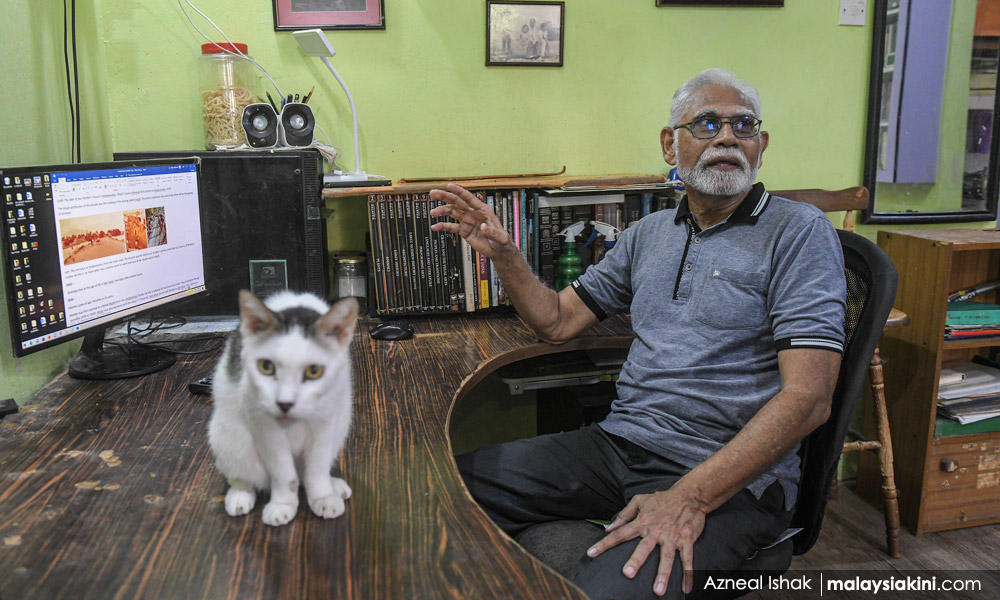
Film critic Hassan Abd Muthalib (above), however, said the vision would be left as empty dreams with 95 percent of local film directors being ignorant of the language of films.
According to Hassan, the situation is also a problem facing Malaysia's animation industry.
"We have gone to an international level, we have the best software and we have all the trained people, colleges that teach animation.
"So, we have the workforce, but what is the big problem? They all don't understand the language of film," he said.
"Storytelling and story-making, they failed to grasp it. Storytelling is about the characters, plot and others. Even that they cannot grasp," said Hassan in a recent interview with Malaysiakini.
The language of film
Hassan said animation students in universities and colleges were not taught in detail about the subject.
"They were only taught at an external level. That can't be, because animation is the controller of filmmaking. We will control every inch of each frame. So story making is a technique to place our story on screen.
"Film grammar and the language of film are two different things. We are well versed with film grammar including long shot, medium shot, close up, eye level, above eye level, high-key lighting and low-key lighting," he said.
He said a director's use of film grammar will create the language of film or a visual language that allows the audience to understand both explicit and implicit messages conveyed on screen, as well as the main storyline.
Hassan explained that while the audience will see a love story, an action scene or others, a director's real message will remain unknown.
"The director wants to talk about love between individuals. Take for example the movie ‘Gladiator’, a two-hour twenty-five-minute movie with tigers fighting, gladiator battles, war and others. But that is not the (real) story, it's just what we see or the foreground story.
"What is the background story? There is nothing more important in this world than my family and my home.
"That's it. Simple. A simple idea will become a great film and that has been proven," said Hassan.
Hassan, however, said he did not see the same concept being applied to by local filmmakers.
"We want to create great films, we want to go to the Oscars. Kepala otak dia orang (what rubbish).
"If they can be like India, just 50 percent would be enough, then they can talk about going to the Oscars. The Oscars, even Japanese films can't make it, what more our films. I'm sorry to say but 95 percent of Malaysian directors, they don't know the language of film," he said.
Hassan said the list of Malaysian directors and directors of photography who learnt the visual language from him include Madnor Kassim, the late Filus Ghazali, Raja Mukhriz and Indra Che Muda.
Missing film theories
In the past, Malaysian films that nearly made it to the Oscars final nomination list include ‘Puteri Gunung Ledang’ (2005) by Saw Teong Hin and ‘Bunohan’ (2012) under the Best Foreign Language Film category.
Similarly, local animation ‘Upin dan Ipin: Keris Siamang Tunggal’ was listed among 31 titles in the initial nominations stage under the Best Animated Feature Film category, alongside finalists including Pixar's ‘Toy Story 4’.
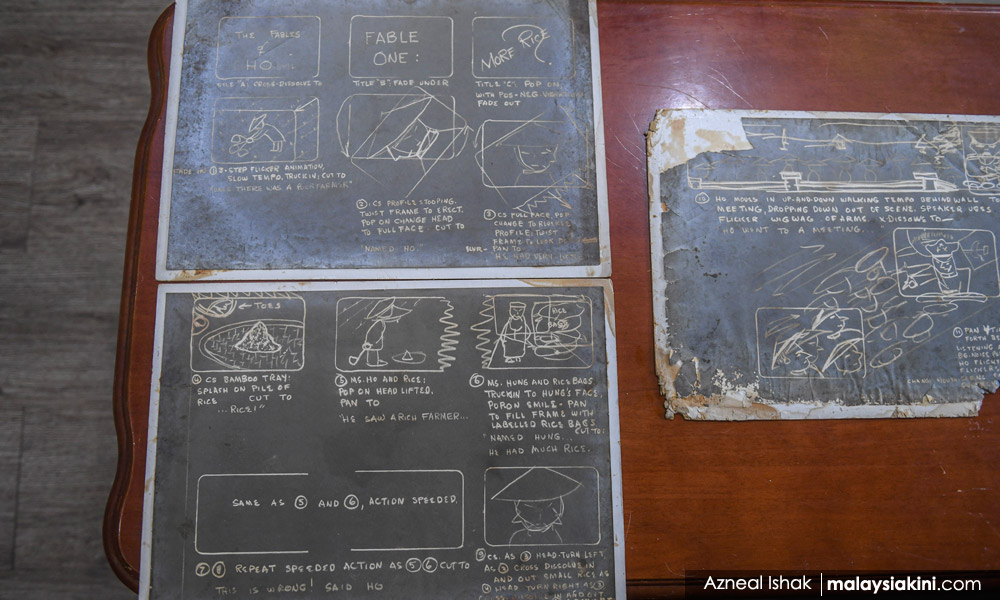
Hassan said he used to compile several photographs to explain the habits of a film director.
"I take photographs from feature films and I explain why a director does this or that.
"So there are four theories that must be taught in film schools - archetype, binary of position, semiotic and gestalt psychology," he said.
"In Gestalt psychology, there are five elements that you must know. It contains a lot of visual storytelling methods and principles.
"For example, when you take a shot and I see a photographer who took an image of Siti Nurhaliza standing next to a large mirror. If we can see her and her reflection, that is wrong. It's a beautiful shot but the visual language is wrong. That means Siti Nurhaliza has a psychological problem.
"You just see any feature film if there is a shot of the hero or heroine near a mirror, the story is that they have a psychological problem," he said.
Hassan also revealed he has been the only person in Malaysia to teach the elements of visual language.
"If there are others who are talking about the same thing, that means they were my students.
"So for those who made it as lecturers, they will thank me for teaching all these. Every day when they watch films they would already know who the villains were and how it would end," he said.
"In animation, if we are not taught that (visual language) then it means we are creating a storyboard strictly based on talent. By right, the storyboard is how we build the visual language to tell a story using visuals through dialogues," he explained.
Radio dramas, not movies
Within the local scene, Hassan likened movies by Razak Mohaideen to radio dramas rather than big-screen productions.
"We close our eyes, we listen to the dialogue and we can understand the story from beginning to end, that means he made a radio drama. That is not a film.
"But if you look at Shuhaimi Baba's first three movies, the rest were disasters, she used the language of film," said Hassan.
"There are scenes that if you close your eyes and hear some music, and then there are people talking or there are other sounds, that is a film.
"You have to see the visuals to understand," he said, noting there are no current lecturers capable of teaching the skills.
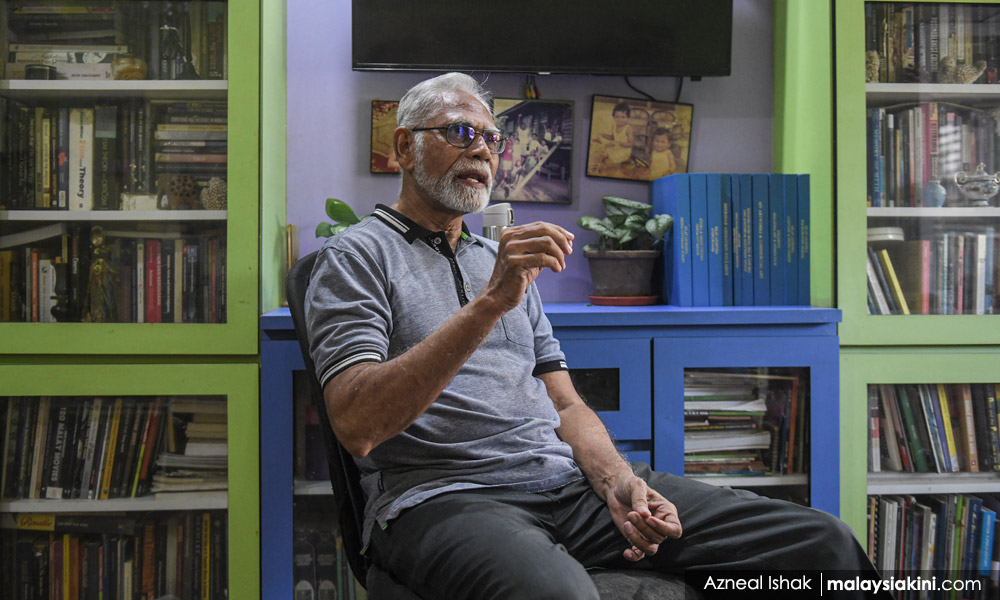
As a result, he said what is being taught only covers 50 percent of skills, minus the missing visual language elements, even in popular productions such as the ‘Upin Ipin’ series.
"‘Upin Ipin’ has raked in millions but I see it as nothing more than a video game on a large screen.
"The visual language is wrong," he stressed.
Hassan cited a scene from ‘Upin Ipin's’ first feature film, ‘Geng Pengembaraan Bermula’, that he said went against the principle of proximity according to Gestalt Principles on human perception.
"In the movie ‘Geng Pengembaraan Bermula’, a child waved down two villains driving a lorry and ended up sitting in-between them.
"That is not right. In Gestalt psychology it falls under the principle of proximity [...]," he said.







Report this comment
Are you sure you want to delete this comment?
This action cannot be undone.