




Return to M'sia? No thanks, say Burmese
A group of Burmese asylum seekers detained in Nauru are to spend years on the tiny island after rejecting an offer from the Australian government to return voluntarily to Malaysia.
A group of Burmese asylum seekers detained in Nauru are to spend years on the tiny island after rejecting an offer from the Australian government to return voluntarily to Malaysia.
Quoting The Age newspaper, Bernama reported that the group has been told they will not be resettled in Australia even if they are found to be refugees and could spend a "long time" in Nauru.
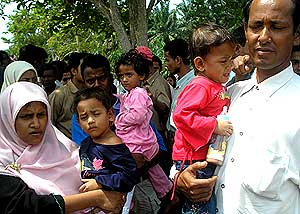 Seven of the eight Burmese, who were dropped by Indonesian human traffickers on Ashmore Reef last August, say they cannot return to Malaysia even though it could eventually lead to them being resettled with their families in Australia.
They alleged that all Muslims from Myanmar's Rohingya ethnic minority feared persecution in Malaysia where they lived after fleeing their country, and uncertainty about what would eventually be offered in Australia is simply too great.
"We have suffered a great deal in Malaysia and do not want to go back to suffer again," one of the Burmese told the newspaper in a telephone interview through an interpreter yesterday.
Two possibilities
An eighth asylum seeker is considering the voluntary return offer to Malaysia but only, he insists, due to concern over his two young children's welfare.
The offer of "two possibilities" from the Australian government to resolve their status has been held in strict confidence since it was communicated to the asylum seekers on Dec 15 last year through their Melbourne lawyer, David Manne, who coordinates the Refugee and Immigration Legal Centre.
Manne told The Age now that they have made their decision, the group wanted the offer to be made public along with their reasons for staying put in Nauru.
"Their emphatic belief is that the whole proposal (to return to Malaysia) is far too uncertain, far too precarious and far too frightening. It would leave them back in the state of very dangerous limbo from which they fled," Manne was quoted as saying.
The men said they were also extremely apprehensive about staying on in Nauru, saying all were suffering from depression and a number required hospital treatment.


Report this comment
Are you sure you want to delete this comment?
This action cannot be undone.