


/file/976/1dc3da27528f8a05c70bfd5c44179d61.jpg)

Mentari Project - education for the urban poor
At the end of 2007, having learned more about the Kelana Jaya constituency where I was active in [PKR work], I put a word out on my blog asking for anyone who was interested to work with me on a community project to come forward.
I thought of doing something along the lines of the Kalsom Project, on a small budget but over a longer run. Someone replied in the comments section saying that she was interested.
I met up with the said person, Mawarni Hassan. She was a former teacher who graduated from Canada and served in the examinations syndicate. Having just left government service, she and her children wanted to do something for the community.
We met at a McDonald’s in the city centre to plan further. Along with Mawarni and her children, I gathered a group of my friends who had just graduated. I was fortunate to have Mawarni as she was an experienced educator and manager.
We decided on doing a voluntary tuition project. We charged RM10 per family to get their commitment, as we feared making it free would mean parents not taking it seriously. However, when there were families who could not pay...
The following is an exclusive excerpt from ‘Malaysian Son: A progressive’s political journey in the heart of Southeast Asia’, a memoir by PKR vice president and Setiawangsa MP Nik Nazmi Nik Ahmad.
At the end of 2007, having learned more about the Kelana Jaya constituency where I was active in [PKR work], I put a word out on my blog asking for anyone who was interested to work with me on a community project to come forward.
I thought of doing something along the lines of the Kalsom Project, on a small budget but over a longer run. Someone replied in the comments section saying that she was interested.
I met up with the said person, Mawarni Hassan. She was a former teacher who graduated from Canada and served in the examinations syndicate. Having just left government service, she and her children wanted to do something for the community.
We met at a McDonald’s in the city centre to plan further. Along with Mawarni and her children, I gathered a group of my friends who had just graduated. I was fortunate to have Mawarni as she was an experienced educator and manager.
We decided on doing a voluntary tuition project. We charged RM10 per family to get their commitment, as we feared making it free would mean parents not taking it seriously. However, when there were families who could not pay, they were not pressured to pay. Many who could not pay the fee insisted on paying in kind in the form of refreshments as they did not want their children to get a free lunch!
Finally, we settled on doing it in Desa Mentari in the Kelana Jaya constituency. A massive low-cost housing project that was built in the early 2000s, it was part of the BN state government’s ‘zero squatter’ policy.
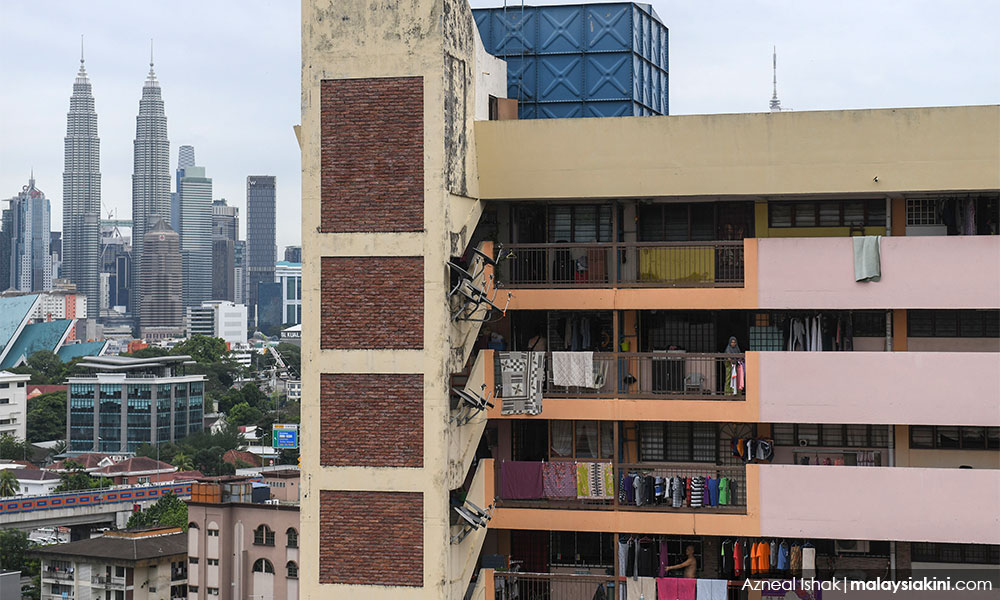
The government wanted to move the squatters that flourished during the early days of industrialisation to a proper environment, while at the same time, unlocking the land they occupied for development.
Desa Mentari is located next to Kampung Lindungan near Old Klang Road. The residents hailed from Kampung Gandhi in Kampung Penaga and other squatter villages and longhouses nearby. The Malays were the majority in Desa Mentari, with a substantial Indian minority. These squatter colonies were so abandoned by the authorities that not only were they beset with poverty, but they were rife with crime, gangsterism, and social ills.
In 2001, a racial riot took place that started in the nearby Kampung Medan and spread to these localities. These were the squatter areas where my La Salle friends came from. Six people died, 24 were hospitalised, and almost 200 were arrested. When I became politically active in the area, I got to know those who were detained by the police during the incident.
Then prime minister Dr Mahathir Mohamad decided to introduce his PPSMI [the Teaching and Learning of Science and Mathematics in English] policy in 2002, demanding that science and mathematics be taught in English in all national schools. Ostensibly, it was supposed to improve the command of English.
In 1969, the government declared that from the next year onwards, students entering the first standard in English primary schools would use the Malay medium instead, ensuring the end of the use of English medium from all levels of national schools by the early 1980s. Thus, I studied all subjects in Malay.
Standard 1 and Form 1 students would start learning under PPSMI in 2003, and it would be fully implemented by 2008. This policy attracted a lot of opposition from various backgrounds.
Malay nationalists opposed a policy deemed undermining to the status of Malay as the national language. Chinese and Tamil educationists were concerned about its impact on vernacular education. Social activists feared that the working and rural classes would be adversely affected as they generally had a poor command of English. What was raised by the third group obviously was relevant to the Desa Mentari community.
We reached an understanding with the PAS kindergarten on the 10th floor at Block 8: we would pay a small amount and use their space over the weekends for our project, which we named the Mentari Project. We photocopied some 2,000 leaflets promoting the tuition and distributed them to the letterboxes in Desa Mentari.
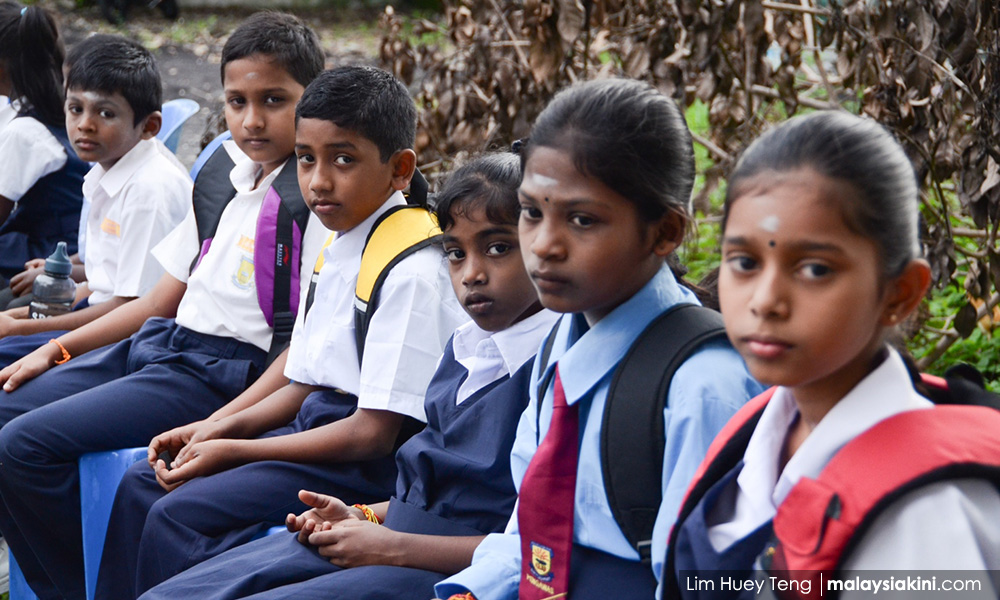
The first class was in January 2008. I was a bit disappointed that only a small number of students - fewer than 20 - attended. I joined Mawarni, her children, and my friends in facilitating the classes. As long as it was primary school children, I was fine. If I had to teach additional mathematics - or worse, biology or chemistry - that would be a different matter altogether! But the number of students grew every week. The students called us ‘Cikgu’, or teacher.
The approach that we crafted for the students was dynamic. We tried to make learning fun through games as well. We focused on English, Malay, science, and mathematics. Some parents were complaining that they used to be able to assist their children in the lower primary in science and mathematics, but are now unable to do so because the language of instruction was English.
The Mentari Project also emphasised field trips. Over the years, the students from the project were able to go to the Petronas Twin Towers, including its science centre, the aquarium at the Twin Towers, and various theme parks. For children with middle-class parents or well-funded Parents Teachers Associations, these trips were taken for granted. But some of the children in Desa Mentari had never set foot inside these nearby attractions.
Many of us were young professionals and were able to share our experiences in doing well at school and furthering our studies, including at foreign universities. The children were excited to be able to engage with us. At the same time, we learned just as much, if not more, from the children, who faced bigger challenges than we did.
One of the big challenges is male underachievement. This is a global phenomenon, of course, but witnessing it up close in the confines of low-cost housing with the faces to boot, beyond the abstract statistics, was a revelation. I personally remember a boy who I first met in the Mentari Project when he was in primary school. He participated actively in class, asking and answering questions. He got almost all As, including English, in his UPSR exam, ahead of many girls in the programme.
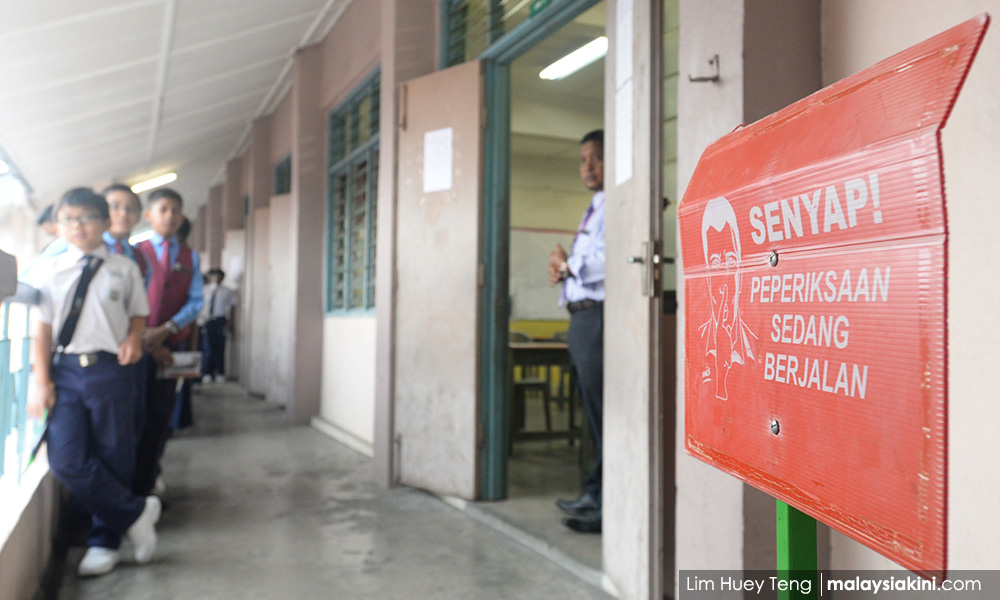
However, in secondary school, he began mixing with the wrong crowd and was soon playing truant, not just at the Mentari Project but even at school. He did not sit for his national Form 3 exams. On the other hand, many of the girls diligently continued attending the project and went on to not only finish secondary school but to get diplomas and even degrees! The absence of positive male role models was a factor in many cases similar to this.
/file/publisher-c1a3f893382d2b2f8a9aa22a654d9c97/2022/09/4d4fb61d0eedd0049ede8ac0ebbc7e0d.jpg)
/file/publisher-c1a3f893382d2b2f8a9aa22a654d9c97/2019/11/c2504f528c713de9206275acf3c064d2.jpg)
/file/publisher-c1a3f893382d2b2f8a9aa22a654d9c97/2022/09/b2d30d586332f67d2757da20a42cda1c.jpg)
/file/publisher-c1a3f893382d2b2f8a9aa22a654d9c97/2022/03/68fb81c3b95540887c036500c13eb055.jpg)


Report this comment
Are you sure you want to delete this comment?
This action cannot be undone.