


/file/publisher-c1a3f893382d2b2f8a9aa22a654d9c97/2019/03/08b07159cd976a5fa326711e38401c71.jpg)

As GE15 looms, climate expert warns monsoon floods may be worse than 2021
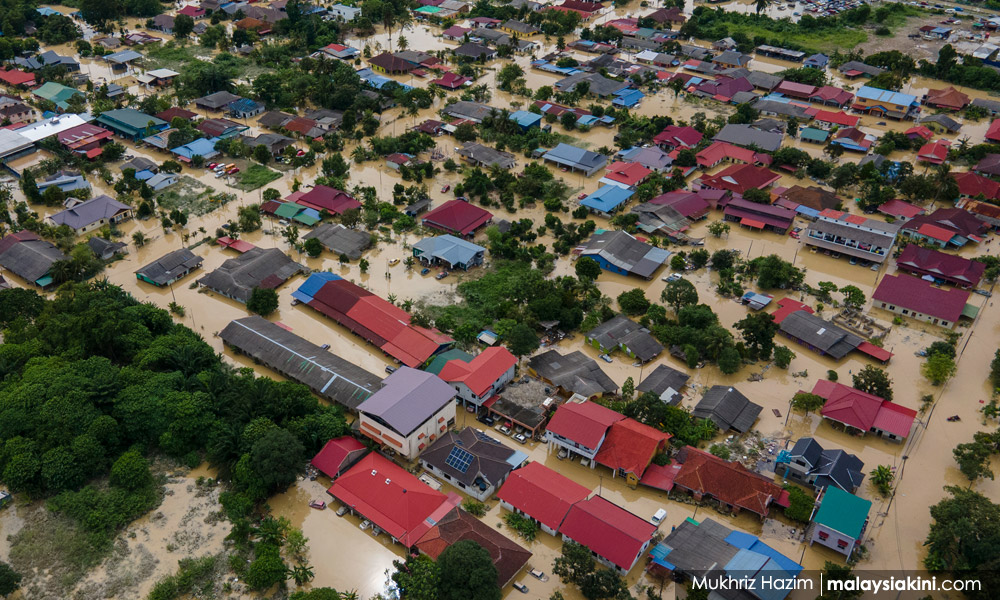
A climate change expert has suggested the country only hold the 15th general election (GE15) after February, warning that the floods situation during the monsoon season at the year-end might be worse than in 2021.
Universiti Putra Malaysia scientist Haliza Abdul Rahman told Malaysiakini that based on previous years’ trends, floods can be expected to occur in Kelantan, Terengganu, Pahang, Johor, Sabah and Sarawak between this November and January.
"Whether we have the current technology or not, the seriousness of the situation cannot be...
A climate change expert has suggested the country only hold the 15th general election (GE15) after February, warning that the floods situation during the monsoon season at the year-end might be worse than in 2021.
Universiti Putra Malaysia scientist Haliza Abdul Rahman told Malaysiakini that based on previous years’ trends, floods can be expected to occur in Kelantan, Terengganu, Pahang, Johor, Sabah, and Sarawak between this November and January.
"Whether we have the current technology or not, the seriousness of the situation cannot be predicted easily. However, with the worst impacts of climate change around the world, the situation might be worse this year.
"This statement is in line with the Meteorological Department's forecast that heavy rain will be expected in Kelantan, Terengganu, and Pahang from November to December while Johor, Sabah, and Sarawak from December to January next year," she said via email.
The scientist was asked to comment on whether it would be advisable for the government to dissolve Parliament and hold GE15 between now and December, given the monsoon season which is expected to see major floods in several states in the coming weeks.
Several politicians, especially from Umno, have been pushing Prime Minister Ismail Sabri Yaakob to dissolve Parliament to pave way for GE15 as soon as possible, with Umno president Ahmad Zahid Hamidi saying the party is ready even if they have to wade through floods to campaign.

Parliament will automatically dissolve on July 16 next year, five years from the date it first convened after GE14, following which there is a 60-day window to hold an election.
"The ‘safe’ month should be next year, from February onwards. My advice is not to have a general election this year, especially in the months of November and December," Haliza said.
Global warming
The scientist said Malaysia has not been spared the impact of global climate change, resulting in a greater risk of flooding as the La Nina phenomenon causes "above normal" rainfall even outside of the annual monsoon.
"The annual rainfall in Malaysia has increased from the range of 670mm to 3,673.2mm in 2019 to the range of 1,691.8mm to 5,320.8mm in 2020, based on the Department of Statistics’ Compendium of Environment Statistics 2021.
"Hence, it might be possible that climate change will increase Malaysia's risk of facing floods worse this year than the last," Haliza added.
She pointed to two different predictions on the extent of the La Nina - the Meteorological Department forecasted a 60 percent chance for heavy rain to continue until December, while the World Meteorological Department (WMO) cited a higher possibility.
Beyond Malaysia, she said predictions of heavy rain attributed to La Nina were also made in coastal regions across Southeast Asia and Australia.
Besides heavy rainfall, there are also other important aspects that have to be taken into consideration when it comes to assessing flood risk.
This is because, Haliza said, rain alone is not always the "culprit" to cause floods.
"Scientists have long theorised that climate change is associated with widespread changes in weather patterns. Hence, global warming due to the increased rise in global temperature also causes floods in surrounding years."
The expert added that other factors include tropical cyclones and cloud bursts.
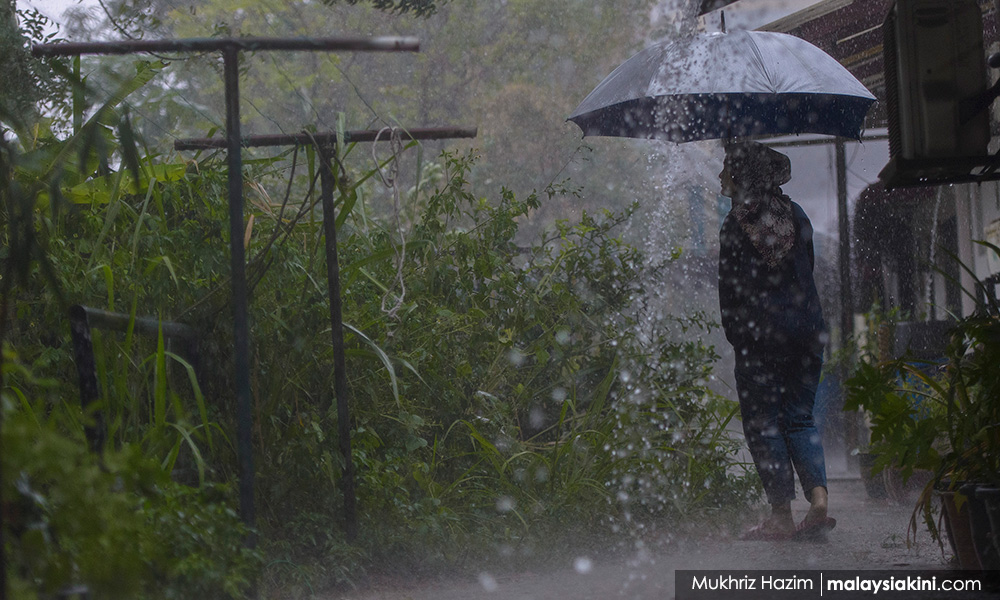
"Tropical cyclones can produce huge amounts of rain, causing flooding and flash flooding once the storm reaches land. They can also send a rush of water from the ocean onto coastlines in an event called a storm surge, which floods low-lying areas.
"Cloud bursts occur due to intense precipitation in a short duration which can sometimes be accompanied by hail and storm and can cause a flood. These natural incidents occur at the mountain slopes, and water runs down towards the plains, causing a flood," Haliza explained.
Parties other than BN components have largely opposed GE15 being called this year.
The Umno supreme council had on Friday decided for Parliament to be dissolved soon and that Ismail Sabri will present a proposed date to the Yang di-Pertuan Agong in accordance with Article 40(1) of the Federal Constitution.
/file/publisher-c1a3f893382d2b2f8a9aa22a654d9c97/2020/12/d749c6d0c2437d389ec4ca7ec7025cc5.jpg)
/file/publisher-c1a3f893382d2b2f8a9aa22a654d9c97/2022/09/1ce10c5fdd8f1e63e3548b7d2a09685b.jpg)
/file/publisher-c1a3f893382d2b2f8a9aa22a654d9c97/2022/09/bd5aa96fd679c52dcdaf33f6061202ce.jpg)
/file/publisher-c1a3f893382d2b2f8a9aa22a654d9c97/2022/08/7cbe28bb71320037cab67c0ebb00d112.jpg)
/file/publisher-c1a3f893382d2b2f8a9aa22a654d9c97/2021/09/bf64acda5c5ce61e6ba4f4f1f0aa4b69.jpg)
/file/publisher-c1a3f893382d2b2f8a9aa22a654d9c97/2022/08/a57dbda4cb9bc4d9e52781b6efb02391.jpg)
/file/publisher-c1a3f893382d2b2f8a9aa22a654d9c97/2021/12/c3762b96c3e912fc25380db3936e2215.jpg)
/file/1306/6acc80f77d48ac6b78f8a9b29d4f769d.jpeg)


Report this comment
Are you sure you want to delete this comment?
This action cannot be undone.