


/file/publisher-c1a3f893382d2b2f8a9aa22a654d9c97/2021/11/f561776d450c4a32deeda8fdf4f31ba7.jpg)

From Sungai Perak to Kinta Valley, 'polls war' for the state begins
GE15 | The official nomination of candidates for the 15th general election this morning has kicked off the “war of polls” as the 14-day campaign formally begins.
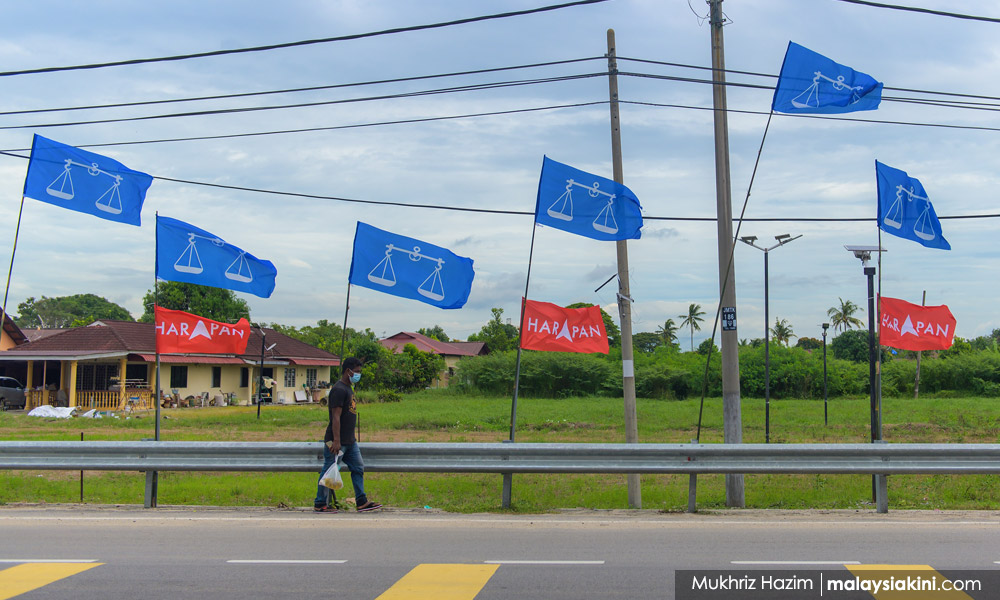
All eyes are on Perak as Pakatan Harapan has made the state its frontline for the national polls with its chairperson Anwar Ibrahim contesting in Tambun.
Harapan does not only aim to recapture Perak but also to enable the coalition to reach its goal of achieving a “Harapan corridor” of states in the Peninsular, along with Penang, Selangor and Negeri Sembilan already under the coalition.
All eyes are on Perak as Pakatan Harapan has made the state its frontline for the national polls in its battle for Putrajaya.
Perak, which has 24 parliamentary and 59 state seats, plays a very important part in any...
GE15 | The official nomination of candidates for the 15th general election this morning has kicked off the “war of polls” as the 14-day campaign formally begins.
All eyes are on Perak as Pakatan Harapan has made the state its frontline for the national polls with its chairperson Anwar Ibrahim contesting in Tambun.
Harapan does not only aim to recapture Perak but also to enable the coalition to reach its goal of achieving a “Harapan corridor” of states in the Peninsular, along with Penang, Selangor and Negeri Sembilan already under the coalition.
The opposition also harboured hope to attain victory in more parliamentary seats to recapture Putrajaya.
Perak, which has 24 parliamentary and 59 state seats, plays a very important part in any contesting parties’ electoral strategy.
Looking at results from the last three general elections since 2008, the ruling and opposition bloc could be said to be neck and neck.
Power barrier
Regardless of who emerges as the victor in this state, no one party or coalition can form the government with a large majority of seats.
For instance, in GE14, there was a distinct power barrier between BN and Harapan.
Based on the map below, Harapan swept all federal constituencies near Kinta Valley (the red block on the right), except for Tapah.
On the other hand, the constituencies located along Sungai Perak, from Gerik all the way to Bagan Datuk are BN strongholds.

As for PAS, it fought the 2018 election battle as a lone wolf.
Despite not winning any parliamentary seats, it still claimed three state constituencies in the north of Perak, namely Selama, Kubu Gajah and Gunong Semanggol – proving it has a certain level of political presence in the silver state.
In this general election, PAS, which is now a component party of Perikatan Nasional (PN), is only contesting in five parliamentary seats, three of which are in the north – Lenggong, Parit Buntar and Bagan Serai – while the other two - Pasir Salak and Parit - are in the south.

As for state seats, the number of seats allocated to PAS has also greatly been reduced to 22, from 44 seats that were previously contested in GE14.
Meanwhile, Bersatu is contesting 22 state seats, and the remaining 15 seats were allocated to Gerakan, the Non-Muslim PAS Supporters Congress (DHPP) and PN associate members.
Looking at the seat distribution, it seems that PAS is focusing more on the northern and coastal areas of Perak, which was always the party base, while Bersatu and its allies have been tasked to contest in other areas.
Comparatively, Bersatu did not perform well in the Malacca and Johor state polls as the party only won two seats in each election. However, the vote share it gained was not bad compared to Harapan.
15 marginal seats in Perak
Unlike the previous three general elections, Harapan lacks a pure Malay-based party like PAS or Bersatu to win over the trust of the Malay voters.
Therefore, if Harapan wishes to make a breakthrough in Perak, it must first overcome its weakness and gain more Malay support.
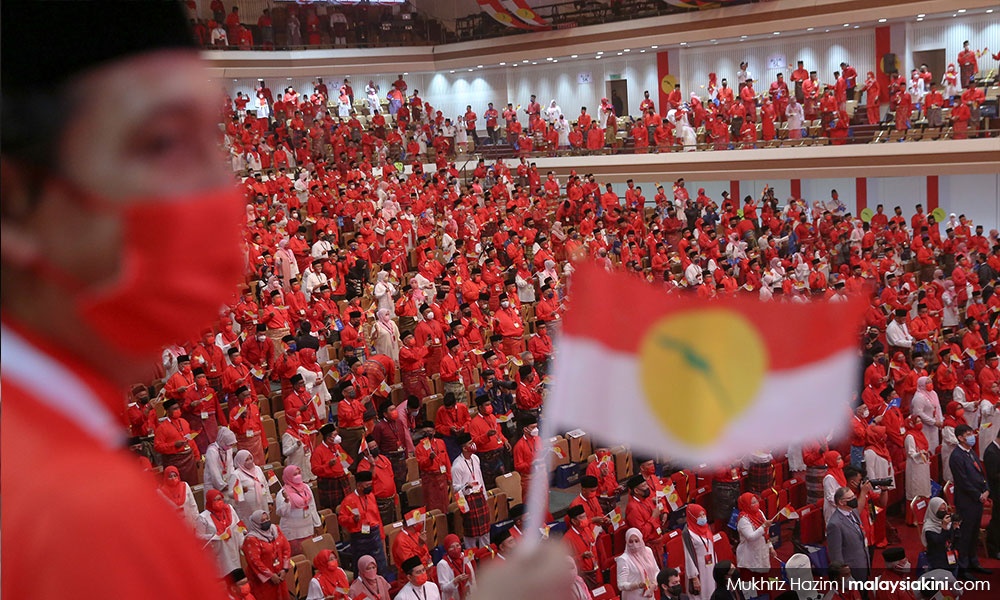
In the last three national polls, Umno consecutively won 27 Malay-majority seats. That record was only matched by DAP with a 100 percent win for all the 18 seats it contested that were dominated by non-Malay voters.
This was because Perak does not have many mixed constituencies, but there is a number of seats with a high mono-ethnic population proportion.
Although Umno was the party that won the most state seats, according to the GE14 results, there were 15 seats that had a majority of less than 1,500 votes. Nine of them belonged to Umno while Amanah has three, PAS (2) and Bersatu (1).
Among these 15 state seats, the percentage of Malay voters was over 60 percent except for Chenderiang and Hutan Melintang.
Tough fights are expected among BN, PN and Harapan in these marginal seats.

According to Election Commission data, Perak has a total of 2.03 million voters as of August.
For racial composition, there are 35 seats with more than 60 percent Malay voters and 20 seats with more than 60 percent non-Malay voters.
/file/publisher-c1a3f893382d2b2f8a9aa22a654d9c97/2022/04/7fa6fbefd4ac26e8afe22aed711d5738.jpg)
/file/publisher-c1a3f893382d2b2f8a9aa22a654d9c97/2022/10/0f8bee526141135813061883cbffa6b1.jpg)
/file/publisher-c1a3f893382d2b2f8a9aa22a654d9c97/2022/01/b746b6b97acf0bc61c1ef6541c169ee4.jpg)
/file/publisher-c1a3f893382d2b2f8a9aa22a654d9c97/2022/08/b42dc8fa251126ee577b6d009cb7c724.jpg)
/file/publisher-c1a3f893382d2b2f8a9aa22a654d9c97/2022/03/29f57688c0755dc3b96ff87f6cc6f4ae.jpg)
/file/publisher-c1a3f893382d2b2f8a9aa22a654d9c97/2022/11/e72725594ecaf8fd1aab44556a219ee7.jpg)


Are you sure you want to delete this comment?
This action cannot be undone.