


/file/publisher-c1a3f893382d2b2f8a9aa22a654d9c97/2023/01/20d0fef538c06b361834838feced3fba.jpg)

BOOK REVIEW | Mahadeva: Forgotten pioneer of Singaporean journalism
In fact, many would say that the country wouldn’t have been successful without him.
Through his political vehicle, the People’s Action Party(PAP), Lee reigned as prime minister of Singapore for 31 years, from 1959 until 1990, and the country flourished, becoming one of the Four Asian Tigers (along with Taiwan, Hong Kong and South Korea) in the 21st century.
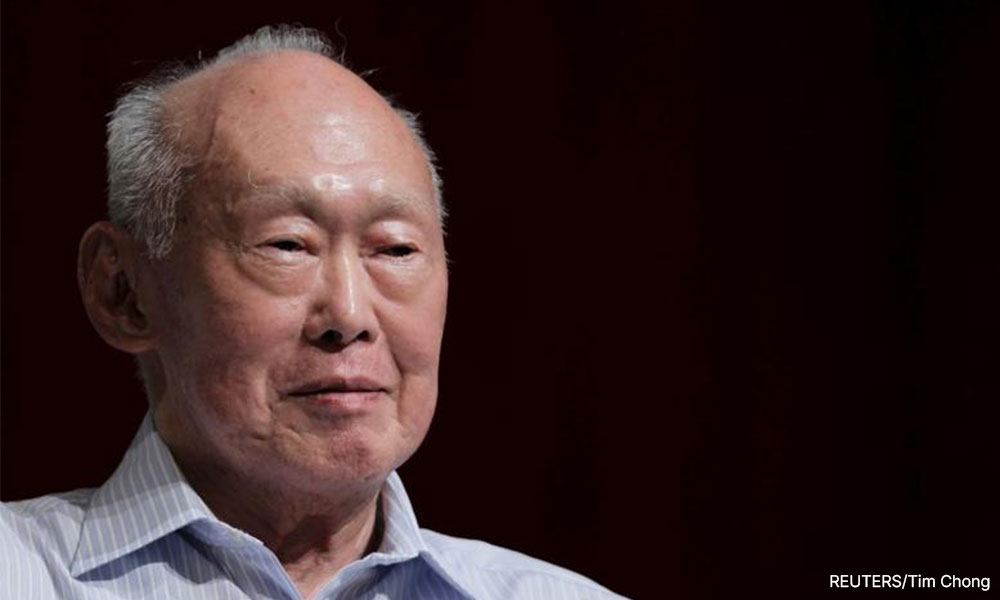
BOOK REVIEW | It can't be disputed that Singapore underwent rapid development thanks to the late Lee Kuan Yew, the nation’s first prime minister.
In fact, many would say that the country wouldn’t have been successful without him.
Through his political vehicle, the People’s Action Party(PAP), Lee reigned as prime minister of Singapore for 31 years, from 1959 until 1990, and the country flourished, becoming one of the Four Asian Tigers (along with Taiwan, Hong Kong and South Korea) in the 21st century.
That is a staple of Singaporean history, isn’t it? Lee built the country to become an economic powerhouse after its independence from colonial rule - and its expulsion from Malaysia.
But as with many history lessons, there are always counter-narratives and blind spots. And there were many, according to Arun Bala - the younger brother of the late Mahadeva Arunasalam, the former secretary-general of the Singapore National Union of Journalists (SNUJ).
Through a memoir dedicated to his older brother titled “Completing the Singapore Story? Memoirs of A Mahadeva, Journalist Imprisoned without Trial”, Arun has told a different side of the country’s history. A grittier side with strikes, threats, abuse and imprisonments - not as clean and pristine as their streets.
The book is packed with information, dare I say, a little too packed if you are new to the subject. So it’s not for the best to recommend this to anyone who only wants surface details.
While nominally a memoir of Mahadeva, it could easily be a historical biography for scholars to decipher because through this book, it is very clear that the journalist lived through every potent moment of the country’s transformation under Lee.
The life of Mahadeva
Mahadeva, whom Arun referred to as Maha, was always a fighter and took a keen interest in political activism from his university days during the mid-1950s.
In 1954, the student editors of the left-leaning University Socialist Club were charged with sedition after the publication of the essay "Aggression in Asia" in the club's magazine, The Fajar.
None other than Lee himself, who was a lawyer at that time, defended the club alongside senior counsel Denis Pritt.
When the accused were later acquitted, Lee and Pritt gained a reputation, with Lee becoming the pseudo-leader of the anti-British movement.
The event inspired Mahadeva to join the University Socialist Club where he later campaigned for PAP candidates, Devan Nair and Lim Chin Siong.
This convinced Lee, who was PAP’s secretary general at the time, to recruit Mahadeva into the party.
However, Mahadeva’s personal interaction with Lee led him to be disillusioned with PAP, realising that the members were splitting up and harbouring different political stances.
He went on to become a journalist for the Singapore Tiger Standard and the Straits Times, constantly butting heads with PAP as he was determined to report truthfully even if it painted the party in a bad light.
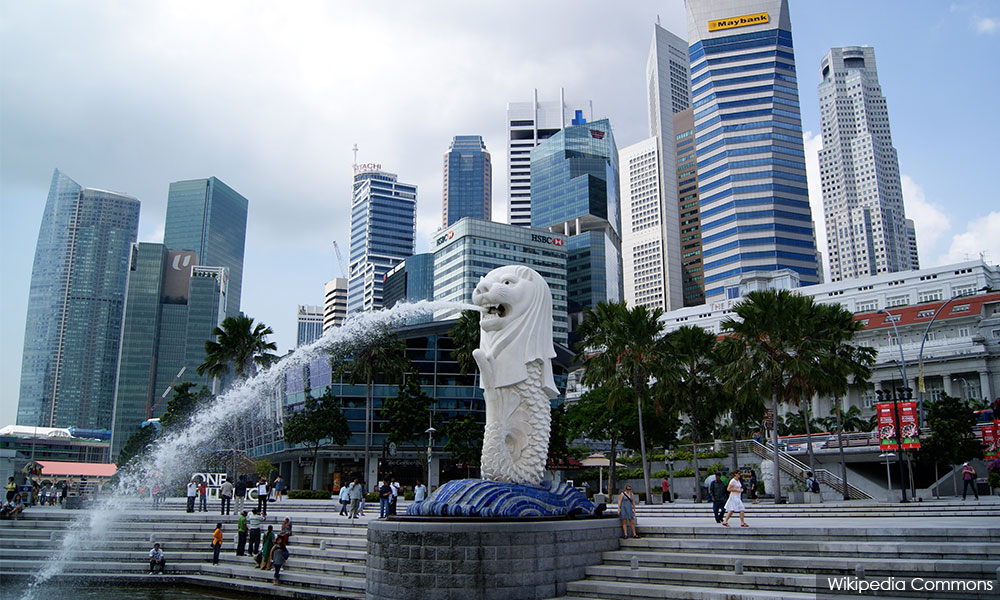
Evidently, Arun deemed his brother the pioneer of Singaporean journalism because he was one of the first to refuse to kowtow to a political party.
Mahadeva also joined the Singapore National Union of Journalists (SNUJ) in 1958, an organisation that acted as a watchdog and protector for the press.
When PAP came into power in 1959, Lee warned journalists sternly that he would not hesitate to enforce the Preservation of Public Security Ordinance against any media who sought to sour relations between the Singaporean government and the public.
This announcement only made Mahadeva’s life even more difficult where eventually, in 1963, he was imprisoned without trial under Operation Coldstore along with 112 others.
Lee branded them as “communist sympathisers”.
This was part of a broader anti-democratic move which saw all Singapore’s opposition MPs losing their seats, with Socialist Front MP Chia Thye Poh spending a record 23 years in detention without trial.
Indeed, from the mid-1960s to 1981, Singapore had zero opposition MPs in Parliament due to its government’s strong-arm tactics. From Lim Chin Siong to latter-day Workers Party leader JB Jeyaretnam, many suffered at the hands of the state.
It was said that Mahadeva’s family suffered financial hardship after his arrest, during which, he was kept in solitary confinement in Outram Prison for four months, before being transferred to Changi Prison.
Four years later, his citizenship was revoked due to the “communist” allegations. Mahadeva was accused of spreading communist propaganda through the media and was also accused of using the SNUJ for political gain.
Before his release in 1968, Mahadeva was made to write a scripted confession about his “communist beliefs”.
He left prison as a stateless person, struggling for years to regain his citizenship which was only reinstated in 1985, nearly two decades after.
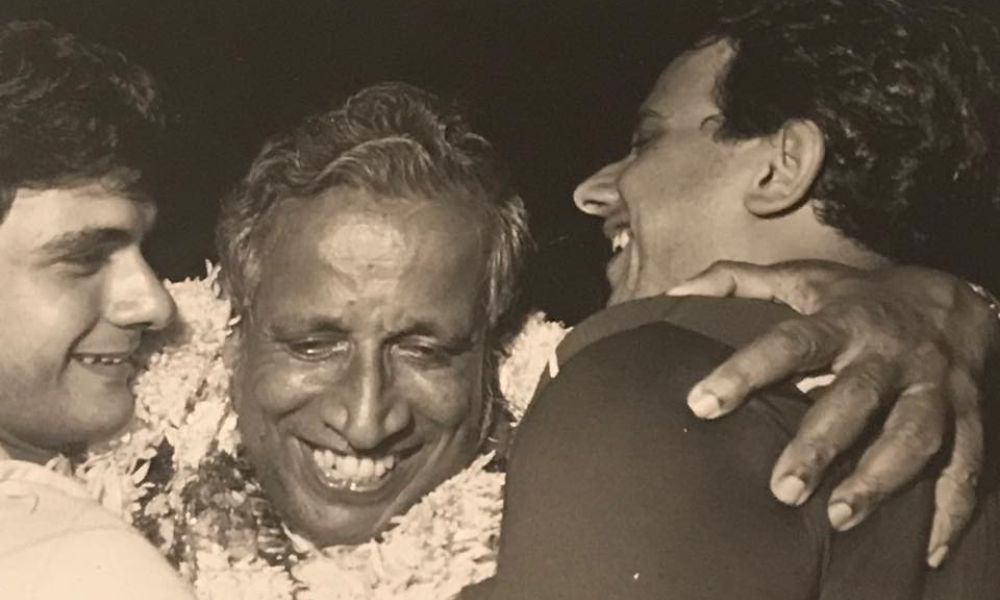
Mahadeva was arrested for the second time in 1976 along with several other journalists because… well, it’s not clearly stated why they were detained.
Arun said that Mahadeva had told him that his detention under Operation Coldstore was 10 times better than his second arrest.
He alleged that Mahadeva was beaten and slapped, and had to give false statements to implicate other “targets”. He was released three months later.
The former journalist decided he wanted to live a simpler life without pain shortly after and ventured into other businesses. According to Arun, his brother became a property manager and even learned how to speak Mandarin after visiting China several times.
Mahadeva passed away at the age of 74, in 2005.
The memoir in a nutshell
Much of what I read was new information for me. Memoirs are usually reserved to be… well, in memory of a long-living or no-longer-living person of interest.
But in a way, Arun managed to write a book about his older brother (there’s an age gap of 16 years, by the way) and at the same time, a history book about Singapore.
Yet, I must say that I struggled to digest the contents of the book. Not that the topic at hand was a difficult one to accept or understand, I just wished the memoir had better chronology planning.
The information provided was not sparse, in fact, I think there was too much information written in the book.
It would have been better had Arun related a historical moment to an event his brother went through because I found myself getting lost in the pages and needing to refer back to the previous chapters.
However, from the way he writes about his brother, I could sense the feeling of respect and awe Arun had towards Mahadeva.
From small recollections of childhood memories and funny antics, in a way, I felt as though the author was indirectly trying to say, “Hey, this is my brother. He was a human being, a simple man who only wanted equality for all”.
The views expressed here are those of the author/contributor and do not necessarily represent the views of Malaysiakini.
/file/publisher-c1a3f893382d2b2f8a9aa22a654d9c97/2022/06/b519f1106993eb527c7928e6a1cd296e.jpg)



Are you sure you want to delete this comment?
This action cannot be undone.