


/file/publisher-c1a3f893382d2b2f8a9aa22a654d9c97/2023/01/c7e146368396757bee5e3a0241269d51.jpg)

Researcher: Menu Rahmah a hit but policy delivery lacking
Based on observations by Malaysiakini at Mydin, Subang Jaya, most customers were satisfied with the price and types of menu offered. It was also lauded by traders who welcomed the boost to business.
Among the items on the menu are chicken rice, nasi paprik, Roti John, fried keow teow, rojak and mee rebus...
The launch of Menu Rahmah by the government earlier this week, in general, was met with approval from customers and traders alike, as the affordable meal programme caters to the hardcore poor - priced at RM5 per meal.
Based on observations by Malaysiakini at Mydin, Subang Jaya, most customers were satisfied with the price and types of menu offered. It was also lauded by traders who welcomed the boost to business.
Among the items on the menu are chicken rice, nasi paprik, roti john, fried keow teow, rojak and mee rebus.
However, customers met by Malaysiakini said they still hope for the government to try to lower the prices of goods and services.
Independent researcher Edwin Goh said that while he lauded the intention behind the programme, the meal raises questions about policy delivery.
“At the moment, it seems like it is just another well-intentioned but poorly-executed policy idea.
“I’m glad the government is trying to lower food prices, and I support policymakers who see these as short-term measures to reduce the cost of living for the lower-income group (B40) and hardcore poor.
“However, the policy delivery is concerning. Menu Rahmah, for example, assumes policymakers understand low-income consumers. It also assumes that they can easily get to these restaurants, customers like the food and people can get sufficient nutrients.
“There are unanswered questions about how the initiative would reach the people it was meant for,” he told Malaysiakini.
Goh said that these issues had also applied to other measures under the Payung Rahmah initiative by the Domestic Trade and Cost of Living Ministry.
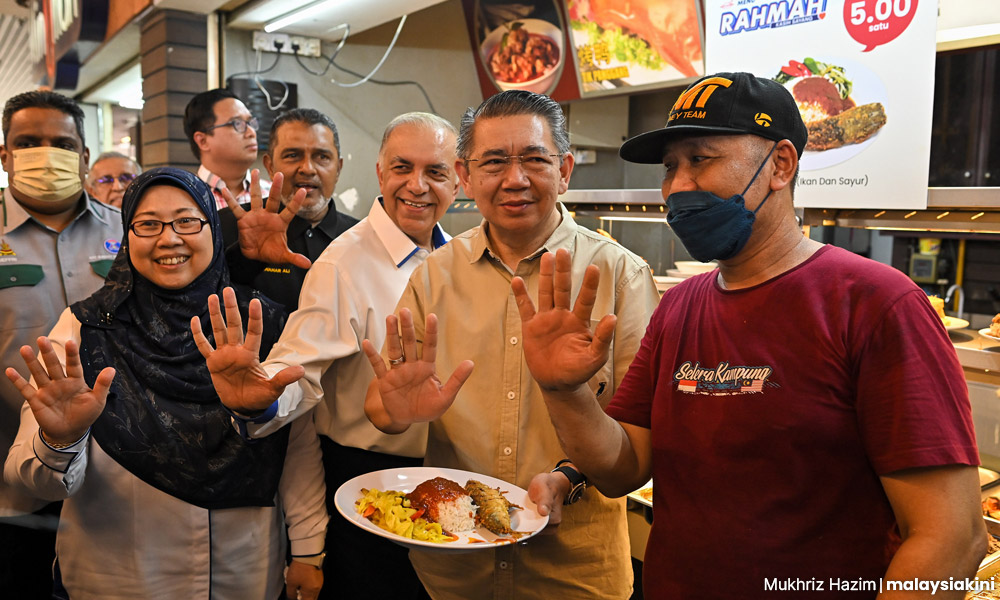
It includes Menu Rahmah affordable meals, food baskets, Rahmah Kasih Sayang Cheap Sale and Cafe Rahmah for university students.
Upon its launch, Domestic Trade and Cost of Living Minister Salahuddin Ayub said the initiative involved more than 15,000 eateries nationwide.
While noting the government so far has no plan to provide subsidies to reduce the burden on the operators of these eateries, Salahuddin said the government may come up with incentives for those involved in the Menu Rahmah programme.
Improve communications, provide details
“Promoting more affordable food options is great. I like that Salahuddin said this initiative is financially sustainable for business owners, as there is still some profit margin, but they need to compromise a bit,” said Goh.
However, he said that for this policy idea to work, it required a strong communication strategy to support its delivery.
“It should at least achieve three objectives; encourage more business owners to participate, avoid or counter any poverty stigma associated with the programme and ensure the delivery of core messages to its target audience,” Goh added.
He also said that beyond adding more affordable lifestyle options, the cost of living is also an income problem.
“People can’t afford to cut expenses if they can’t live on their current income.
“Aside from tackling the problems on the supply and demand sides that cause high cost of living, we need a clear policy strategy to increase income.
“As such, we should consider designing and adding complementary measures, such as systematic wage subsidies to our minimum wage framework for qualifying employers.
“With the wage subsidy, the government will be able to update the minimum wage and give temporary support to businesses based on their size and financial health. Over time, this approach may promote healthier income growth for employees, especially those currently earning below a living wage,” he mentioned.
/file/publisher-c1a3f893382d2b2f8a9aa22a654d9c97/2023/01/c7e146368396757bee5e3a0241269d51.jpg)
/file/publisher-c1a3f893382d2b2f8a9aa22a654d9c97/2023/01/0c23bb0a8f670f62824d6bac86c1c26d.jpg)
/file/1055/853053c0dc93101c30c303e6d2df07b2.jpg)
/file/publisher-c1a3f893382d2b2f8a9aa22a654d9c97/2022/12/829cb3ebba82d8016dd037dee67dbba5.jpg)


Report this comment
Are you sure you want to delete this comment?
This action cannot be undone.