


/file/publisher-c1a3f893382d2b2f8a9aa22a654d9c97/2023/02/c5835d0aab6ec96acb4b4dc58f5b8a41.jpg)

Just like YBeeee, Jo Kukathas moves with the times
MALAYSIANSKINI | Back In 1989, Jo Kukathas, Andrew Leci, Zahim Albakri, and the late Jit Murad founded Instant Cafe Theatre (ICT), a progressive theatre group that essentially revolutionised the live entertainment scene in Malaysia.
At a time when freedom of expression was almost a taboo subject, ICT made us laugh through political satire.
Decades later, Jo, now 60, is one of the icons of the theatre scene.
Asked what keeps her going in a scene that has so many ups and downs, Jo told Malaysiakini...
MALAYSIANSKINI | Back In 1989, Jo Kukathas, Andrew Leci, Zahim Albakri, and the late Jit Murad founded Instant Cafe Theatre (ICT), a progressive theatre group that essentially revolutionised the live entertainment scene in Malaysia.
At a time when freedom of expression was almost a taboo subject, ICT made us laugh through political satire.
Decades later, Jo (above), now 60, is one of the icons of the theatre scene.
Asked what keeps her going in a scene that has so many ups and downs, Jo told Malaysiakini: “It’s an interesting question. I mean, it’s interesting that you would ask this question about the arts, right? But you wouldn’t ask this question to a doctor.
“But for me, it’s the same thing. I talked to my uncle yesterday, he’s 85 years old and he’s still practising medicine. He still goes in every day. He’s made one small concession.
“He now doesn’t go in on Wednesdays. But if there’s an emergency, he might go in on a Saturday. He said that he sees medicine as a service, not a profession. It’s not a way to make lots of money. Once you decide you’re going to be a doctor, that’s what you do.
“I’m not saying that the arts are a service but I guess, for me, it’s a way of life, maybe. It’s my life, you know, being an artist. It’s not like leaving a job. You can leave a job, but you can’t leave the arts.”
Jo pointed out that even her friends, who are not openly practising the arts, are also drawn to being creative.
Getting through repression
When ICT was created, Dr Mahathir Mohamad was the prime minister, and freedom of expression, especially openly on stage, was not something many dared to do.
It was post-Ops Lalang, when his regime had detained many without trial, but ICT created a huge splash by making digs at politicians and politics, and their audience loved them.
“We made a huge splash because apart from singer Rafique Rashid, nobody else was doing this kind of comedy. Rafique was better known as a singer-songwriter. He also wrote these comedy songs, which everybody loved, parody songs, and things like that.
“Sometimes I think he would feel people would come to watch his gigs and then he’d sing his serious stuff because he’s a serious musician as well.
“But at some point in the night, people would always ask him, please sing that song, this song, a song about something political.
“So, he would oblige. But ICT was the first to do it. And at a time when people didn’t imagine you could do such a thing,” she said.
The power of imagination
Jo believes in the importance of imagination.
“I think, for me, it’s always about the imagination. My character, Curry Spice, in her first big show, said we have to have more imagination. We have to imagine the nation we want. I think that’s what we were trying to do.
“We were trying to say, you say we can’t have freedom of expression, but if we just express ourselves, then people can imagine a nation in which we have freedom of expression.
“But somebody has to imagine it for them. The artist has to perform freely. If the artist performs the freedom, then other people say, oh, hold on a minute. Can we say that?” explained Jo.

She recalled their first show in Penang in 1991, which was a corporate event held in a ballroom. An elderly technician said he was going to adjust his shift so that he could watch the show.
He said he loved ICT and was so happy they were performing there.
Naturally curious Jo enquired where he has watched them before.
“He said, ‘oh, I've never seen you. I’ve only heard of you. And what he’d heard about, he loved. He loved the idea of what we were doing. So that’s why when some people say, oh, you’re elitist, you only reach a few people, we never pretended that we are mass media.
“We’re not on a mass medium. We’re not on TV. We’re not on the radio. We can't be. But things can still affect people, even if they don’t see it, because they know it exists.
“So for me, I think it was the fact that people were told, you can’t say this. That's what came out of the mantra. You can’t say this.”
Indeed, last year, ICT made a documentary about their inception called ‘You Can't Say This’.
“The important thing was that even if you're told you can't say something, if you feel it's your right to say it, you should say it. And people always say, oh, but you can't say that. We said, ‘Well, let’s say it until somebody tells us no’.”
Strangely enough, ICT did not get into much trouble with politicians back then.
Jo surmised that this was because, in the early 1990s, the BN government was extremely powerful.
“So, they felt untouchable. Did it matter to them that we were doing this? No. The weird thing was, in the very early days after we were being told by all kinds of people, oh, you know, you’re going to get into trouble, you’re going to get arrested.
“After a while, government-linked companies started approaching us and getting us to perform at their functions,” Jo recalled.
Apparently, former MCA president Ling Liong Sik was a big fan of ICT and would jokingly tell people he would attend their functions if ICT was performing.
Financial challenges abound
Despite ICT’s success, they struggled with funding but somehow managed to survive with the support of their fans who attend their shows.
Jo also believes that there is not enough representation among art practitioners in Malaysia.
“I feel our art scene is still relatively small compared to Singapore, Indonesia, and Thailand. Singapore is tiny and they have many, many more arts organisations than we do. Many, many more players than we have.
“Of course, it’s also much harder to be in the arts here and it’s harder to stay.”
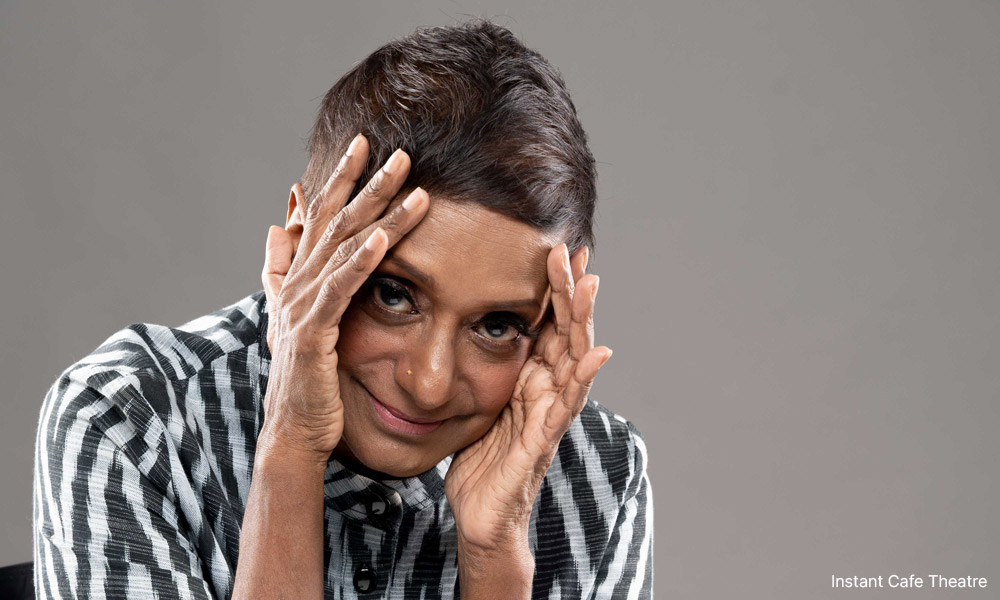
Jo could have easily moved on to doing something else. She even recalled a time when her producer friend Adeline Tan suggested “loaning her out” to an advertising firm for a year to make money for ICT.
“Maybe there’s a kind of calling. I think I only feel happy if I'm doing something which I feel gives me some meaning for myself.
“Maybe for other people, it’s in advertising or public relations or it’s in medicine or it’s in being a lawyer. And actually, I was talking to my cousin yesterday and she’s a lawyer. We were talking about this, our same uncle (the doctor), and she was saying, yeah, once you don’t like your job anymore, leave. And I agree with that.
“I mean, it’s not to say that over the years I haven’t wanted to leave because I’ve been tired or I just feel there’s so little real understanding and respect for the arts here that you do want to give up. And maybe sometimes you need a break.
“But you can never stop being an artist and maybe it'll find an outlet in other ways, like during the pandemic, right? You couldn’t put a piece of work on stage but that doesn’t mean you stop being an artist. If you’re an artist, you’re an artist and you will find some way,” said Jo.
Some unlikely detours
She cited the example of singer Yudi Yap, who opened a homestay in Bentong, even before the pandemic.
“I think of it as a way to deal with income issues. But of course, as an artist, it’s not just like any other homestay. You always bring something from your artistic self to that endeavour.
“So I think whatever area you may move to, you won’t stop being an artist.
“I also think sometimes it’s just about visibility. People think, oh, that person’s not doing anything anymore because they haven’t done something which the public will see in a big way,” said Jo pointing out that it took over a decade for Zahim Albakri to get his film ‘Spilt Gravy on Rice’ screened.
Speaking of ‘Spilt Gravy on Rice’, which was written by the late Jit Murad, Jo recalled how they restaged another one of Jit’s works, ‘Gold Rain and Hailstones’, a few years ago.
“I want the younger generation to know who Jit Murad is. It was packed to the rafters because of word of mouth. We had to extend and extend the staging of the play.
“The writing is still so good. The sense of what it captures about human nature is still so good. And I think it was very well directed by Gavin Yap and very well performed by the four actors. So, of course, people then were reintroduced to Jit.
“There are many playwrights who I’d love to kind of reintroduce to Malaysian audiences. I don’t do as much as I would like because, frankly, it’s funding. This is what I’m weary of. I’m just tired of always having to look for funds,” said Jo.
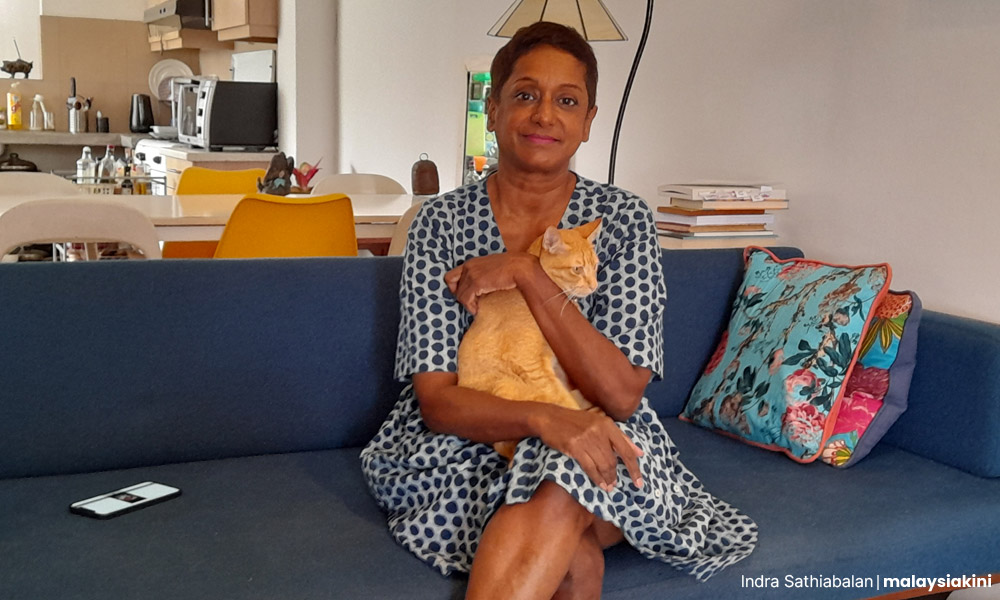
Jo feels that Malaysian artists are not able to always give their full expression of things because they spend so much of their time trying to make ends meet.
The problem of getting funding for the arts is something that artists all over the world share. Jo recalled a trip to Australia a few years ago where she spent a month with a theatre company and doing workshops for a play of hers.
She said that she was invited to many talks, during one of which she told her audience “In Malaysia, even if you don’t have funding for something, you’ll still do it. Whereas I noticed in Australia, an artist won’t do some work unless they have funding. It is as destructive as not doing something because you got censored.
“So I said, in Malaysia, we don’t have funding, we don’t have the infrastructure, but we still will just do the work, and find a way to do it somehow. And audiences have been the biggest supporters, right? I mean, when you ask me how ICT survives, I survive. I’ve survived mostly because audiences have supported us over the years,” explained Jo.
During the pandemic, ICT arranged online screenings of the theatre play ‘Nadira’, which was recorded during a performance in Japan.
They also performed another play, ‘Para’, live for online viewers.
Last year they collaborated with the Afghan refugee theatre company Parastoo to film and release a play to help them raise funds.
Retiring Ybeeee
One of the characters that Jo made hugely popular is Ybeeee.
“I mean, he's been around for 30 years now, right? And I think that he ought to retire. But I saw the show I’m doing is coming up in March. It's called Instant Cafe Night Live, Edisi X. So is that going to be the last appearance of YBeeee or what? Maybe, maybe. But is YBeeee going to be like Mahathir? Everybody’s wrong and I am right.
“YBeeee is a survivor, right? YBeeee was never prime minister. YBeeee is never even a minister. YBeeee is always a deputy minister because he, unlike Mahathir, doesn’t want to be in the forefront.
“He wants to survive. And so that’s why I was trying to think, well, what’s going to happen to YBeeee?”
Ybeeee has undergone different incarnations over the years in various shows - from a member of the ruling party to the opposition in 2018, then back into the government.
She says that YBeeee is inspired by different politicians and at one point (in 1998) he was channelling an Anwar vibe, even telling people to call him “saudara”.
“He is that guy who’s always trying to claw power, in whatever way. At the same time, I think, what makes audiences like him because he’s really honest. He will tell you what he’s doing, really quite honestly. Or else his manipulation is so blatant that you can’t help but laugh.”
About Edisi X, she said ICT has been working on it since last year.
“It’s big. The two characters are now on the same side. There’s YBeeee, who has always been on one side of the political divide. It’s now on the same party as the people who used to criticise. Curry Spice, my character, who’s always been very critical of people like YBeeee and now finds that YBeeee’s on her side. She also finds this slightly bizarre. But she’s also asking, OK, so what's this new PMX (10th prime minister Anwar Ibrahim) all about? That's why it’s called Edisi X. X marks the spot. It’s 10.
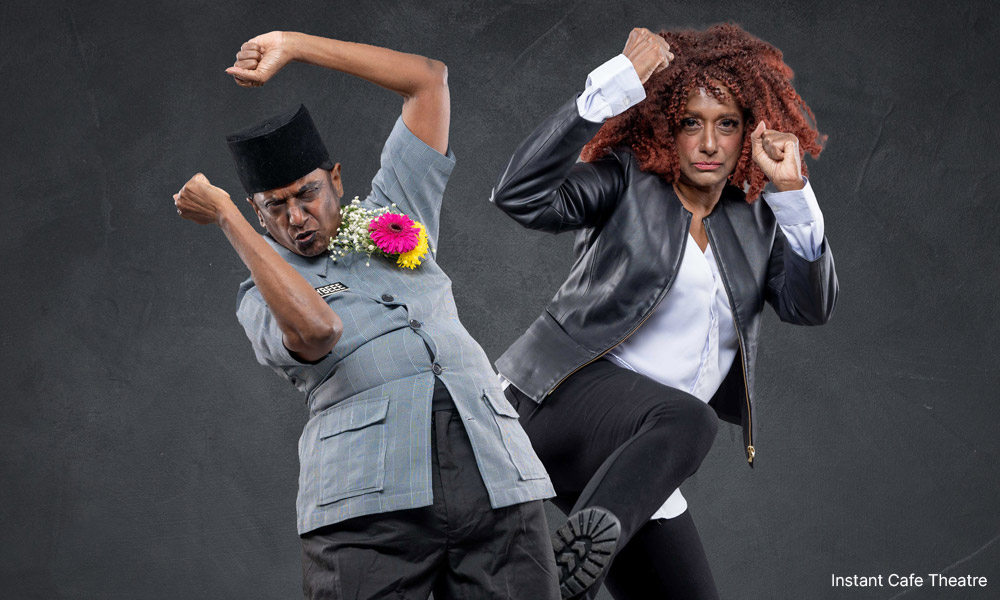
“And so she’s questioning if this is what we voted for. She’s questioning how Malaysia for Malaysians is. We say this is Malaysia for all Malaysians now. So she’s going to question this and also talk about what the last few years of the pandemic were like.
“And we talk about the great reset... And she’s going to ask, what did we figure out? And where are we going to go from here? Of course, these two characters can’t meet on stage, unfortunately,” elaborated Jo about her characters.
Jo herself finds the present government - with people from opposing sides coming together - very interesting. She likens it to a sign of maturity, working together for the sake of the country.
“We will see what happens, of course, with things like court cases, for example, which must still play their course. But I think the language that we have to use now must change.
“The language can’t always be so oppositional. Because actually, one thing we got tired of the last few years is that nobody’s simply governing the country, because everybody was just trying to tear each other down.
“So what is this new Malaysia that’s going to be? What could it be that’s going to move forward? Are we going to shift?”
For now, Jo has a lot on her plate but she plans to take a break in the middle of the year and then come back with something new.
“I can’t say what it is to you yet, because it’s still something we’re in discussion about, and somebody else is spearheading it. So I feel I don't want to talk about it too much,” said Jo.
Instant Café Night Live! Edisi X will be live on March 18 at Plenary Hall, KL Convention Centre.
/file/publisher-c1a3f893382d2b2f8a9aa22a654d9c97/2023/02/a794cd5254d566ee5aff36a7a2a008bd.jpg)
/file/publisher-c1a3f893382d2b2f8a9aa22a654d9c97/2023/01/eed712939298ffddbaad9957c5ed53f0.jpg)
/file/publisher-c1a3f893382d2b2f8a9aa22a654d9c97/2023/01/8ecd9ceb1e1c221387615bb3f7a18ddb.jpg)
/file/publisher-c1a3f893382d2b2f8a9aa22a654d9c97/2022/12/002defcf4f4e59d62ec29c55491656e5.jpg)
/file/publisher-c1a3f893382d2b2f8a9aa22a654d9c97/2022/12/70c638f7a0fee54d21de673b9288a850.jpg)
/file/publisher-c1a3f893382d2b2f8a9aa22a654d9c97/2022/12/1d223856be1c3df4c37d0f0eae46c309.jpg)
/file/publisher-c1a3f893382d2b2f8a9aa22a654d9c97/2022/12/3924a1f2e193c960f75131332f1654ee.jpg)


Report this comment
Are you sure you want to delete this comment?
This action cannot be undone.