


/file/publisher-c1a3f893382d2b2f8a9aa22a654d9c97/2022/12/70c638f7a0fee54d21de673b9288a850.jpg)

Interpreting Hannah: How sign language interpreter duo bridges two worlds
In its absence lies a network of sign language interpreters. Most of us have seen their work at state-sponsored television, public events and most recently, at political rallies.
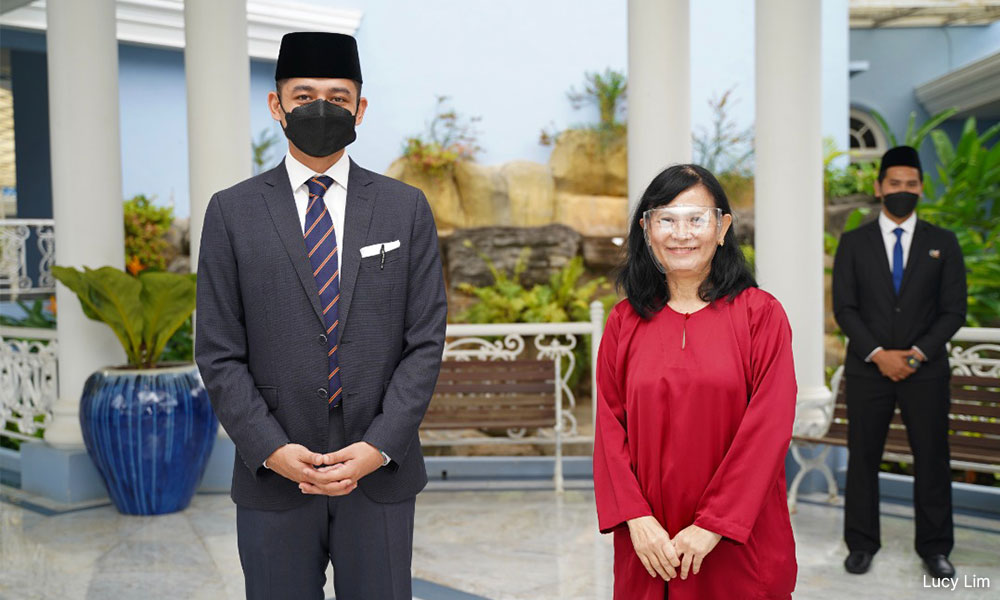
This was where Malaysiakini discovered the work of sign language interpreters Lucy Lim and Jonah Ong - who were following Segambut MP Hannah Yeoh on the campaign trail during the 15th general election (GE15).
MALAYSIANSKINI | While it may seem trivial to some, closed captions play an important role in bridging the gap of information between those who are hearing-impaired and the hearing-dominated world.
In its absence lies a network of sign language interpreters. Most of us have seen their work at state-sponsored television, public events and most recently, at political rallies.
This was where Malaysiakini discovered the work of sign language interpreters Lucy Lim and Jonah Ong - who were following Segambut MP Hannah Yeoh on the campaign trail during the 15th general election (GE15).
It is time-consuming to prepare for such an event, where the duo would go through their material - be it speeches, statements or attendance lists - meeting physically or over Zoom prior to the event.
This would sometimes involve consulting deaf individuals on the best way to communicate a certain phrase or name.
Watch here to find out how Lim and Ong prepare to interpret public events and how they survived the pandemic.
Not a free service
Unfortunately, for the likes of Lim and Ong, sign language interpreting is often mistaken as being a free service rather than a paid profession - with some clients baulking at the thought of paying for their blood, sweat and tears.
Lim spoke of struggling with that societal belief when she began her training in the 1990s.
“The sign language interpreters’ profession was truly unheard of and only a few of us were struggling to interpret for the deaf community since we are working with a related non-governmental organisation.
“Society generally looks at our profession as a ‘helper model’ – or that we are interpreting because we are serving the deaf community and not as professionals,” she said.
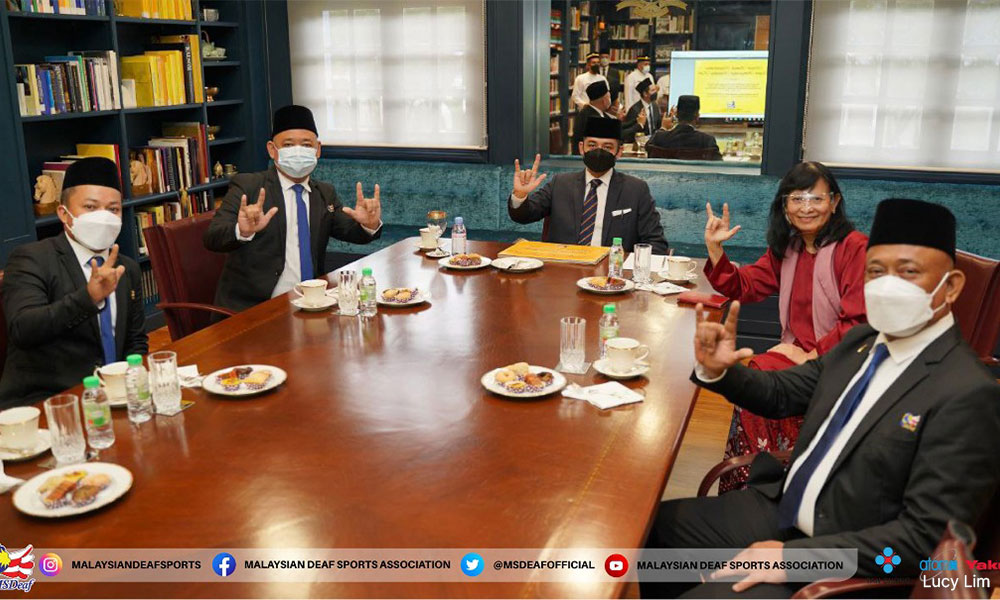
Lim first picked up sign language from deaf colleagues while working with an organisation that serves hearing-impaired individuals - the Young Men’s Christian Association (YMCA) of Kuala Lumpur.
“After ten years - because there are no training sessions in Malaysia - I would interpret something and I'll be asking myself, ‘Right, who is going to tell me (if it is right or) wrong?’
“When the opportunity came for me to go to Canada for a six-week work visit, one of many things I noticed was there was a college called Grant MacEwan College where they were training people in sign language interpreting. I was shocked.
“We were then exposed to agencies for the deaf, schools for the deaf, interpreting referral agencies, employment for the community and even tertiary education for them.
“It was the most memorable time and I was all so fired up to take the course,” Lim said.
It took six years after that trip to Alberta, Canada before Lim would return as a student admitted into the sign language interpreter training programme at the Grant MacEwan College in 1994.
“I was the only Asian to have been selected through a rigorous pre-interview selection, competency video and knowledge about the hearing-impaired community and their culture.
“Yearly, about 100 sign language learners will apply and only the cream of the crop would be selected,” stated Lim, adding that the programme’s yearly intake would typically admit 15 students.
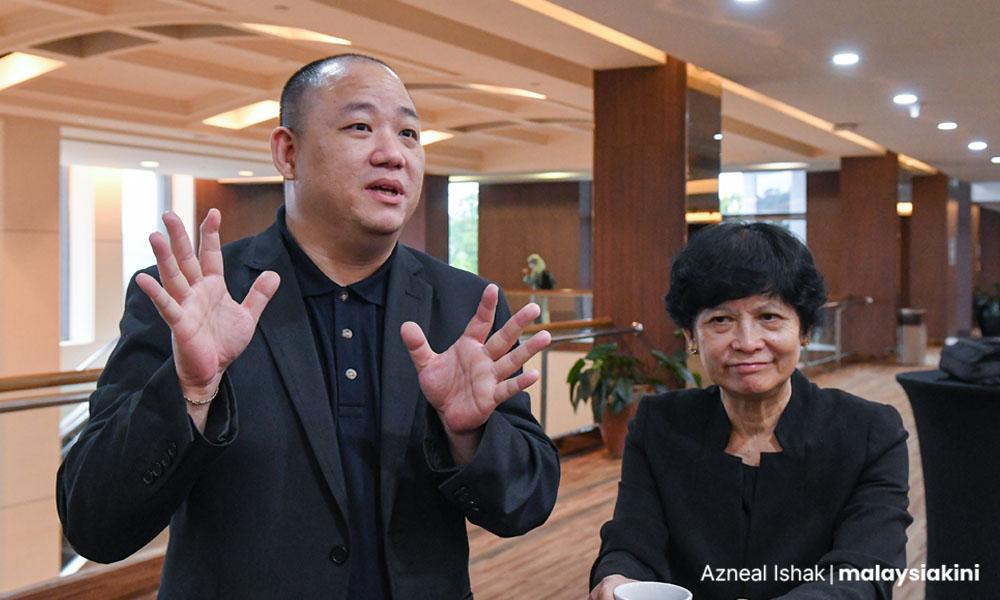
There, Lim developed her command of American Sign Language and Canadian Sign Language - to the chagrin of some back home.
“Of course, when I came back, there was some resistance from the interpreters themselves. ‘Oh, Lim wants to show off coming back from overseas’. It was just a mindset.
“So with me coming back, I changed the whole thing. As an interpreter, you must mingle with the community you work with so I trained the deaf to pick up the role (of teaching their language at the YMCA) because I said, ‘This is your language. We are just borrowing your language to be able to work in that situation’,” said Lim.
Raised in Brickfields
Being able to pursue her studies in Canada to become a sign language interpreter was a far cry from her humble beginnings in Brickfields.
“I come from a Peranakan background and my mother tongue is Malay. I only started to learn English at the age of five from my brothers and sisters.
“I was too poor to attend any kindergarten,” said Lim, who is the youngest of six siblings.
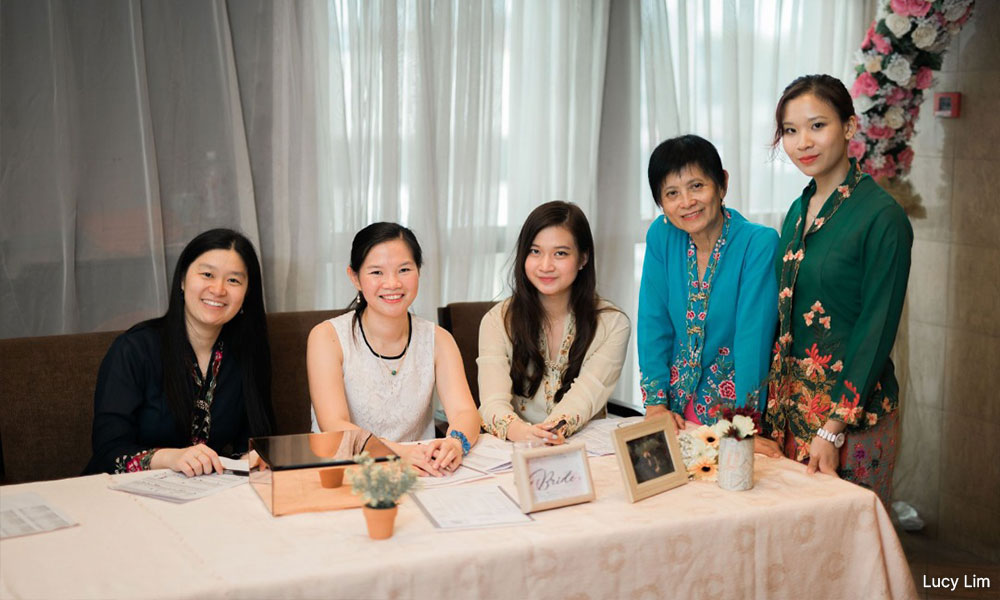
Lim - whose father was a civil servant working in a printing company - grew up in government housing located in Brickfields.
“(My father) was the only breadwinner. To supplement the household expenses, my mum made nyonya kuih, nasi lemak and fried mee hoon to sell at a godown near the railway tracks for the workers. All of us have to help with household chores and sell delicacies.
“At night, she would sell toys at a night market in Petaling Jaya. I was born and raised in Kuala Lumpur - Brickfields, actually - and now I am glad to say, I am back staying in Brickfields,” said Lim.
When about her biggest inspiration in life, she cited the late Tan Yap - who introduced sign language in the local education system.
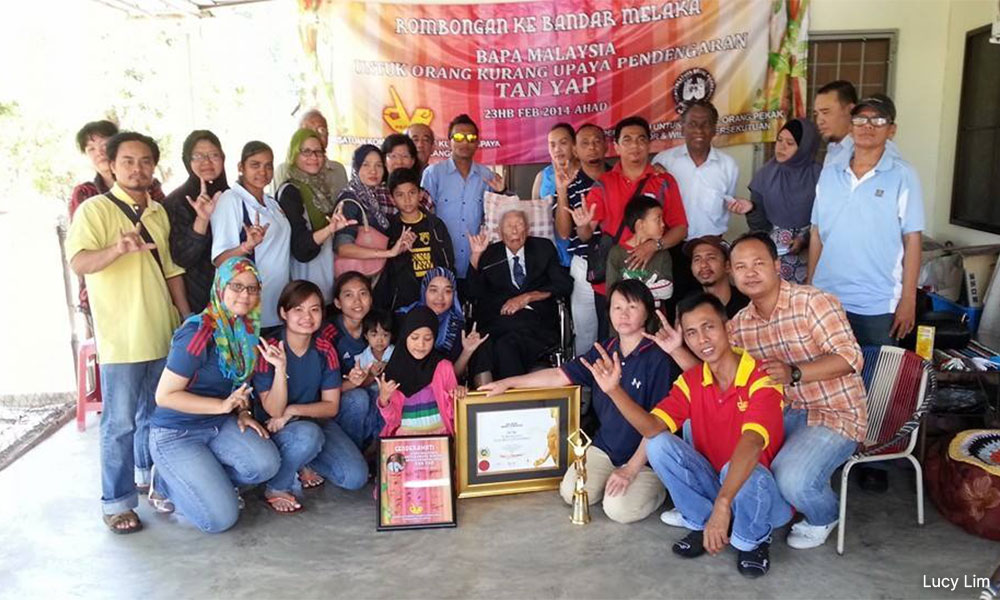
According to the Society of Interpreters for the Deaf (SID) website, Yap introduced sign language in 1964, developing a system of signs to teach Bahasa Malaysia.
Yap is said to have pioneered the first school for the hearing-impaired in Malaysia in Johor Bahru, with an emphasis on those who dropped out or missed their shot at having a decent education.
Facial expressions
Incorporating facial expressions into sign language was another thing Lim brought back from her Canadian training.
“I had to introduce that to appropriately put the context or the word into the facial expression. Of course lah, when you go to a funeral, you must be sad. You cannot be smiling all the time.
“In Asian countries, we also match our attire with the occasion. If it's a Chinese wedding, I’d wear plain red,” said Lim.
She believes that the next step in education for the hearing-impaired is to have training programmes for interpreters in local colleges and universities with proper certification - given that most existing classes teaching Malaysian sign language are done by NGOs.
Lim also suggested that Malaysian sign language should be taught as an elective for all undergraduate programmes.
“(My hope is) that sign language interpreting can be a growing profession, that all persons regardless of their disability have access to equal communication and that there is a place for the hearing-impaired to enjoy the privileges extended by our country,” she said.
From McDonald’s crew to sign language whiz
For Ong, who works closely with Lim, his encounters with the deaf community came by chance while waiting for his SPM results in the early noughties.
In his late teens, Ong (now 35) took up a job at his local McDonald’s - where he came across deaf kitchen crew members.
“I got curious and I asked if I could learn the language. So every day, I would come up with ten words to ask my deaf colleague.
“He saw that I had an interest and took me to an association dealing with the deaf community in Penang,” said Ong, noting that it had taken place roughly 20 years ago.
“I followed them around, learned sign language on my own just by observing them and asking them whether I was doing it correctly,” he added.
Ong then moved to Kuala Lumpur where he met Lim, who took him under her wing to become a sign language interpreter by trade.
“I was his whip,” joked Lim, in response to the story.
Ong said that even in his free time, he often watches videos on YouTube where some channels perform creative sign language interpretations of music.
"I like watching videos where people are using sign language to convey the music. A song is very personal! It's how the person understands the song and then conveys it in a sign language form," said Ong, adding that seeing sign language interpreters work during live concerts as being a "jaw-dropping" experience.
Advice for youths
Advising those interested in getting into the field of sign language interpretation, Lim said that one must have a huge appetite for learning and giving.
“You must have a love and flair for language, and have a huge appetite for learning and giving. As a professional sign language interpreter, you will be exposed to various types of situations,” she said.
This includes recreational jobs (for example, tours and games), conferences that involve interpreting for a large crowd or in the online sphere, as well as health, academic and legal interpreting.
“There are a lot of preparations to be done and lots of readings. (You would be) more like a walking encyclopaedia! You must have all the information,” she quipped.
MALAYSIANSKINI is a series on Malaysians you should know:
Author Shamini Flint on her iconic Inspector Singh being a TV show
Allan Perera – 40 years of laughs and music
Ex-producer finds ‘wheel’ power to make zero-waste lifestyle easier
Rapper Altimet grooves to the political beat
Books and Jomo: How Gerakbudaya’s Pak Chong rebounded from 8 years of ISA
/file/publisher-c1a3f893382d2b2f8a9aa22a654d9c97/2022/10/3def489dffbded9c6be9fe21a717845f.jpg)
/file/publisher-c1a3f893382d2b2f8a9aa22a654d9c97/2022/09/85898cf4e826ece0736eb6e23b797a87.jpg)
/file/publisher-c1a3f893382d2b2f8a9aa22a654d9c97/2022/09/fef2d4b4c3bf17c284e5acb00c662b3f.jpg)
/file/publisher-c1a3f893382d2b2f8a9aa22a654d9c97/2022/08/e907a048e88f0b93711a9c137aa1cab6.jpg)
/file/publisher-c1a3f893382d2b2f8a9aa22a654d9c97/2022/09/6dcdd215fcb2d02343e899967df68a0c.jpg)
/file/publisher-c1a3f893382d2b2f8a9aa22a654d9c97/2022/09/cea9fc65f55067b03355fbcd6ba0ecdf.jpg)


Report this comment
Are you sure you want to delete this comment?
This action cannot be undone.