


/file/publisher-c1a3f893382d2b2f8a9aa22a654d9c97/2023/09/519d7d7aa4461e04b99cccc7fc82dd81.jpg)

Generations of Sabah stateless living in landfill may be evicted
This is Part 5 of a Malaysia Day series on the issue of statelessness in the country.
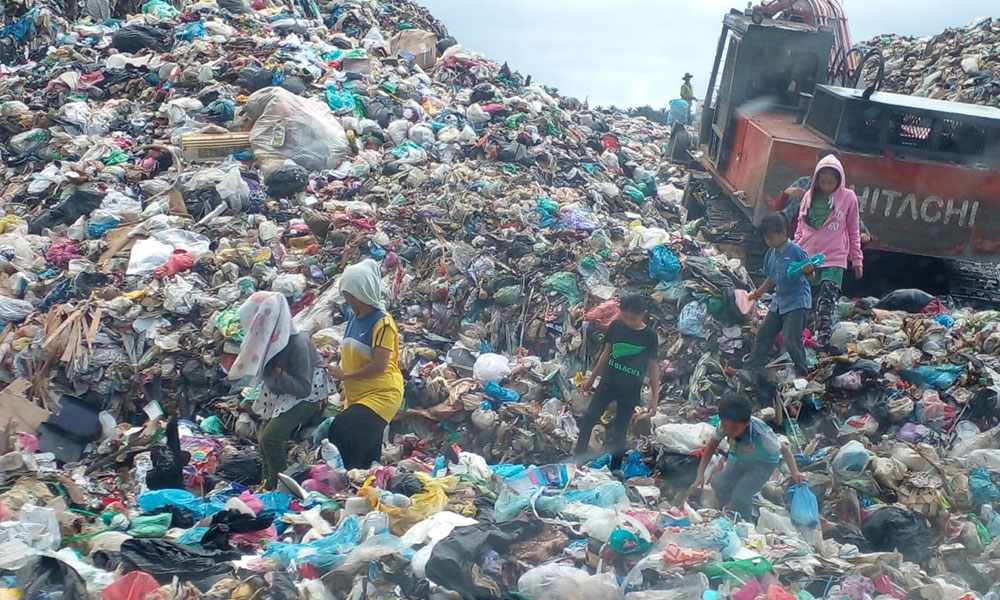
As a waste disposal truck trundles down a dirt road, families rush toward it from a clearing. The truck will dump its contents on an expansive, methane-emitting, 30-year-old mountain of waste.
On the ground, a wriggling maggot moves into the pile, on the way to complete its life cycle in this landfill where the household waste from every home in Lahad Datu, Sabah, is deposited.
Al Nazri Azmi, two, was born in this toxic landscape to stateless parents squatting and...
This is Part 5 of a Malaysia Day series on the issue of statelessness in the country.
As a waste disposal truck trundles down a dirt road, families rush toward it from a clearing. The truck will dump its contents on an expansive, methane-emitting, 30-year-old mountain of waste.
On the ground, a wriggling maggot moves into the pile, on the way to complete its life cycle in this landfill where the household waste from every home in Lahad Datu, Sabah, is deposited.
Al Nazri Azmi, two, was born in this toxic landscape to stateless parents squatting and hiding there.
The toddler, wearing nothing but a T-shirt, clumsily treads over glass and plastic garbage barefoot and plays make-believe with items found at his parents’ worksite, the Tanjung Bangkaruan landfill.
As his mother, Nalin Rajik, chats casually to Malaysiakini, toxic fumes and other dangers lurk around her toddler’s play space, but this is not Nalin’s most pressing concern.
The 26-year-old is more worried about being homeless and jobless when the landfill is relocated soon.
On Sept 6, the Lahad Datu District Forestry Office issued a notice for them to clear out within a month, or risk a fine of up to RM500,000 or jail of no more than 20 years, for trespassing.
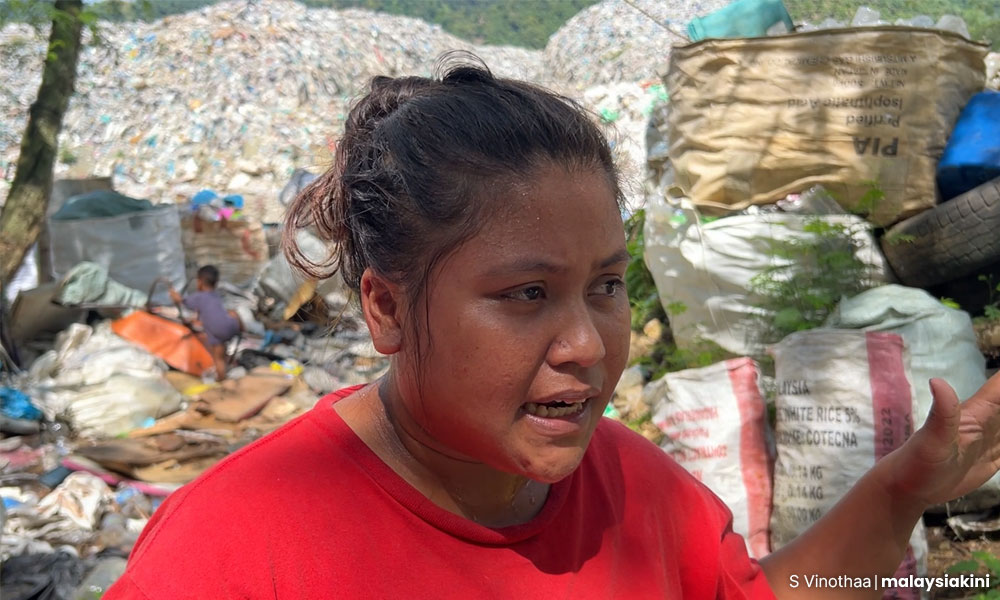
“The waste truck drivers who unload the waste here told us about the closure of this landfill and that we would not be allowed into the new place.
“This is our home and livelihood and once they start using the new place, we will no longer have any means to feed ourselves and our children,” she said.
READ MORE: Baby snatching: How stateless mums lose their babies in Sabah hospital
Since they first heard the news in mid-2022, Nalin said the Lahad Datu District Forestry Office representatives also came to warn them of their imminent eviction - but without a date set - and thus they carried on their daily scavenging with uncertainty.
“Where can evicted stateless people go?” she asked.
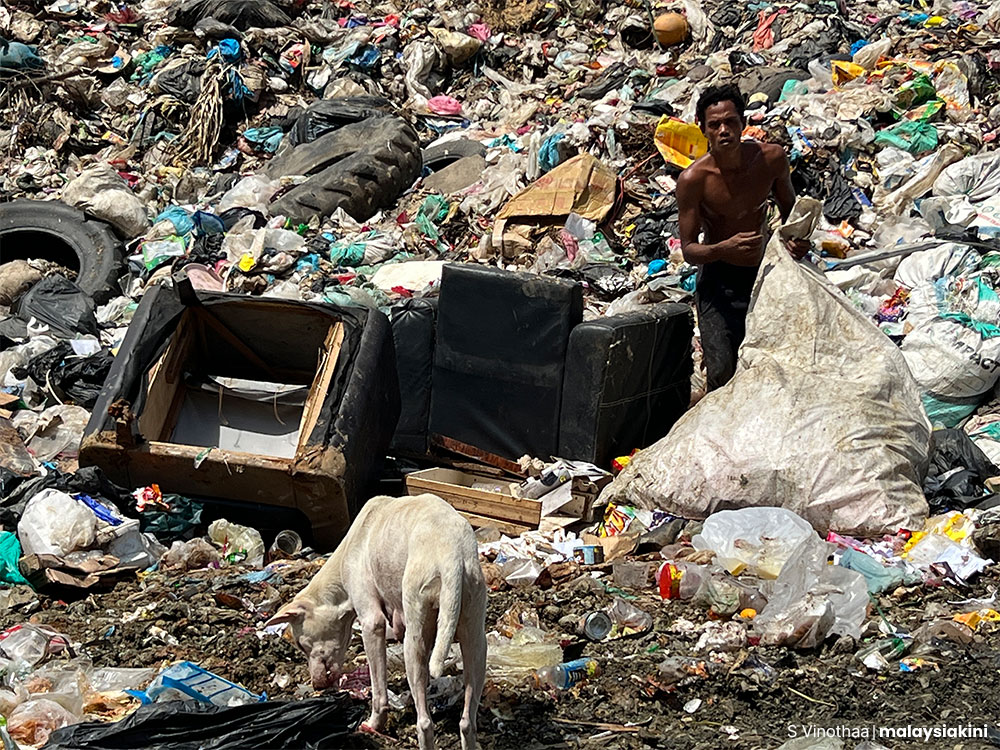
The land on which the dumpsite sits is part of the Sepayaga Forest Reserve and the Kuala Tingkayu (Mangrove) Forest, under the purview of the Sabah Forestry Department.
In 2012, an occupation permit was granted to the Lahad Datu District Council to use 20ha of the forest reserves for the landfill, the department’s Chief Conservator of Forests Frederick Kugan told Malaysiakini.
He added that the community is squatting there illegally and there are only 15 households and not 45 families as the community claimed.
He also confirmed that the landfill will be closed and rehabilitated, once the district council identifies an alternative site but did not address the fates of the families living on and off the dumpsite.
Despite the eviction notice, the Lahad Datu District Council said no alternate site has been identified for the landfill, which it has operated with the Forestry Department’s permission for 25 years.
A spokesperson told Malaysiakini the fate of the stateless community living there is up to the Immigration Department.
Born to a life of ragpicking
Nalin, her husband, and two children are among the families who community leaders say make up the 200 stateless people of Suluk ethnicity from different generations who live at the landfill, ragpicking around the clock.
Like her son, Nalin was also born in the landfill and grew up ragpicking with her five sisters. She continues to do so until today with her mother.
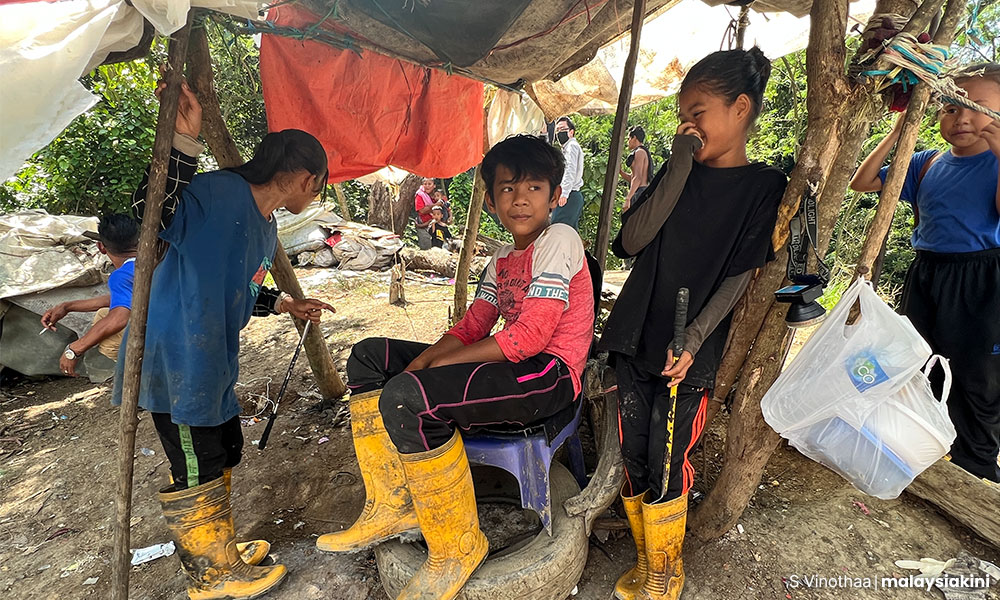
All the families involved their children in ragpicking but don’t see more than RM10 a day for their efforts.
They pick, sort, and pack the recyclables in bales ready for the buyers from Lahad Datu and Tawau, but the estimated RM300 monthly earnings only allow them to buy rice on credit with a nearby village grocer.
“We have to pay the grocery shop as soon as we get paid for a load that we sell. They are very strict and we depend on them because we don’t venture out of the landfill,” Nalin said.
They pick through eight truckloads of waste every day as the trucks unload at the tip according to their morning and night schedules.
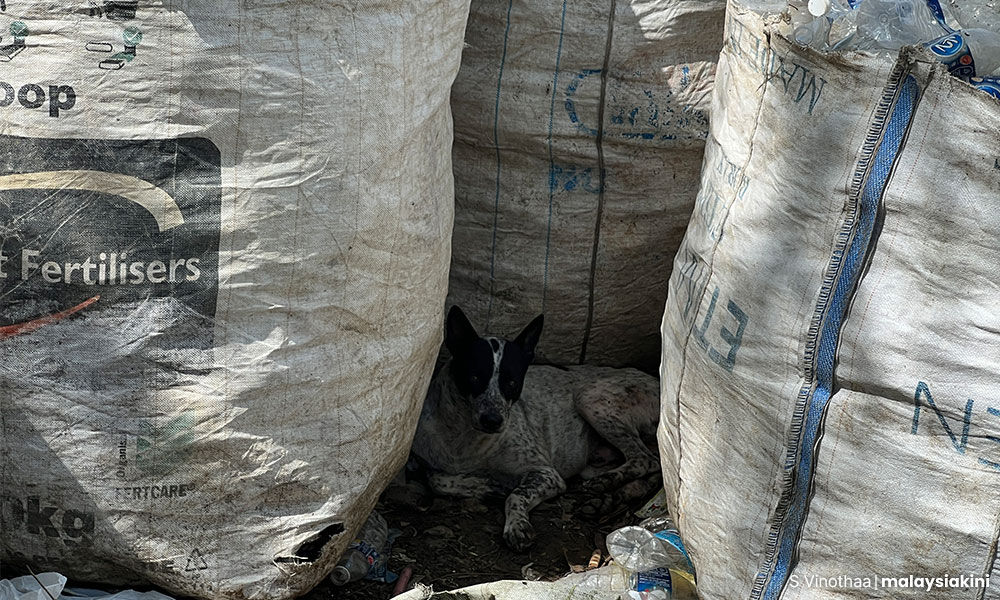
Nalin describes scavenging for recyclables as “mining” (melombong) and she takes turns with her husband to watch their two children.
“I take the day shift and he takes the night shift to pick through the landfill.
“We look for plastic, mostly. There are two types. The thinner water bottles fetch a higher price of 40 sen per kg and the thicker ones like motor oil bottles only fetch 23 sen per kg,” she said, as she stood next to a few four-foot-tall bales of crushed water bottles.
Raids, fumes, and other hazards
The landfill settlement has been raided by joint police and Immigration Department operations on many occasions.
Everyone, including the children, is also exposed to numerous health and safety hazards.
Siti Aishah Elimi said the officers who raided the settlement in 2014 set fire to their homes and the mountain of garbage which continued to produce toxic smoke for days later.
Fearing capture, the 32-year-old and other stateless residents of the landfill would flee to a nearby river, Sungai Bangkuran, every time there was a raid.
They risk their lives and desperately crowd onto small wooden dinghies (sampan) which have been known to capsize when overloaded.
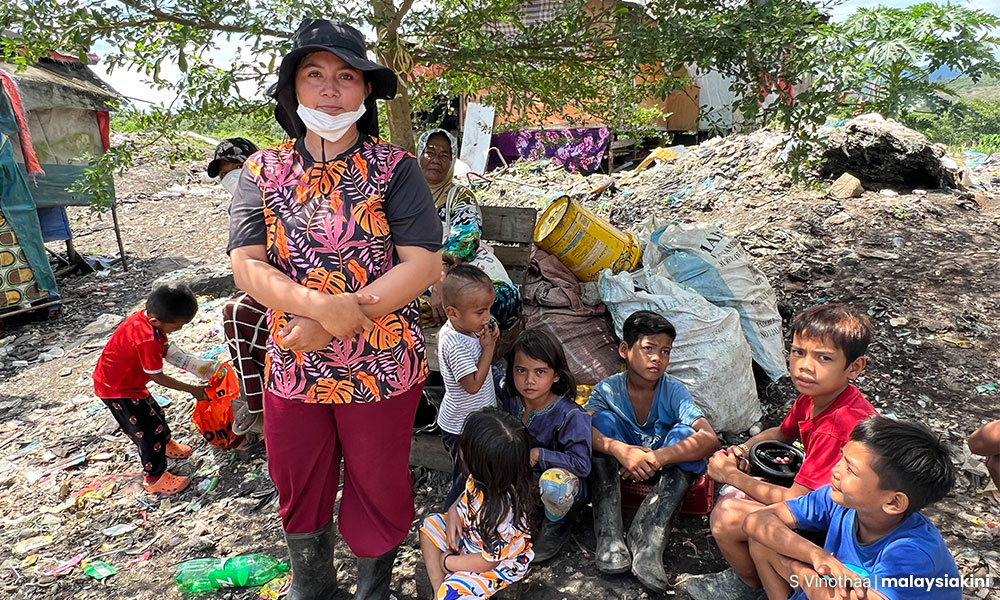
“Those of us who don’t have documentation just run for our lives because if we get caught, they will send us to detention for many months before sending us to the Philippines.
“We don’t have family there and those who are sent there usually make their way back through illegal channels for a fee of RM700.
“Some people have drowned and many have been caught and taken into detention,” Siti Aishah said.
Living in constant fear of the authorities, these families risk their lives and health everyday ragpicking and rarely leave the landfill which occupies a vast space at the fringes of a forest that meets the Sungai Bangkuruan estuary.
Beyond the landfill and deeper into the forest is a disused sawmill and timber factory surrounded by 100 documented residents of villages the stateless call Kampung Sulok and Kampung Pondok Ketam. There is also an old jetty nearby.
They remain on the job because they cannot get hired elsewhere without documentation and over the years, they have been described as “garbage people” (orang sampah) who live in “Garbage Hill” (Bukit Sampah).
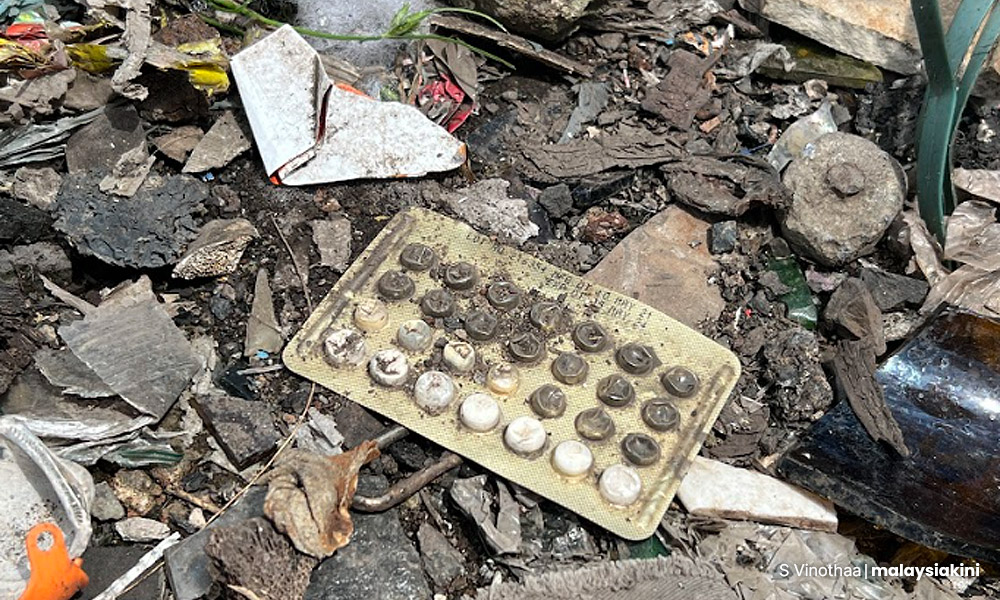
The landfill dwellers keep discarded medications for their own use.
They very rarely venture out of the landfill. Not even during the Islamic festivities, which they celebrate.
The Ramadan month is particularly hard especially for the children because there’s no food sometimes to eat before fasting starts at dawn, or for the breaking of the fast at sunset.
“Sometimes we find food in the garbage and that helps sustain us.
“We also pick up strips of medication and anything that is useful for our daily lives,” Siti Aishah said.
The weeks leading up to cultural festivities are also a time they look forward to as town folks will be discarding old clothes and other unwanted but reusable items, sometimes packed properly as if they were gifts to the ragpickers.
Finding RM1 or RM5 notes in money packets is not unusual.
“During Raya, we try to visit a relative or friend in the nearby villages who has a nice house and we enjoy a good meal,” said Nalin.
Health concerns
The children rush with excitement toward every waste truck that rolls in. With a single-prong trash hook, they start picking even before the truck completes tipping out its content.
Although they are aware of the hazards of the job, they can take little precaution.
Until a recent donation from an NGO, many, including children, were barefoot.
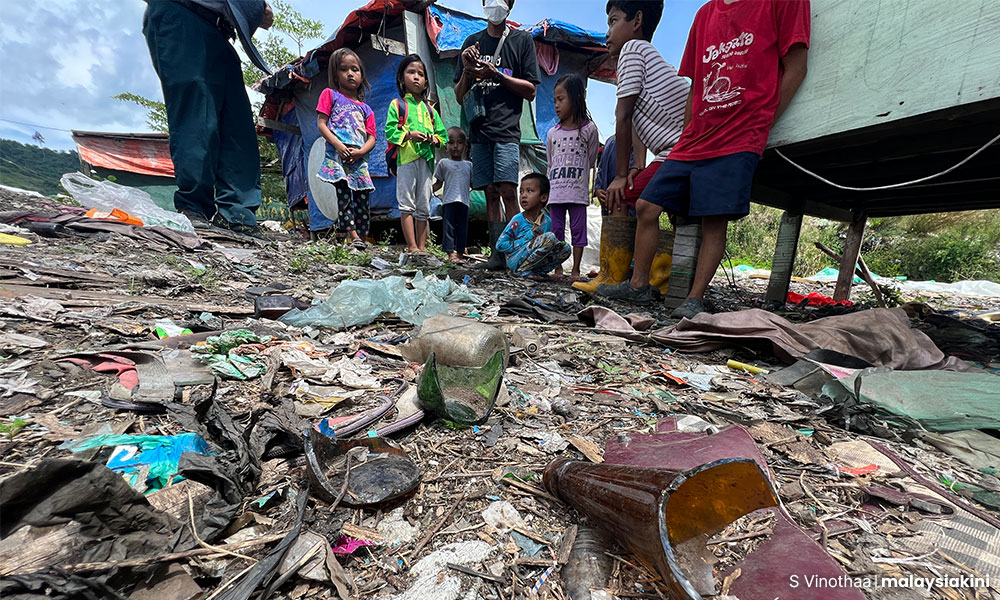
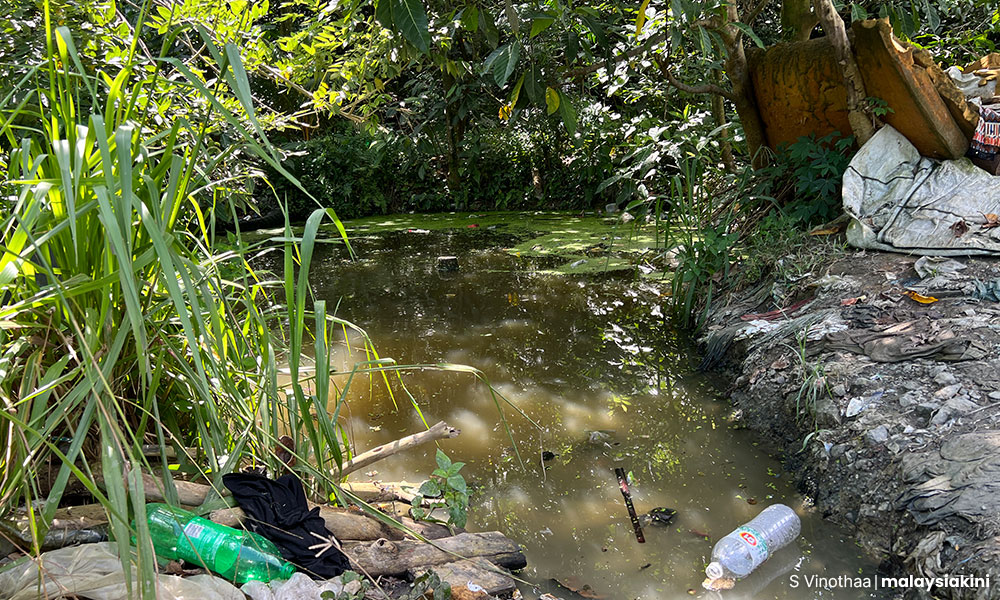
The safest drinking water is from a 50-year-old well near a sawmill not more than 200m away from the mountain of garbage, and with no drainage, rainwater carries the leachate to the river and underground.
All their homes resemble a patchwork of old plywood, square in shape with a gap for the doorway. Some are perched on stilts, some on old tires, and anything else that raises the houses from above the ground to prevent run-off from the garbage heap seeping in during rain.
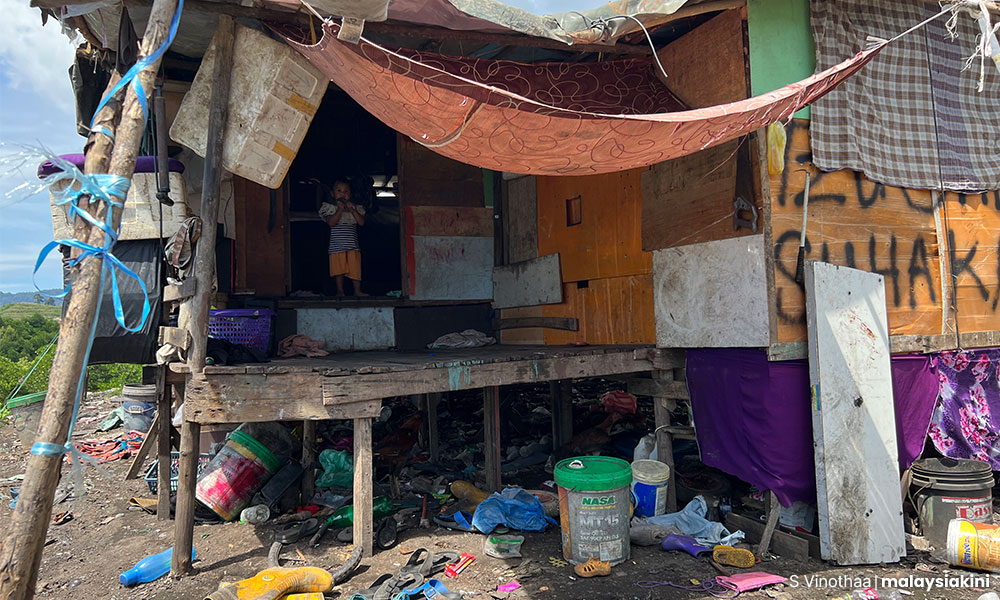
Like the homes, very little thought was put into sanitation or washing and cleaning.
The mountain of rubbish goes up in flames during droughts and under extremely high temperatures, possibly caused by lithium-ion batteries and other flammables often attributed to landfill fires.
“It irritates the eyes and nose and it can become difficult to breathe when the wind blows the smoke into our homes,” said Siti Aishah.
Medical treatment is often out of reach for the landfill-dwellers. The reasons vary from the high cost of a 45-minute ride to Lahad Datu Hospital, upfront fees required of the stateless, to poor treatment of those who cannot afford the foreigners fee.
Many wait until their condition becomes critical to gain access to the Red Zone of the hospital’s Emergency Department, where the RM100 registration fee is temporarily waived.
This waiting game they play, risking their lives in the process almost cost seven-year-old Maimunnah her life when her throat infection developed into sepsis.
Diagnosed with life-threatening Retropharyngeal abscesses, she was transferred to the Tawau Hospital for surgery, where she was extended a fee exemption.
But before she was sent to Tawau, the Lahad Datu Hospital demanded RM200 upfront for an RTK Covid-19 test - a sum that her parents couldn’t afford. It was only after a well-wisher settled the bill that she was sent in an ambulance for urgent surgery.
READ MORE: Stateless boy with HIV dies after deprived treatment for years
Dreaming of better lives
Apart from the families who live in the landfill, no one, including the state authorities, knew that Nalin’s son Al Nazri was born in the landfill in October 2020.
“I couldn’t afford to go to town to have his birth registered and I was too afraid to leave the landfill,” said Nalin.
Births, especially home births of children of stateless parents are not documented mainly because of the high costs involved in the process and the lack of a valid marriage certificate.
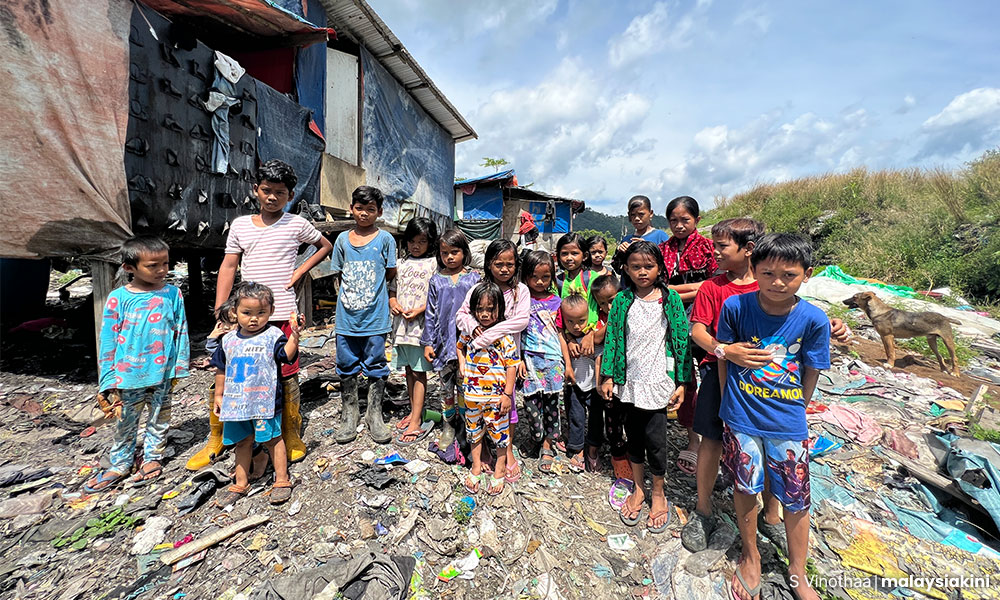
In recent months, the stateless have been denied that privilege by the Lahad Datu National Registration Department, which says it can only issue birth certificates if both parents are citizens.
Before August 2022, a local midwife, Fatimah Rafily Darao, told Malaysiakini that babies born to the stateless receive birth certificates that state they are “non-citizens”.
Siti Aishah, who knows little other than the landfill, said she is more comfortable scavenging than risking arrest and detention. But she hopes better for her children.
The outspoken stateless mother inadvertently became the leader of the landfill when she was appointed to supervise her neighbour ragpickers by one of the recycling factory owners.
“We want documentation for our children so they can attend school.
“We want the adults too to be documented so we can get better jobs to sustain our families without begging or scavenging for food,” she added.
Above all, she wants a life of dignity.
Part 1: Baby snatching: How stateless mums lose their infants in Sabah hospital
Part 2: Stateless boy with HIV dies after deprived treatment for years
Part 3: Mounting hospital bills led to stateless mother-infant murder-suicide in Sabah
Part 4: Toddler’s death by croc attack shows tragic fate of the stateless
Tomorrow: Suhakam commissioner: Lahad Datu Hospital under pressure, doing its best
/file/1305/4ce54ff0a7d52ff047853d9da61822f6.jpeg)
/file/publisher-c1a3f893382d2b2f8a9aa22a654d9c97/2023/09/672391ad172452c130f7b6097f90fe72.jpg)
/file/1200/7b6989d862ce486d80a448bea47a4a39.jpeg)
/file/1035/b71f20a1a8a386cb25657d9f53ecb8f8.jpg)
/file/980/70b3e2f1e4e4ca0bc5c23db8c1e45d9d.jpg)


Report this comment
Are you sure you want to delete this comment?
This action cannot be undone.