


/file/publisher-c1a3f893382d2b2f8a9aa22a654d9c97/2023/10/b1ac5d792120ae60a591e945a58f6485.jpg)

Activist Hartini dedicates her life to 'unseen' children
A teenager’s hand deftly exchanged a small packet of clear crystallites for money.
The refugee boy then pushed past his latest customer and disappeared into the labyrinthine streets, away from Hartini’s watchful gaze.
However, it wasn’t long before the 13-year-old was in her sights again...
MALAYSIANSKINI | In 2010, amidst the bustling chaos of Kuala Lumpur’s cityscape, Hartini Zainudin found herself spending hours in a hired taxi, deeply moved by the heart-wrenching scenes that unfolded along an alleyway.
A teenager’s hand deftly exchanged a small packet of clear crystallites for money.
The refugee boy then pushed past his latest customer and disappeared into the labyrinthine streets, away from Hartini’s watchful gaze.
However, it wasn’t long before the 13-year-old was in her sights again, and under her protection.
“I know their history and I can’t simply turn my back on them,” she said, recalling the moment she decided to foster the Rohingya refugee boy who had been addicted to methamphetamine, which he was recruited to push since the tender age of seven.
The teenager was the third child the single mother decided to foster in as many years.
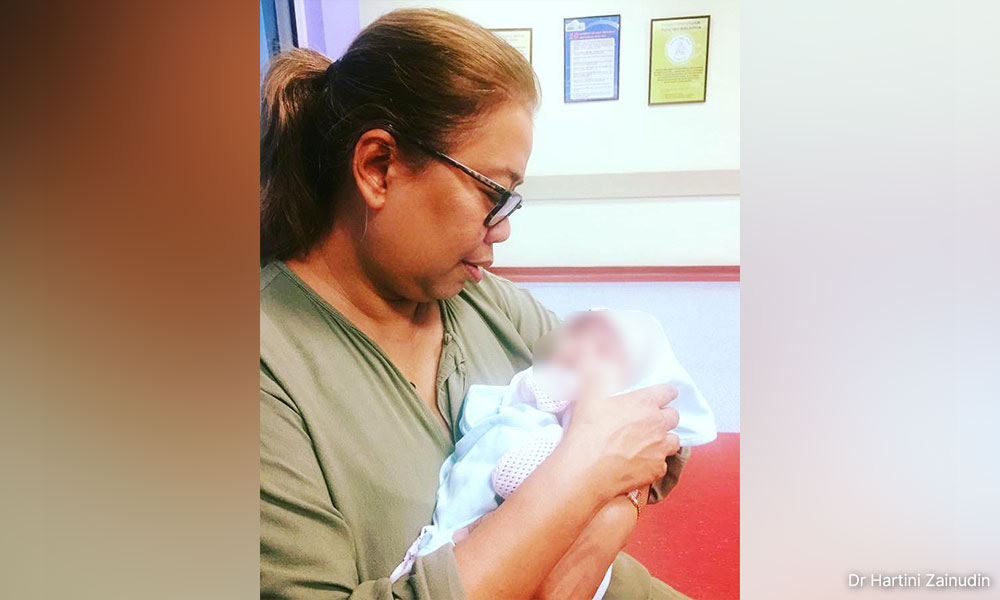
They are the unseen stateless and refugee children who were born in the city or moved there, yet are far removed from access to basic amenities, education opportunities or fundamental rights and are pushed to the brink of survival every day.
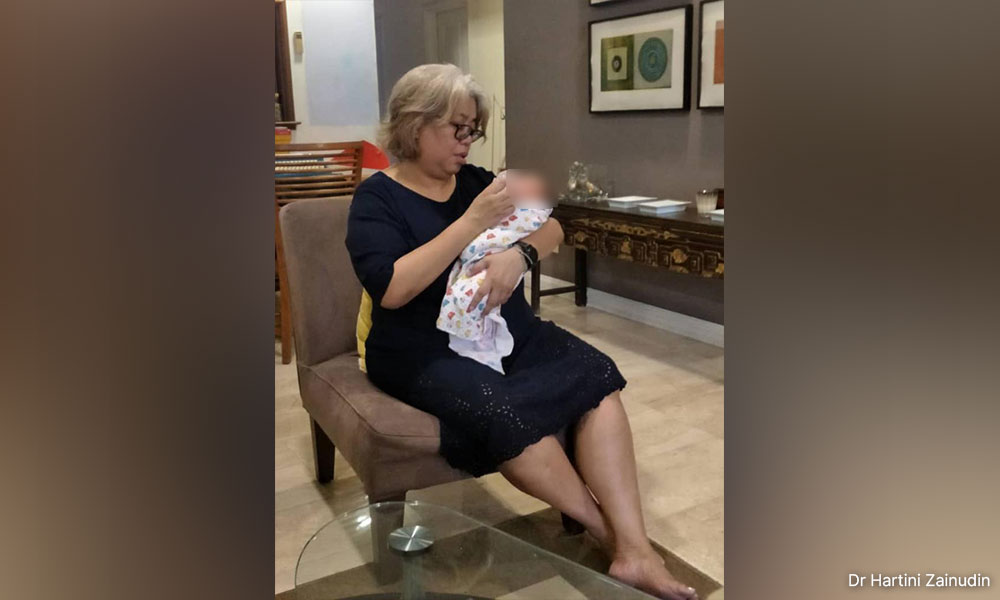
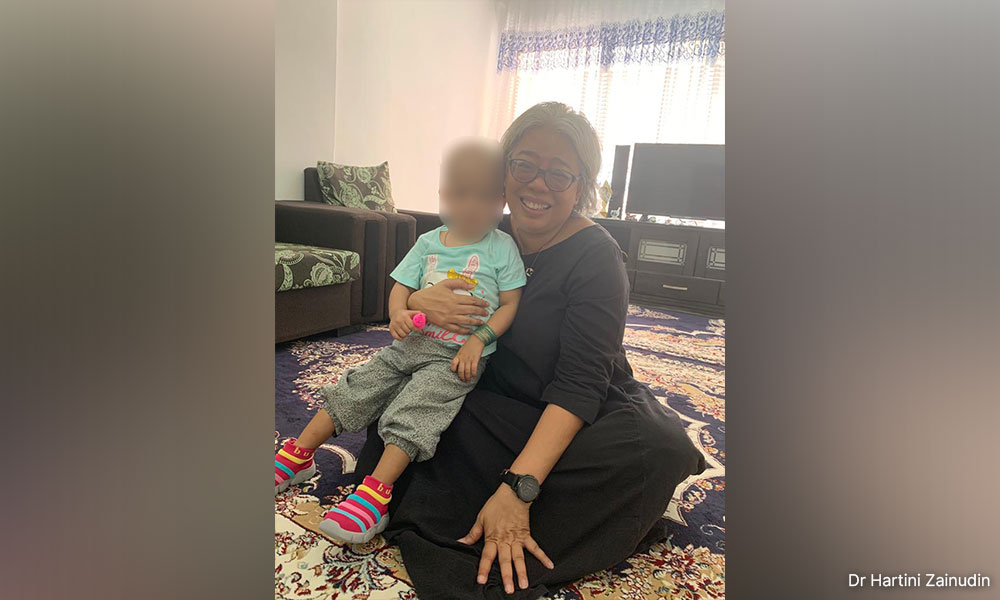
Over the years, 61-year-old Hartini’s cherished family grew to six foster or adopted children.
Often, her decision to foster a child in distress was driven by her profound commitment to safeguarding children, especially when bureaucratic processes stifled a timely response to the child’s urgent situation.
Life revolving around children
The six in Hartini’s care include the refugee boy who was fostered so he could be enrolled for drug rehabilitation and two baby girls who had fallen victim to the harrowing repercussions of a baby-selling racket.
Additionally, she also has two boys who had been tangled in Malaysia’s complex statelessness issue and an orphaned boy left to fend for himself.
Today, they range from 14 to 26 years old, but not all of them have overcome the trials of their challenging past – the specific details of which are kept confidential to protect their privacy as are their names.
As a devoted single mother and a passionate child rights advocate, Hartini has seamlessly merged her personal life with her three-decade-long mission to empower and safeguard marginalised children in Malaysia.
“Throughout my life, I have never truly distinguished between children, work, and my personal life because, to me, life revolves around children.
“As a result, I find that I rarely engage in conversation with adults, unless it deals with my work and advocating,” she shared.
First sight of the ‘unseen’
Hartini’s journey as a child rights advocate started innocently with a volunteer stint at the Kuala Lumpur Welfare Department’s Children’s Activity Centre.
The University of Columbia doctorate holder in Monitoring and Evaluation in the field of education quickly recognised the pressing need for improved facilities and a safe haven, especially for children in the city.
As such, in 2007, Hartini co-founded the ground-breaking Yayasan Chow Kit, a 24-hour day-care centre.
Initially, it opened its doors to 40 children from Chow Kit and its surrounding areas but in just eight months, it registered 198 children.
That year, she found herself on a steep learning curve, immersing herself in the stark realities faced by stateless individuals and refugees residing in and around the former red-light district.
“That was when Yayasan Chow Kit started taking in stateless and refugee children, despite my limited knowledge about their circumstances.
“All I knew was that there were children sleeping on the streets, lacking access to basic hygiene, and I couldn’t comprehend why the Welfare Department kept inquiring about their nationality.
“I had returned from America after 20 years, so I was oblivious to the existence of refugees or stateless people in this country and the discrimination they faced,” she admitted, candidly.
Malaysia’s reservations on children’s rights
Malaysia has ratified the United Nations Convention on the Rights of the Child (UNCRC) but with certain reservations, which means that Malaysia is limiting its commitments to specific articles.
These articles are aimed at safeguarding children from discrimination based on various factors, ensuring children have a name and nationality, the right to freedom of thought and religion, and access to free primary education.
Malaysia has also controversially reserved its commitment to protecting children within the criminal justice system.
Throughout its 16 years of operations, Yayasan Chow Kit has consistently upheld its commitment to inclusivity - ensuring that all children, even those who are stateless, can access its services.
This exposed Hartini to a wide range of issues related to statelessness, which gave her the experience and a deep understanding of the systemic processes that not only discriminated against children but also violated their dignity.
It also introduced her to the dark underbelly of drugs, prostitution, child trafficking, and even baby-selling rackets that thrive on the vulnerabilities of stateless individuals.

However, it was their limited access to healthcare that haunted her nights – witnessing stateless and refugee infants whose existence teetered on the edge.
Approximately 600 non-citizen children under the age of five pass away each year in Malaysia.
Reflecting on the heart-wrenching ordeals, Hartini said: “I’ve endured heartbreak and attended too many funerals to last a lifetime.
“I’ve raced to the hospital with babies turning blue in my arms. I’ve witnessed the hospital making the painful decision to withdraw life support from twins due to their parent’s inability to afford the RM60,000 operation costs.
“The truth about me is that I can’t stand to see any child in distress. I feel compelled to intervene and when you stop to assist, there’s no room for anything else in my mind,” she said.
Scouring for funds to rescue a child became routine, though not always fruitful, Hartini developed a knack for creative crowdfunding and rallying support.
“Today, fundraising and mobilising resources consume the majority of my time,” she said.
Nevertheless, Hartini said, even with the growing number of voices and advocates dedicated to addressing the challenges faced by stateless individuals and the increased efforts in policy development and problem comprehension, the fundamental issues persist.
“We are shedding more light on the issues but we are not making significant progress fast enough,” she said.
Restoring a semblance of dignity
With her wealth of experience, Hartini has developed a comprehensive solution to improve children’s access to healthcare in Malaysia, covering prenatal care, essential medical procedures, post-operative care, and if necessary, palliative care called Madhya’s Gift.
Named in honour of an Afghan refugee child who tragically succumbed to paediatric leukaemia at the tender age of two, Yayasan Chow Kit’s latest initiative, in collaboration with Universiti Malaya Medical Centre, is a pilot project aimed at benefiting marginalised children in Malaysia.
Madhya’s Gift is set to launch a range of community-based programmes that focus on the welfare of pregnant mothers and their children during the crucial first 1,000 days, spanning from pregnancy through the child’s second year.
The initiative also seeks to enhance the early screening and diagnosis of sickly children, in collaboration with a telehealth company, aimed at identifying critically ill children before they require hospitalisation.
“I hope to start with 200 children this year.
“The goal is to minimise waiting times and ensure that children receive prompt medical attention.
“The initiative will involve both private and government doctors, many of whom will volunteer with us,” she explained.
MALAYSIANSKINI is a series on Malaysians you should know.
Breast cancer survivor pays it forward by helping others
How a trailblazing 'rope access professional' scales new heights
MYReaders CEO on a mission to eradicate illiteracy
/file/publisher-c1a3f893382d2b2f8a9aa22a654d9c97/2023/07/76b73ca5bcaf4ef9b8ed35cf1c597b16.jpg)
/file/publisher-c1a3f893382d2b2f8a9aa22a654d9c97/2023/06/1aae1c9a7128f899db86ca4f94eb08c5.jpg)
/file/publisher-c1a3f893382d2b2f8a9aa22a654d9c97/2023/06/426464a3f87c6f06ec88dcce338cc481.jpg)
/file/publisher-c1a3f893382d2b2f8a9aa22a654d9c97/2023/06/9bef9c8fd4957f6c51080bd709f15d28.jpg)


Are you sure you want to delete this comment?
This action cannot be undone.