


/file/publisher-c1a3f893382d2b2f8a9aa22a654d9c97/2023/09/884d77385174a020a3550c968170d425.jpg)

Indonesia’s polls: Presidential debates sign of 'mature' democracy - Bersih
The election watchdog chairperson Muhammad Faisal Abdul Aziz credited Indonesia's Election Commission as host of the four live debates...
A series of official debates organised in the run-up to Indonesia's presidential election next month is a testament to the republic's maturing democracy, according to Bersih.
The election watchdog chairperson Muhammad Faisal Abdul Aziz credited Indonesia's Election Commission as the host of the four live debates.
“The presidential debates reflect maturity in the practice of democracy, whereby the people’s issues and policies form the basis of electing their leaders.
“It is also a space for the people to directly get information on making good policy choices for the country,” Faisal told Malaysiakini yesterday.
The former Muslim Youth Movement of Malaysia (Abim) president said policy-based debates also contributed to Indonesia’s rejection of identity politics focused on race and religion, two factors that continue to dominate Malaysia’s political discourse.
The world’s third largest democracy will go to polls on Feb 14, simultaneously electing their legislative representatives as well as successors to President Joko Widodo, better known as Jokowi, and vice-president Maaruf Amin, at the end of their final term in office.

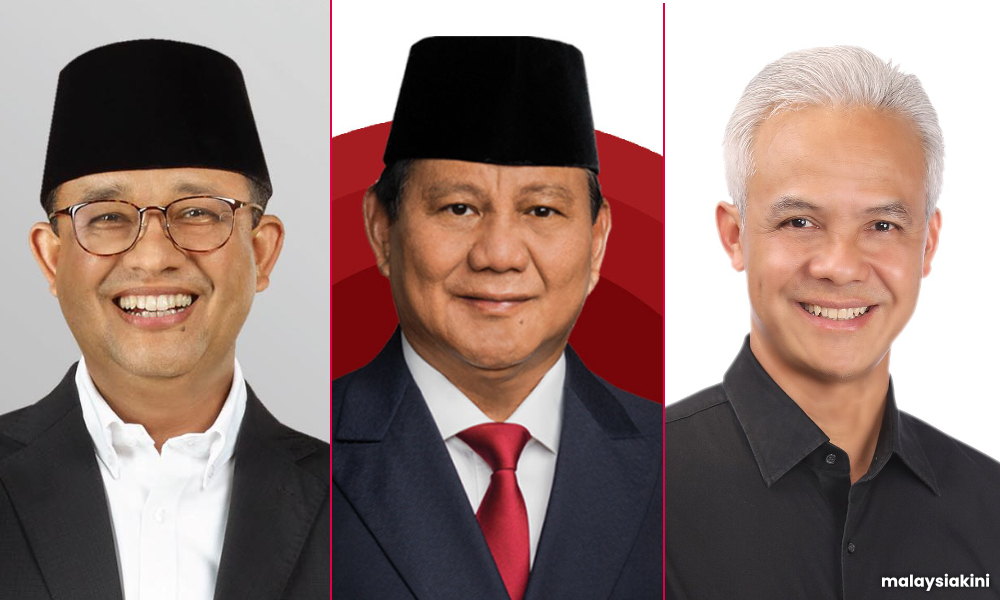
The three pairs of contenders are Anies Baswedan-Muhaimin Iskandar, Prabowo Subianto-Gibran Rakabuming and Ganjar Pranowo-Mahfud Md.
There are two rounds of debates for all three presidential candidates, followed by their running mates - designed as a platform to present their plans.
The plans touch on a range of topics including governance, law, human rights, anti-corruption, strengthening democracy, economy, investments, defence, foreign policies and others.
Boosting voter turnout
Indonesia’s Election Commission will host three presidential debates and two vice presidential debates - each with a set of experts tasked to come up with a list of questions based on their expertise.
The debates, aired live on television and online, also provided opportunities for the candidates to question their rivals.
In the last round of debates held on Sunday, both Anies and Ganjar targeted Prabowo, who is also defence minister in Jokowi’s cabinet, on his procurements budget, particularly reported plans to purchase used weaponry as opposed to new equipment.
Commenting further, Faisal said the debates have the potential to boost voter turnout, citing estimates by various independent pollsters that up to 40 percent of Indonesia’s over 204 million eligible voters remain undecided about their choices.
“This is because it (debate) is a part of an open campaign where all parties have the freedom to present their manifesto, as well as to scrutinise each other,” he said.
Beyond those who have yet to make up their minds, pollsters also defined over 25 percent of swing voters whose support was impacted by changing political allegiances since the last presidential election in 2019.
Primarily, Prabowo, who ran against Jokowi in 2014 and 2019, is now partnered with the president’s son - a controversial move that raised questions over Indonesia’s judicial independence.
A presidential candidate pair must secure 51 percent of votes cast on Feb 14 to be elected, failing which the top two pairs will go head-to-head in a second round of polling at the end of June.
Evaluating candidates
In a Facebook post, former religious minister Zulkifli Mohamad al-Bakri shared his observations of the debates and ongoing campaign from Nov 28 last year until Feb 10, four days before polling.
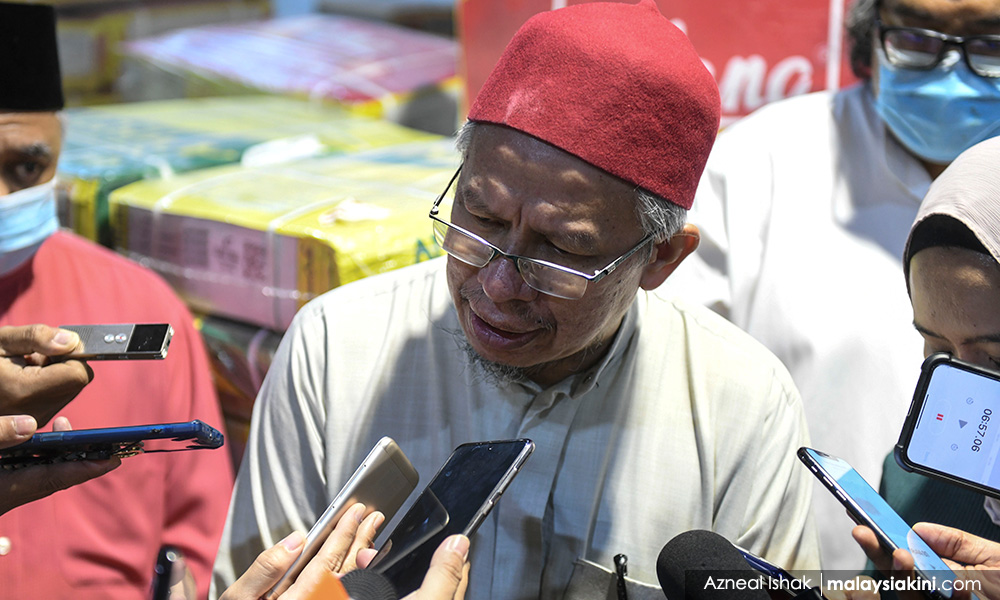
“Small mistakes by any of the presidential candidates can be a deciding factor in the outcome of the election.
"Although the number of fence-sitters is not too high, initial surveys that place all three pairs at nearly equal footings has made their votes crucial for the success of any candidate,” said Zulkifli.
He also outlined five criteria he used to evaluate the candidates - communication skills; knowledge and problem analysis skills; integrity and credibility; community involvement; and experience.
"I see a stiff competition among Indonesians choosing between Ganjar or Prabowo, compared to Anies.
“On paper, Ganjar may have an advantage compared to Prabowo and Anies. However, in politics, anything is possible," said Zulkifli who revealed his personal preference for Anies, a former Jakarta governor who is backed by four political parties.
Their backers
Ganjar-Mahfud is backed by Indonesia’s Democratic Struggle Party (PDI-P) under former Indonesian president Megawati Soekarnoputri and four other parties that form the present administration.
Meanwhile, Prabowo-Gibran is backed by nine parties, including the youth-based Indonesia Solidarity Party whose presidency was taken over late last year by Jokowi’s youngest son, Kaesang Pangarep.
Coming back to Malaysia, Faisal said Bersih had pioneered the culture of electoral debates, extending the process to its internal election which saw him replacing former chairperson Thomas Fann.
He noted the government under Prime Minister Anwar can adopt the model as an element of electoral reform, starting with the Sabah state polls due to be held next year.
/file/publisher-c1a3f893382d2b2f8a9aa22a654d9c97/2022/03/f09a38960fa76bb06f85db93f836976a.jpg)
/file/publisher-c1a3f893382d2b2f8a9aa22a654d9c97/2019/02/9e90328fc67e4f6917e99788244baea5.jpg)
/file/publisher-c1a3f893382d2b2f8a9aa22a654d9c97/2023/12/6ce357be6939fc1af7a0de82a829356c.jpg)


Report this comment
Are you sure you want to delete this comment?
This action cannot be undone.