
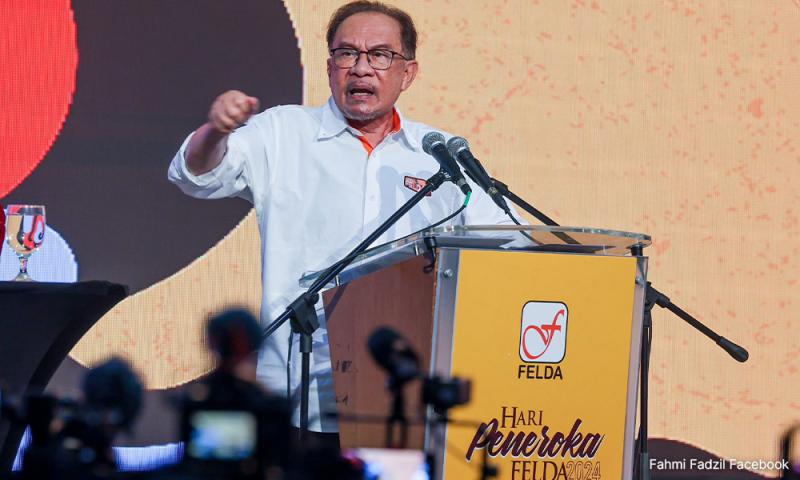
PARLIAMENT | A bill to control the spread of infectious diseases that Prime Minister Anwar Ibrahim and Health Minister Dzulkefly Ahmad once strongly opposed was put back on the table on Monday.

The new bill to amend the Prevention and Control of Infectious Diseases Act (Act 342) included sterner punishments than the last iteration of the bill they fought against.

This sparked concerns in the medical fraternity, with the Malaysia Medical Association (MMA) among its critics.

This was the law the government used to issue compounds and fines for Covid-19 standard operating procedure (SOP) breaches during the pandemic years.

The Ismail Sabri Yaakob administration had tried to amend the bill in 2021 and it underwent two swift revisions before it was binned.

The 2021 bill originally proposed that compounds against individuals under Act 342 be raised from RM1,000 in general to RM10,000 for individuals and RM1 million for companies.

It also raised the general penalty for offences from a maximum two to five years in jail for the first and subsequent offences to a maximum of seven years’ jail and RM100,000 fine for individuals, while companies could be fined up to RM2 million.

The bill also sought to introduce penalties upon conviction which can go up to two years in jail, or a maximum RM50,000 fine, or both.

‘Open to abuse’

After strong backlash, the punishments were then watered down, with the final iteration maintaining individual compounds at RM1,000 while compounds for companies were set at RM500,000.

General penalties were also lowered to two years’ jail or a maximum fine of RM2,000, or both for individuals while the fine for penalties upon conviction was lowered to RM1,500 for individuals, while it was raised to RM1 million for companies.

Despite revisions, debates on the bill were ultimately deferred before the Ismail Sabri administration dropped the amendments entirely.

The deferral was done after the government consulted Anwar - who was then the opposition leader.

Anwar, in rejecting the first two iterations of the bill, expressed concern that the exorbitant penalties opened up “room for abuse of power, bribery, and double standards”.

Likewise, Dzulkefly had said the bill could lead to a “cataclysmic failure” due to how unorganised the implementation of Covid-19 protocols was at the time.

Health Minister Dzulkefly Ahmad

“If you keep blaming and beating people down, one day they will rise up and beat you down, especially when leaders themselves are not compliant and offer good exemplary embodiments of SOPs. 

“Open non-compliant episodes of leaders (have) bred contempt and distrust of SOPs,” he had also said to health news portal CodeBlue.

Preparing for future outbreaks

A comparison between the last version of the 2021 bill and the current bill by CodeBlue showed that the 2024 proposal seeks to raise the penalties paid, albeit not as high as the original amendments.

Under the 2024 bill, the compound against individuals is raised to a maximum RM5,000, while lowering the amount paid by companies to RM50,000.

The fine under the general penalty is also raised to a maximum of RM10,000 for individuals while capped at RM100,000 for companies.

Likewise, the fine for convictions is raised to a maximum RM8,000 for individuals and lowered to a RM50,000 cap for companies. Companies can also be jailed for up to two years under the new bill.

In a social media post after tabling the bill yesterday, Dzulkefly said the Act 342 amendments were tabled as the law had not been updated since it was first introduced and sought to prepare the country to face future disease outbreaks.

Clear guidelines, oversight needed

However, the MMA today opined that the punitive measures sought were still excessive.

“(It) could disproportionately affect lower-income groups. We urge for a more balanced approach that considers socioeconomic factors,” MMA president Dr Azizan Abdul Aziz said in a statement.

MMA president Dr Azizan Abdul Aziz

Azizan expressed concern over the potential misuse of power as the new bill also allows authorised officers to order people into isolation or be subjected to tracking and monitoring.

“(This) raises serious concerns about potential abuse and lack of accountability. Clear guidelines and oversight mechanisms must be established,” she stressed.

MMA, however, is prepared to work with the government to develop a more balanced and effective approach, she added.

Among their recommendations include support for vulnerable groups via financial and social support for those affected by quarantine or isolation measures; ensuring rules are applied fairly; improving the healthcare system's capacity to handle infectious diseases; and increased public health education and literacy.

They also recommended engagement between the government, healthcare professionals, public health experts, and community representatives before the amendments are finalised.