


/file/publisher-c1a3f893382d2b2f8a9aa22a654d9c97/2020/12/fa60ec051420f4eeaede4f18752a6bbf.jpg)

KINIGUIDE | What is carbon storage and is it good for Malaysia?
KINIGUIDE | Last week, Economy Minister Rafizi Ramli announced the government has identified Terengganu, Pahang, Sabah, and Sarawak as potential leaders in the carbon capture and utilisation storage (CCUS) industry.
He said these states have decommissioned oil wells and existing terminal facilities that can be used as carbon storage.
But what is carbon storage and is it a good idea for Malaysia to be a leader in this industry? This Kiniguide explores.
KINIGUIDE | Last week, Economy Minister Rafizi Ramli announced the government has identified Terengganu, Pahang, Sabah, and Sarawak as potential leaders in the carbon capture and utilisation storage (CCUS) industry.
He said these states have decommissioned oil wells and existing terminal facilities that can be used as carbon storage.
But what is carbon storage and is it a good idea for Malaysia to be a leader in this industry? This Kiniguide explores.
What is carbon storage?
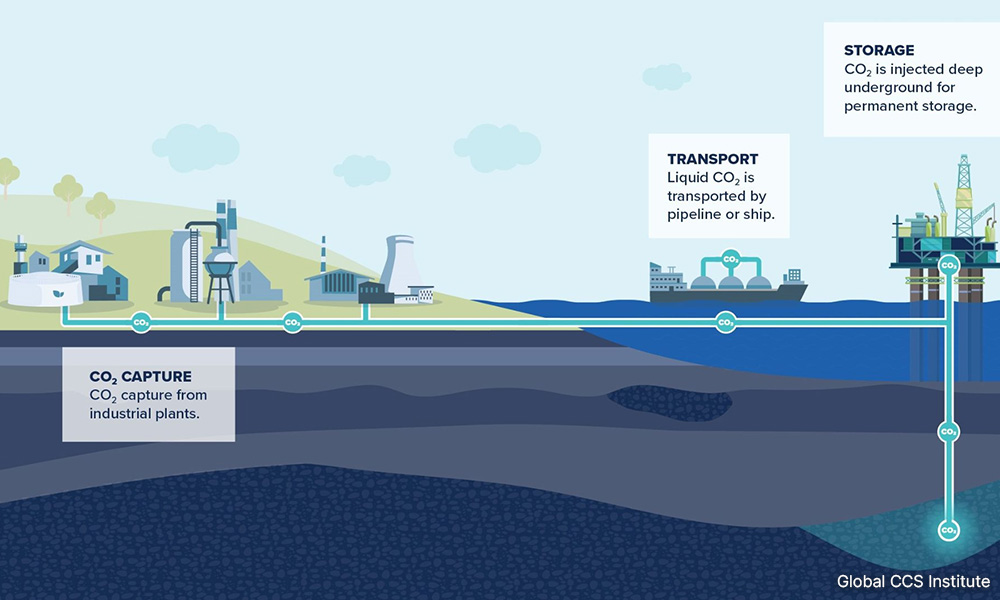
Carbon storage is a relatively new and complex technology that captures carbon dioxide produced by industry and then transports and stores it in underground facilities, including under the seabed.
The carbon dioxide may be produced in fossil-fuelled power plants or other industries like cement or steel production which have high carbon emissions because they are fueled by coal or other fossil fuels.
How is the carbon captured?
First, the carbon dioxide is separated from other gases emitted in the industrial process.
This means capturing the carbon dioxide after the fuel is burnt (post-combustion), before it is burnt (pre-combustion), or while it is burning (oxy-fueled combustion).
In the post-combustion methods, the carbon dioxide is separated from the flue gas using a chemical solvent.
In the pre-combustion method, the fuel is first converted into a gas mixture of hydrogen and carbon dioxide, and the latter is separated with the solvent. The remaining hydrogen is used for fuel.
In the third method, oxy-fueled combustion, the fuel is burned with almost pure oxygen to produce steam and carbon dioxide, which is then separated.
How is the captured carbon transported and stored?
The carbon dioxide is compressed into a liquid form and transported through a pipeline or tankers by ship, rail, or road.
Once it reaches the storage facility, it is then permanently injected into deep rock formations typically more than 1km underground found to be geologically suitable. These are usually depleted oil wells or coal beds.
Is the technology widely adopted?
According to the Intergovernmental Energy Agency (IEA), in 2012, there were already 13 carbon capture facilities in operation.
In the first quarter of 2024, 46 carbon capture facilities are operational worldwide, 36 are under construction, 138 are in advanced development, and 294 are in the feasibility study stage.
The US has the most carbon capture facilities in the world while four new capture facilities started operations in China in 2023, and planned capture and storage capacity could reach 50 million tonnes (Mt) of carbon dioxide and 85 Mt carbon dioxide per year by 2030, the IEA said.

“Momentum behind CCUS has been growing since around the start of 2018. Since February 2023, project developers have announced ambitions for 115 Mt carbon dioxide per year of additional capture capacity by 2030,” the IEA said in a review of the subject.
Critics caution that most of the information on carbon sequestration in subsea geological rock formations comes from two smaller Norwegian projects and conditions may not be identical elsewhere.
But Rafizi said we’re also looking to be carbon utilisation leaders. How is the captured carbon utilised?
This part of the equation refers to the commercial use of the captured carbon dioxide.
One use is to inject carbon dioxide into existing and operating oil and gas reservoirs to increase extractions - a method used in the oil and gas industry for decades.
But critics say this just means the technology will continue to drive fossil fuel production, exacerbating the impacts of climate change.
Why is carbon capture and utilisation storage suddenly gaining interest worldwide?
This is largely because it is seen as a way to reduce carbon from the atmosphere to mitigate climate change.
According to a systematic review of carbon capture technologies published in 2023, the technology has been “around for decades” but “consistent research did not become prevalent until 2008, following climate change legislation and increased public awareness”.
The IEA said the technology development “gained significant momentum in recent years, driven by strengthened climate targets and subsequently increased policy support for the technology around the world”.
If it’s largely accepted worldwide, why are environmental groups against it?
Various international and Malaysian groups, including Greenpeace, argue that the technology is not foolproof, risks severe impact on humans and biodiversity, and allows industries to continue to use carbon-intensive production methods, including producing fossil fuels.

United Nations secretary-general Antonio Guterres agrees that it is greenwashing, allowing fossil fuel producers to become “more efficient planet wreckers”.
“The problem is not simply fossil fuel emissions. It is fossil fuels, period,” he said at United Nations climate talks last year.
What’s the issue with the technology?
Among others, there are concerns about carbon leakage when it is being transported many kilometres through lengthy pipelines or tankers from the source to the carbon storage facility.
The leak may be “rare” but “ incidences can have severe effects on surrounding communities”, scientists observed in an article published in the Renewable and Sustainable Energy Reviews last year.
Because carbon dioxide is an asphyxiant, leaks are a threat to humans and animals surrounding the leak site, they said.
They noted there were 46 incidents associated with carbon dioxide pipeline malfunction in the United States from 1972 to 2012 but none have resulted in deaths or major injuries.
There are also concerns of leaks from the storage area, including into the sea if the storage is located under the seabed. This could increase sea acidity and harm marine life and humans who rely on marine biodiversity.
What are the other criticisms?
Cost is also a factor. The technology requires large infrastructure development and investments.
Petronas’ Kasawari carbon storage project off Bintulu, Sarawak is estimated to cost at least RM4.5 billion, according to contracts awarded.
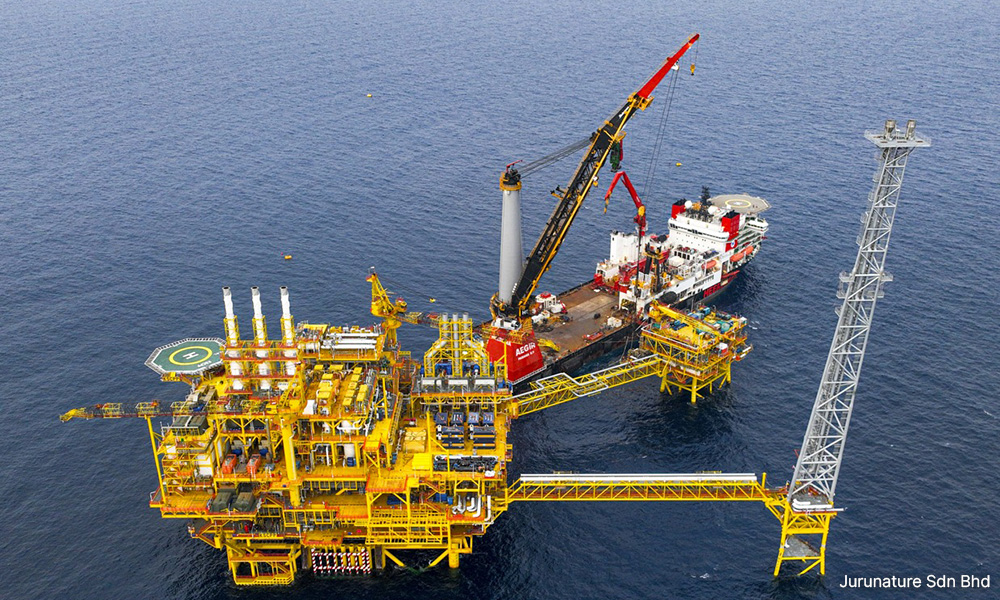
Environmental groups argue that the amount can pay for hundreds of megawatts of solar panel capacity to transition from fossil fuels to greener energy sources.
However, proponents believe the cost of carbon storage is economical.
An IEA report states that the technology is “cost-competitive” and helps achieve “deep emissions reductions” in heavy industries like cement, steel, and chemicals, especially if the technology is retrofitted onto existing facilities.
It added it is “the only scalable solution” for reducing emissions in the cement industry and the “most advanced and least-cost low carbon” option for iron and steel industries using prevailing technologies.
Aren’t there already facilities doing this successfully?
Yes, the two commonly cited examples are the Snøhvit and Sleipner carbon dioxide storage projects in Norway. Both are owned by fossil fuel companies.
Started in 1996, the Sleipner site has captured approximately 11 Mt of carbon dioxide into “porous sandstone filled with saline water” under an 800-metre thick rock cap.
That is equivalent to about emissions from 2.6 million petrol-fueled cars, the US Environment Protection Agency estimates.
Site owner, Statoil, claims that the “carbon dioxide will probably remain stored in the geological layer for thousands of years”.
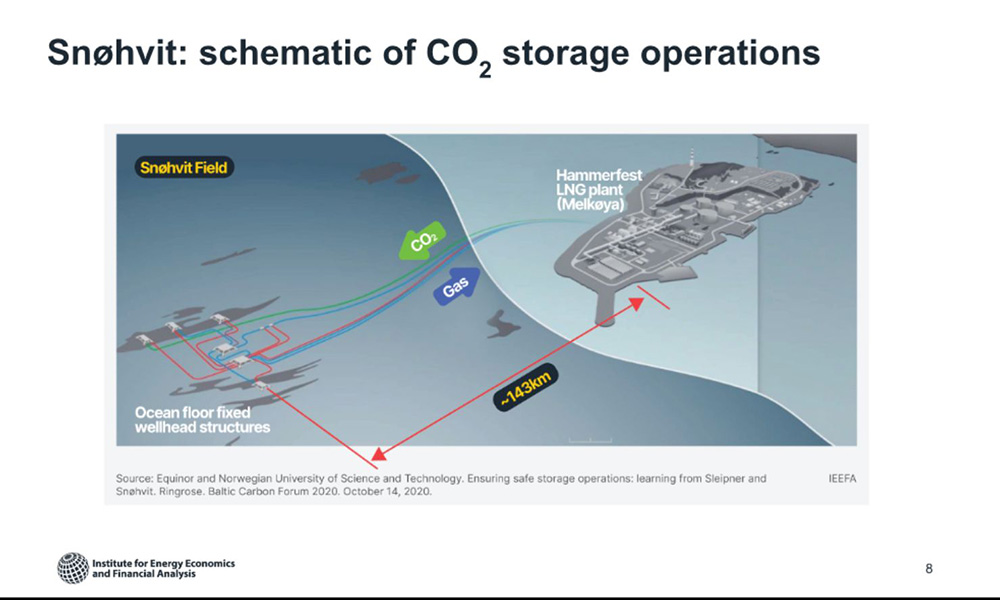
Meanwhile, Equinor, which owns the Snøhvit site, says “700,000 tonnes of carbon dioxide are captured and stored in wells there each year.”
Equinor says this is the equivalent of emissions from 400,000 cars but the US EPA estimates it to be closer to 160,000 cars annually.
Does everyone agree that Snøhvit and Sleipner are successful?
The think tank Institute of Energy Economics and Financial Analysis (IEEFA) says that Snøhvit and Sleipner are actually “cautionary tales” because they have had to face significant and costly deviations.
“Storage conditions at Snøhvit began deviating dramatically from design plans only about 18 months into carbon dioxide injections, necessitating major interventions and investments.
“In the case of Sleipner, carbon dioxide moved into an area previously unidentified by engineers despite extensive study of the subsurface geology,” the IEEFA said in a press statement last year.
IEEFA strategic adviser Grant Hauber said this is because engineers designed the facility using a snapshot of subsurface conditions but the geological conditions may change over time.
“While the oil and gas industry is used to dealing with uncertainty in exploration and production, the risks multiply when trying to place something like carbon dioxide back in the ground,” he said.
Okay, but can carbon capture, utilisation and storage help the Malaysian economy?
There is a business incentive. Carbon storage space and services can be sold to emitters, generating revenue.
This includes importing carbon dioxide from overseas to be stored locally or, in other words, opening up Malaysia to be the dumping ground for the world’s captured carbon dioxide.
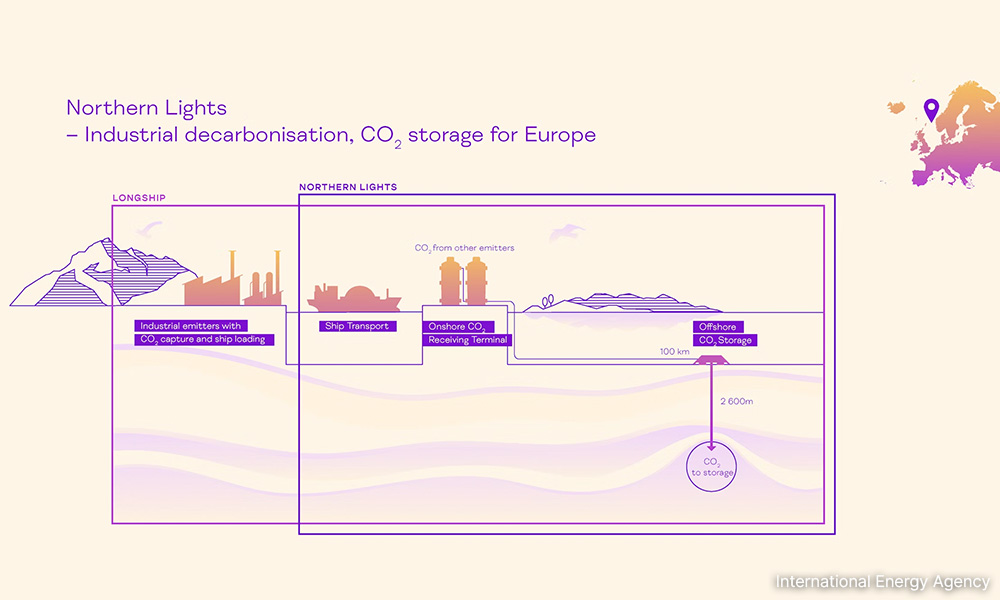
The Northern Lights project in Europe, which is not yet operational, is the only example of transboundary carbon dioxide transportation and storage to date.
The project owned by oil and gas firms TotalEnergies, Equinor, and Shell is expected to start operations later this year and is estimated to be able to store 1.5 Mt carbon dioxide a year - the equivalent of 357,000 cars a year.
The project involves shipping carbon dioxide from the Netherlands to be buried 2,600m under the seabed in the Northern North Sea in Norway.
In 2022, the Northern Lights consortium announced signing a “profitable” deal with Dutch fertiliser maker Yara to store its captured carbon emissions starting 2025 - a deal deemed a “commercial breakthrough”. However, the terms of the deal were not published.
Is it legal to move carbon dioxide - in this case, a waste product - across borders?
In 2009, the London Protocol which deals with dumping of wastes at sea, was amended to allow transborder export of carbon dioxide streams.
Correspondingly, multiple countries have ratified the convention, allowing them to export or import carbon dioxide.
“In addition, Denmark, South Korea, the Netherlands and Norway have also formally deposited declarations, to avail themselves of the provisional application of this amendment,” the Global CCS Institute reported last year.
However, Malaysia has not acceded to the London Protocol or the European Union Carbon Capture and Storage Directive because the country has no domestic framework for this as yet.
Will Malaysia start regulating this?
Yes, the federal government will table a law on it this year.

In response, the Sarawak government cautioned that the federal law should not impact Sarawak which had in 2022 passed a law to regulate the use of land offshore and onshore Sarawak, the development of storage sites, the permanent storage of carbon dioxide on such sites, and the monitoring of storage sites.
“The amendment in the Land Code and the Carbon Storage Rules are enacted in the exercise of Sarawak’s constitutional power over land and the use of land for carbon storage and that the boundary of the state extends from the coastline/foreshore to the seabed and subsoil beneath the high sea which forms the continental shelf of Sarawak,” said Sarawak deputy minister for Energy and Environmental Sustainability Hazland Abang Hipni.
Why is Sarawak so quick to amend its laws on this?
This is likely to pave the way for the Petronas carbon capture and storage project built near the oil and gas giant’s Kasawari oil field off Bintulu, Sarawak.
Speaking about this last year, Sarawak premier Abang Johari Openg said the project is anticipated to sequester 3.3 Mt of carbon dioxide annually, making it the largest offshore project of its kind in the world.
“This achievement firmly positions Sarawak as a global leader in this cutting-edge technology towards achieving net-zero carbon by 2050,” he reportedly said.
He added that Sarawak has vast potential for carbon storage - an estimated nine billion tonnes - under the seabed formation of its continental shelf.
“Our offshore depleted or abandoned petroleum fields offer an ideal location for secure and permanent storage of captured carbon dioxide,” he said.
What is Petronas’ Kasawari carbon capture project?
Petronas said the project is located about 200km from the Bintulu coast and involves injecting compressed carbon dioxide into a depleted reservoir via a 138km-long 16-inch subsea pipeline.
Expected to be operational next year, it is reported to be able to abate 3.3 Mt of carbon dioxide emissions each year, the equivalent of emissions of 7,854,060 cars.
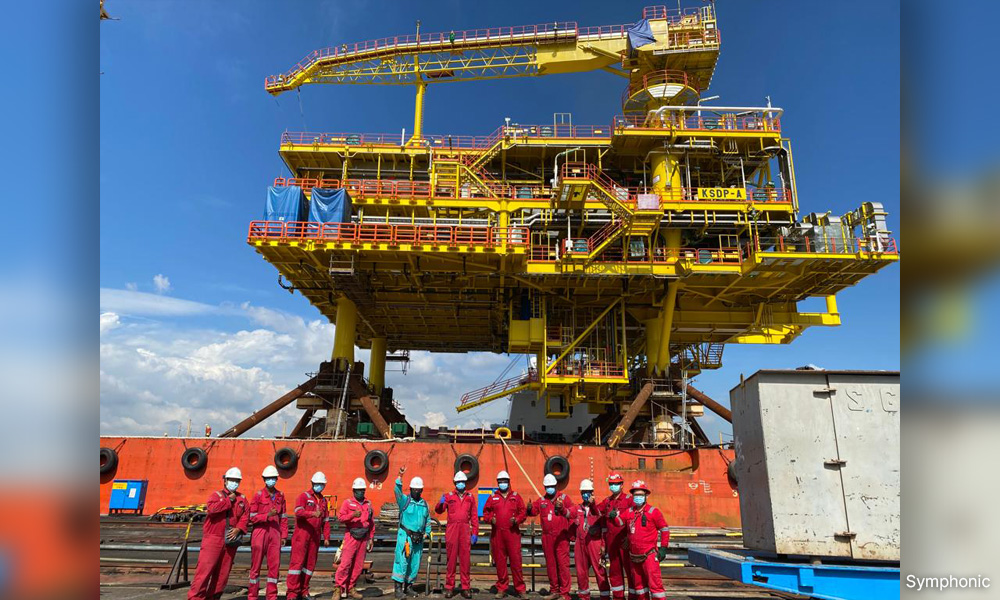
The carbon emissions captured are from flaring in Petronas’ oil and gas production.
But environmental groups say that even in this best-case scenario, this amount is less than one percent of all of Petronas’ current emissions - “a number too small to be visible on a graph”.
It will also only capture 14.6 percent of the annual emissions of the Kasawari field, they estimate.
“Stop including CCS in climate targets. Stop subsidising CCS. Stop approving new CCS projects. Re-direct CCS funds to renewable energy investments instead,” they said.
/file/publisher-c1a3f893382d2b2f8a9aa22a654d9c97/2024/07/2f30f90a9b27780b963ea7143bc86a99.jpg)
/file/publisher-c1a3f893382d2b2f8a9aa22a654d9c97/2022/02/176ba033876bd5d9503e71361e2caf1d.jpg)
/file/1217/2f1a06c828e038a7c49cf6bb26f6a204.jpeg)
/file/publisher-c1a3f893382d2b2f8a9aa22a654d9c97/2024/03/844d5c1e9edb915fa6bb61932c3fff68.jpg)


Report this comment
Are you sure you want to delete this comment?
This action cannot be undone.